Article Text
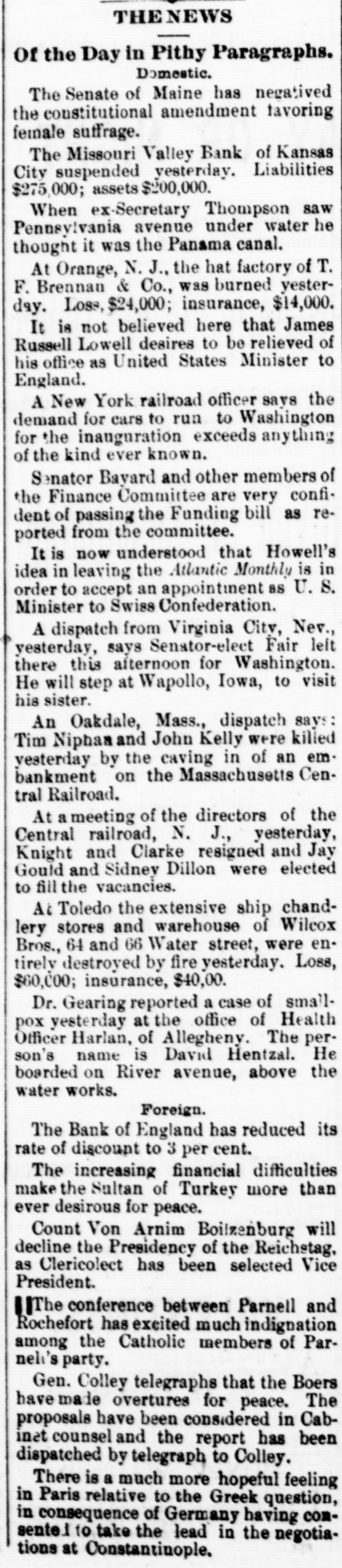
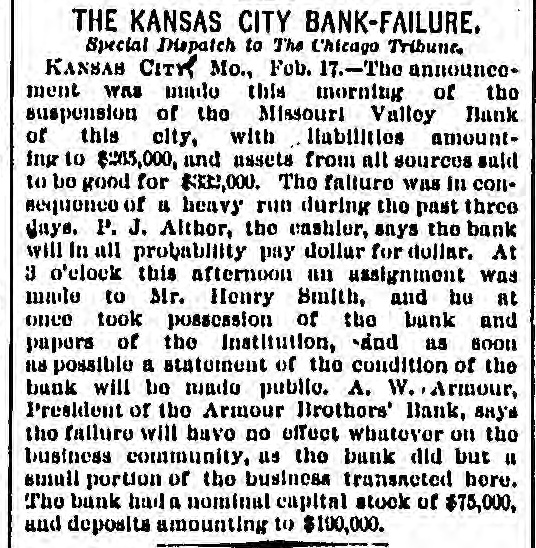
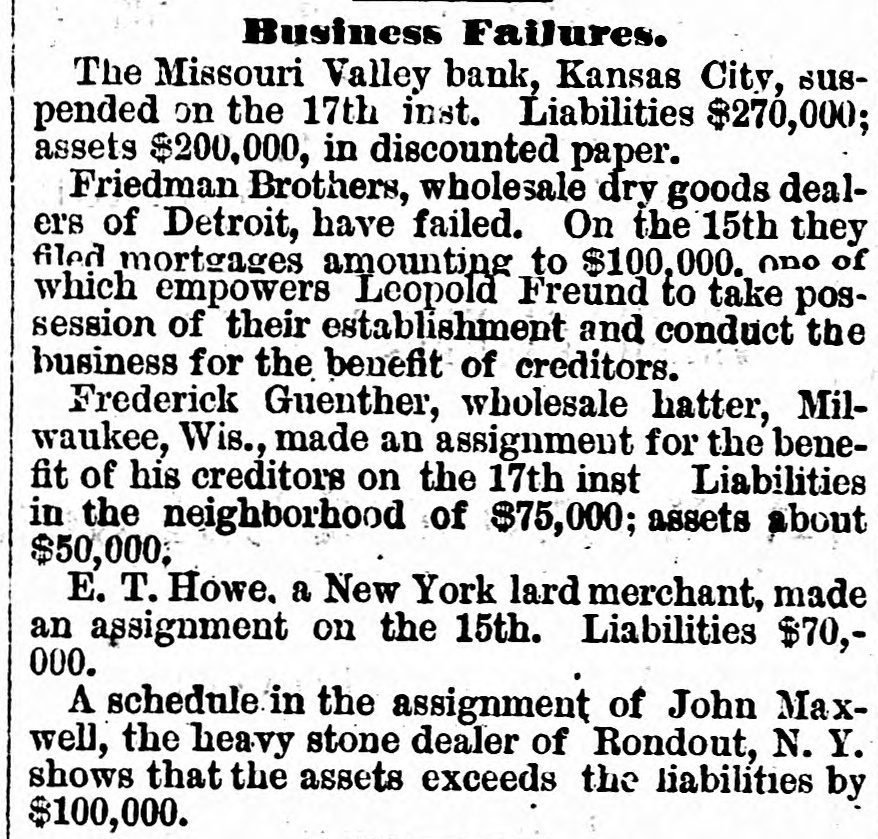
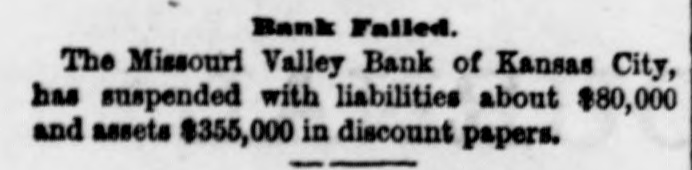
BRIKE TELEGRANS. . Bits of News and Gomsp or the World Briefly Told. The police force of New York city numbers 2,519 men. Nothing of interest transpired in the Whittaker case yesterday. The telegraph wire has been cut between New Castle and Lady Smith. e Speaker Randall thinks the three per cent funding bill will pass both houses of Congress. Increasing financial difficulties make the Sultan of Turkey more than ever desirous of peace. Telegrams report the murder of J Reid, a negro, by a negro, Tuesday night, near Hustonville, Ky. President Brand denies the rumor that p the Orange Free State Boers have formed a league in Natal to oppose the British. I Tim Murphy and Kelly were killed yesterday by the caving of an embankment on the Massachusetta Central railroad, 1 The conference between Parnell and V Rochefort has created much indignation . among the Catholic members of Parnell's . party, , J. March, editor of the Commercial, t Portland, Indiana, was mortally wounded : by a printer, named Williams, on Tues: day last. , President Hayes has withdrawn the nomination of Gen. Forster for United States Attorney for the Southern district I of New York. I The Missouri Valley Bank of Kansas City, an institution considered unsafe for a ) long time, suspended yesterday. Liabilii ties, $275,000; assetts, $200,000. The proposed prohibitory liquor amend: ment to the Constitution of Michigan was defeated in the State Senate yesterday, lacking one vote of the requisite twothirds. ; At Toledo, Ohio, the extensive ship chandlery stores and warehouse of T. COX Bros., 64 and 66 Water street, wore entirely destroyed by fire yesterday morn3 ing. Loss, $60,000; insurance, $40,000. Parnell promised, on his return to Ireland, to send Victor Hugo a letter upon the political situation of that country. Hugo said he would reply to such a letter by a manifesto to Europe in favor of the claims of Ireland, : Charles Swazart, a rough, went uninvited to country dance, near Webster, Dark county, Ohio, and, to create a scene. fired a pistol into the ceiling, whereupon ) Lewis Christian shot Swazart in the head. The wound is probably mortal. Hugo Bank, a German, and wife arrived : in this country eight months ago, and since that time visited Cincinnati, whence to they Tuesday, returned and stopped New at York 339 East city Ninth last street. The husband came to Castle Gar. den yesterday, and said that the night be. fore his wife and be quarreled over fifty dollars, which she had lost, and she left the house, vowing that she would never return. He says she has no friends in the city. The police were notified to search for her.