Newspaper notices (Oct–Nov 1928) state Daniel Waite is employed by the National Banking Department as Receiver of the First National Bank of Biwabik, indicating the bank was placed in receivership/closed. No articles mention a run or reopening, so classified as suspension leading to closure (receivership). Date taken from the 1928-10-19 article.
Events (3)
1.May 18, 1907Chartered
Source
historical_nic
2.May 10, 1927Receivership
Source
historical_nic
3.October 19, 1928Receivership
Newspaper Excerpt
employed by the National Banking Department of the U. S. Government as Receiver of the First National Bank of Biwabik
Source
newspapers
Newspaper Articles (4)
1.October 19, 1928The Ely MinerEly, MN
Click image to open full size in new tab
Article Text
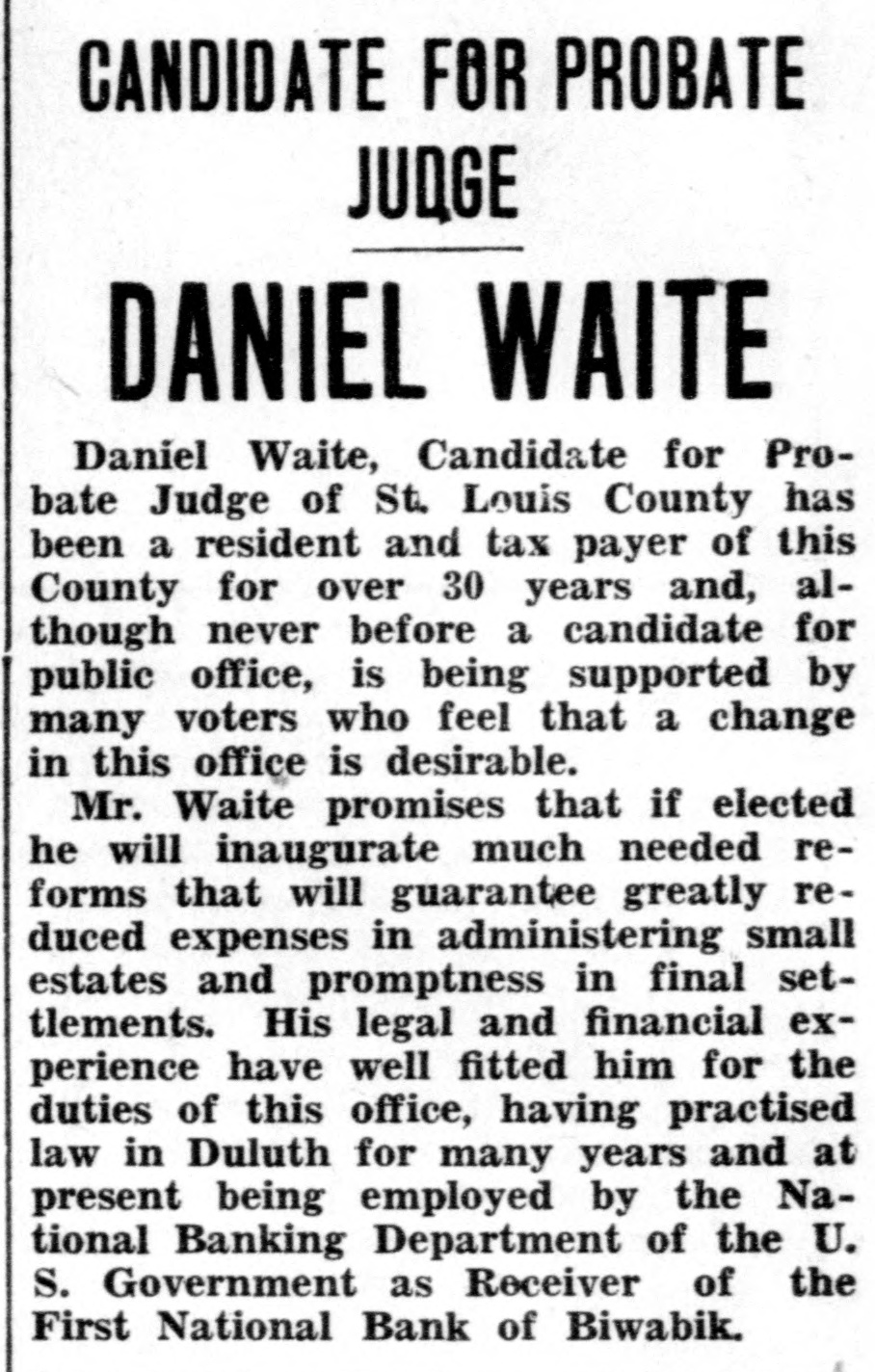
CANDIDATE FOR PROBATE JUDGE DANIEL WAITE Daniel Waite, Candidate for Probate Judge of St. Louis County has been a resident and tax payer of this County for over 30 years and, although never before a candidate for public office, is being supported by many voters who feel that a change in this office is desirable. Mr. Waite promises that if elected he will inaugurate much needed reforms that will guarantee greatly reduced expenses in administering small estates and promptness in final settlements. His legal and financial experience have well fitted him for the duties of this office, having practised law in Duluth for many years and at present being employed by the National Banking Department of the U. S. Government as Receiver of the First National Bank of Biwabik.
2.October 26, 1928The Ely MinerEly, MN
Click image to open full size in new tab
Article Text
# DANIEL WAITE
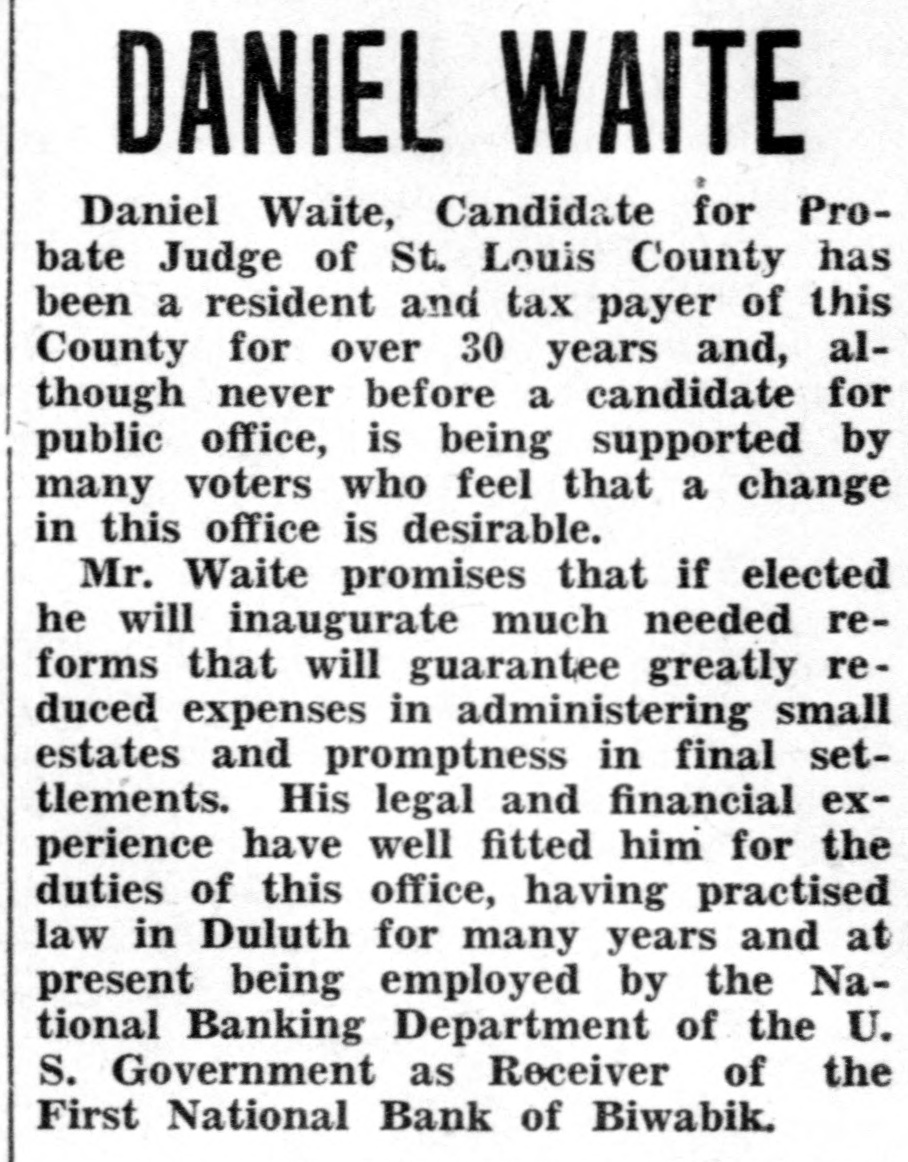
Daniel Waite, Candidate for Probate Judge of St. Louis County has been a resident and tax payer of this County for over 30 years and, although never before a candidate for public office, is being supported by many voters who feel that a change in this office is desirable.
Mr. Waite promises that if elected he will inaugurate much needed reforms that will guarantee greatly reduced expenses in administering small estates and promptness in final settlements. His legal and financial experience have well fitted him for the duties of this office, having practised law in Duluth for many years and at present being employed by the National Banking Department of the U. S. Government as Receiver of the First National Bank of Biwabik.
3.November 2, 1928The Ely MinerEly, MN
Click image to open full size in new tab
Article Text
# DANIEL WAITE
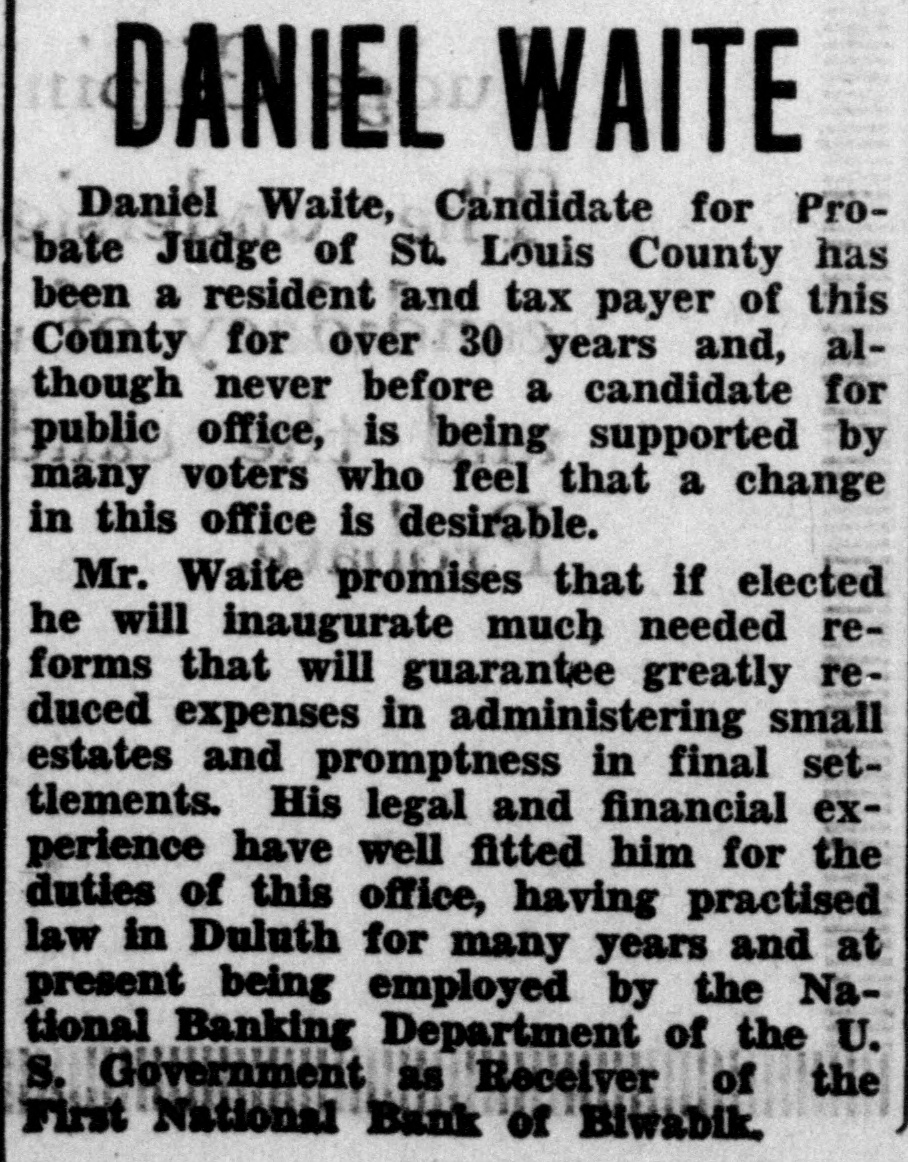
Daniel Waite, Candidate for Probate Judge of St. Louis County has been a resident and tax payer of this County for over 30 years and, although never before a candidate for public office, is being supported by many voters who feel that a change in this office is desirable.
Mr. Waite promises that if elected he will inaugurate much needed reforms that will guarantee greatly reduced expenses in administering small estates and promptness in final settlements. His legal and financial experience have well fitted him for the duties of this office, having practised law in Duluth for many years and at present being employed by the National Banking Department of the U. S. Government as Receiver of the First National Bank of Biwabik.
4.November 2, 1928The Ely MinerEly, MN
Click image to open full size in new tab
Article Text
# DANIEL WAITE
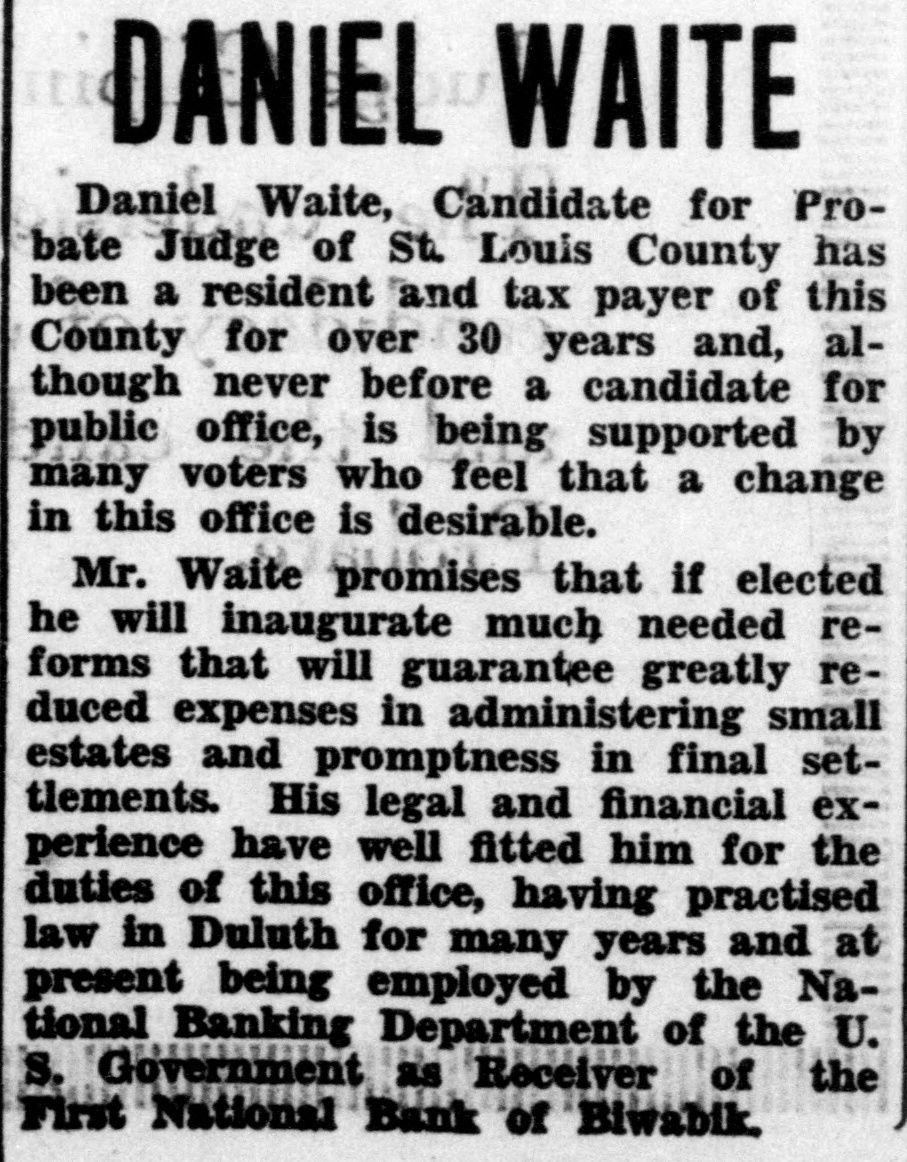
Daniel Waite, Candidate for Probate Judge of St. Louis County has been a resident and tax payer of this County for over 30 years and, although never before a candidate for public office, is being supported by many voters who feel that a change in this office is desirable.
Mr. Waite promises that if elected he will inaugurate much needed reforms that will guarantee greatly reduced expenses in administering small estates and promptness in final settlements. His legal and financial experience have well fitted him for the duties of this office, having practised law in Duluth for many years and at present being employed by the National Banking Department of the U. S. Government as Receiver of the First National Bank of Biwabik.