Bank suspended operations July 6, 1926 (funds frozen with Bankers' Trust Co. of Atlanta), receiver appointed in early September 1926, and plans to reopen December 18, 1926. No newspaper description of a depositor run; suspension appears driven by correspondent funds being frozen.
Events (4)
1.July 6, 1926Suspension
Cause
Correspondent
Cause Details
Bank closed July 6 because its funds were frozen with its correspondent, Bankers' Trust Company of Atlanta.
Newspaper Excerpt
The bank has been closed since July 6, due to the funds being frozen with the Bankers' Trust company of Atlanta.
Source
newspapers
2.September 4, 1926Other
Newspaper Excerpt
GROVELAND, Sept. 4-(Tribune News Edge. pioneer merchant here, appointed receiver for the Bank Groveland, which been closed July Mr. Edge is being assisted by E. Acre. Plans for the opening of new bank are under way, which will include the taking the affairs of the Bank of Groveland.
Source
newspapers
3.September 6, 1926Receivership
Newspaper Excerpt
E. E. Edge, merchant of this city, has been appointed receiver the bank of Groveland, and is now in charge ... The bank has been closed since July 6, due to the funds being frozen with the Bankers' Trust company of Atlanta.
Source
newspapers
4.December 18, 1926Reopening
Newspaper Excerpt
Bank Examiner R. F. Rogers is here going over the affairs of the Bank of Groveland. ... will be reopened Dec 18.
Source
newspapers
Newspaper Articles (3)
1.September 5, 1926The Tampa TribuneTampa, FL
Click image to open full size in new tab
Article Text
The Weather for Southeast Sunday to southeast Georgia, Extreme Northwest Florida: Partly east south Partly with and Monday: and Monday: gentle southerly
Rainfall Total for 24 since Sept. Deficiency Jan.
Tides Today Sept. Moon will new Sept. for Tampa. For time subtract one hour twenty utes.
Winds East Gulf: Gentle east and partly overcast rains Sunday and Windward Moderate local rains Sunday Sandy Hatteras Gentle and generally fair weather Sunday.
Barometer reduced was 30.00 inches._
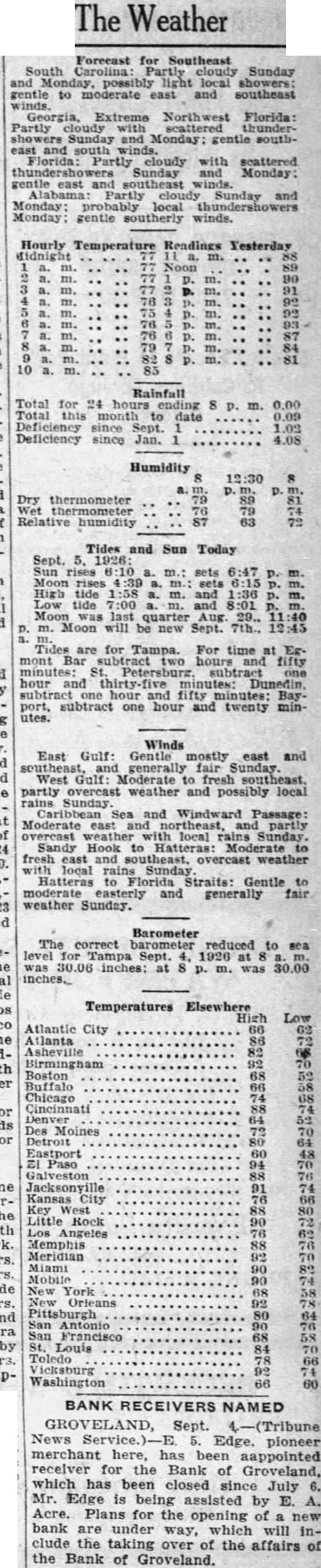
BANK RECEIVERS NAMED
GROVELAND, Sept. 4-(Tribune News Edge. pioneer merchant here, aappointed receiver for the Bank Groveland, which been closed July Mr. Edge is being assisted by E. Acre. Plans for the opening of new bank are under way, which will include the taking the affairs of the Bank of Groveland.
Hourly Temperature Yesterday
Humidity 12:30 Dry
Temperatures Elsewhere Atlantic City Atlanta Asheville Birmingham Boston Chicago Cincinnati Moines Detroit Paso Kansas Little Rock Memphis Meridian Miami New York Orleans Pittsburgh Antonio Francisco Louis Vicksburg Washington
2.September 6, 1926The Tampa TimesTampa, FL
Click image to open full size in new tab
Article Text
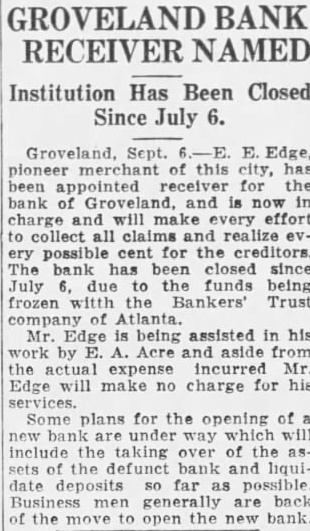
GROVELAND BANK RECEIVER NAMED
Institution Has Been Closed Since July 6.
Groveland, Sept. 6.-E. E. Edge, merchant of this city, has been appointed receiver the bank of Groveland, and is now in charge and will make every effort to collect all claims and realize every possible cent for the creditors. The bank has been closed since July 6, due to the funds being frozen with the Bankers' Trust company of Atlanta. Mr. Edge is being assisted in his work by E. A. Acre and aside from the actual expense incurred Mr. Edge will make no charge for his services. Some plans for the opening of new bank are under way which will include the taking over of the assets of the defunct bank and hquidate far as possible Business men generally are back of the move to open the new bank.
3.December 3, 1926The Tampa TribuneTampa, FL
Click image to open full size in new tab
Article Text
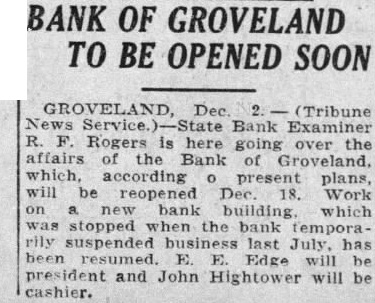
BANK OF GROVELAND TO BE OPENED SOON
GROVELAND, Dec (Tribune News Bank Examiner R. F. Rogers is here going over the affairs of the Bank of Groveland. which according present plans, will be reopened Dec 18. Work new bank building which stopped when the bank temporarily suspended business last July, has resumed. Edge will and John Hightower will be