Click image to open full size in new tab
Article Text
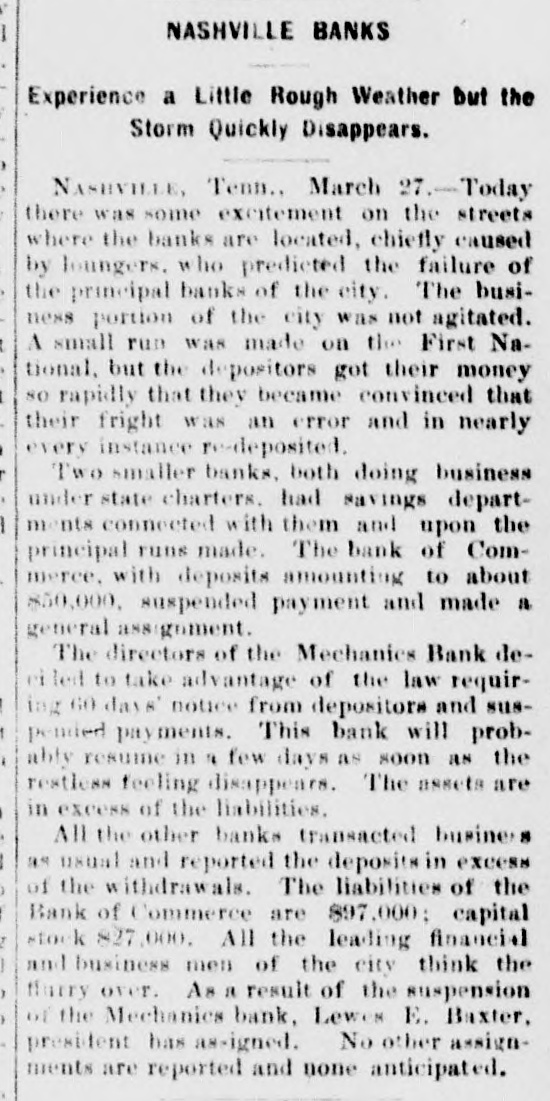
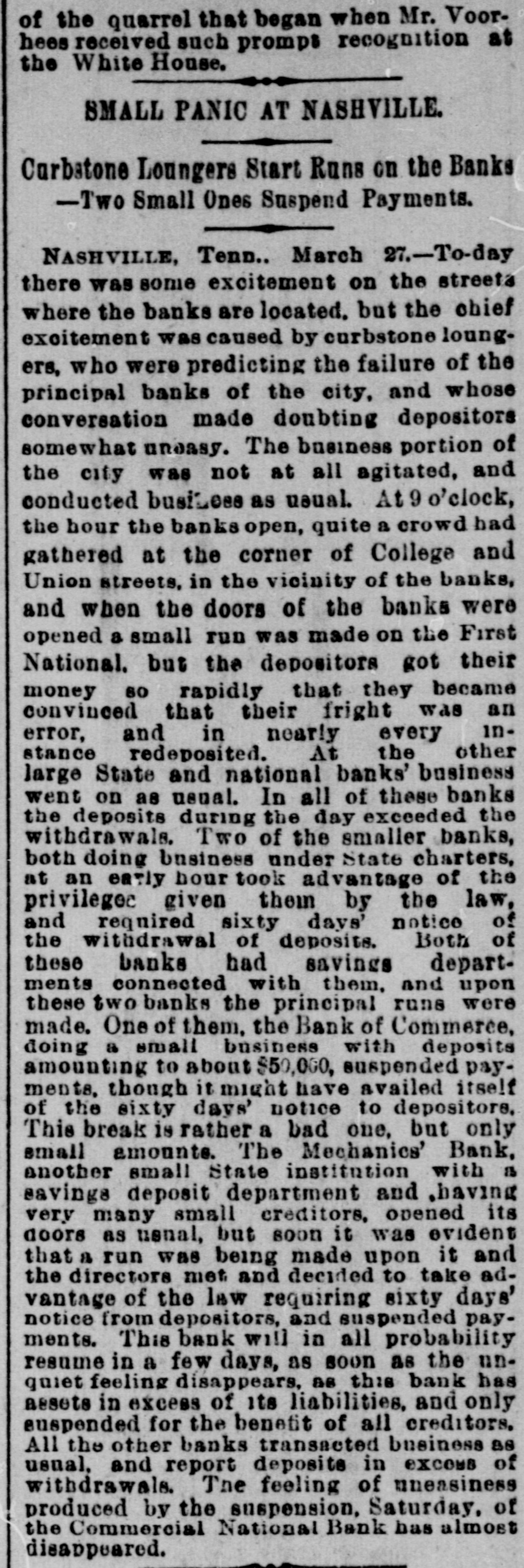
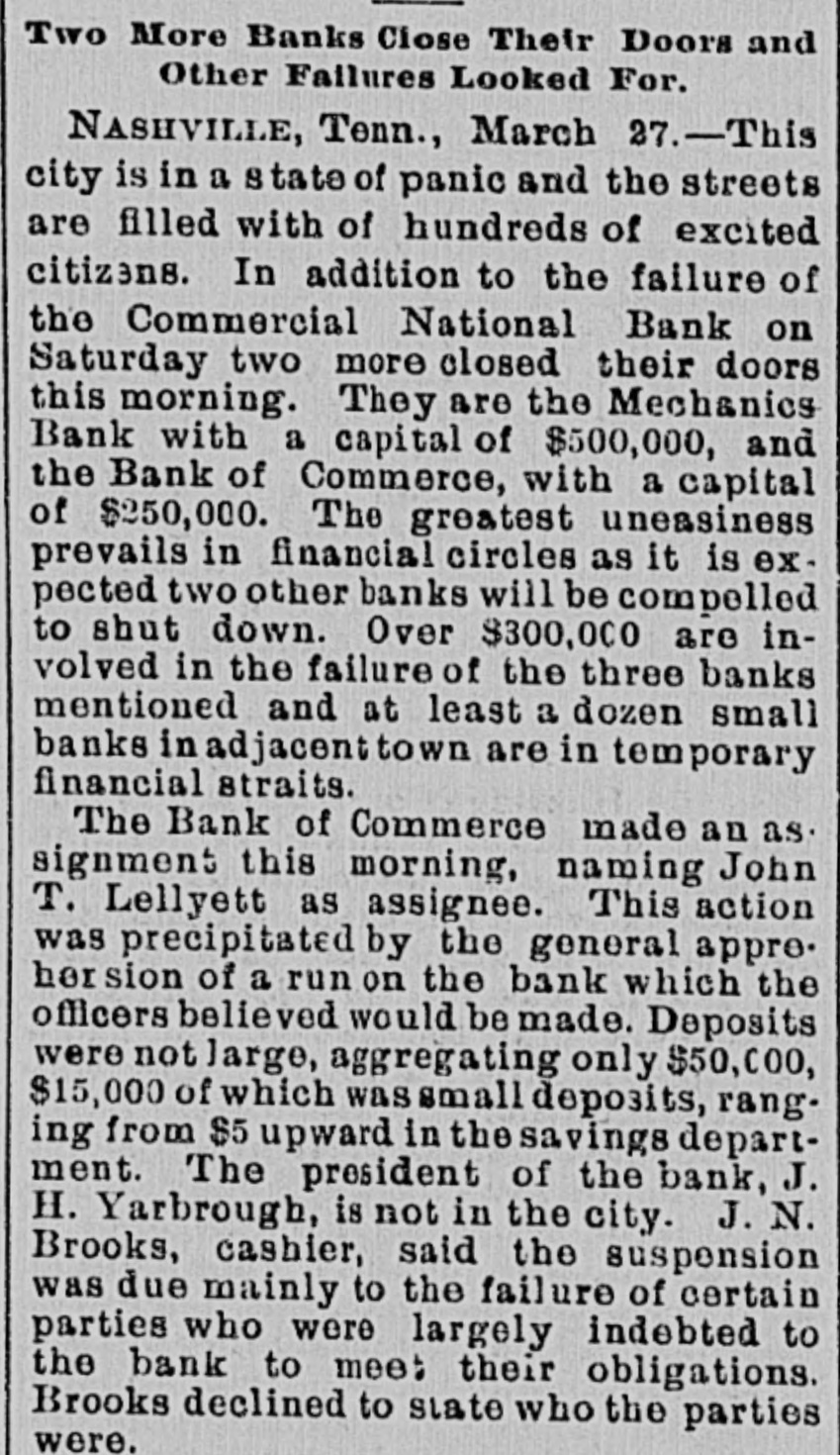
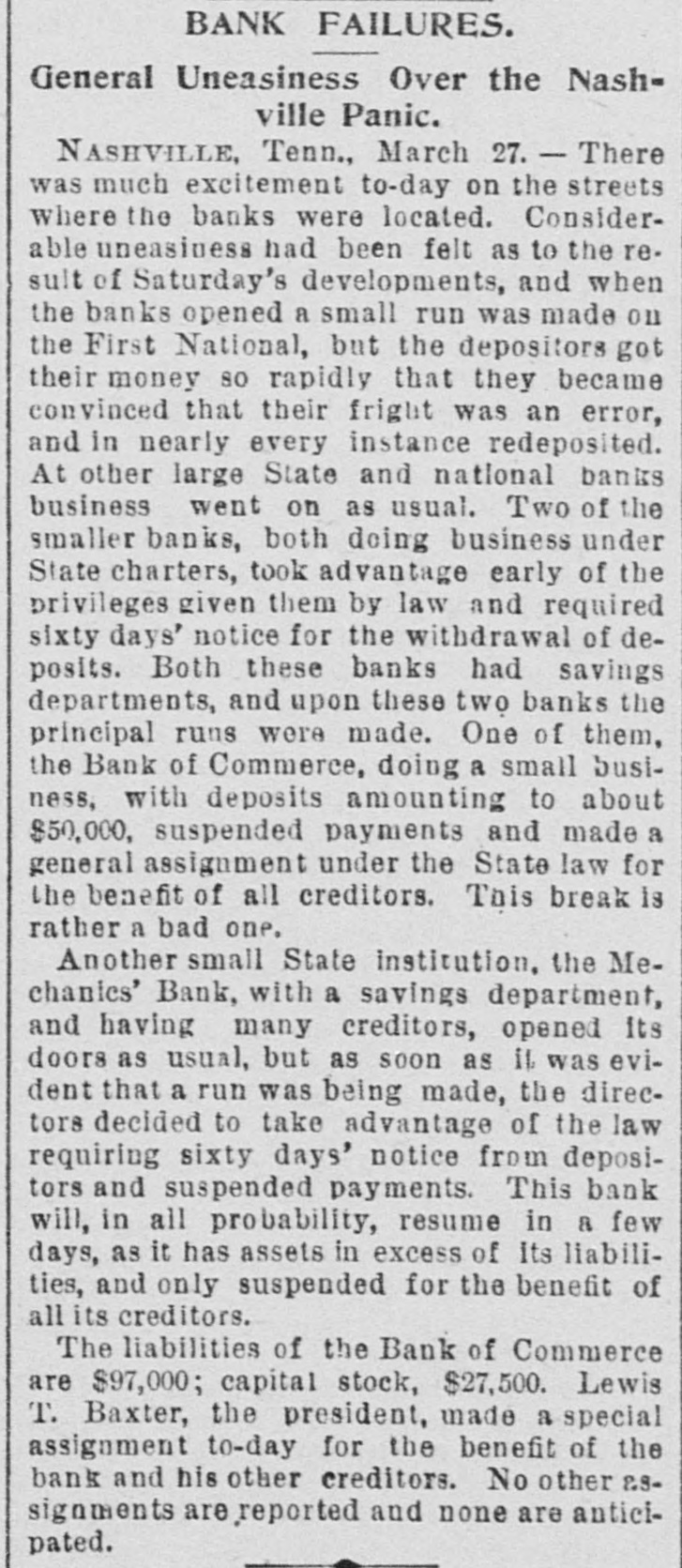
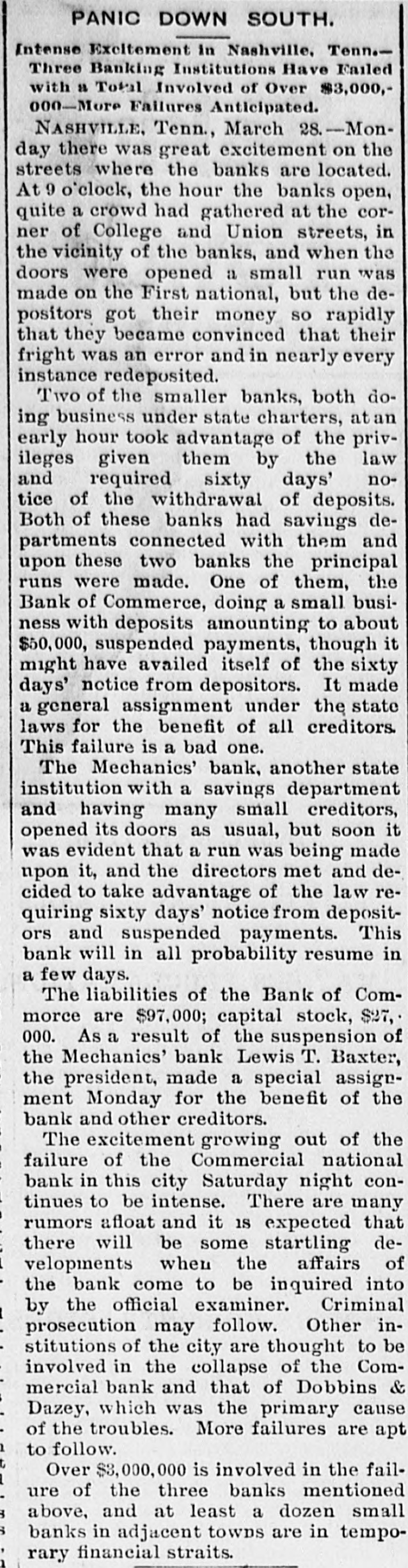
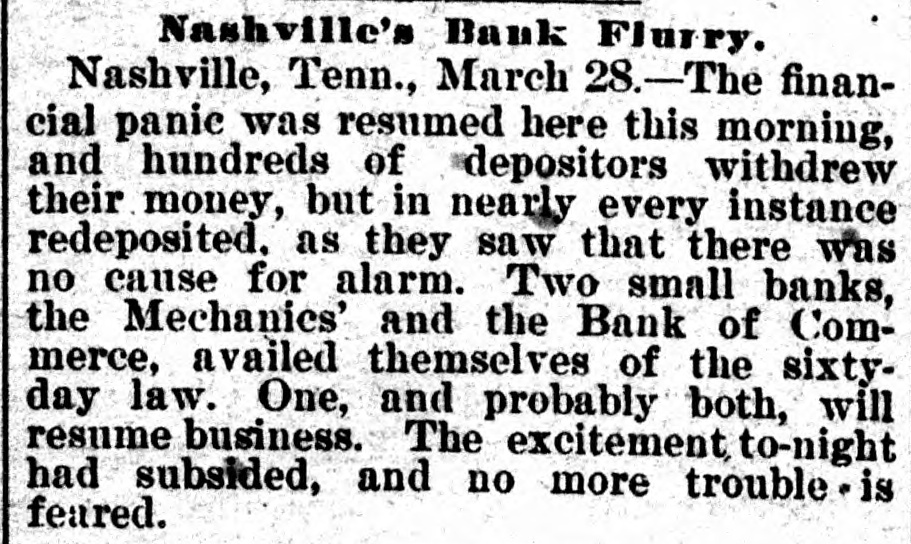
SUSPENDED PAYMENT Two Small Savings Banks at Nashville in Financial Difficulties. They Take Advantage of the Required Sixty Days' Notice. One of Them Will Probably Resume Business in a Few Days. All of the Other Banks Transacted Business as Usual. NASHVILLE. Tenn., March 27.-Today there was some excitement on the streets where the banks are located, but the chief excitement was caused by curbstone loungers, who were predicting the failure of the principal banks of the city, and whose conversation made doubtful depositors somewhat uneasy. The business portion of the city was not at all agitated, and conducted its business as usual. At 9 o'clock. the hour the banks open, quite a crowd gathered at the corner of College and Union streets, in the vicinity of the banks, and when the doors of the banks were opened a small run was made on the First National, but the depositors got their money so rapidly that they became convinced that their was an error. and in nearly every fright instance state and redeposited. At the other large national banks business went on as usual. In all of these banks the deposits during the day Exceeded the Withdrawals. Two the smaller doing of under banks, charters, both at business state an hour took privileges them by reearly given advantage the of law the the and withquired sixty days' notice of drawal of deposits. Both of these banks had savings departments connected with them. and upon these two banks the principal runs were made, one of them, the Bank of Commerce, doing a small business, with deposits amounting to about $50,000, suspended payments, though have of the to sixty it days might provided availed depositors, itself and made a under laws of all This a creditors. today the state general break for small the assignment is benefit amounts. rather bad one, but only for The Mechanics' bank. another small state institution with a savings department and having very many small creditors, opened its doors as usual, but soon it was evident that a run was being made upon it, and the directors met and decided to take advantage of the law requiring sixty days notice from depositors. and suspended payments. This bank will, in all probability. Resume in a Few Days, as soon as the disappears. as this has assets 111 excess of its for liabilities. bank unquiet and only feeling suspended All the benefit of all its creditors. the other banks transacted business as usual, and report deposits in excess of withdrawals. The feeling of uneasiness produced by the mercial there is no to peared, suspension and National bank Saturday has doubt almost of the that disap- Commorrow business will resuine its usual channels and the banks will have no further trouble. The officers of the Mechanics bank suspended are Lewis T. Baxter, president, and John Schardt, cashier. The officers of the Bank of Commerce assigned are J. H. Yarbrough, president, and J. N. Brooks. rashier. The liabilities of the Bank of Commerce are $97,000; capital stock, $27,500. The consensus of opinion of all the leading financial and business men of the city, is that the flurry is over and that the storm has expended its fury. As a result of the suspension of the Mechanies' the made a president, bank. Lewis special T. the assignment Baxter, bank for the benefit of and and none are other today Special are reported creditors. Bank Examiner No other assignments anticipated. J. M. Mcof has and is in city, Knight, Louisville, charge of the reached suspended the Commercial National bank.