Click image to open full size in new tab
Article Text
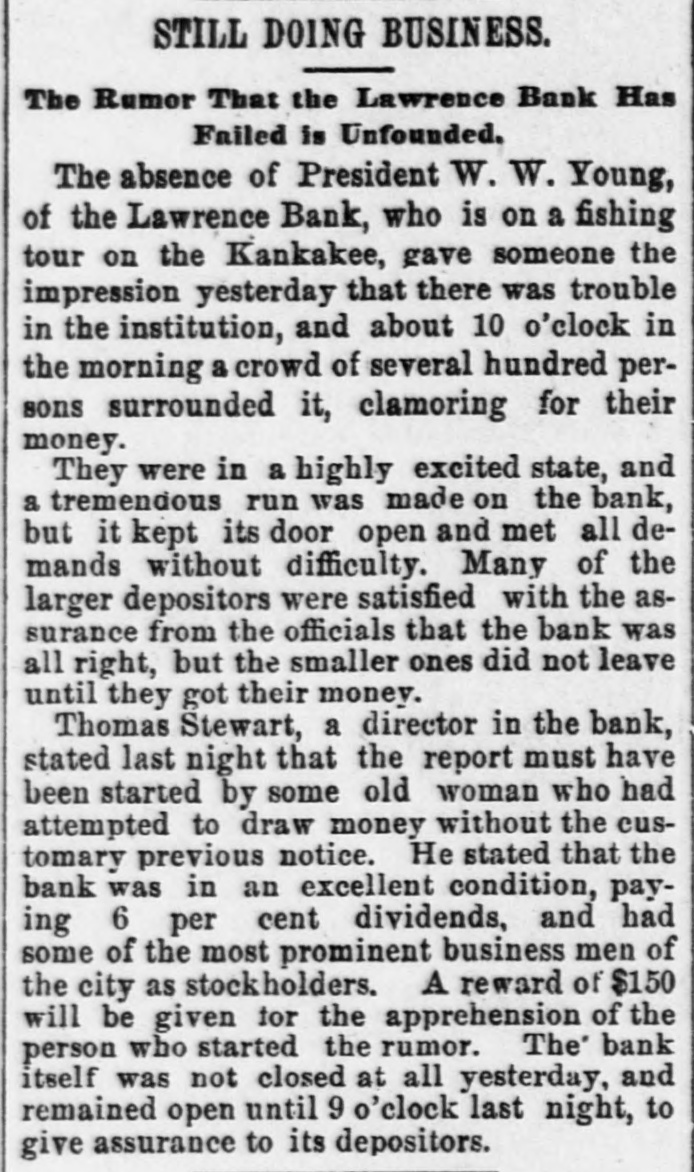
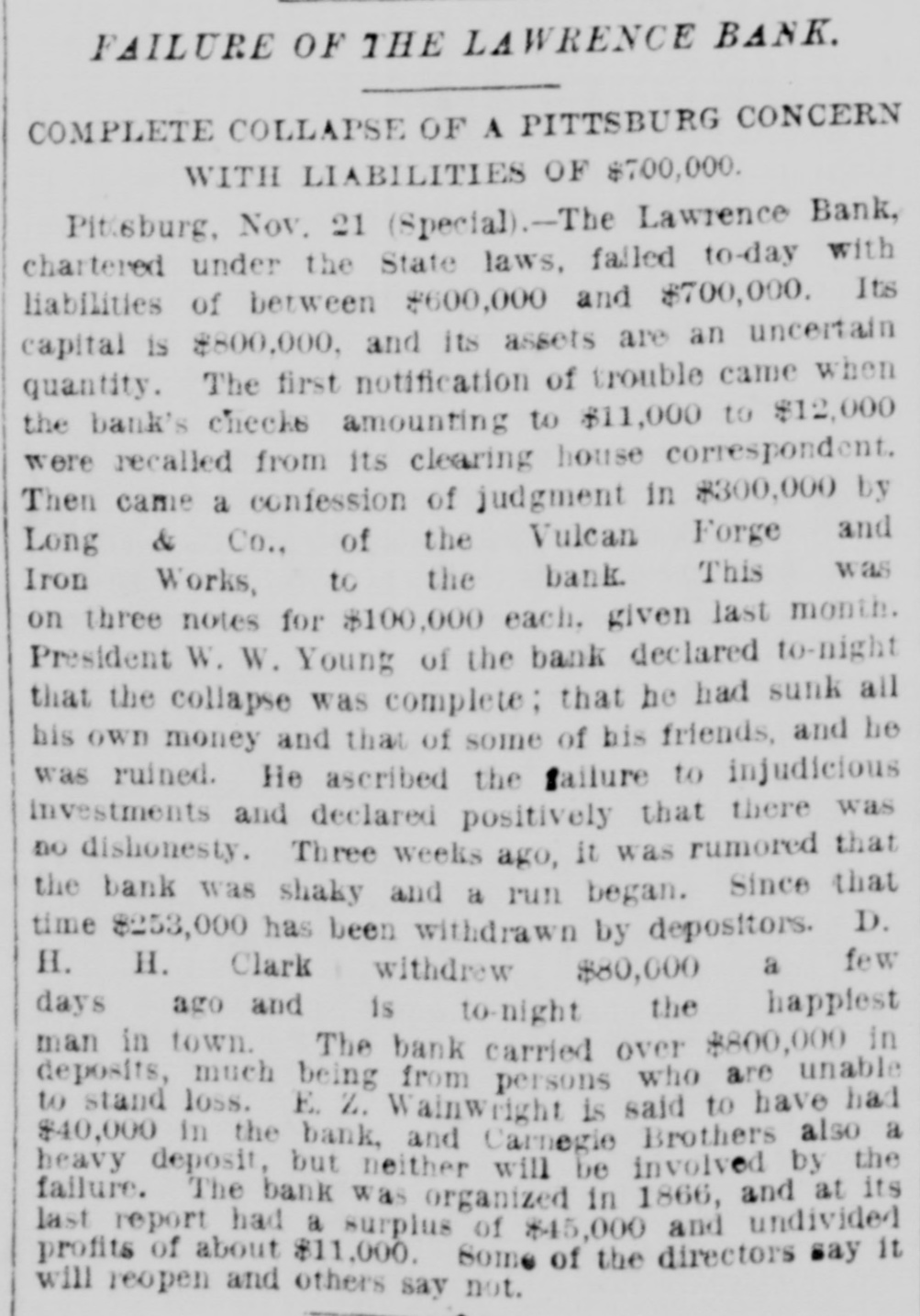
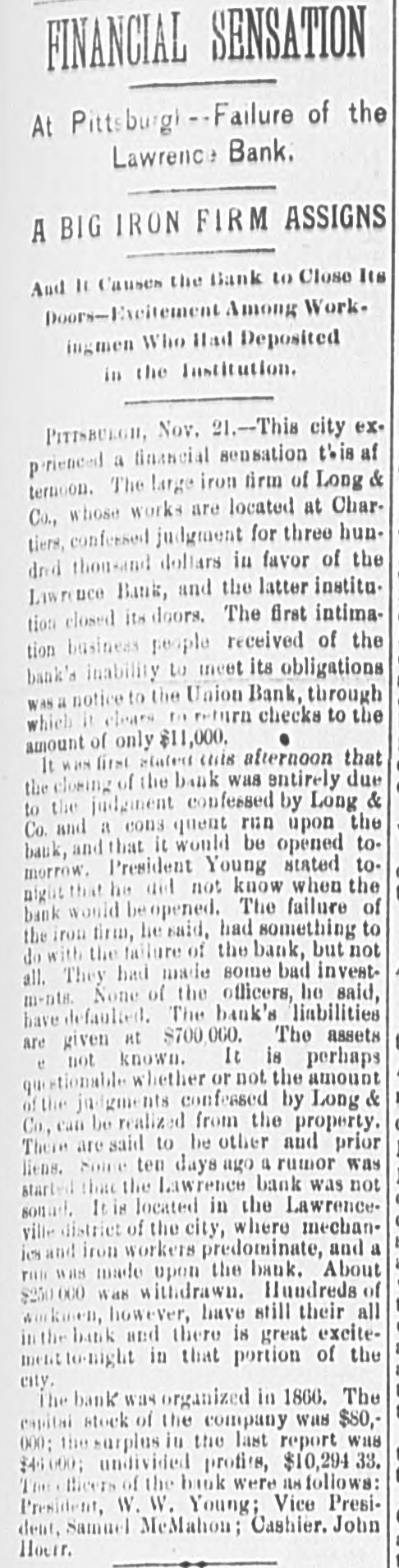
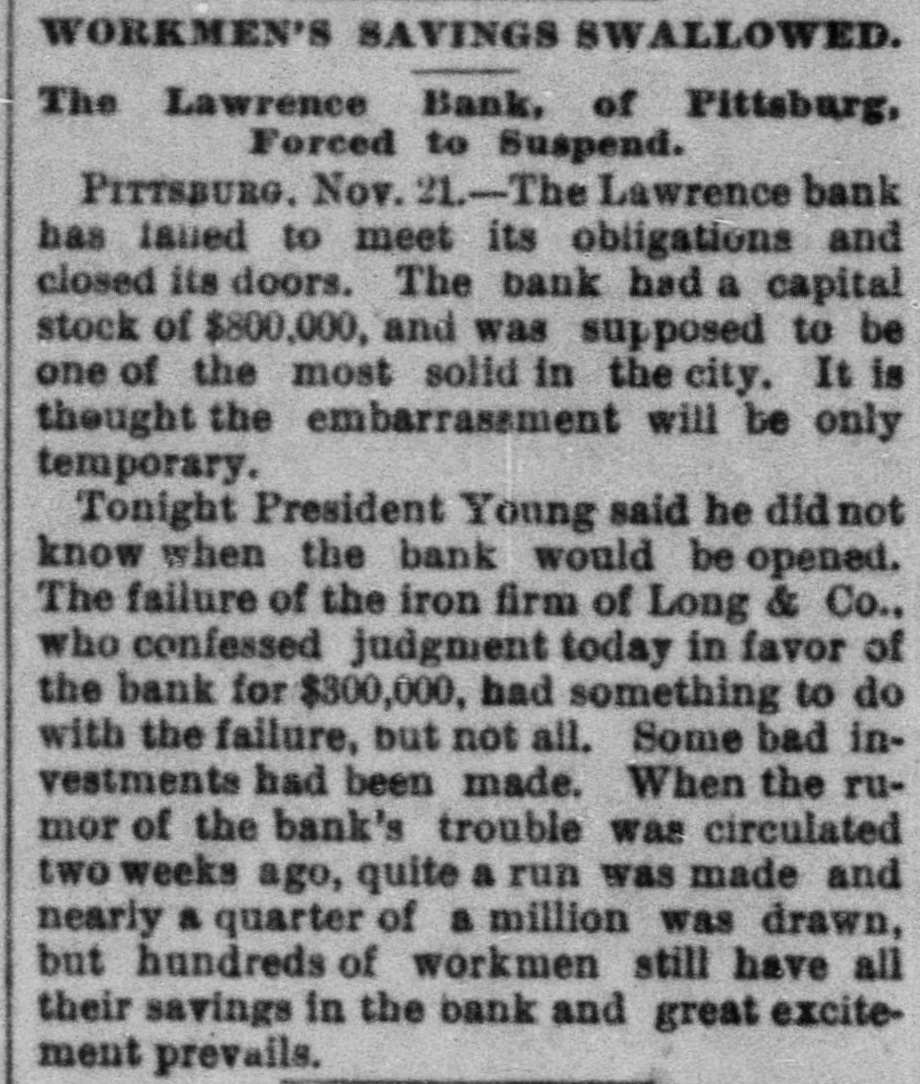
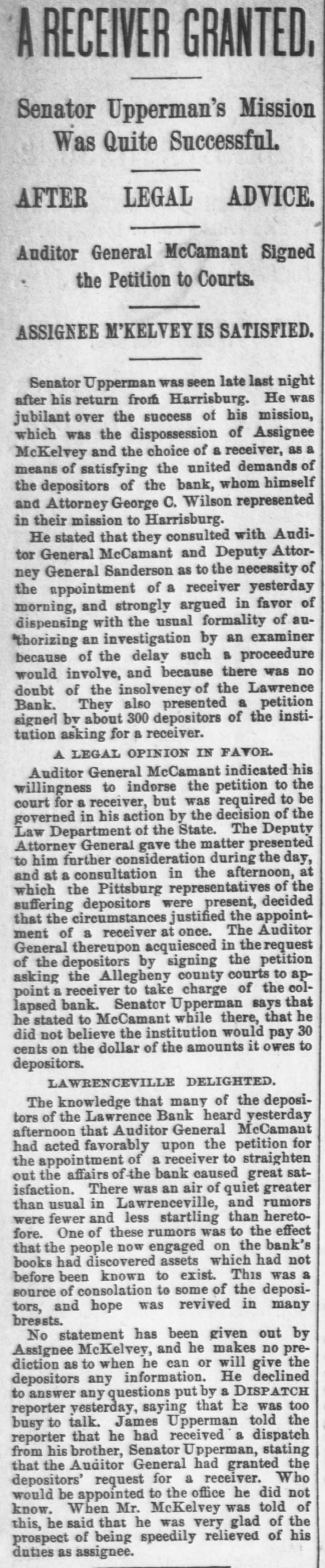
NEWS OF THE WEEK. BOSTON, Nov. 22.-[Speciel.].]-Sullivan has received a telegram that the San Jose, Californio, Athletic Association will puup fifteen thousand for finish fight bet tween him and the negro Jackson, He will accept and will telegraph his accept ance. NEW YORK, Nov. 22,-[Special.]-A highly sensational shooting affray occurred here this morning on Fulton street. Stephen L. Pattens, secretary and treasurer of the Brooklyn Elevated Road and a Brooklyn Bridge trustee, was shot and instantly killed by Mrs. Hannah Southworth. The weapon used was a 88-calibre self-cocking revolver. All five chambers were discharged and every bullet took effect. Pettens had just left the ferry, when a woman, richly dressed, very handsome and thickly yeiled, stepped behind him and began firing at him. Pettens was married man, but has no children. It seems for some years past Mrs. Southworth has given Pettens a vast amount of trouble, She assaulted him once before In Brooklyn. At that time she broke an umbrella over his head. She was then arrested and put under bonds for good behavior. Some time ago she brought suit against him for a large amount, alleging he had seduced her, and asking big money as compensation. Pettens fought the case, which is still pending. Mrs. Southworth is still under arrest. Pettens was wealthy. The affair creates a great sensation throughout the eny, owing to the prominence of Pettens. PITTSBURG, Nov. .-[Special. ]--A twostory frame house was blown to atoms at Braddock, Pa., this morning by the explosion of natural gas. Mrs. Peter Keish, wife of the owner, was in bed with an infant. Both are believed to be fatally ourned. Charles Householder is also faally burned. Five other members of the Kelsh family who were in the house are ba By injured. The MITH WAS leaking in the basement kitchen,where Householder, in the employ of the gas company, called repair the leak. His light ignited the gas, and the whole side of the house was town out. Tue explosion shook up the whole town. HELENA, Montana, Nov. 22,-[Special. B. Olds, Republican Senatorand very prominent man, says he in opposed to the methods the Republicans have used to noure control of the Legislature, and that he will oppose it. He says that his party neither law nor justice on its side and feeling in his county among his own party is that the business should stop just where it is and the Democrats be allowed organize the Legislature and elect the United States Senator. His position creconsternation among the Republicans. MASSILLON, Nov. 22. [Special.]- WilHam T. Clay, a prominent citizen of this Jace, died 1108 morming Trom a parsy, ''' troke receive d Wednesda moved to orn in Plain township and father of Massillon in 1836. He is the of this aylor Clay and Mrs. John o The den funeral city, He was 78 years old. will be held Sunday at 2 p. m. PHILADELPHIA Nov. 22.-[Special.]-It now said that Wigton, manager of the Glanmorgan Iron Co. has doctered notes the amount of fifty thousand dollars and that he admits making alterations to amount. The officers of the company fear still larger defalcations. WASHINGTON, Nov. 22.-[Special.]-A N. venerable appearing man named 1. not Alexander, evidently 60 years of age, overly well kept, is here looking for the bilice of District Attorney for Northern Dhio, now held by R. S. Shields This is from Van Wort, Ohio, and Senator Sherman is backing him. There is tremendous opposition to his appointment, and serious charges have been filed against him, and strong protests from Poledo and Cleveland against his appointment. Sherman is said to be hesiating, but knowing ones think Alexander will get the appointment. PITTSBURG, Nov. 22.-[Special]- Presilent Smith of the Lawrence busted bank they will be able to pay all liabilities full. No other banks are affected. RIO JANERIO, Nov. 20.-The Provisional rovernment has issued a decree declaring miversal suffrage in the United States of Brazil. It goes into operation at the next general election. Tranquility prevails. CHICAGO, III., Nov. is enveloped in a ever known. It is impossible and to recognize pedestrians on the streets, cable roads are running on a walk. PHILADELPHIA, Nov, 21. -[Special.]The funeral of ex-Attorney Lewis C. Cas. took place this morning from his late residence. There was a large attendance of prominent lawyers and politicians. HAMILTON, O., Nov. 20.-Chairman Neal being asked if Calvin S. Brice, of the Nalonal Democratic Committee, aided him the Ohio campaign, said: "I asked for assistance and he gave it." WASHINGTON, Nov. 21.-[Special.]-The Bolivian minister will be presented the President to-morrow morning by Secretary Blaine. NEWARK, N.J., Nov. 21. -[Special.]President Alfred A. Reeves of the Globe Fire Insurance Co. of New York City died here this morning aged 54. He left a arge estate. ALBANY, N. Y., Nov.21.--[Special.]--Tolay Gov. Hill commuted the sentence of Charles Giblin, the murderer of Mrs. Valontine Goetz, to life imprisonment. CHICAGO, Nov. 21.-[Special.]-In the Cronin trial this morning the defense coninued the work of proving analibi for the prisoners and also attempted to prove the White horse of Dinans was not one that carried off Dr. Cronin from rooms on the fatal night of his disapbearance. WASHINGTON, Nov. 21.-[Special.]-The Brazilian delegates to the Pan-American Marine Congresses, have been notiby the new government to continue their duties in both Congresses, just as if accident had happened to Dom Pedro. WASHINGTON, Nov. 21.-[Speclal.]-The President has appointed Thomas Clay McDowell collector of internal revenue to succeed the late William Cassius Goodloe Lexington, Ky. McDowell is the sonin-law of Col. Goodloe. COLUMBUS, O., Nov. 21.-[Special.]Estimates made here from letters and dispatches from all parts of the state indithat the contest for Senator in between Col. Cal Brice, of Lima, and Hon. John H. Thomas, of Springfield, and Foster, that