Article Text
BANK DEPOSITORS CALL MEETING TO CONSIDER SITUATION
Made That All Suggestion Unite to Take Creditors Over Washoe Institution
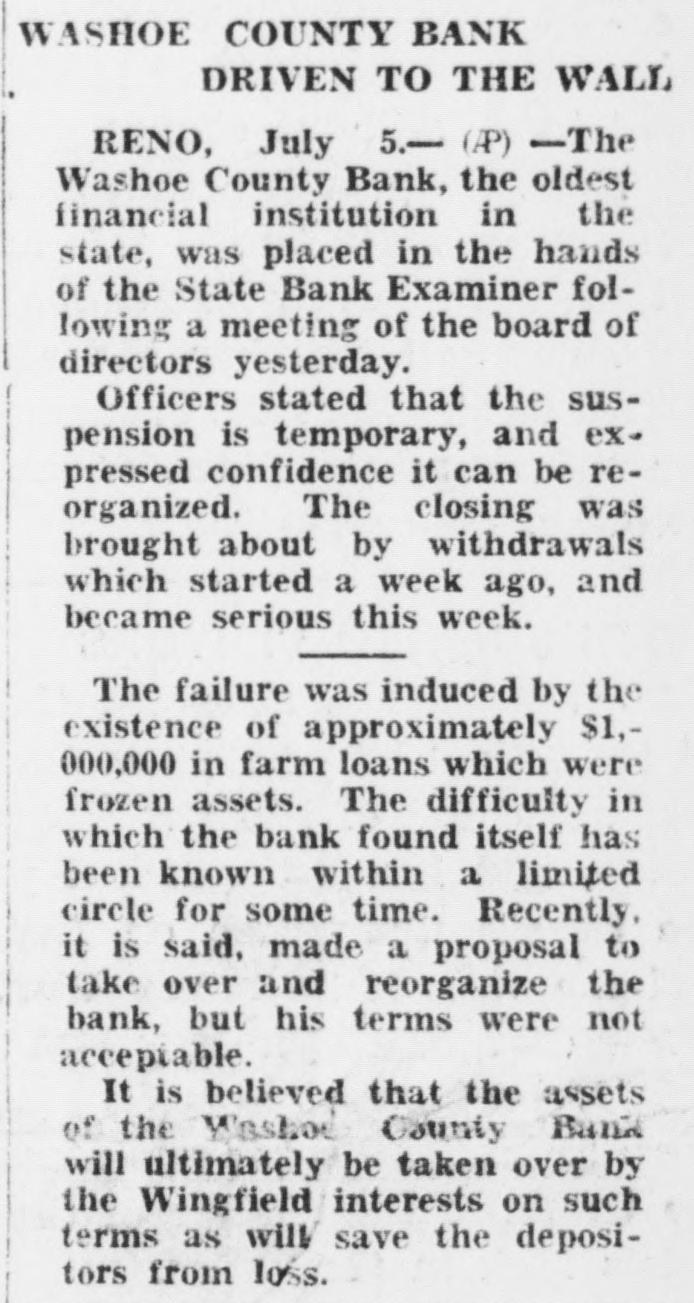
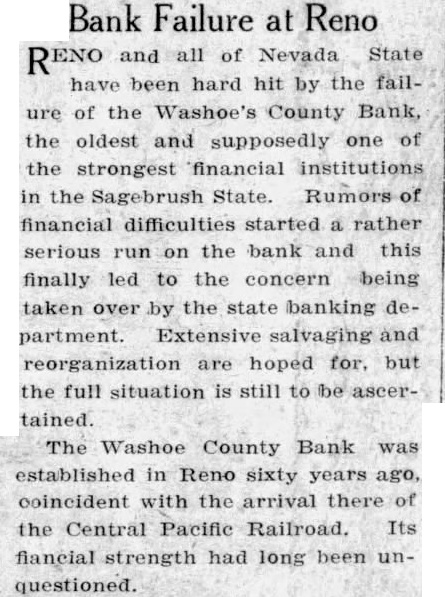
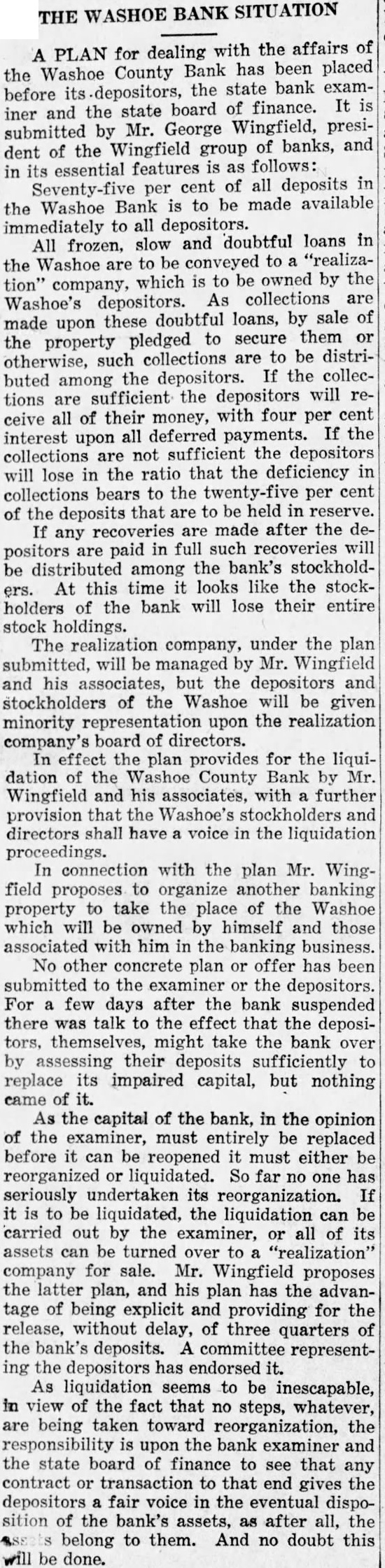
A meeting of the depositors of the Washoe County Bank for the purpose of effecting an to proand to tect their bank in dealwith the state the affairs of the with be held Monday at the Nevada state building in Powning park. call for such meeting was issued this morning and is published in the advertising section of the Gazette today. The call signed by H. Erickson, Penney Company, Ben Barbash. K. Foster. Lester Hilp. Maynard Stampfli. Donnels Steinmetz and Frank Steinheimer. Several of those signing the call are very large depositors. Following bank suspensions it customary for the depositors to organize and appoint general committee to their interests, and represent this step has been discussed since the bank temporarily suspended its business few days ago. Yesterday number of depositors suggested the advisability of the depositors, themselves, taking the bank over unless better and more advantageous plan is proposed. Those making the suggestion advance the proposal that each depositor $200 the bank agree have more in twelve fifteen per cent his total deposit and have this from amount issued to him in the form of bank stock. By this it represented. the impaired capital of the bank would be restored and could immediately be reopened with fully paid up cash capital as going institution. This. would preserve the "good will" or "going institution' of the bank, which very great, and within few years, said, the stock issued would have market value of much more than par. Several Nevada banks that have been closed heretofore have been reorganized in this manner and declared be plan that is followed throughout the country. At meeting of the state board of finance held Carson City this morning the state board of finance passed resolution expressing full opproval of the steps that have been taken by State Bank Examiner Seaborn and also approved plans which he has outlined for the bank's reorganization. Examiner Seaborn said today that soon he received instruction from the district attorney to that effect he would give all depositors access to their safety deposit boxes.