Click image to open full size in new tab
Article Text
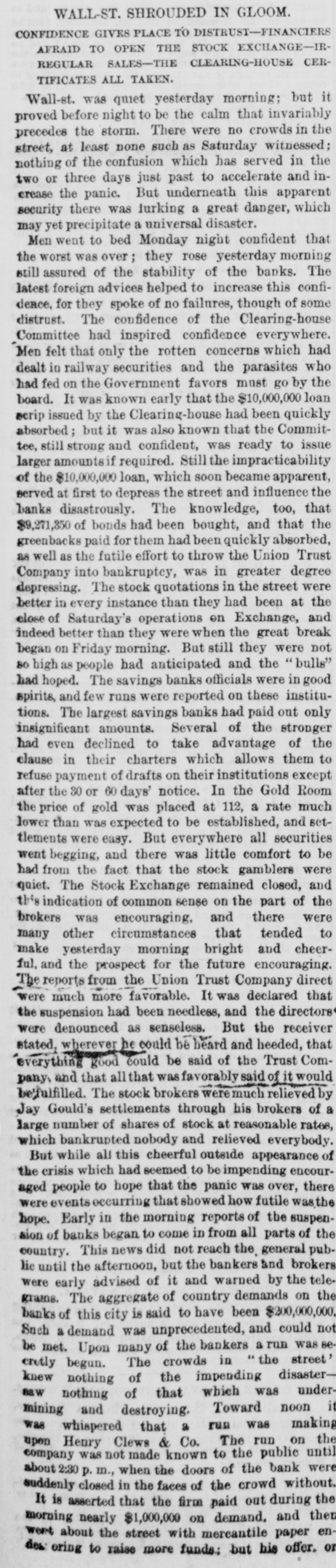
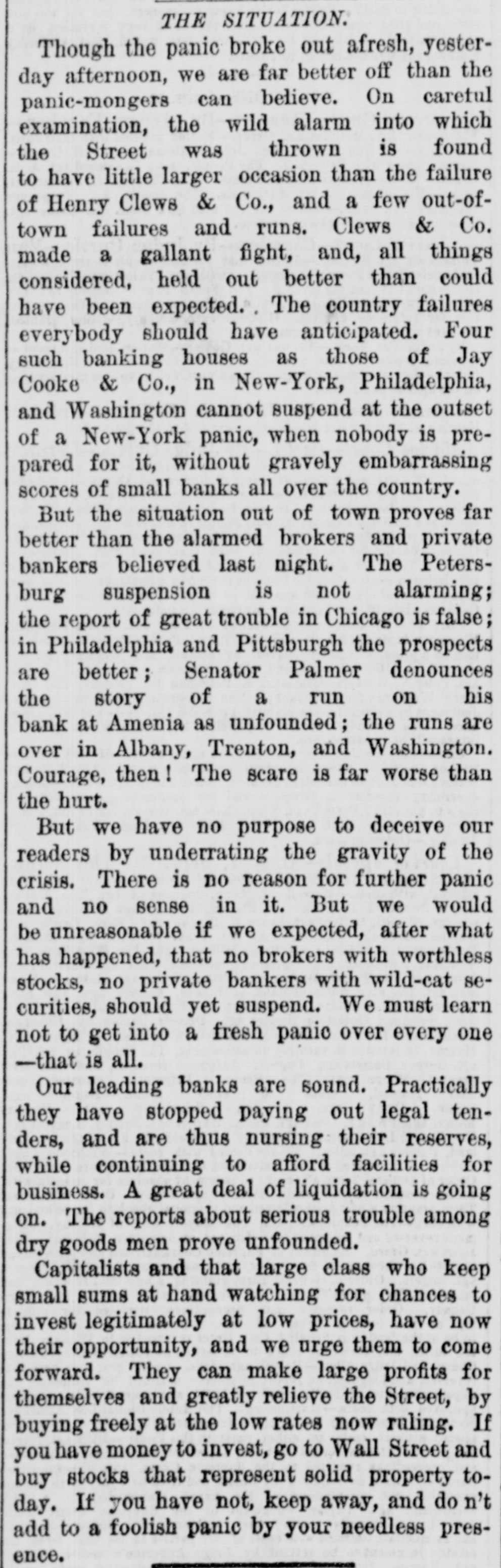
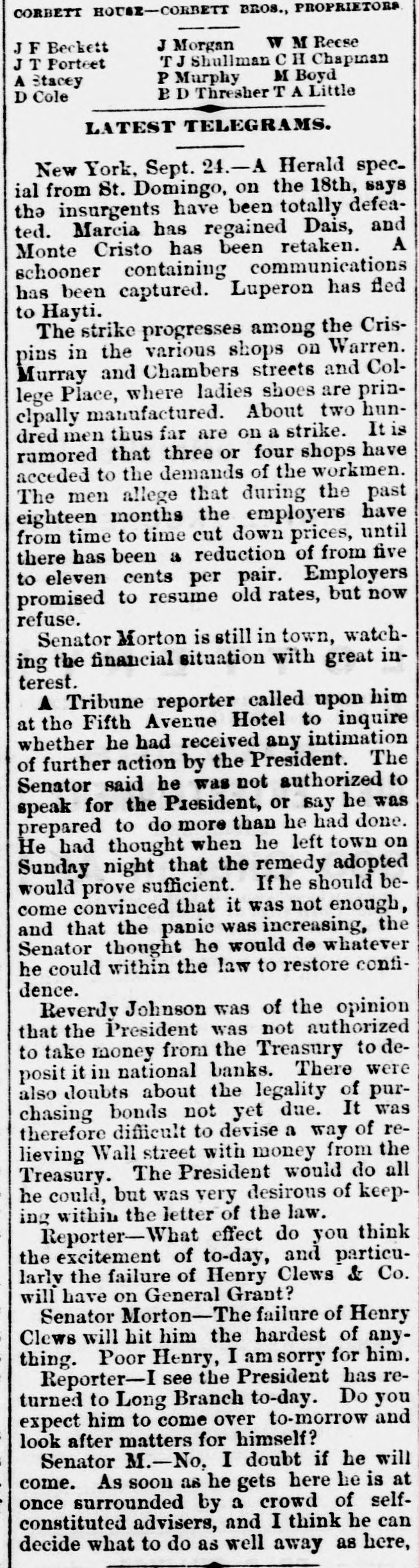
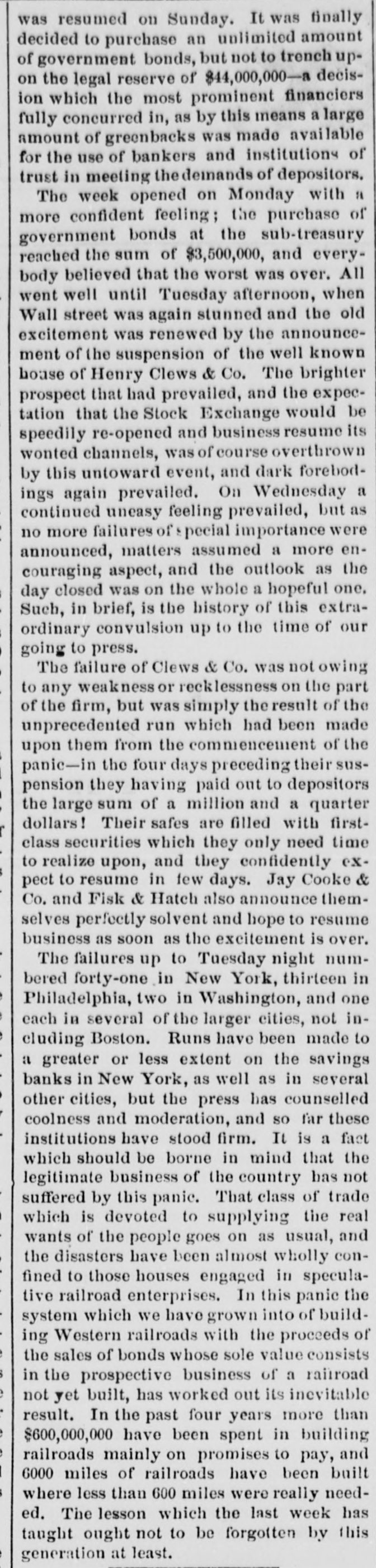
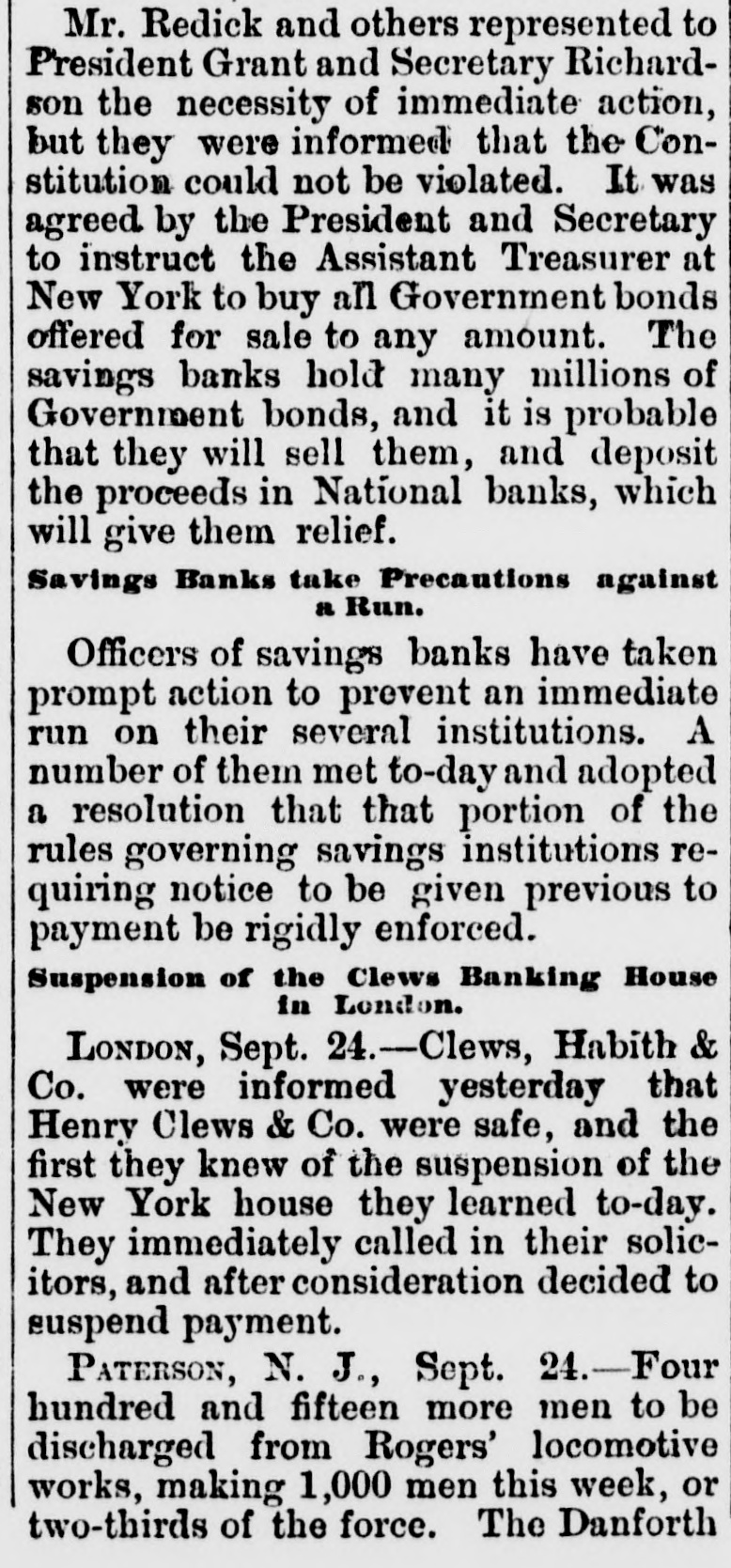
so sanguine as to believe that the Stock Exchange would open yesterday, and that the Governing Committee, at the meeting which it was to hold at 9:30 A. M., would see fit to decide upon such a plan. Yesterday morning the feeling was decidedly favorable to a speedy solution of the financial difficulty, although the Governing Committee of the New-York Stock Exchange did not deem matters sufficiently settled to admit of opening their doors to resume business. As soon as the Sub-Treasury opened, numbers of people holding bonds made their appearance, and sold them at par in gold according to the Government conditions. The greater number of those having large amounts of bonds, so far as could be learned, were disposing of them to replenish the treasuries of the savings banks which were being run on in different quarters of the City. These purchases of bonds were of course not so extensive as they would have been if many of the savings banks had not taken advantage of the thirty and sixty day law, thereby avoiding a sudden drain of their resources. A certain amount of money was required by these to pay the claims of depositors who were drawing $100, as privilege is accorded at present. The tape of the gold and stock telegraph constantly chronicled new purchases of bonds by the Government, and gave the various amounts. Men stood about in bankers' and brokers' offices, and as they read of the bonds purchased, and knew that the currency was, of course, let loose in a market where greenbacks were golden, they grew still more cheerful than on Monday, and set about prophesying how high stocks would go after the Exchange opened. The news from London, too, was reassuring. There had been no panic in American securities whatever. Everything was held firm, and prices were higher. Even poor old Erie took on a fit of buoyancy, and under the manipulations of Bischoffsheim and his clique danced about at 45 1/2 to 45 3/4, nearly one per cent. higher than on Monday. The Englishmen evidently took no stock in the American panic, and when it came back to Wall street that they did not, still more confidence was felt in a prosperous future and in an early resumption of business.
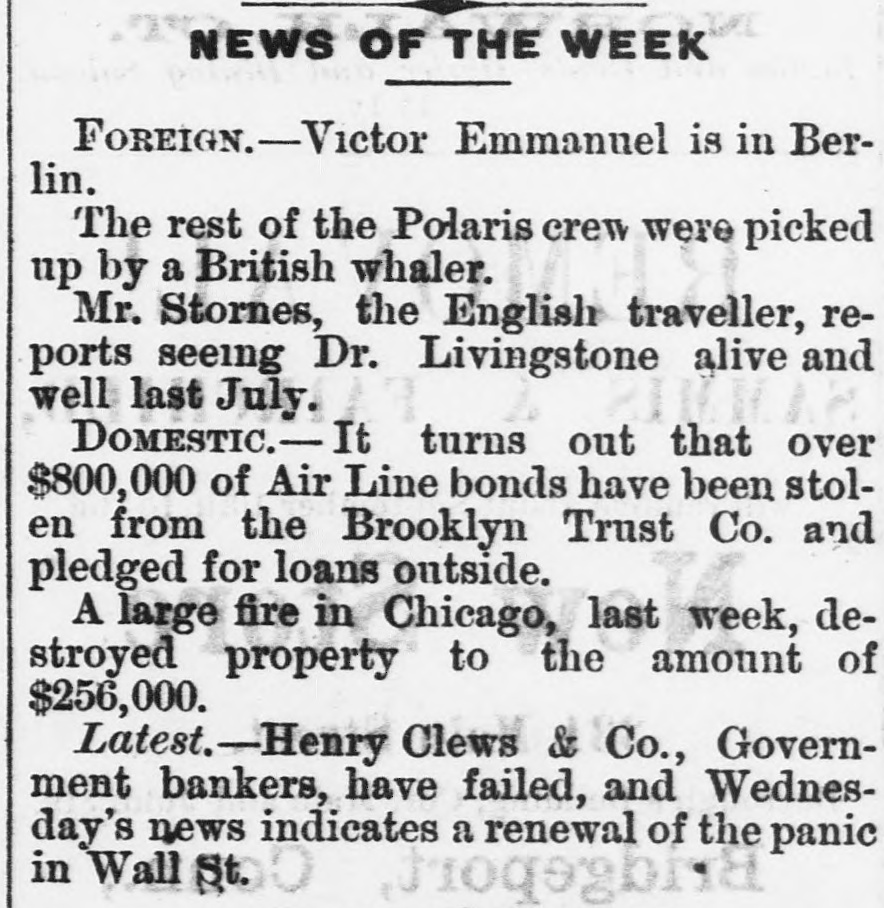
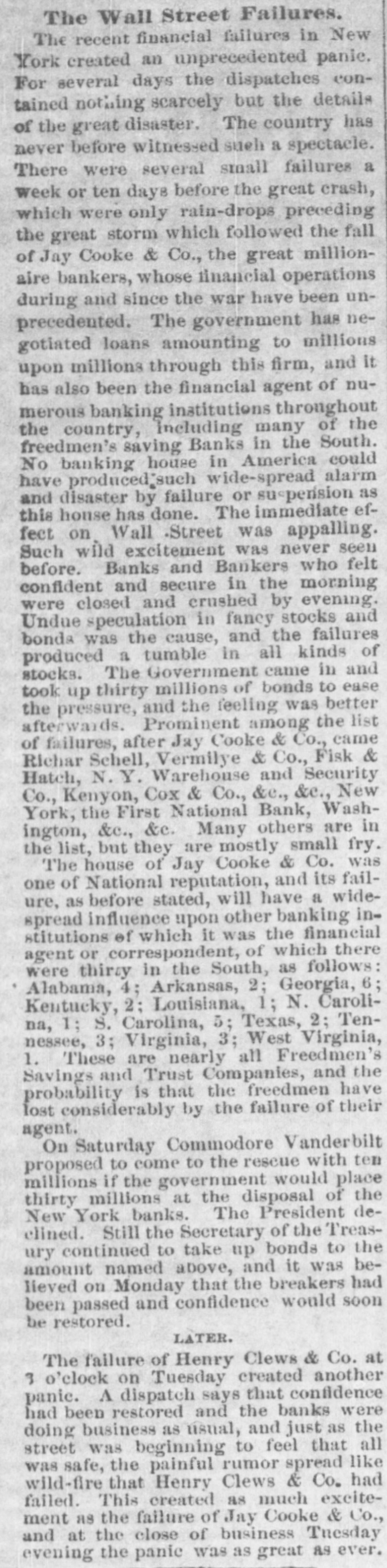
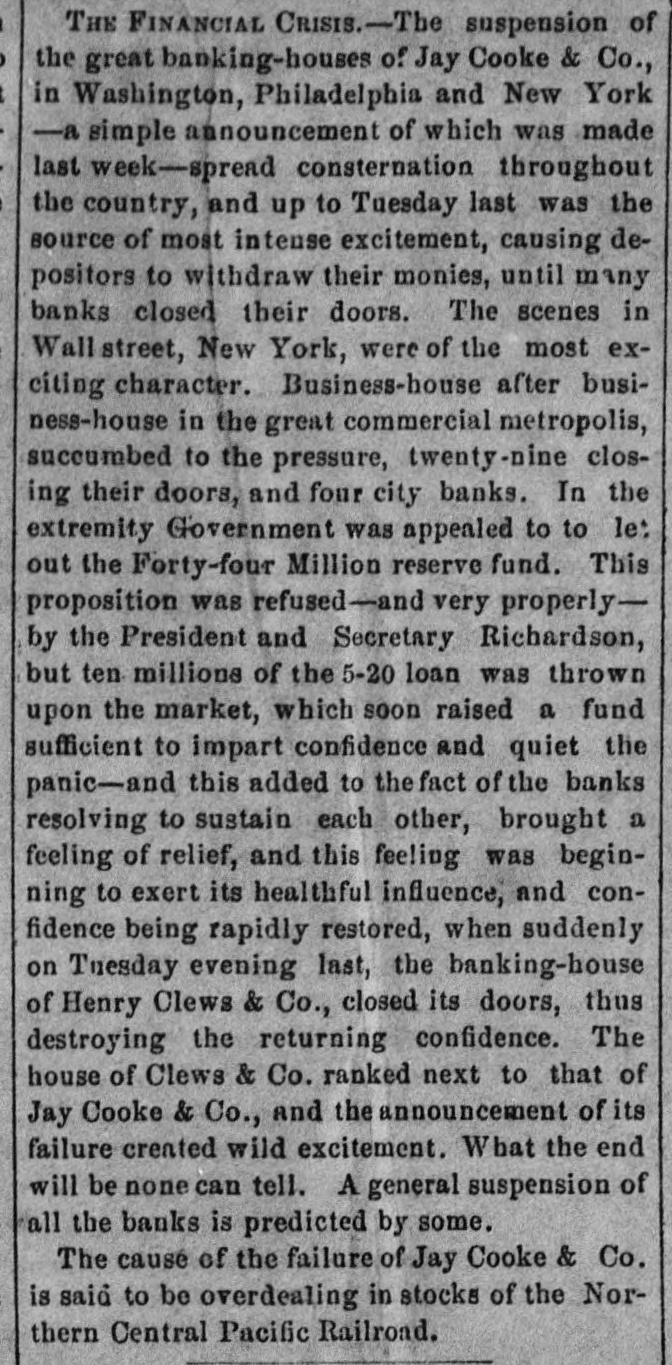
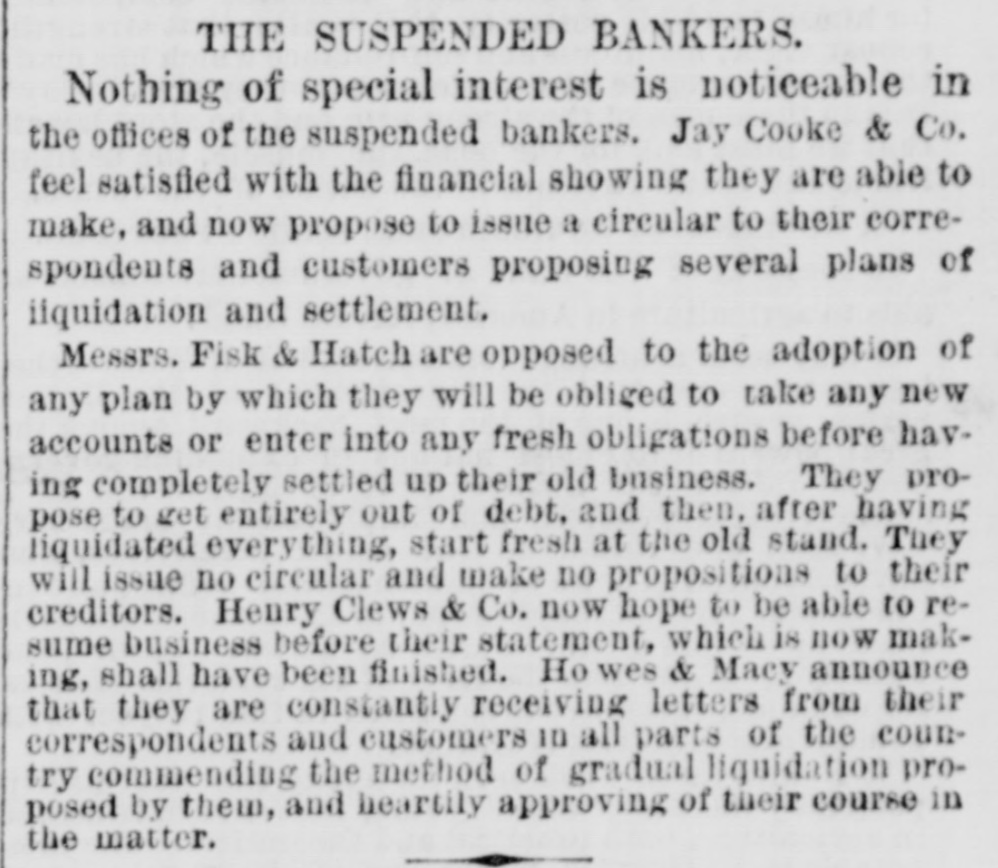
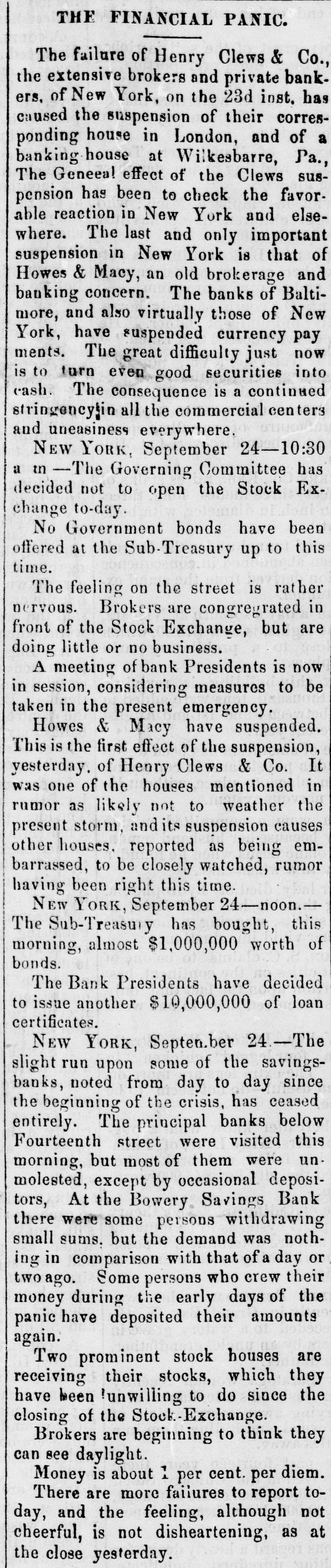
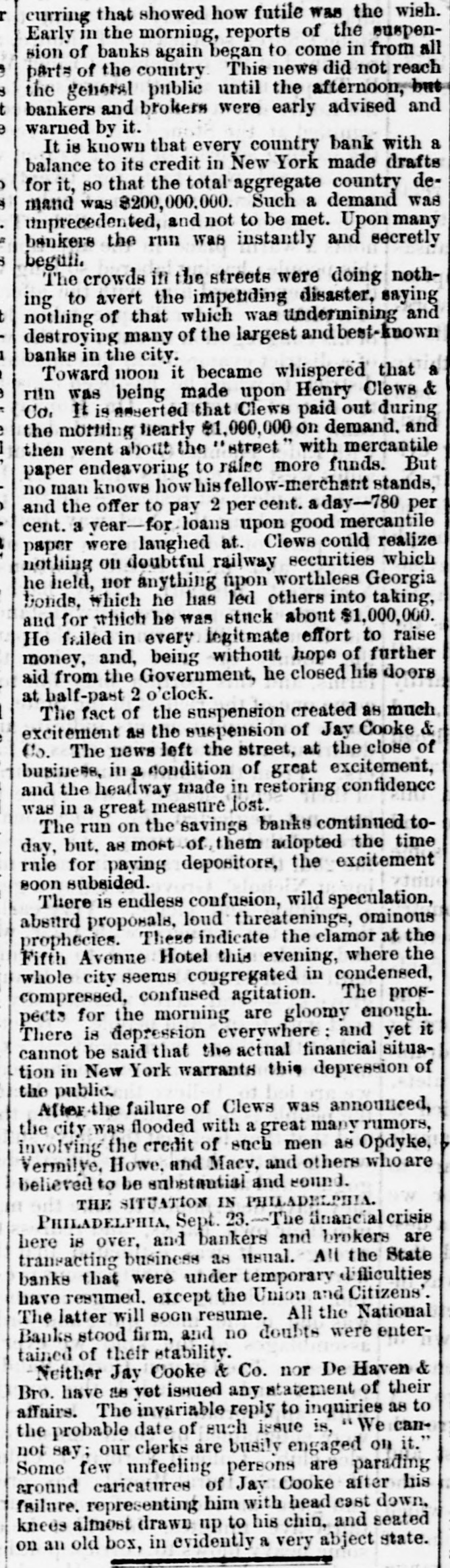
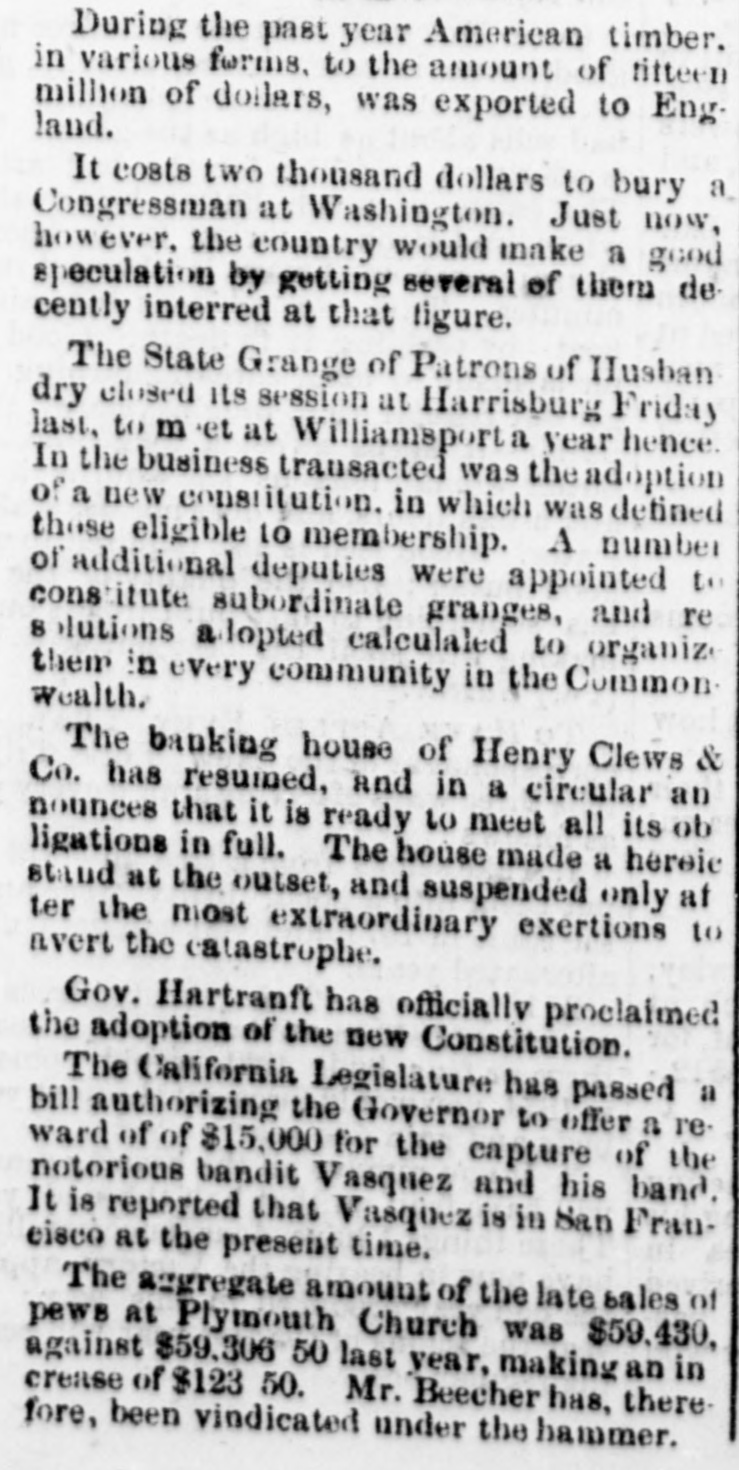
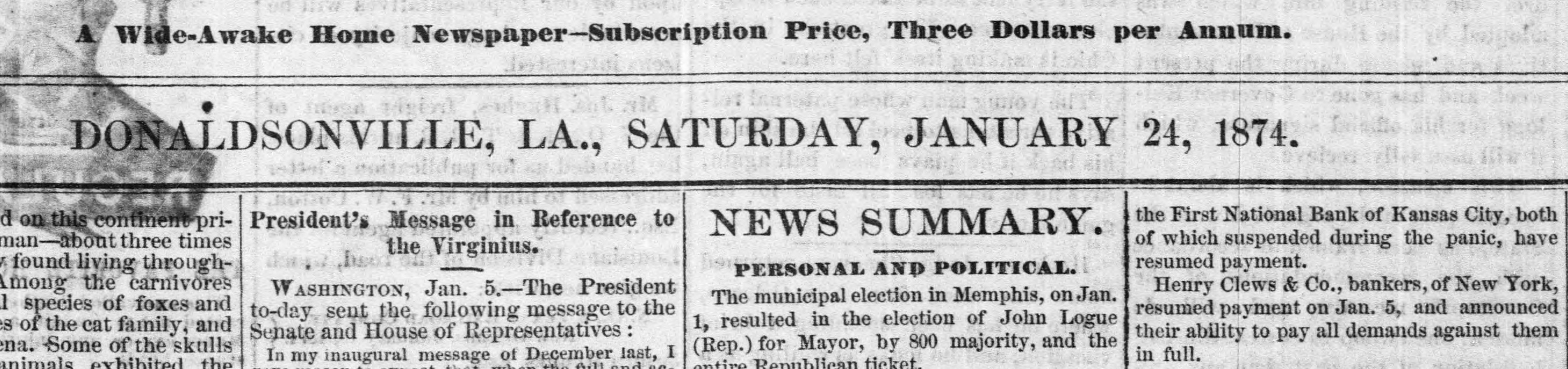
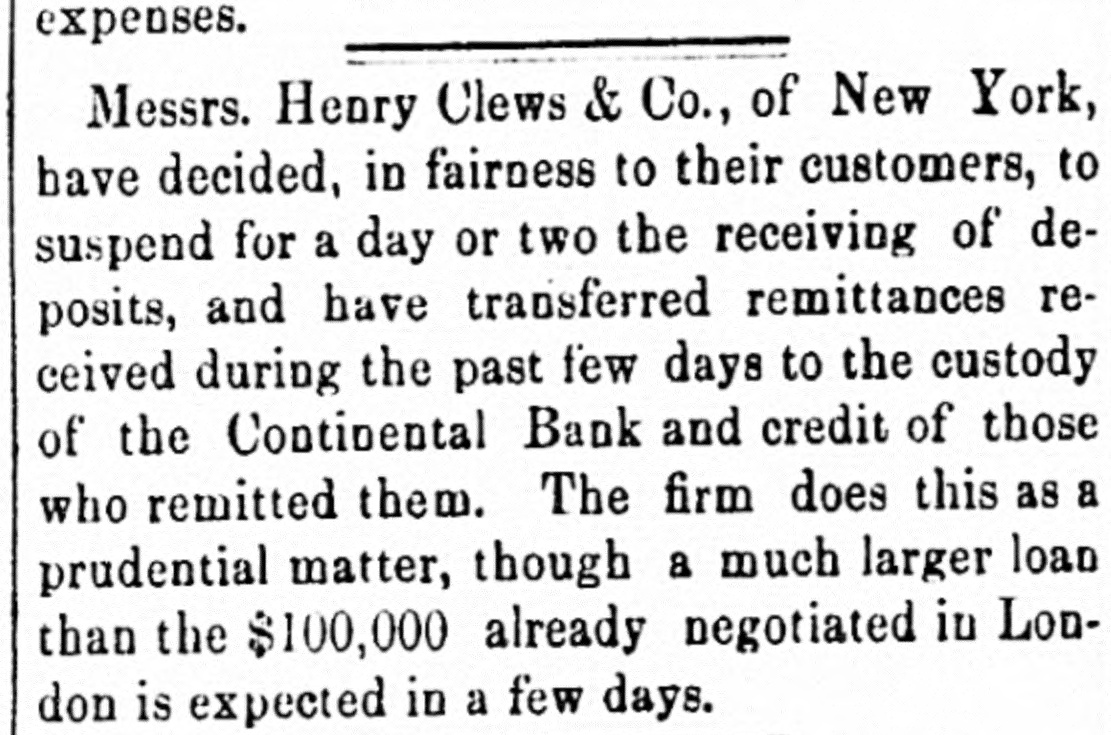
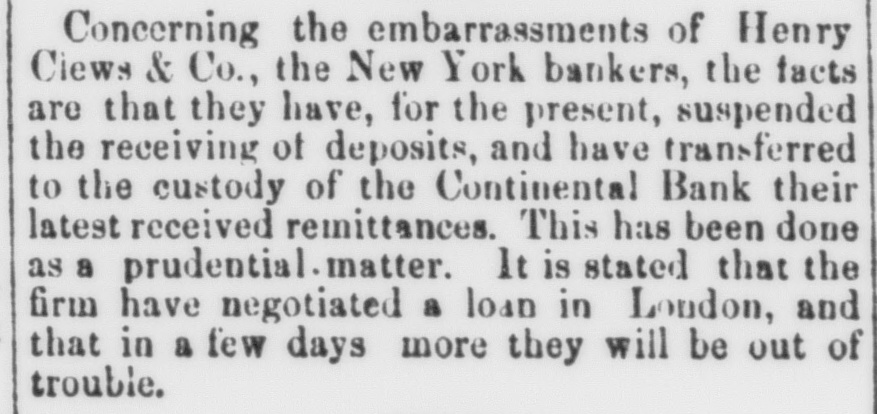
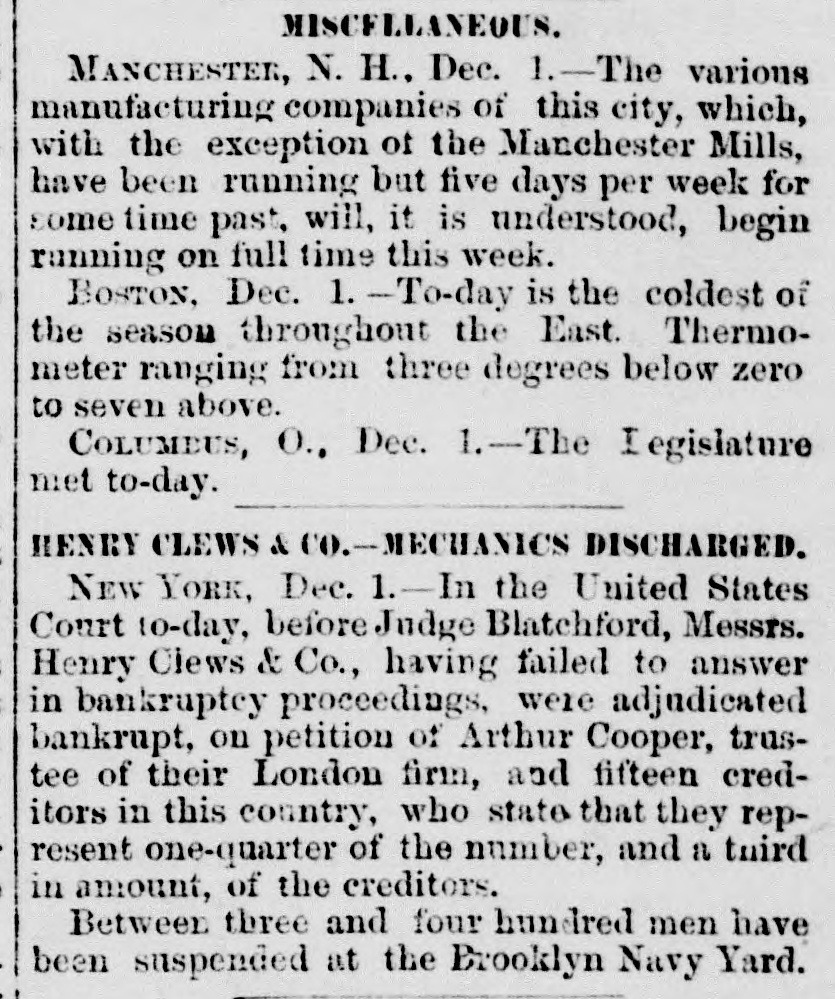
There were no dealings whatever in money in the way of loans so far as could be learned, every one, although feeling better, deeming it advisable to hold on to what he had. Perhaps this circumstance did more to bring about further trouble than anything else. The bankers and brokers who needed money could not obtain it by the deposit of any security, no matter how large in amount, or of what value. Mercantile paper was untouched and the guarantee of any number of names did nothing toward rendering it negotiable. People stood about feeling better on account of the action of the Government, but they would not trust anybody else until some one made the first move; no one did, and consequently all trading in loans was at a stand-still. In spite of the action of the Government and the amounts which were constantly being paid out of the Sub-Treasury, very little of it came into the street, where it was needed, and where in an hour, if it had been moved about in the way of loans upon securities, relief would have been afforded of a most substantial nature. The commercial interests began to feel the influence of stringent money and the Wall street stagnation, and contracts in almost every branch of the trade were extremely light. Foreign exchange declined to 107 3/8 for sixty days' bills, and 108 for sight. There was, however, very little business done at these rates. On Broad street, in front of Osgood & Co.'s, a street Stock Exchange was opened, where shares were bought and sold by outside parties at prices which they deemed to correspond with the general condition of affairs. A large crowd of brokers and investors gathered at this place, and with greenbacks in their pockets ready to pay down on the spot, kept up the spirit of speculation which ran rampant even in the midst of adversity. Canadian bankers had arrived in the City with large amounts of ready funds, and having command of these proceeded to buy stocks and securities of every kind for a mere song. In this way business progressed in the street until 2:30 in the afternoon, and prices gradually grew better, when rumors began to circulate regarding the well-known house of Henry Clews & Co. It was said that their checks would not pass through the Clearing-house, owing to the refusal of the Fourth National Bank to certify them. At first no one believed it, and the business of buying and selling proceeded as usual. At 2:45, however, it was positively announced that the house had suspended, and a scene of wild excitement prevailed in every part of the street. The house had stood up so nobly under the terrible pressure of the panic that every one thought that it would continue to do so, and were ready to give it their countenance and aid. There was universal sympathy, and hundreds of prominent men crowded in to express their regret and sorrow at the untoward event. Mr. Clews stood up to the rack, as he has all through the panic, with firmness and manhood, and while expressing his sorrow that he could not hold out under the strain of the day, affirmed his intention of resuming payment and business as soon as confidence is restored and securities will bring their value.
In all the history of the suspension of Wall-street firms, it may well be doubted whether any one has been received by the street with such heartfelt expressions of regret as that of Messrs. Henry Clews & Co. Every one liked the man, believed in him as of liberal views, kindly impulses, and as a financier of extraordinary ability. When it was found that he had suspended, every one seemed to think of the man, and those who had deposits still untouched seemed to feel worse that the firm had been forced to succumb to the panic than because their money was locked up.
The causes for the failure are simply as follows: Ever since the beginning of the panic there has been a run upon nearly every bank or banker down town to a greater or less extent. The house of Henry Clews & Co. came in for a large share of it, and during the last four days over a million and a quarter of dollars in cash have been paid out to satisfy the demands made