Washington Commercial & Savings Bank (Venice, CA)

Episode Information

Episode UID
90120671588
Episode Type
Run โ†’ Suspension โ†’ Closure
Bank Type
state
Bank ID
9012067 routing
Routing Number
90-1206
Start Date
April 27, 1932
Location
Venice, California (33.991, -118.460)

Metadata

Model
gpt-5-mini (chosen from majority vote of a three-model LLM ensemble)
Short Digest
fe6a3ffe3c316db9

Response Measures

None

Description

Closure followed publicity about receivership deposits and withdrawals; state banking department took the bank over.

Events (2)

1. April 27, 1932 Run
Cause
Bank Specific Adverse Info
Cause Details
Heavy withdrawals triggered by publicity about the bank's connection to the American Mortgage receivership and allegations involving Judge Fleming.
Newspaper Excerpt
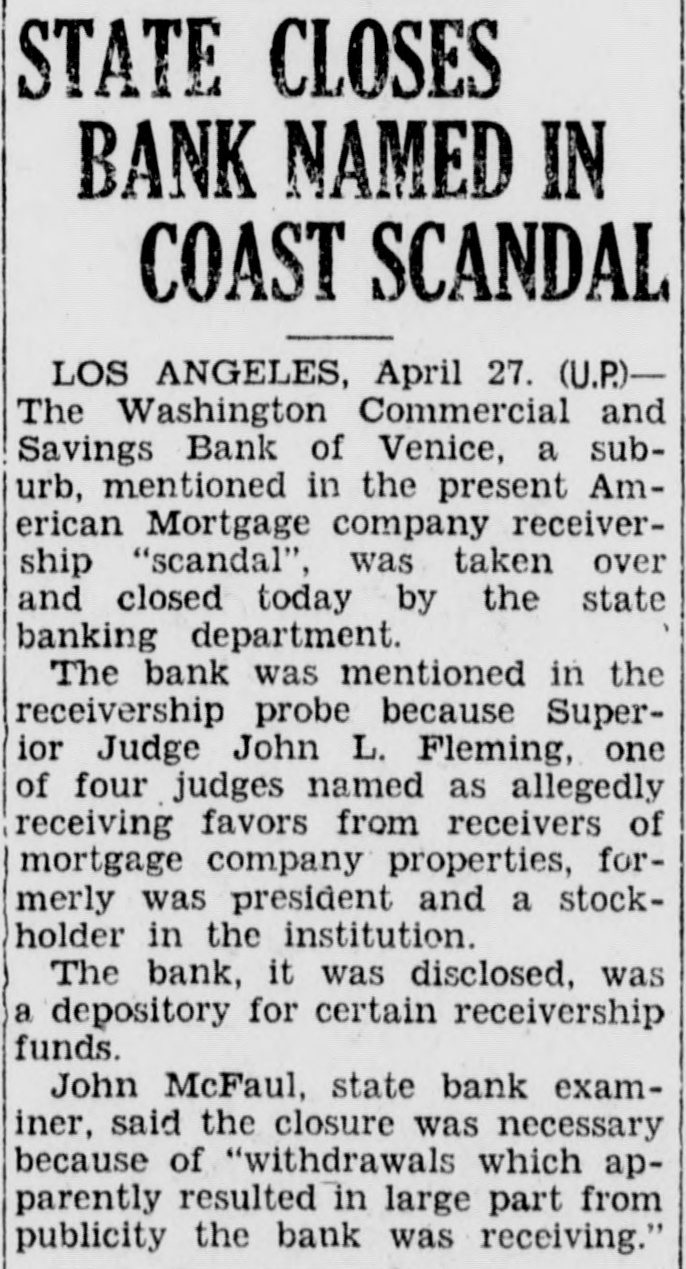
withdrawals which apparently resulted in large part from publicity the bank was receiving.
Source
newspapers
2. April 27, 1932 Suspension
Cause
Government Action
Cause Details
State banking department closed and took over the bank following heavy withdrawals and scandal-related publicity.
Newspaper Excerpt
The Washington Commercial and Savings Bank of Venice ... was taken over and closed today by the state banking department.
Source
newspapers

Newspaper Articles (2)

Article from Los Angeles Evening Express, September 14, 1931

Click image to open full size in new tab

Article Text

GOT RECEIVER COIN, HE ADMITS But Jurist Declare Funds Were Not Solicited Presiding Judge John L. Fleming of the Los Angeles Superior Court today admitted that receivers deposited funds of firms in receiver ship in the Washington Commercial and Savings Bank of Venice. Until short time ago Fleming was president of the bank. He reported to have resigned after members of secret bar committee had conferred with him on the matter. Last week Judge Fleming denied that receivership funds had been deposited in the bank. FUNDS NOT SOLICITED recently learned that several receivers had deposited money in the Washington Commercial and Savings Bank," Judge Fleming declared. did not ask them to make the deposits. When learned they had been made requested that they be withdrawn. Judge Fleming stated that he did know until recently that Charles Allison, receiver for 20 cases growing of the collapse of the American Mortgage Company, had deposited the Venice bank. Receiver Allison declared that he told Judge Fleming about the deposit some time after was made, and that the jurist thanked him. Three weeks ago, according to Receiver Allison, Judge Fleming asked him to withdraw the account. DENIES APPOINTMENT Judge Fleming denied that he appointed Receiver Allison the first the American Mortgage Company cases. Superior Judge Joseph Sproul, who made the first declared the he called the presiding judge's department in the absence of Judge Fleming. He stated that he understood that the matter had been settled beforehand Judge Fleming and so signed the order appointing Receiver Allison. According to plans, the older members of the bench seek to point permanent presiding judge. At present the presiding judge changed each year, according to his seniority. A committee of the Bar Association was reported investigating other as-l serted deposits of receivership funds in the Washington Commercial and Savings Bank, today. It was in this bank that Charles( H. Crawford. slain politician, deposited $10,000, for which deposit Judge Fleming wrote Crawford a letter, thanking him.

Article from Imperial Valley Press, April 27, 1932

Click image to open full size in new tab

Article Text

STATE CLOSES BANK NAMED IN COAST SCANDAL LOS ANGELES, April 27. (U.P.)The Washington Commercial and Savings Bank of Venice, a suburb, mentioned in the present American Mortgage company receivership "scandal", was taken over and closed today by the state banking department. The bank was mentioned in the receivership probe because Superior Judge John L. Fleming, one of four judges named as allegedly receiving favors from receivers of mortgage company properties, formerly was president and a stockholder in the institution. The bank, it was disclosed, was a depository for certain receivership funds. John McFaul, state bank examiner, said the closure was necessary because of "withdrawals which apparently resulted in large part from publicity the bank was receiving."