839. Globe Savings Bank (Los Angeles, CA)

Bank Information

Episode Type
Run Only
Bank Type
savings bank
Start Date
November 14, 1913
Location
Los Angeles, California (34.052, -118.244)

Metadata

Model
gpt-5-mini
Short Digest
03c02bff

Response Measures

Capital injected, Books examined

Description

Newspaper accounts (Nov 14–15, 1913) report that a slump in Los Angeles Investment Company stock and revelations of alleged fraud started a run on the Globe Savings bank, an affiliated institution. The articles state the bank was subsequently sold to another institution, but do not explicitly describe a suspension or formal receivership in these excerpts, so I classify this as a run-only episode (run followed by sale).

Events (1)

1. November 14, 1913 Run
Cause
Bank Specific Adverse Info
Cause Details
Reports and alleged fraudulent misrepresentations by the affiliated Los Angeles Investment Company (stock slump and indictments) triggered withdrawals.
Measures
Bank was sold to another institution (reported after the run).
Newspaper Excerpt
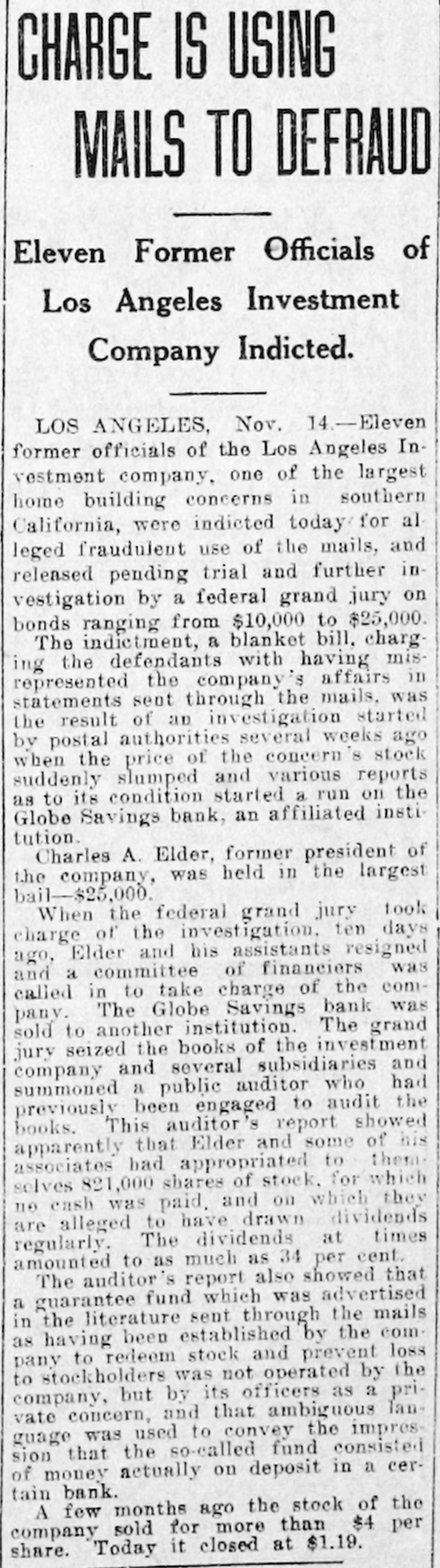
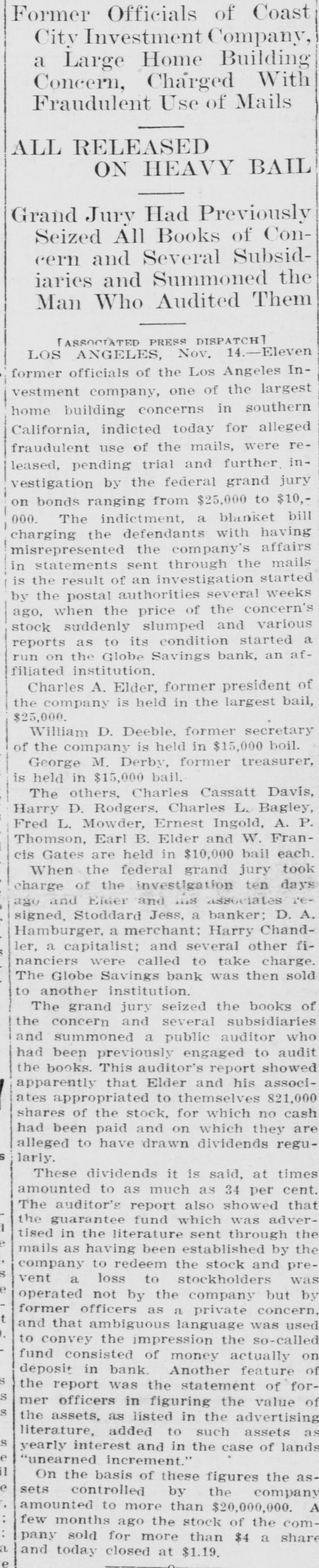
the price of the concern's stock suddenly slumped and various reports as to its condition started a run on the Globe Savings bank, an affiliated institution.
Source
newspapers

Newspaper Articles (3)

Article from The Salt Lake Tribune, November 15, 1913

Click image to open full size in new tab

Article Text

CHARGE IS USING MAILS TO DEFRAUD Eleven Former Officials of Los Angeles Investment Company Indicted. LOS ANGELES, Nov. 14. -Eleven former officials of the Los Angeles Investment company, one of the largest home building concerns in southern California, were indicted today for al leged fraudulent use of the mails, and released pending trial and further investigation by a federal grand jury on bonds ranging from $10,000 to $25,000. The indictment, a blanket bill. charging the defendants with having misrepresented the company's affairs in statements sent through the mails. was the result of an investigation started authorities ago of the by suddenly when postal the slumped price and several concern's various weeks reports stock as to its condition started a run on the Globe Savings bank, an affiliated institution. Charles A. Elder, former president of the company, was held in the largest bail-$25,000. When the federal grand jury took charge of the investigation. ten days ago, Elder and his assistants resigned and a committee of financiers was take of the comThe Globe another sold called pany. to in to institution. charge Savings The bank grand was jury seized the books of the investment company and several subsidiaries and summoned a public auditor who had previously been engaged to audit the books. This auditor's report showed apparently that Elder and some of his associates had appropriated to them. selves 821,000 shares of stock. for which no cash was paid. and on which they are alleged to have drawn dividends regularly. The dividends at times amounted to as much as 34 per cent. The auditor's report also showed that a guarantee fund which was advertised in the literature sent through the mails as having been established by the com. pany to redeem stock and prevent loss to stockholders was not operated by the company, but by its officers as a private concern, and that ambiguous Tanwas used to convey the so-called sion guage that fund the consisted impresof money actually on deposit in a certain bank. A few months ago the stock of the company sold for more than $4 per share. Today it closed at $1.19.
Article from Arizona Republican, November 15, 1913

Click image to open full size in new tab

Article Text

Former Officials of Coast City Investment Company, a Large Home Building Concern, Charged With Fraudulent Use of Mails ALL RELEASED ON HEAVY BAIL Grand Jury Had Previously Seized All Books of Concern and Several Subsidiaries and Summoned the Man Who Audited Them ASSOCIATED PRESS DISPATCH LOS ANGELES, Nov. 14.-Eleven former officials of the Los Angeles Investment company, one of the largest home building concerns in southern California, indicted today for alleged fraudulent use of the mails, were released, pending trial and further investigation by the federal grand jury on bonds ranging from $25,000 to $10,000. The indictment, a blanket bill charging the defendants with having misrepresented the company's affairs in statements sent through the mails is the result of an investigation started by the postal authorities several weeks ago, when the price of the concern's stock suddenly slumped and various reports as to its condition started a run on the Globe Savings bank, an affiliated institution. Charles A. Elder, former president of the company is held in the largest bail, $25,000. William D. Deeble, former secretary of the company is held in $15,000 boil. George M. Derby, former treasurer, is held in $15,000 bail. The others. Charles Cassatt Davis, Harry D. Rodgers, Charles L. Bagley, Fred L. Mowder, Ernest Ingold, A. P. Thomson, Earl B. Elder and W. Francis Gates are held in $10,000 bail each. When the federal grand jury took charge of the investigation ten days ago and Elder and His associates resigned, Stoddard Jess, a banker; D. A. Hamburger, a merchant: Harry Chandler, a capitalist; and several other financiers were called to take charge. The Globe Savings bank was then sold to another institution. The grand jury seized the books of the concern and several subsidiaries and summoned a public auditor who had been previously engaged to audit the books. This auditor's report showed apparently that Elder and his associates appropriated to themselves 821,000 shares of the stock, for which no cash had been paid and on which they are alleged to have drawn dividends regularly. These dividends it is said, at times amounted to as much as 34 per cent. The auditor's report also showed that the guarantee fund which was advertised in the literature sent through the mails as having been established by the company to redeem the stock and preS vent a loss to stockholders was e operated not by the company but by former officers as a private concern t and that ambiguous language was used to convey the impression the so-called fund consisted of money actually on deposit in bank. Another feature of S the report was the statement of forS mer officers in figuring the value of S the assets, as listed in the advertising literature, added to such assets as S yearly interest and in the case of lands e "unearned increment." il On the basis of these figures the as e sets controlled by the company . A amounted to more than $20,000,000. : few months ago the stock of the com : pany sold for more than $4 a share a and today closed at $1.19. e


Article from Arizona Republican, November 15, 1913

Click image to open full size in new tab

Article Text

e e City Investment Company, a Large Home Building Concern, Charged With Fraudulent Use of Mails ALL RELEASED ON HEAVY BAIL Grand Jury Had Previously Seized All Books of Concern and Several Subsidiaries and Summoned the Man Who Audited Them [ASSOCIATED PRESS DISPATCH] LOS ANGELES, Nov. 14.-Eleven former officials of the Los Angeles Investment company, one of the largest home building concerns in southern California, indicted today for alleged fraudulent use of the mails, were released, pending trial and further investigation by the federal grand jury on bonds ranging from $25,000 to $10,000 The indictment, a blanket bill charging the defendants with having misrepresented the company's affairs in statements sent through the mails is the result of an investigation started by the postal authorities several weeks ago, when the price of the concern's stock suddenly slumped and various reports as to its condition started a run on the Globe Savings bank, an affiliated institution. Charles A. Elder, former president of the company is held in the largest bail, $25,000. William D. Deeble. former secretary of the company is held in $15,000 boil. George M. Derby, former treasurer, is held in $15,000 bail. The others, Charles Cassatt Davis, Harry D. Rodgers, Charles L. Bagley, Fred L. Mowder, Ernest Ingold, A. P. Thomson, Earl B. Elder and W. Francis Gates are held in $10,000 bail each. When the federal grand jury took charge of the investigation ten days ago and Elder and his associates resigned. Stoddard Jess, a banker: D. A. Hamburger, a merchant: Harry Chandler. a capitalist; and several other financiers were called to take charge. The Globe Savings bank was then sold to another institution. The grand jury seized the books of the concern and several subsidiaries and summoned a public auditor who had been previously engaged to audit the books. This auditor's report showed apparently that Elder and his associates appropriated to themselves 821.000 shares of the stock, for which no cash had been paid and on which they are alleged to have drawn dividends regularly. These dividends it is said, at times amounted to as much as 34 per cent. The auditor's report also showed that the guarantee fund which was advertised in the literature sent through the mails as having been established by the company to redeem the stock and prevent a loss to stockholders was operated not by the company but by former officers as a private concern, and that ambiguous language was used to convey the impression the so-called fund consisted of money actually on deposit in bank. Another feature of the report was the statement of for( mer officers in figuring the value of the assets, as listed in the advertising literature, added to such assets as yearly interest and in the case of lands "unearned increment." On the basis of these figures the asI sets controlled by the company : amounted to more than $20,000,000. A I few months ago the stock of the company sold for more than $4 a share and today closed at $1.19. --