Article Text
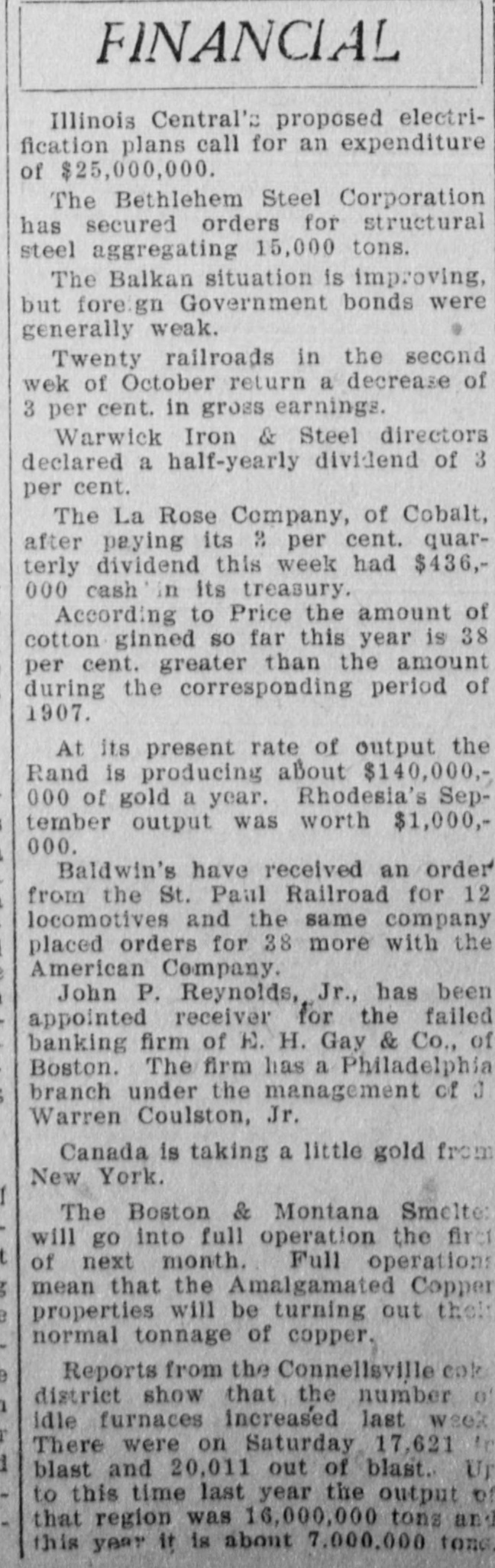
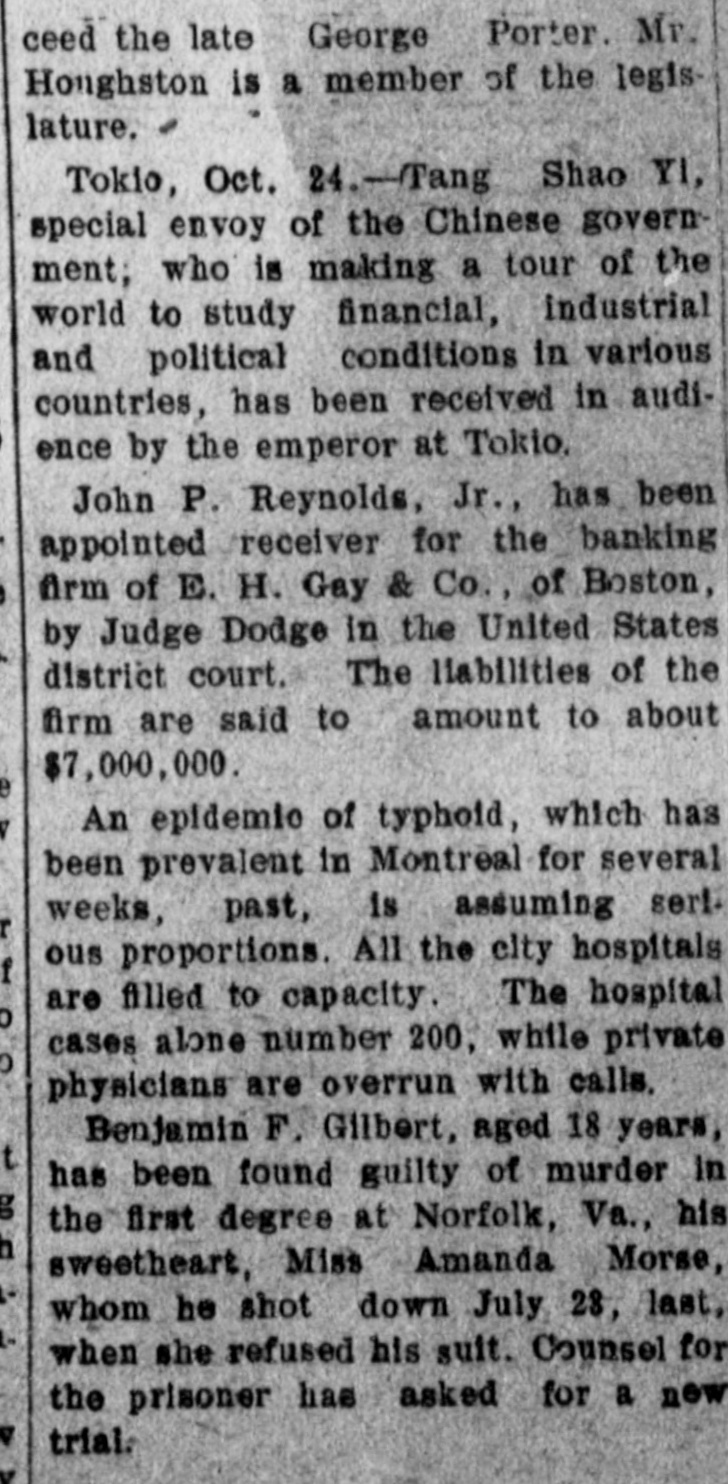
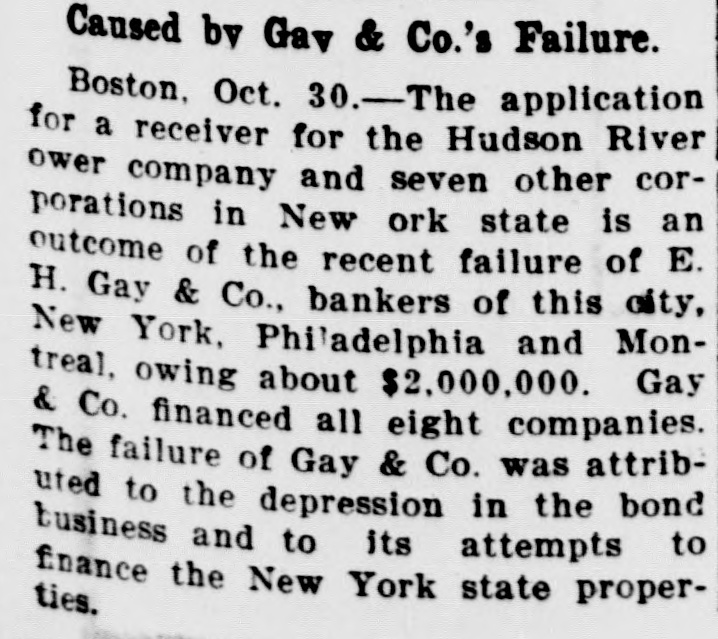
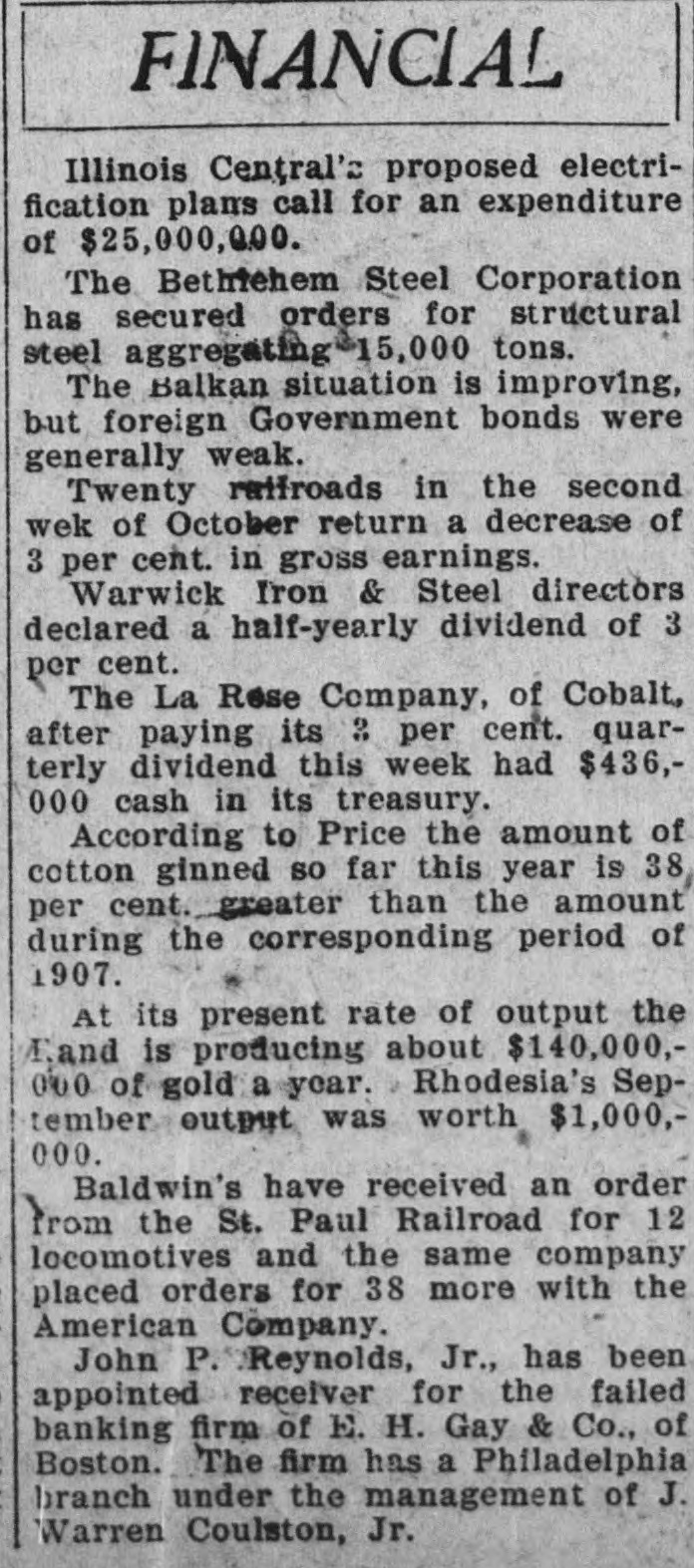
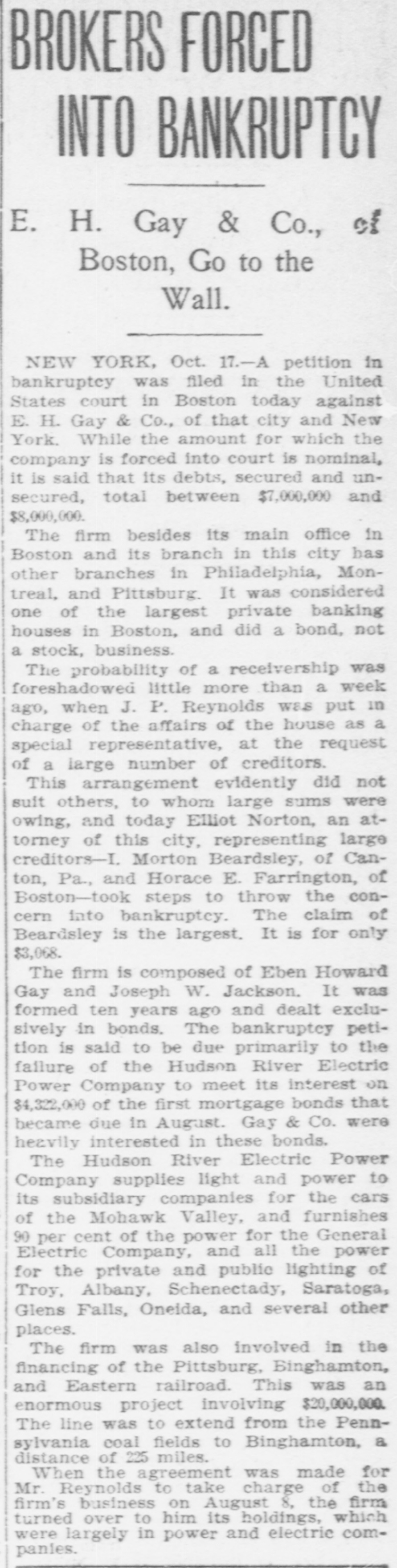
BROKERS FORCED INTO BANKRUPTCY E. H. Gay & Co., of Boston, Go to the Wall. NEW YORK, Oct. 17.-A petition in bankruptcy was filed in the United States court in Boston today against E. H. Gay & Co., of that city and New York. While the amount for which the company is forced into court is nominal, it is said that its debts, secured and unsecured, total between $7,000,000 and $8,000,000. The firm besides its main office in Boston and its branch in this city has other branches in Philadelphia, Montreal, and Pittsburg. It was considered one of the largest private banking houses in Boston, and did a bond, not a stock, business. The probability of a receivership was foreshadowed little more than a week ago, when J. P. Reynolds was put in charge of the affairs of the house as a special representative, at the request of a large number of creditors. This arrangement evidently did not suit others, to whom large sums were owing, and today Elliot Norton, an attorney of this city, representing large creditors-I. Morton Beardsley, of Canton, Pa., and Horace E. Farrington, of Boston-took steps to throw the concern into bankruptcy. The claim of Beardsley is the largest. It is for only $3,068. The firm is composed of Eben Howard Gay and Joseph W. Jackson. It was formed ten years ago and dealt exclusively in bonds. The bankruptcy petition is said to be due primarily to the failure of the Hudson River Electric Power Company to meet its interest on $4,322,000 of the first mortgage bonds that became due in August. Gay & Co. were heavily interested in these bonds. The Hudson River Electric Power Company supplies light and power to its subsidiary companies for the cars of the Mohawk Valley, and furnishes 90 per cent of the power for the General Electric Company, and all the power for the private and public lighting of Troy, Albany, Schenectady, Saratoga, Glens Falls, Oneida, and several other places. The firm was also involved in the financing of the Pittsburg, Binghamton, and Eastern railroad. This was an enormous project involving $20,000,000. The line was to extend from the Pennsylvania coal fields to Binghamton, a distance of 225 miles. When the agreement was made for Mr. Reynolds to take charge of the firm's business on August 8, the firm turned over to him its holdings, which were largely in power and electric companies.