6716. Citizens Bank of Louisiana (New Orleans, LA)

Bank Information

Episode Type
Run Only
Bank Type
state
Start Date
January 1, 1840*
Location
New Orleans, Louisiana (29.955, -90.075)

Metadata

Model
gpt-5-mini
Short Digest
e4c924b6f527268e

Response Measures

None

Description

Articles describe a run during the Panic of 1857 which the bank 'withstood' and remained solvent. They also mention an earlier suspension during the revulsions of 1840 for several years; that earlier suspension was not a consequence of the 1857 run. Classification chosen is run_only because the 1857 run did not lead to a suspension or closure in the materials provided. OCR-corrections: none significant aside from expected OCR artifacts in the transcribed clippings.

Events (2)

1. January 1, 1840* Suspension
Cause
Macro News
Cause Details
Forced to suspend during the financial revulsions of 1840 (widespread downturn).
Newspaper Excerpt
it was forced, during the revulsions of 1840 to suspend its operations for several years
Source
newspapers
2. January 1, 1857* Run
Cause
Macro News
Cause Details
Run occurred during the Panic of 1857 (broader, macroeconomic panic) rather than due to bank-specific scandal or misinformation.
Measures
Withstood heavy withdrawals for two days; remained open and solvent.
Newspaper Excerpt
During the panic of 1857 the bank withstood a two days' run upon it and came out with flying colors
Source
newspapers

Newspaper Articles (4)

Article from The Evansville Daily Journal, February 23, 1857

Click image to open full size in new tab

Article Text

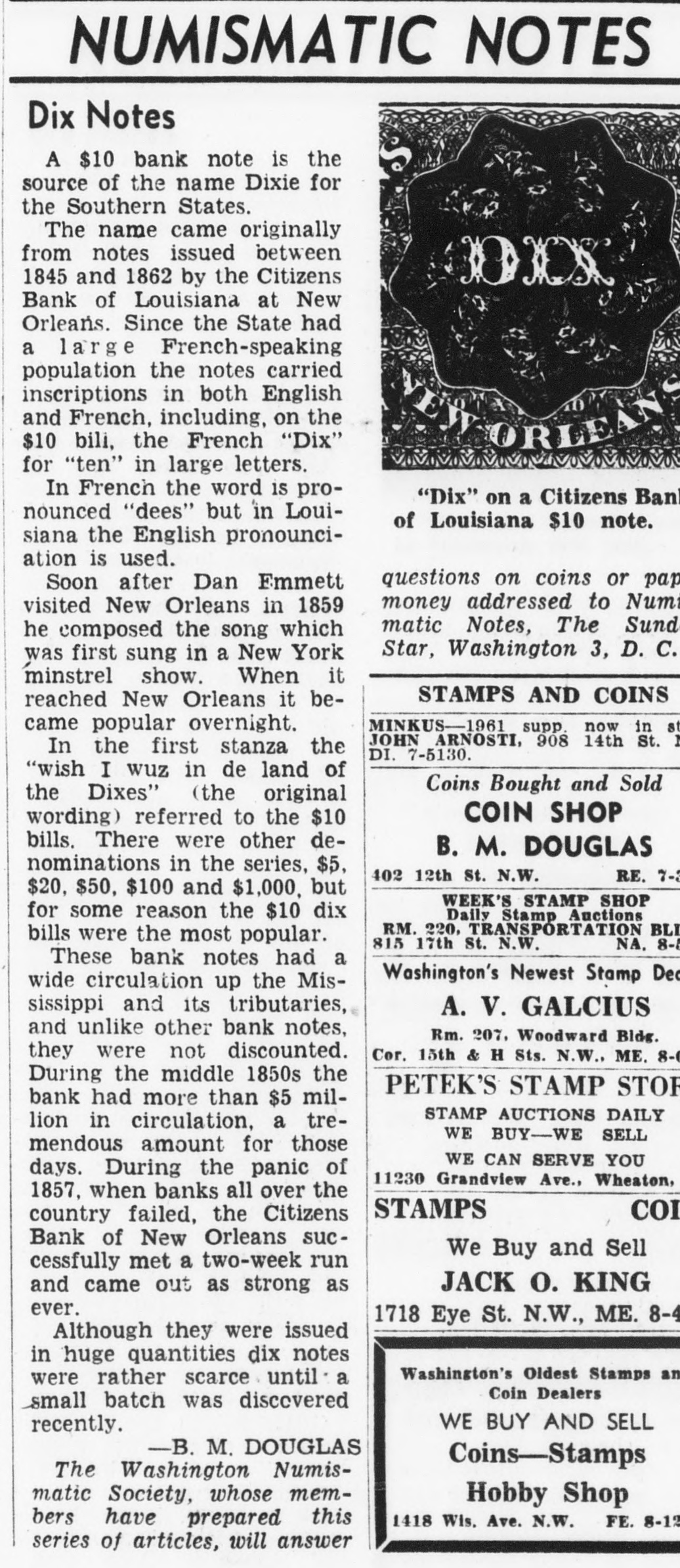
REAL ESTATE BANK.-A bill was intrcduced into the Senate on Wednesday to create a new State Bank upon the basis of real estate, somewhat after the plan of the Citizens, Bank of Louisiana, which has become one of the most successful and powerful institutions in that State. Though it was forced, during the revulsions of 1840 to suspend its operations for several years, it has since recuperated, and is now the most active and useful institution in the city of New Orleans. It is, however, on a plan that demands the highest financiering talent. The project is to permit stockholders to pay in their stock in bonds and mortgages on real estate, to the amount of one half its appraised value. These mortgages are to be sold in the same way that the bonds of the State of Indiana were sold to make up the State's share in the capital stock of the old State Bank. The difficulty will be in negotiating the bonds and mortgages; SO many frauds in that form have been committed, that capitalists abroad are shy of such securities. There is little probability of the passage of the bill, even were the constitution decreed to be a dead letter; but as some respect is still manifested for it where it does not come in conflict with the aspirations of the party leaders for office, we suppose the bill will be arrested by its operations.


Article from The Sun, May 1, 1899

Click image to open full size in new tab

Article Text

the tont life which they followed. This expression suggested the song "Dixie's Land." It made a hit at once with the playgoing public of New York. and was speedily spread to all parts of the Union by numerous bands of wandering minstrels. who sang and danced to It. In the fall of 1860 Mrs. John Wood sang it in New Orleans in John Brougham's burlesque of "Pocahontas," and ere a week had passed the whole city had taken it up. and the darky on the street corner and the banker in his office were both humming it contentedly. A New Orleans publisher saw possibilities in the music. and without the authority of the composer had the air harmonized and rearranged. issuing it with words embodying the strong Southern feeling then existing in the chief city in Louisiana. Dixie would. doubtless. have met the fate of hundreds of other "popular" songs but for this. The original words. which are printed at the beginning of this article. rapidly gave way when the war broke out to the thrilling battle song composed by Gen. Albert Pike of Arkansas, and they have since become almost lost to view. Several sets of words were. from time to time during its popularity. set to the music, which, doubtless. is from the Seotch. The words of the war song thrilled the South before and during the war and to-day occupy a permanent place among the immortal songs of the land. The first verse is typical of the entire eight: Southrons, hear your country call you, Up! lest worse than death befall you! To arms! To arms! To arms in Dixie! Lo! all the beacon fires are lighted, Let all hearts be now united. To arms! To arms! To arms in Dixie! Chorus: Advance the flagof Dixie! Hurrah! Hurrab! The word "Dixie" was brought into national prominence and usage by these songs. and. no doubt, perpetuated by the war song the air of which is to-day dear to every Southerner. Previous to their advent the word had been used to indicate the Southland only by a few, and in no sense was the term familiar. or its usage general. There can be no denying this statement: but the general impression concerning the origin of the word Dixie' existing outside of the South and in many parts of it is incorrect. Naturally the popularity of the word created interest concerning its origin. The fact that the term was used to indicate the States south of the Mason Dixon line has led to the general as ceptance of the statement publicly made some years ago that Dixie sprang from Dixon.' The argument was based mainly on the alleged similarity of the two words. Dixie and Dixon, and pointed out that the expression Dixie Land gradually grew out of Dixon's land.' a erm which, by the way. was never in use. As a result, the real root of the word has never before been made known. It is often difficult to trace such a word back to its first usage and firmly establish its origin but the arguments in the present instance, however. are both conclusive and convincing, and leave no. room for reasonable doubt that the term Dixie Land sprang from the -dollar note. Dix.' issued by the Citizens' Bank of Louisiana. which had such an unprecedented circulation for a number of years previous to the war. The story is not a long one, and in addition to its historical signifleance. it cannot fail to be of much interest. for the word Dixie has grown into general usage. not only in this country. but throughout the world. In the days of State banks their notes suffered a discount in other States owing to the opportunity offered to counterfeit. for with such a large variety in circulation. it was difficult to identify them and to discover whether they were genuine or wild Some idea is gained of what this identification meant when you learn that a paper called the Bank Note Reporter was published for the sole purpose of describing the rates of the most reputable banks, some 1.400 in number, to aid in the identification of their notes. In consequen 18 the managers of every State bank did all in their power to enlarge the circulation of their banks. It enabled them to increase their loans, and. with currency widely distributed, the dangers attending a "run" were materially lessened. C.W. Cammack, Teller of the Citizens' Bank In Louisiana, was instrumental in achieving for that bank the prestige of a larger circulation than any other bank of the South, if not of the country. He encouraged new accounts by sending out handsomely bound books of deposit and check books with the name of the depositor engraved upon the checks. The innovation aroused a desire to secure the books and brought business. Every new account afforded an additional avenue for currency to the interior. as remittances to planters and storekeepers were of frequent occurrence. But the manner in which the notes of the bank were brought into almost national circulation was by inviting the steamboat men to bring their freight bill checks to the Citizens' Bank for payment These bills aggregated from $3,000 to $10.000, and they were generally paid by check on some one of the numerous banks or banking houses of New Orleans It was a decided innovation and a great saving of time and labor to the collectors. who in the past had been obliged to present each check at the particular bank upon which It was drawn, In this way. as was foreseen by Mr. Cammack, the steamboat men became of great service to the bank. as the major part of the sum of their collections was carried out of the city to be disbursed throughout the Mississ ppi Valley. in payment for fuel, wharf boat dues, stores, wages, port charges. &e Thousands upon thousands of dollars were taken out of the every week by packets bound for points on the Mississippi, Missouri and Ohio rivers and their tributaries, the Wabash. Tennessee. Arkansas and Red. In this manner. throughout the wide territory from Pittsburg. Pa. St. Paul. Minn. and St. Louis. Mo. to the Gulf, these notes were kept in constant circulation until they became better known than those of any bank in the South or in the Union. and the sirculation of the bank mounted up to four or five millions of dollars, then an unprecedented sum. The following clipping from the Commercial Bulletin of New Orleans gives an idea of the bank's credit: The extraordinary success following the reorganization of the Citizens Bank, the unparalleled pinnacle of fame, the remarkable extent to which operations have reached. the great advance in value of the stock. the steady increase of its already vast business have attracted a large share of the attention of the moneyed men of the country. During the panie of 1857 the bank withstood a two days' run upon it and came out with flying colors, while others fell all about it. This established its credit so firmly that one of its notes to-day. was as good as a national bank note is The bank was known both as the Citizens' Bank of Louisiana and La Banque des Citoyens de la Louisiane. The denominations were also printed in French and English: five. cinq: ten, dix; twenty. vingt; fifty. cinquante; one hundred, cent: one thousand. mille. It will be readily seen that the French names of any denomination but ten. were unpronounceable, and no one attempted it: but the ten. dix." seemed to attract the eye and to meet a public demand. always existing for


Article from The People's Journal, August 17, 1899

Click image to open full size in new tab

Article Text

# THE ORIGIN OF "DIXIE." A New Version of the Word and its Derivation-A New Orleans Bank Was the Cause of its Coinage. A correspondent of The New Orleans Times-Democrat, in an interesting article, traces the derivation of the word "Dixie" to the notes issued by the Citizens' Bank of Louisiana, says The Bankers' Journal. The original song, "Dixie Land," was composed in 1859 by Daniel Deca- tur Emmett, as a "walkaround" for Bryant's minstrels, then performing in Mechanics' hall, New York. Mr. Emmett's experiences were varied, and part of his life had been spent with the circus. He had frequently heard the performers make the re- mark, "I wish I was in Dixie," as soon as the northern climate began to be too severe for the tent life which they followed. This expression suggested the song "Dixie Land." It made a hit at once with the play- going public of New York, and was speedily spread to all parts of the union by numerous bands of wander- ing minstrels, who sang and danced to it. In the fall of 1860 Mrs. John Wood sang it in New Orleans, in John Brougham's burlesque of "Pocahontas," and ere a week had passed the whole city had taken it up, and the darky on the street corner and the banker in his office were both humming it content- edly. A New Orleans publisher saw possibilities in the music, and without the authority of the composer had the air harmonized and rearranged, issu- ing it with words embodying the strong Southern feeling then existing in the chief city in Louisuna. The word "Dixie" was brought into national prominence and usage by these songs, and, no doubt, prepetuated by the war song, the air of which is to-day dear to every Southern r. There can be no denying this statement, but the general impression concerning the origin of the word "Dixie" existing outside of the South, and in many parts of it, is incorrect. Naturally the popularity of the work created interest concerning its origin. The fact that the term was used to indicate the states south of the Mason-Dixon line has led to the general acceptance of the statement publicly made some years ago that "Dixie" sprang from Dixon. The argument was based mainly on the alleged similarity of the two words, Dixie and Dixon, and pointed out that the expression "Dixie Land" gradually grow out of "Dixon's Land," a term which, by the way, was never in use. As a result, the real root of the word has never before been made known. It is often difficult to trace such a word back to its first usage and firmly establish its origin, but the arguments in the present instance, however, are both conclusive and convincing, and leave no room for reasonable doubt that the term "Dixie Land" sprang from the ten-dollar note, "Dix," issued by the Citizens' Bank of Louisiana, which had such an unprecedented cir- culation for a number of years previous to the war. C. W. Cammuck, teller of the Citi- zens' Bank of Louisiana, was instru- mental in achieving for that bank the prestige of a larger circulation than any other bank of the South, if not of the country. The manner in which the notes of the bank were brought into almost nationisi circulation was by inviting the steamboat men to bring their freight bill checks to the Citizens' bank for payment. These bills aggregated from $3,000 to $10,000, and they were generally paid by check on some one of the numerous banks or banking houses of New Orleans. It was a decided innovation and a saving of time and labor to the collectors, who in the past had been obliged to present eaen check at the particular bank upon which it was drawn. In this way the steamboat men be- came of great service to the bank, as the major part of the sum of their col- lections was carried out of the city to be disbursed throughout the Mississippi valley, in payment for fuel, wharf- boat dues, stores, wages, port charges, etc. Thousands upon thousands of dollars were taken out of the city every week by packets bound for pointson the Mississippi, Missouri and Ohio rivers and their tributaries, the Wabash, Tennessee, Arkansas and Red. During the panic of 1857 the bank withstood a two days' run upon it and came out with flying colors, while others fell all about it. This estab- lished its credit so firmly that one of its notes was as good as a national bank note is today. The bank was known both as the Citi- zens' Bank of Louisiana and La Banque des Citoyens de la Louisiane. The de- nominations of the notes in English and French were as follows: Five, cinq; ten, dix; twenty, vingt; fifty, cinqu- ante; one hundred, cent, one thousand, mille. It will be readily seen that the French names of any denomination but ten, were unpronouncable, and no one attempted it; but the ton, "dix," seemed to attract the eye and to meet a public demand. As a result, the ten- dollar notes of the Citizens' bank were seldom, if ever, referred to in any other way than as "dixes." And, be- sides, it was the most natural way in the world to identify this particular note. The denomination, too, was a convenient size for the steamboat men to meet their obligations with, not too large or too small; and of the many thousands of dollars taken out of the city every week by the river boats, a large proportion was in "dixes." In consequence, these notes had a much larger circulation than any other notes issued by the bank, and ere long the expression, "A Dixie note," or a note issued from the "Dixie Bank" was very common among the large number of people everywhere who were fami- liar with the currency. This was the most natural thing in the world, for the word "Dix" is prominent on the front of the of the note, and so much so on the back that the observer, in a hasty glance, would see nothing else. A common almost universal expression.

Article from Evening Star, December 3, 1961

Click image to open full size in new tab

Article Text

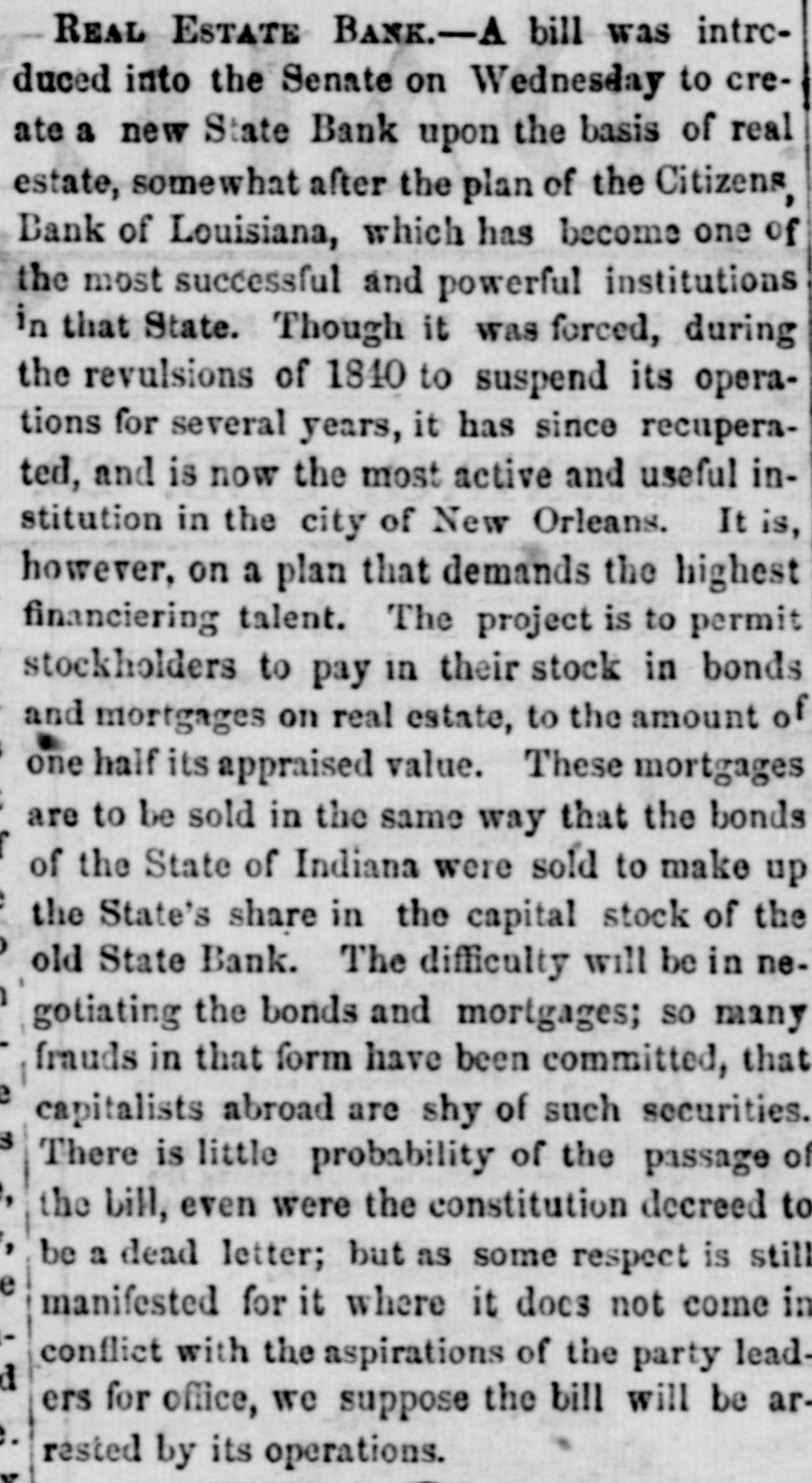
NUMISMATIC NOTES Dix Notes A $10 bank note is the source of the name Dixie for the Southern States. The name came originally from notes issued between 30X 1845 and 1862 by the Citizens Bank of Louisiana at New Orleans. Since the State had a large French-speaking population the notes carried inscriptions in both English and French, including, on the $10 bili, the French "Dix" for "ten" in large letters. In French the word is pro"Dix" on a Citizens Ban nounced "dees" but in Louiof Louisiana $10 note. siana the English pronounciation is used. questions on coins or pap Soon after Dan Emmett money addressed to Numi visited New Orleans in 1859 matic Notes, The Sund he composed the song which Star, Washington 3, D. C. was first sung in a New York minstrel show. When it STAMPS AND COINS reached New Orleans it became popular overnight. MINKUS-1961 supp. now in st JOHN ARNOSTI, 908 14th St. I In the first stanza the DI. 7-5130. "wish I wuz in de land of Coins Bought and Sold the Dixes" (the original COIN SHOP wording) referred to the $10 bills. There were other deB. M. DOUGLAS nominations in the series, $5, 402 12th St. N.W. RE. 7-3 $20, $50, $100 and $1,000. but WEEK'S STAMP SHOP for some reason the $10 dix Daily Stamp Auctions RM. 220, TRANSPORTATION BLI bills were the most popular. 815 17th St. N.W. NA. 8-5 These bank notes had a Washington's Newest Stamp Dec wide circulation up the Mississippi and its tributaries, A. V. GALCIUS and unlike other bank notes, Rm. 207, Woodward Bldg. they were not discounted. Cor. 15th & H Sts. N.W., ME. 8During the middle 1850s the PETEK'S STAMP STOP bank had more than $5 milSTAMP AUCTIONS DAILY lion in circulation, a treWE BUY-WE SELL mendous amount for those WE CAN SERVE YOU days. During the panic of 11230 Grandview Ave., Wheaton, 1857, when banks all over the STAMPS COI country failed, the Citizens Bank of New Orleans sucWe Buy and Sell cessfully met a two-week run JACK O. KING and came out as strong as ever. 1718 Eye St. N.W., ME. 8-4 Although they were issued in huge quantities dix notes Washington's Oldest Stamps an were rather scarce until a Coin Dealers small batch was discovered WE BUY AND SELL recently. -B. M. DOUGLAS Coins-Stamps The Washington Numismatic Society, whose memHobby Shop bers have prepared this 1418 Wis. Ave. N.W. FE. 8-12 series of articles, will answer