Click image to open full size in new tab
Article Text
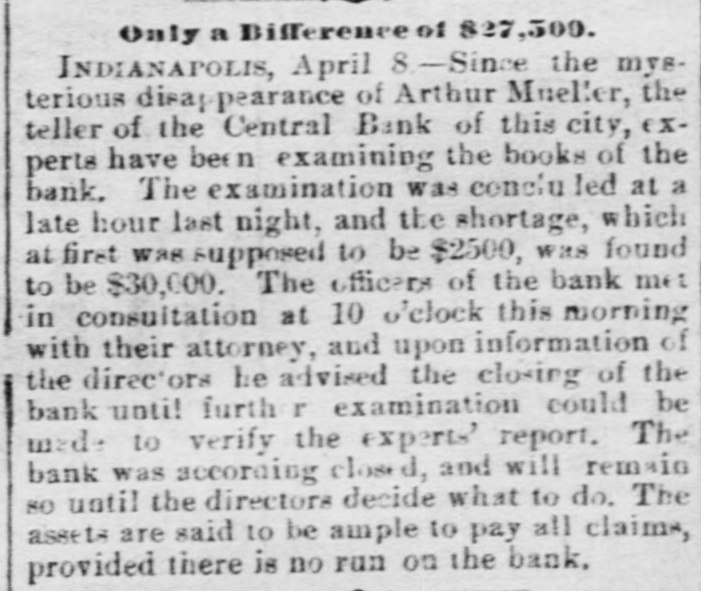
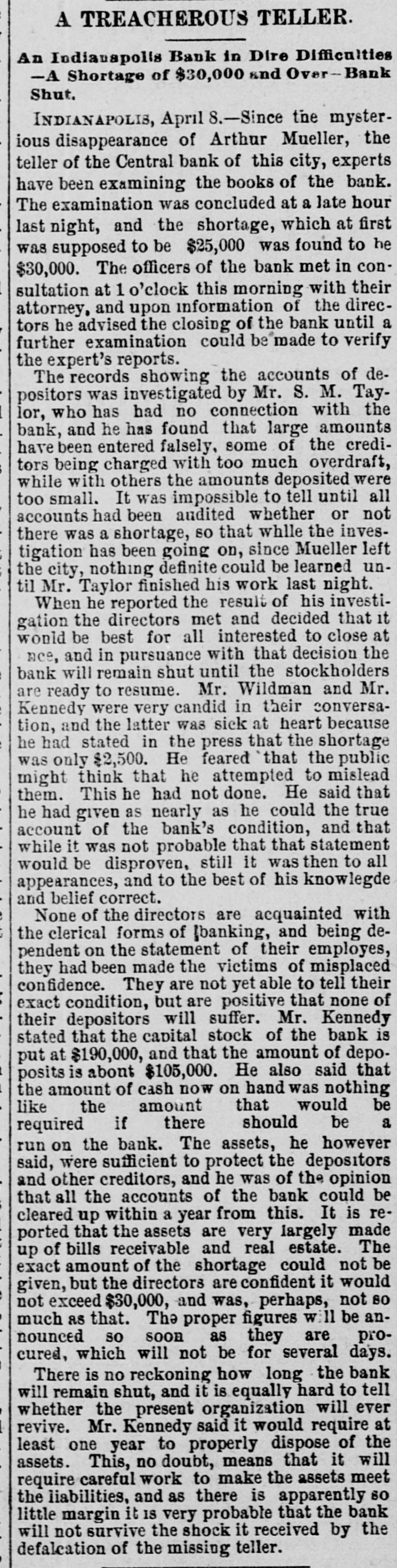
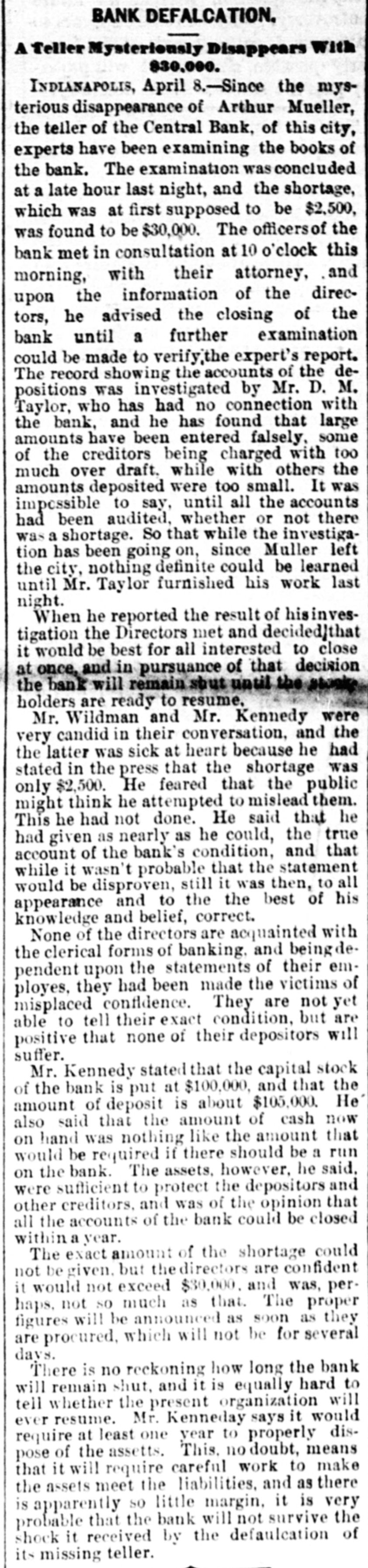
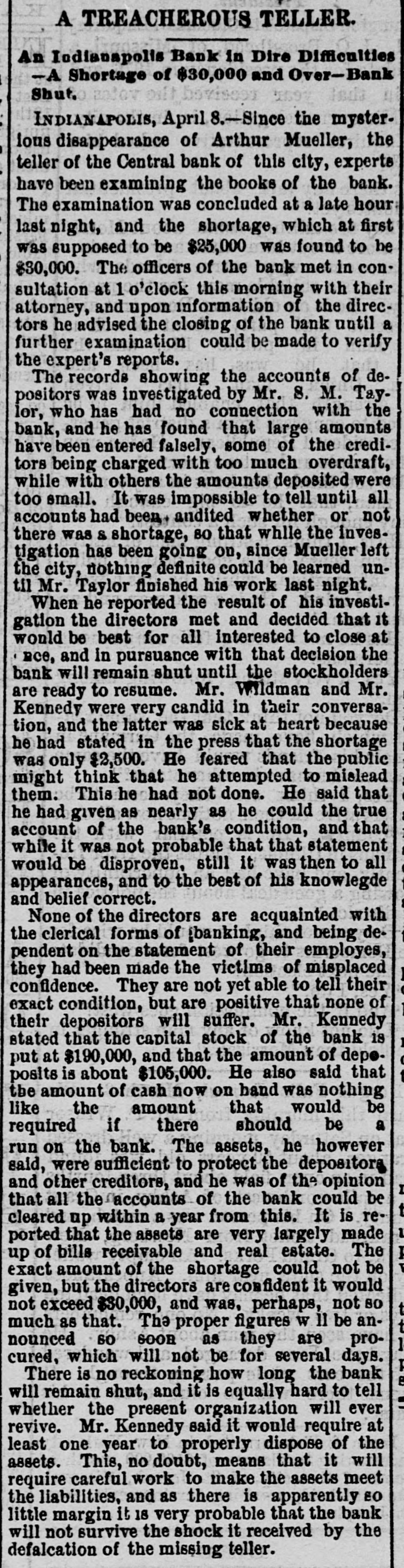
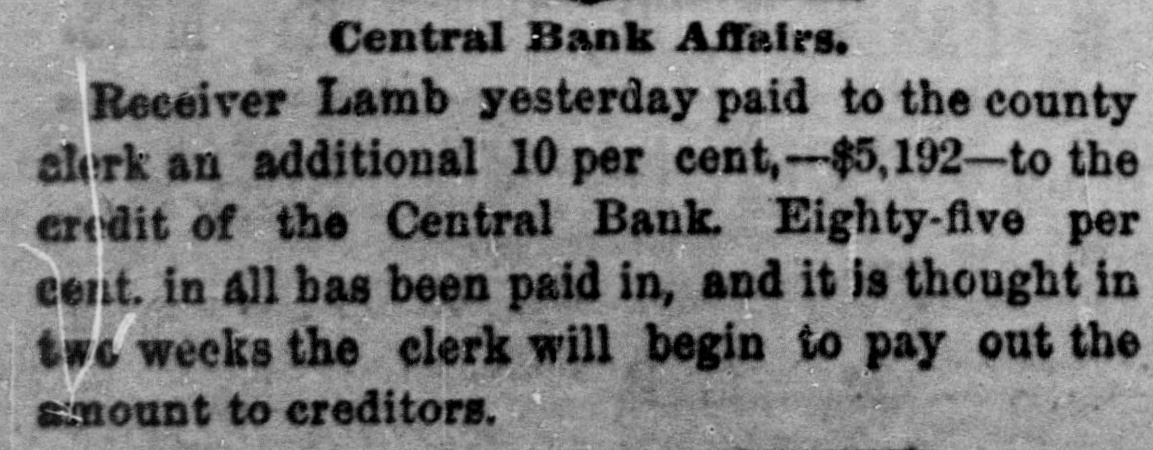
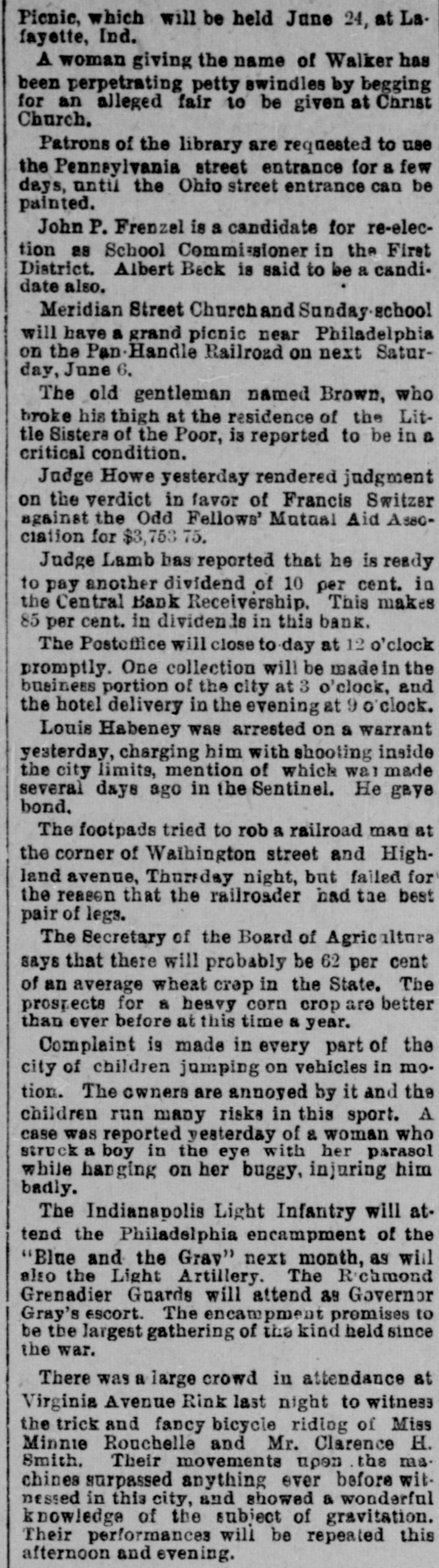
THE FINANCIAL OUTLOOK. Judge Robert N. Lamb Appointed Receiver for Mr. Harrison's Bank. The Real Condition of Its Affairs Yet Unknown-The Proposed Plan for Reorganizing Fletcher & Sharpe's. Upon petition of numerous depositors, Judge Walker, of the Superior Court, on Saturday ap pointed Judge Robert N. Lamb receiver of Harrison's Bank, fixing his bond at $100,000, a reduction of $200,000 from the amount originally proposed. Judge Lamb consented to accept the trust, and during the afternoon gave the required bond, his sureties being I. N. Pattison, N. N. Morris, W. G. Wasson, J. E. Robertson and Ralph Hill. The appointment gives general satisfaction, for Mr. Lamb is known to be a man of excellent judgment and ability. He is at present receiver of the Central Bank, whose failure was at the time thought to be most disastrous. He managed its affairs so admirably that he has already paid 75 cents on the dollar, and he is now about to declare an additional dividend of 10 per cent. Judge Lamb took possession of Harrison's bank Saturday evening, and an examination of the vaults showed that the amount of cash on hand was just $63.25, mostly in nickels and other fractional currency. Mr. Lamb will this morning begin an examination of the books and papers, and he thinks he will be able to make public a statement of assets and liabilities by to morrow or Wednesday. Mr. Harrison still declines to make any statement to the reporters. MORE LEGAL PROCEEDINGS. On Saturday afternoon an amended complaint was filed by Alfred Harrison in the SuperiorCourt, reciting the facts set forth in the petition for the appointment of a receiver and setting forth in addition that he is the owner in his individual right of certain real and personal property and that the defendant, John C.S. Harrison, is the owner in his individual right of certain real and personal property, that the partnership assets of the firm are not sufficient to pay their liabilities, wherefore the plaintiff surrenders all his individual property, saving the amount legally exempt from execution, and asks the court to take possession of the property by the receiver and apply it to the payment of the partnership debts in the same manner as the receiver takes possession of the assets of the partnership. The complaint further avers that the plaintiff is informed and believes that the defendant, John C. S. Harrison, is willing to surrender his individual property for the payment of partnership debts of the firm, and the plaintiff asks that the defendant be required to answer the complaint, and in case he consents to such surrender of his individual property, the court to direct the receiver to take possession of the individal property of the defendant in the same manner and for the same purpose as that of the plaintiff. To this an answer was formally made by J. C. S. Harrison, admitting the allegations made. Later in the day three mortgages were placed on record by the Harrisons, conveying the residence property of Alfred and John C. S. Har rison and the Parker Block on North Delaware street. They are executed to Charles Mayer, William Haueisen, William Haerle. George W Stout and George Mannfeldt, sureties on John C.S. Harrison's bond as receiver of the Indiana Banking Company, for the purpose, as stated, 'to secure and indemnify the mortgagees against any and all loss on account of their liability as sureties of John C. S. Harrison, re ceiver of the banking company, and to secure the mortgages on account of any money they may be required to pay as such sureties. The mortgage on the Parker Block is also "to secure the mortgagees against any indebtedness of Alfred and J. C. S. Harrison. PROPOSED REORGANIZATION OF FLETCHER & SHARPE, Exclusive mention was made in the Journal of Saturday of the proposed scheme to reorganize Fletcher & Sharpe's Bank, which is meeting with much favor from depositors, and there now seems to be a probability of its consummation. The plan of reorganization is detailed as follows in a circular sent out to depositors: It is very desirable, and unquestionably to the interest of all depositors in the bank of Fletcher & Sharpe, that their affairs be taken out of the hands of the court, and the bank continue business. and to this end it is now proposed to form stock company, under the name of Fletcher & Sharpe's Banking Company. each depositor being stockholder to the amount of his or her deposit, and with limited liabil ity, Messrs. Fletcher and Sharpe holding all stock above the amount due to depositors This will make a bank with capital of about $1,750,000 paid up and out of debt. The plan is as follows: 1. Fletcher & Sharpe convey to said company all of their real estate and turn over, also, all notes, bills, cash and other assets. now held by the receiver, estimated to amount to $1 800,000. 2. The depositors hold stock to the amount due them, being about 1,550,000, leaving $250,000 for Fletcher & Sharpe. 3. The said banking company to be managed by a board of directors, to be composed of nine members, four of whom shall be the members of the firm of Fletcher & Sharpe, who shall continue in charge of the details of the business, and the remaining five, elected by the depositors, as their representatives; this management to continue for five years. The advantage of this plan would be: 1. Saving of cost of litigation, lawyers's fees, forcing of real estate on the market at an unfavorable time, and sacrifice of assets as IS always the case under receivership, because, the bank being entirely out of debt, would have ample time to convert its assets, instead of being compelled to sell, in order to close such large estate. 2. Each depositor being a stockholder. would be interested in the success of the bank, and by continuing his or her business at the bank, in which he or she would then be interested would be adding to the profits of the institution, by providing funds with which to make discounts and accommodate borrowers. 3. The sales of real estate would be made at more satisfactory prices, and money would thus be constantly added to the business, and eventually a very large capital provided with which to carry loans; and the larger the profits the more rapidly would the stock appreciate in value. 4. Dividends on stock would be made in the following order, viz.: That held by depositors would be entitled to a dividend first; after that, the stock held by Fletcher & Sharpe should participate, the depositors' stock being considered preferred stock. It is believed that this is the best course to pursue, as any one can see at a glance the necessity of saving the assets, instead of allowing them to be frittered away through court and attorneys fees, and all the attendin costs of winding up so large a business. It is also believed that, within two years, dividends on the stock could be made, and such as would make the stock a very desirable investment for any one. With in five years the stock would be worth its face, and the strongest bank in Indiana would be the Fletcher & Sharpe Banking Company The undersigned agree to the above arrangement, and request a able response from you. Please reply promptly as it is desired to reopen the bank by the 15th day of August. This places in the hands of the depositors the entire means of the firm and the management of the business, and there would, therefore, be no waste, but the entire benefit over the actual running expenses would to the depositors, who are then participating stockholders, as there would