Article Text
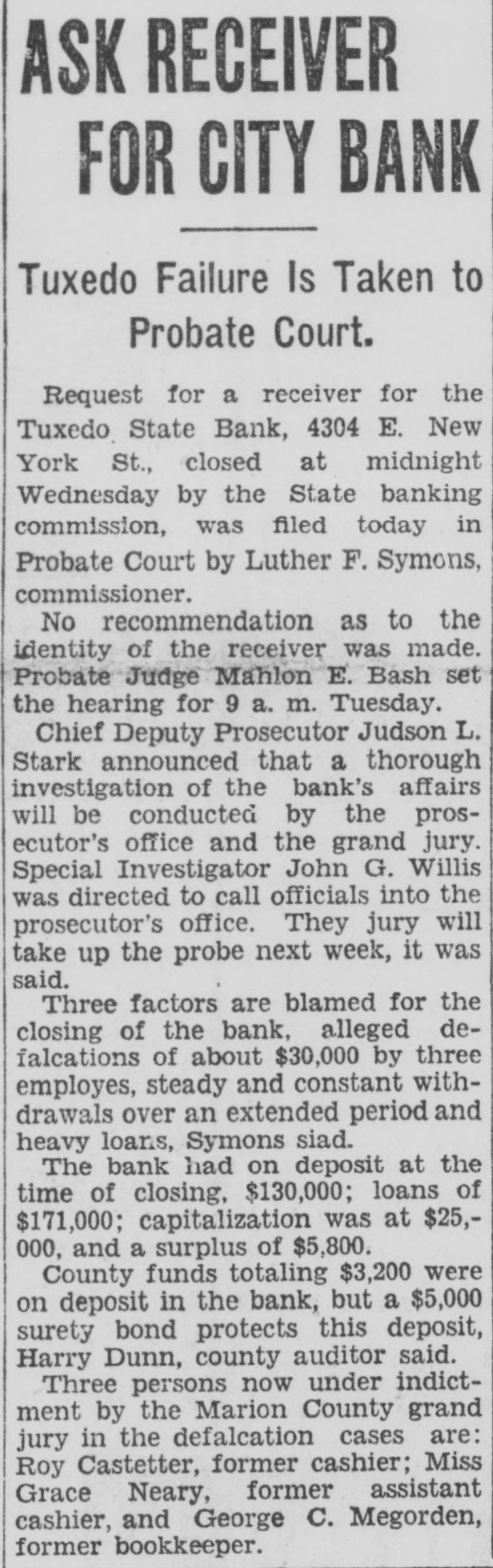
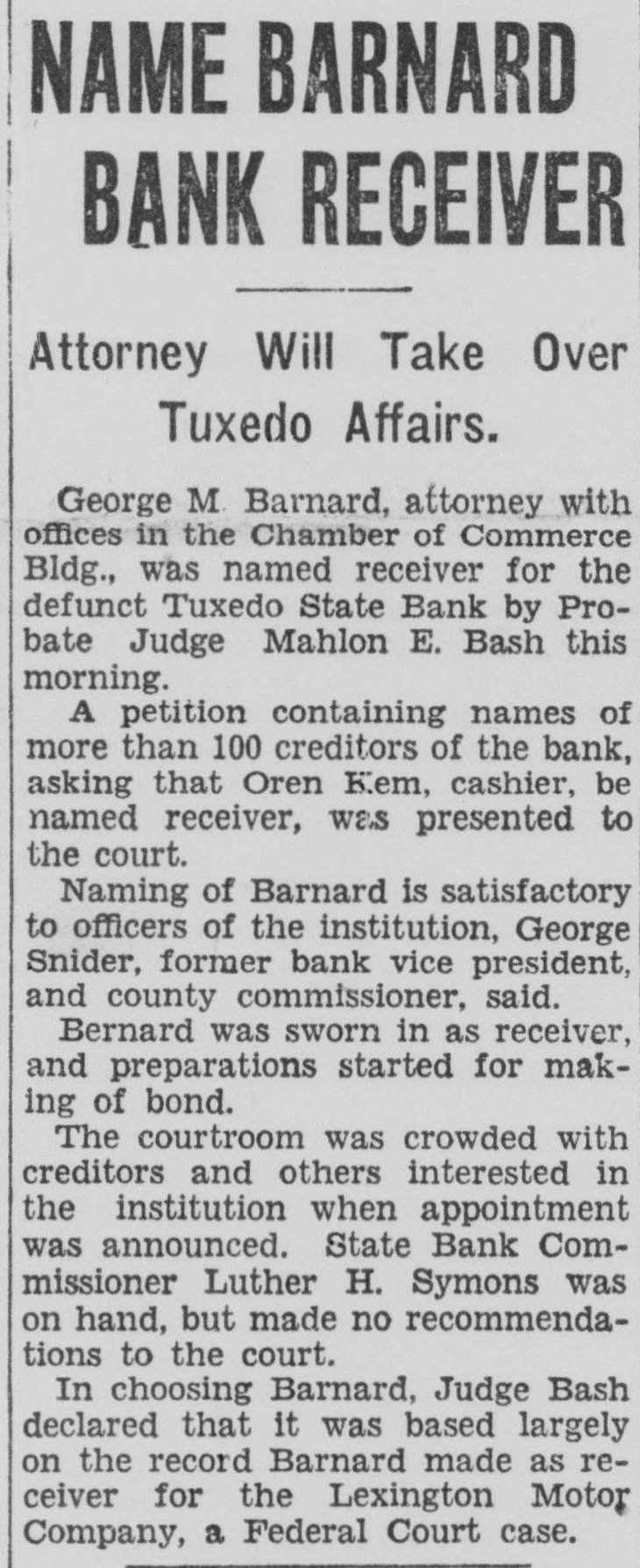
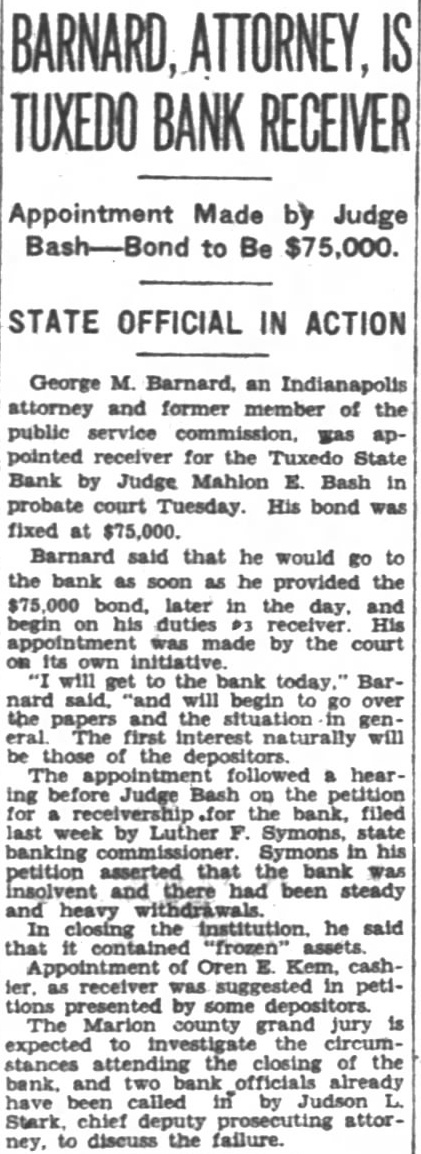
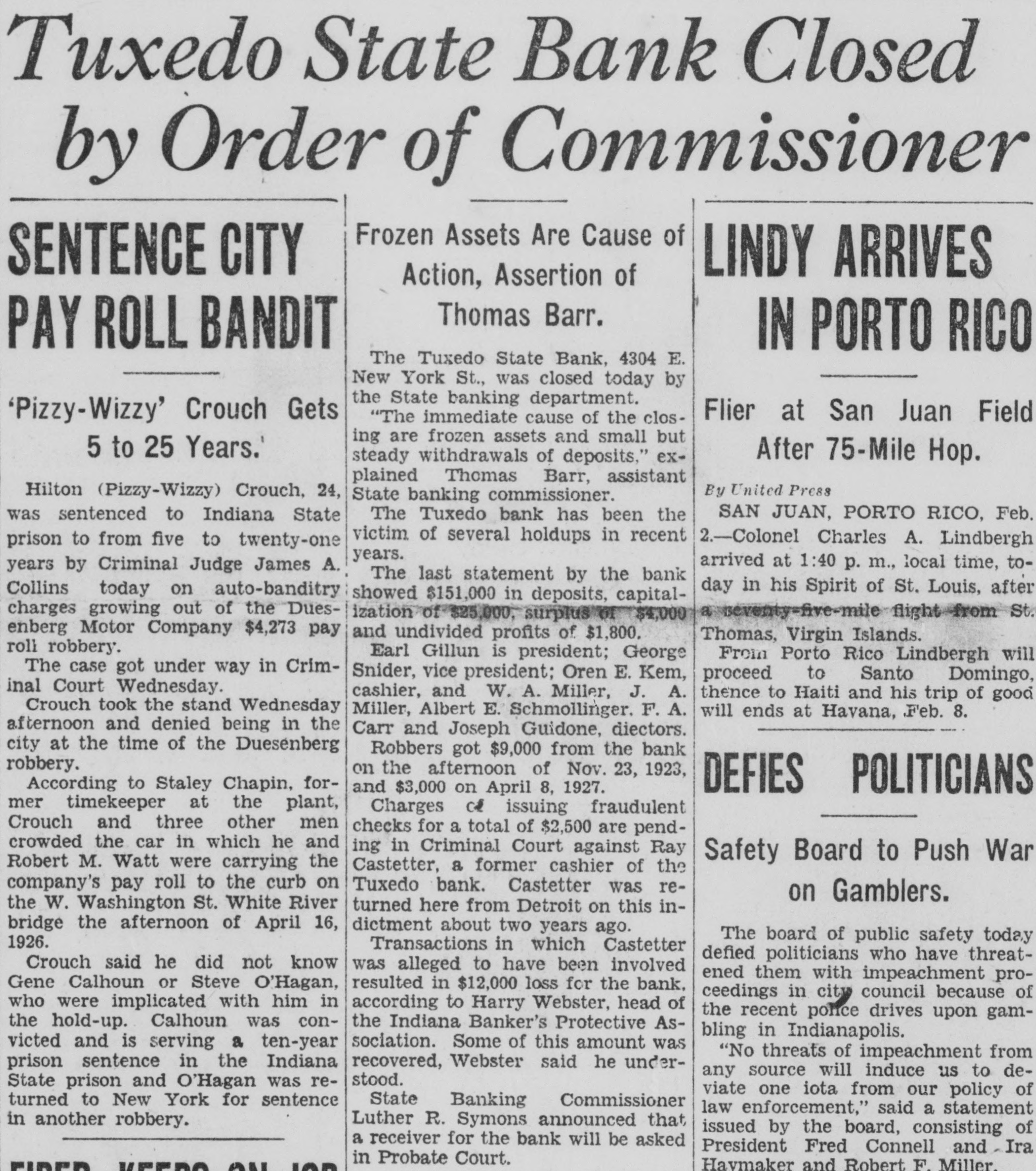
Tuxedo State Bank Closed by Order of Commissioner Frozen Assets Are Cause of SENTENCE CITY LINDY ARRIVES Action, Assertion of Thomas Barr. PAY ROLL BANDIT IN PORTO RICO The Tuxedo State Bank, 4304 E. New York St., was closed today by the State banking department. Flier at San Juan Field "The immediate cause of the clos'Pizzy-Wizzy' Crouch Gets ing are frozen assets and small but 5 to 25 Years. steady withdrawals of deposits," exAfter 75-Mile Hop. plained Thomas Barr, assistant By United Press Hilton (Pizzy-Wizzy) Crouch, 24, State banking commissioner. The Tuxedo bank has been the was sentenced to Indiana State SAN JUAN, PORTO RICO, Feb. victim of several holdups in recent 2.-Colonel Charles A. Lindbergh prison to from five to twenty-one years. arrived at 1:40 p. m., local time, toyears by Criminal Judge James A. The last statement by the bank day in his Spirit of St. Louis, after Collins today on auto-banditry showed $151,000 in deposits, capitalcharges growing out of the Duesa seventy=five-mile flight from St. ization of $25,000, surplus of $4,000 enberg Motor Company $4,273 pay and undivided profits of $1,800. Thomas, Virgin Islands. roll robbery. Earl Gillun is president; George From Porto Rico Lindbergh will The case got under way in CrimSnider, vice president; Oren E. Kem, proceed to Santo Domingo, inal Court Wednesday. cashier, and W. A. Miller, J. A. thence to Haiti and his trip of good Crouch took the stand Wednesday Miller, Albert E. Schmollinger. F. A. will ends at Havana, Feb. 8. afternoon and denied being in the Carr and Joseph Guidone, diectors. city at the time of the Duesenberg Robbers got $9,000 from the bank robbery. on the afternoon of Nov. 23, 1923, According to Staley Chapin, forDEFIES POLITICIANS and $3,000 on April 8, 1927. mer timekeeper at the plant, Charges ct issuing fraudulent Crouch and three other men checks for a total of $2,500 are pendcrowded the car in which he and ing in Criminal Court against Ray Safety Board to Push War Robert M. Watt were carrying the Castetter, a former cashier of the company's pay roll to the curb on Tuxedo bank. Castetter was reon Gamblers. the W. Washington St. White River turned here from Detroit on this inbridge the afternoon of April 16, dictment about two years ago. The board of public safety today 1926. Transactions in which Castetter defied politicians who have threatCrouch said he did not know was alleged to have been involved ened them with impeachment proGene Calhoun or Steve O'Hagan, resulted in $12,000 loss for the bank. ceedings in cit council because of who were implicated with him in according to Harry Webster, head of the recent police drives upon gamthe Indiana Banker's Protective Asthe hold-up. Calhoun was conbling in Indianapolis. sociation. Some of this amount was victed and is serving a ten-year "No threats of impeachment from recovered, Webster said he underprison sentence in the Indiana any source will induce us to destood. State prison and O'Hagan was reviate one iota from our policy of turned to New York for sentence State Banking Commissioner law enforcement," said a statement in another robbery. Luther R. Symons announced that issued by the board, consisting of a receiver for the bank will be asked President Fred Connell and - Ira in Probate Court. Haymaker and Robert F. Miller.