Article Text
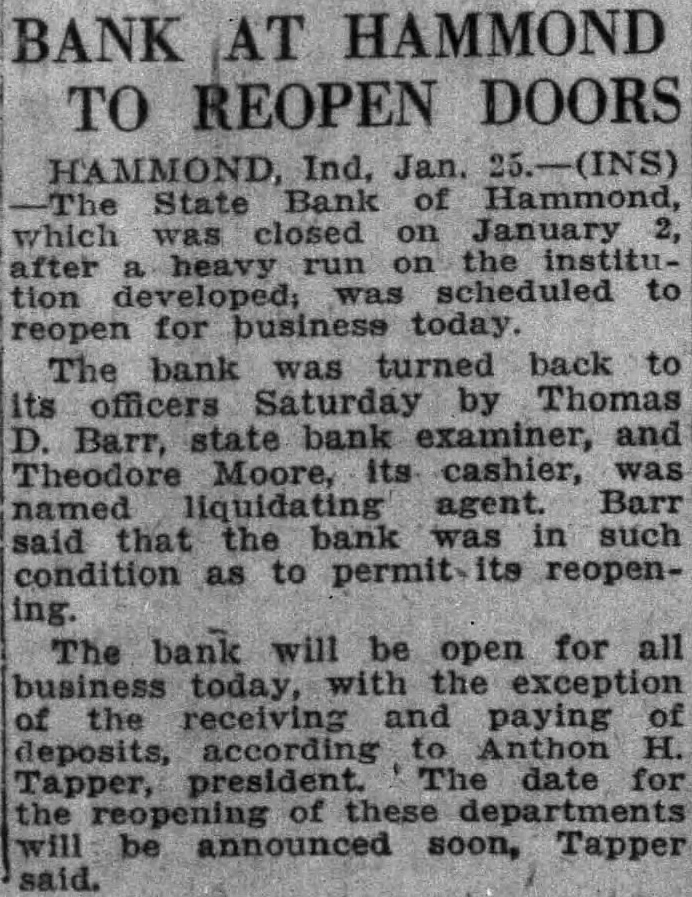
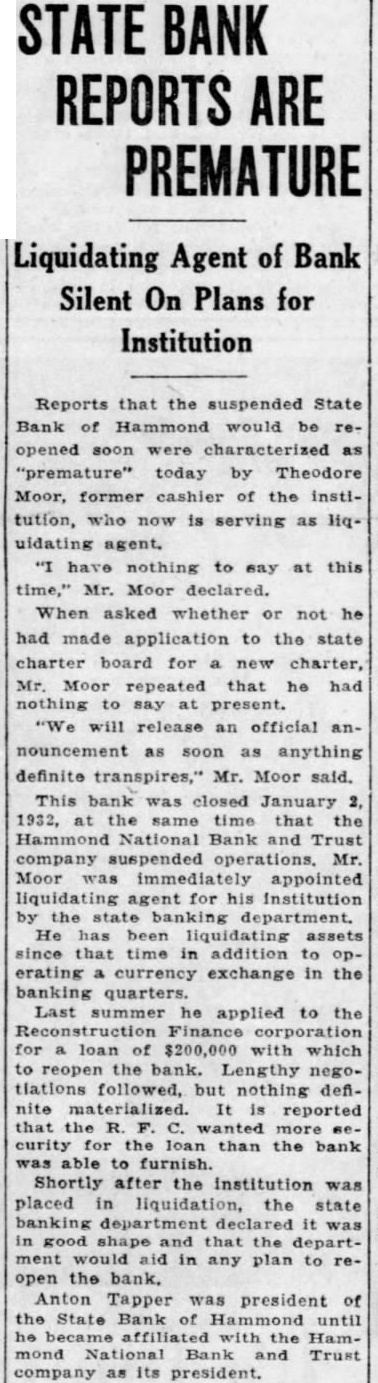
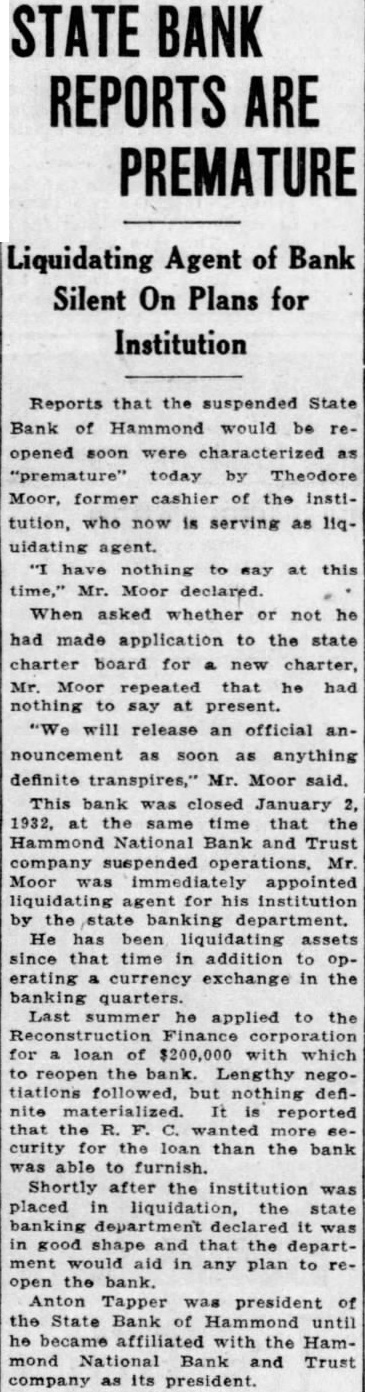
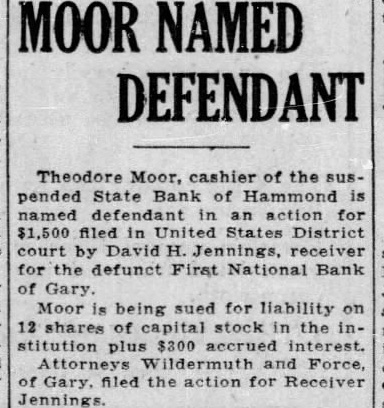
LIBERTY BELL MAY RING AGAIN Famous Bell, Silent for Ninety-six Years, May Ring Out on Washington's Birthday. The famous old Liberty Bell, which so joyously rang to announce the Declaration of Independence and which tolled so sadly when George Washington died at Mount Vernon, may again ring forth from Independence Hall, in Philadelphia, on Washington's next birthday, Feb. 22, 1931. Efforts are being made by officials of the George Washington Bicentennial Commission to arrange for a nation-wide hook-up on this date and have President Hoover press an electric button in Washington which will start the nation's most historic bell ringing again after a silence of almost one hundred years. It is proposed to have the bell strike thirteen times, one for each of the thirteen original states. According to noted Philadelphia historians, the last ringing of the bell was on July 8, 1835, in honor of the funeral services of John Marshall, Chief Justice of the United States, who died in Philadelphia on July 6, 1835. While the bell was being solemaly tolled it suddenly cracked. An attempt was made to repair it in 1846 for the celebration of Washington's birthday ceremonies, but this attempt failed. It is believed however, that while the cracked bell will not give forth its once famous clarion notes, it will nevertheless ring sufficiently loud to be heard by all radio listeners, if it is tapped thirteen times on the anniversary of Washington's birth next month. Before it cracked, the Liberty Bell had lived a-life of eighty-two useful years and had become one of the most famous bells in the world. All through the Revolutionary War the Liberty Bell was used for the purpose of calling together the inhabitants of the city to learn news from the battlefields. time during was, however, it became necessary to remove the bell hastily from its fastenings and take it out of the city. This exciting event took place on September 18, 1777, when the news came that the British Army was about to occupy Philadelphia. The bell was carefully loaded on a wagon and conveyed along with the heavy baggage of the American Army in a supply train of seven hundred wagons, guarded by two hundred North Carolina Virginia Cavalry, to Allentown, Pennsylvania, where it was hidden in Zion's Church until June 27, 1778, when it was taken back to Philadelphia and again placed in Independence Hall. Never from that time until 1835 did anything of importance happen that was not announced by the ringing of this historic bell. It was joyously rung when the news came of the surrender of Cornwallis to General Washington, which ended the Revolution. The old bell is reverently preserved. It stands on the ground floor of Independence Hall, where it is viewed daily by thousands of visitors from all sections of this country. The Liberty Bell has been a great traveller in its day. In fact, it has seen more of the United States than a vast majority of the people. In addition to its war-time trip to Allentown, it has made the following peace-time journeys: July 23, 1885: To New Orleans for the World's Industrial and cotton exposition. July 25, 1893: To the World's Columbia Exposition at Chicago. Oct. 24, 1895: To the Cotton States and Atlantic Exposition, Atlanta, Georgia. Jan. 6, 1902: Interstate and West India Exposition, Charleston, South June 15, 1903: Bunker Hill Celebration, Boston, Massachusetts. 1904.-Louisiana Purchase Exposition at St. Louis, Missouri. Oct. 23, 1913, Historical Street parade, Founders Week Celebration, Philadelphia, Pennsylvania. July 4, 1915: To the Panama-Pacific Exposition at San Francisco, California. George Washington very often heard the ringing of the Liberty Bell, due to the fact that he spent more time in Philadelphia than any other place, except his home state of Virginia. He first went there as a membereof the Continental Congress. His next official visit was as the presiding officer of the Convention which framed our Constitution. His longest stay in the City of Brotherly Love was as President of the United States from 1790 to 1797. The history of the Liberty Belt, even before the American Revolution, is an interesting one. In the year 1751 the Assembly of the Province of Pennsylvania decided that the State House at Philadelphia (Independence Hall) needed a new bell. A resolution was passed, instructing the superintendents of the building to secure one. The superintendents, Isaac Norris, Thomas Leech and Edward Warner, wrote the following quaint letter to Robert Charles, the Colonial Agent at London: "Respected Friend, Robert Charles: "The Assembly having ordered us to procure a bell from England to be purchased for their use, we take the liberty to apply ourselves to thee to get us a good bell of about two thousand pounds weight, the cost of which we assume may amount to one hundred pounds, sterling, or perhaps with the charges something more. "We hope and rely on thy care and assistance in this affair, and that thou wilt procure and forward it by the first good opportunity, as our workmen inform us it will be much less trouble to hang the bell before the scaffolds are struck from the building where we intend to place it, which will not be done till the end of next Summer or beginning of the Fall. "Let the bell be cast by the best workmen, and examined carefully before it is shipped, with the following words well shapen in large letters around it, viz: 'By order of the Assembly of the Province of Pennsylvania for the State House in the City of Philadelphia, 1752'. "And underneath: 'Proclaim Liberty throughout all the land unto all the inhabitants thereof Leviticus XXV, 10'. "As we have experienced thy readiness to serve this Province on all occasions, we desire it may be our excuse for this additional trouble, from thy assured friends, Issue Norris Thomas Leech Edward Warner "Let the package for transportation be examined with particular care and the full value insured thereon." The careful directions by the superintendents were duly carried out by the Colonial Agent at London, and reached Philadelphia in August 1752. It, was not a success. When placed on trusses in the State House yard for a trial ringing it soon cracked. An American firm was now given a chance to see what it could do in the way of producing a satisfactory bell. The name of this firm was Pass & Stow, "two ingenious workmen" of Philadelphia. These two young men broke up the Englishmade bell, melted the material, added an ounce and a half of American copper to each pound of the old metal to make it less brittle, and re-cast it with all the original inscriptions on it, with the exception of the substitution of their own names for that of the London manufacturer and the date and place of manufacture. Certain defects made a second casting necessary. The bell as it now stands is the result of this second casting. The bell is considerably larger than most people imagine, it being twelve feet in circumference-and with a clapper three feet, two inches long. The early official ringers of this famous bell were Edward Kelly, from 1753 to 1755; David Edward, from 1755 to 1758, and Andrew McNair from 1758 to 1776. It was McNair who had the honor of ringing the bell announcing the Declaration of Independence. BASKET BALL MC CONNELL BANK CLOSED The McConnell State Bank of Mc Connell, III., did not open for bustness on Monday morning following an order issued by the board of directors who met on Saturday night and ordered that notice be posted on the doors saying. Bank is closed for examination and adjustment. It is not known if the depositors would suffer loss. any The State Bank is a reorganization of a privately owned bank which was formed a number of years ago by H. D. Price, and Seise brothers, of Lena. The reorganization was effected in 1920, the bank having operated since that time under the present name. Steady withdrawals by depositors during the past several months was given as the cause of the failure to open this morning, according to a statement made by Mr. Phillips. The bank has a capital stock of $30,000, with surplus and profits amounting to $12,000. According to the last statement published by the institution the total deposits amounted to approximately $166,000, this amount having depreciated considerably during recent weeks, it is understood. We often wonder how many of the old timers can recall when we put our shirts on over our heads, when anybody could hitch a horse, when there was no such thing as a wrist watch and a hired girl was lucky to get $2.50 a week. Or who can remember when nobody had appendicitis and everybody kept the Sabbath. Surely there must be a lot of people around who can remember when they carried a lantern on the dashboard of the spring wagon and drove through mud, loose rock or rock most of the time, when they slept on a straw tick or when the women wore Mother Hubbards, when a brick covered with a carpet served as a door-stop and when congress gaiters were the most stylish of shoes. But if you remember any or all of these it isn't a sign that you are getting old. It's just a sign of good memory. Start the New Year with entertainment at its best. A Coronado Radio will bring it. All the latest improvements. Gamble's Play-Boy $49.50Model 72 $69.50-Model 82 $99.50 complete with tubes. Gamble Stores. Belvidere, III. Mrs. Clara Sarver of Chicago was here over the week end to visit her brother Andrew Thompson who is ill and slowly getting worse with no hopes of recovery. OBITUARY Elizabeth Wolfe, the wife of Thomas Wolfe passed away at their home south of Rock City on Friday evening following a few days illness with bronchial pneumonia. She has always lived in Rock Run township having passed away on the farm where she was born. Elizabeth Wendt was born in Rock Run township, Dec. 23, 1872 and died Jan. 23, 1931, age 59 years and 1 month. On Jan. 16, 1892 she was married to Thomas Wolfe and lived on the Wolfe farm until last year, when they moved to the old homestead. She is survived by her husband and four children, Pearl, Dewey and Miles at home and Mrs. Christ Byle of Ridott. Also four sisters, Mrs. Sophie Flynn of Rock City, Mrs. Chas. Nath of Davis, Mrs. Ever Everson of Rockford and Mrs. Louis Nath of Durand. The funeral was held on Monday afternoon at the Epplyanna church, with burial in the Epplyanna cemetery. Rev. G. A. Winger officiated. The basket ball game last Saturnight at the I. O. O. F. Hall between Davis and McConnell was a hard fought game. Davis won by 1 point. The score was: Davis (25) P Hoover, f 1 1 Kloster, f 5 0 Weimer, e 2 1 Gunderson, g 3 1 0 0 1 Zwygart, E 11 3 3 McConnell (24) F P Wood, f 1 0 0 Rakasha f 2 0 4 Klontz, f 0 0 0 Daughenbaugh, e 4 3 Price, g 0 0 Stabenow, g 3 1 0 10 4 6 Joe Oberta is visiting at his home in Seatonville, 111.