Click image to open full size in new tab
Article Text
sources, a strict fidelity in the fulfilment of obligations already contracted, and due caution in the further extension of Sate credit, it cannot be doubted that all our public works will be completed in reasonable time, and every engagement of the State faithfully kept. When this state of things shall exist, the increased wealh and population of the country will enable the Legislature to relieve the burden of taxation, which at this time weighs heavily upon all, but especially upon the farming portion of the State. The presant scarcity of money, and depression of value in the staple products of the country, is greatly to be deplored. In such a state of things, while the amount of taxes the people are compelled to pay, remains the same, the value of labor and property, from which these taxes are to be raised is constantly falling in porportion to the diminution in the amount of money in the country. Measures therefare, which look to a still further reduction of the currency in circulation, are equivalent to an increase of taxation to that amount.
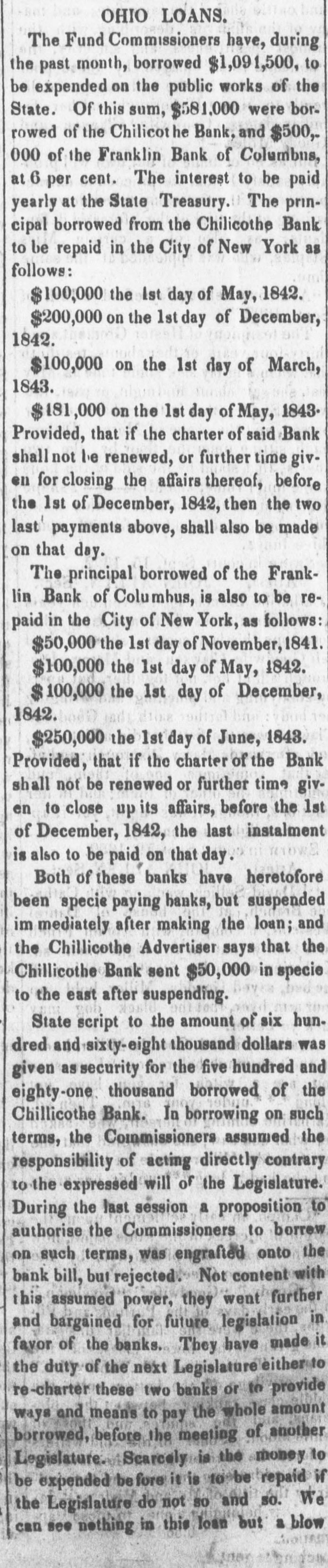
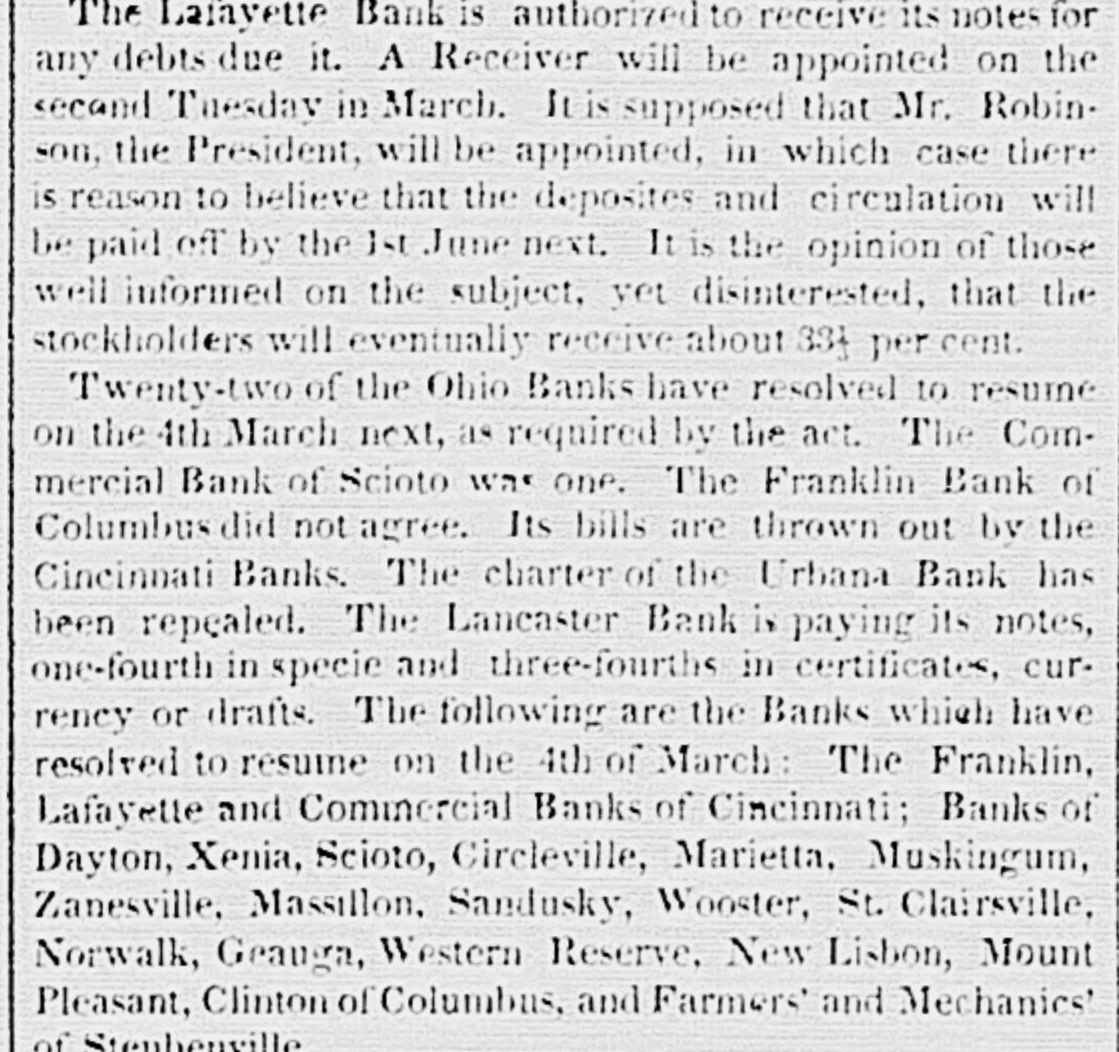
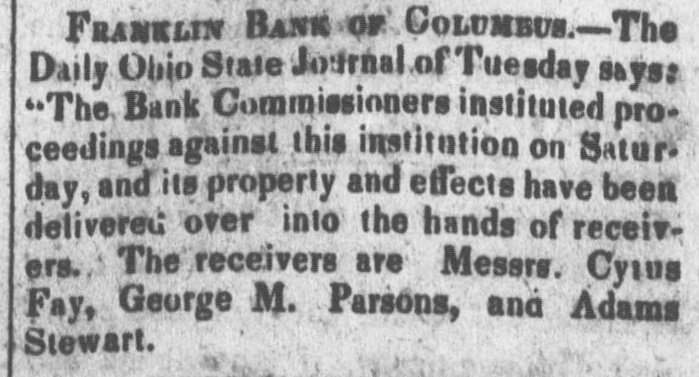
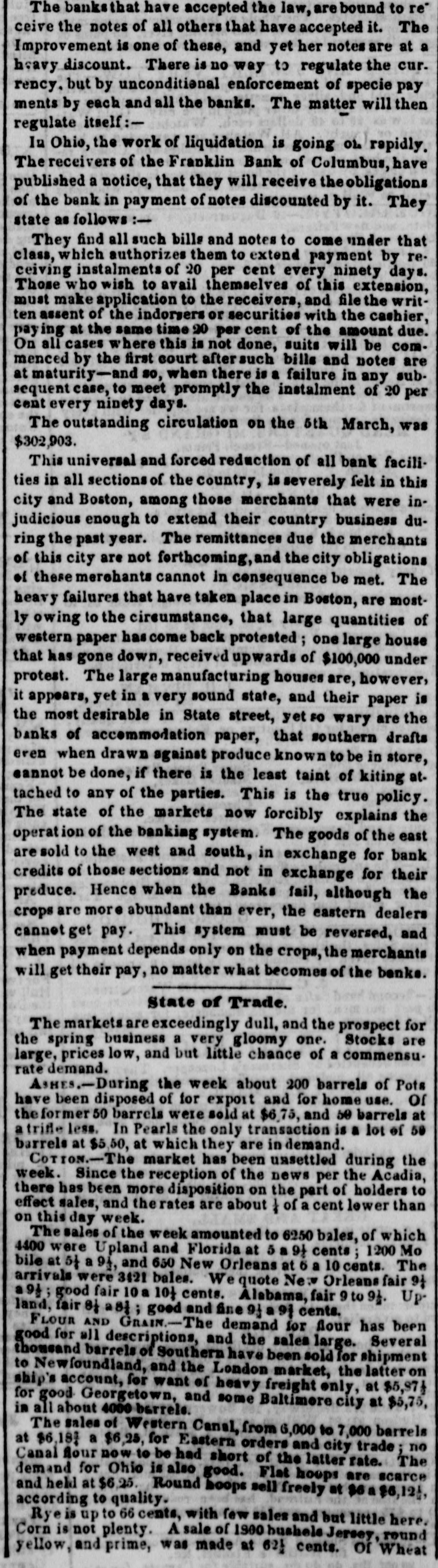
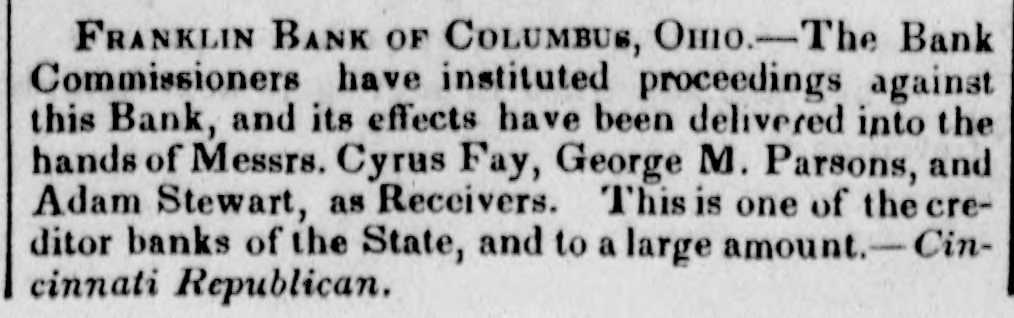
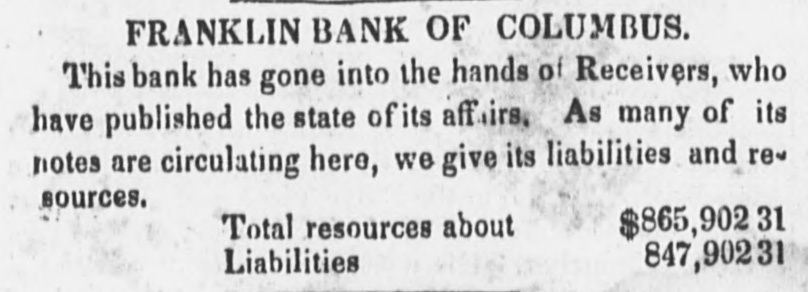
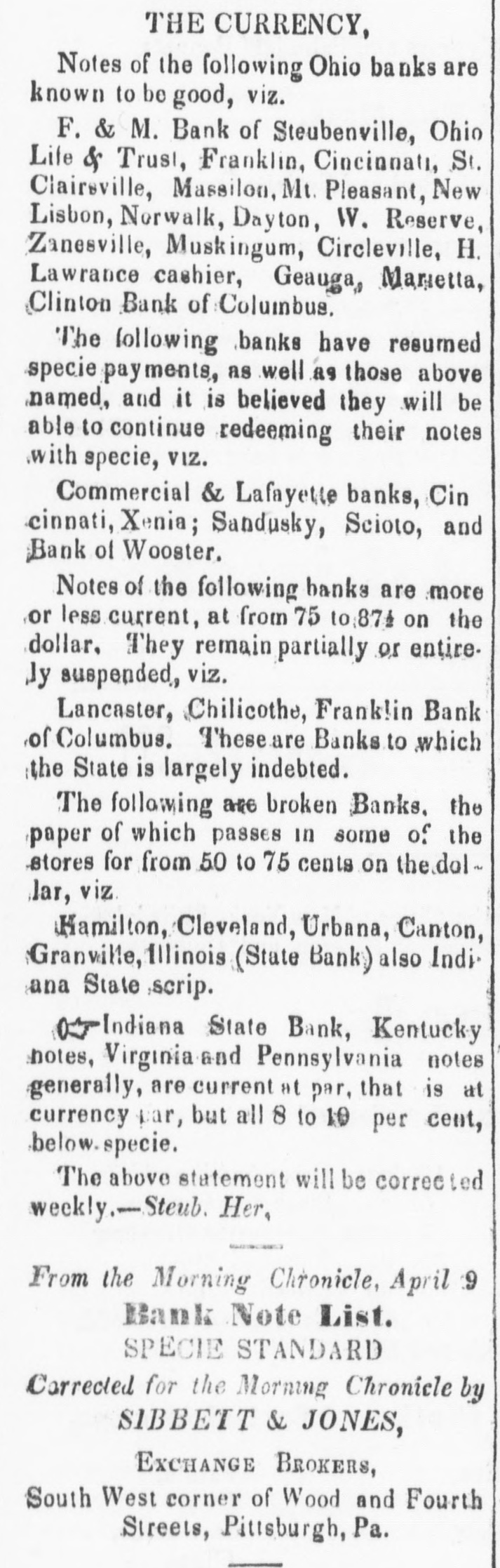
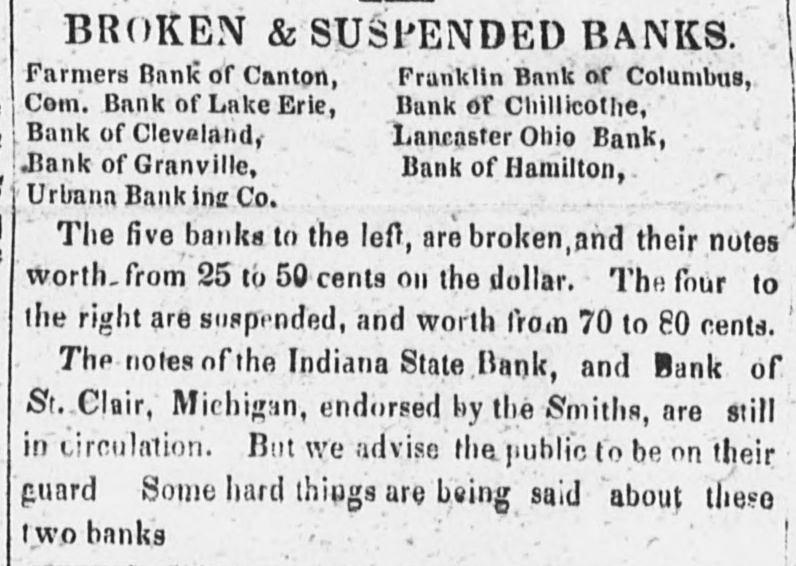
The situation of the Banking institutions of the State, is a subject which necessarily cennects itsself intimately with the foregoing suggestions. According to a Report made by the Bank Commissioners to the Legislature in July last, there were in the State at that time, twenty-two Banks doing business, and redeeming their liabilities with coin on demand. Since that report was made, the Franklin Bank of Columbus, which, in consequence of a failure on the part of the State to comply with its engagement, was in a State of suspension, has resumed payment of specie, and may be considered a nongst the soundest institutions of the State.
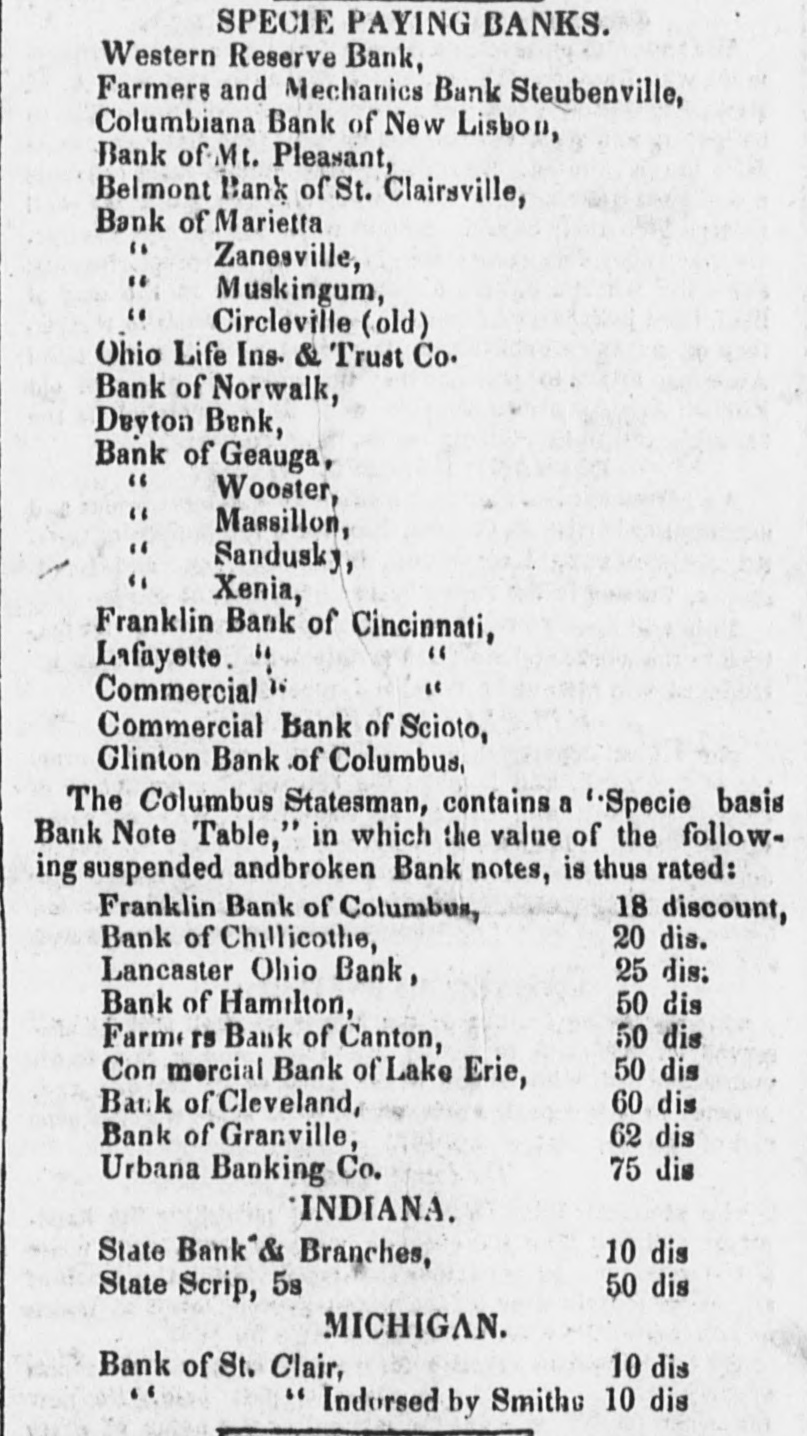
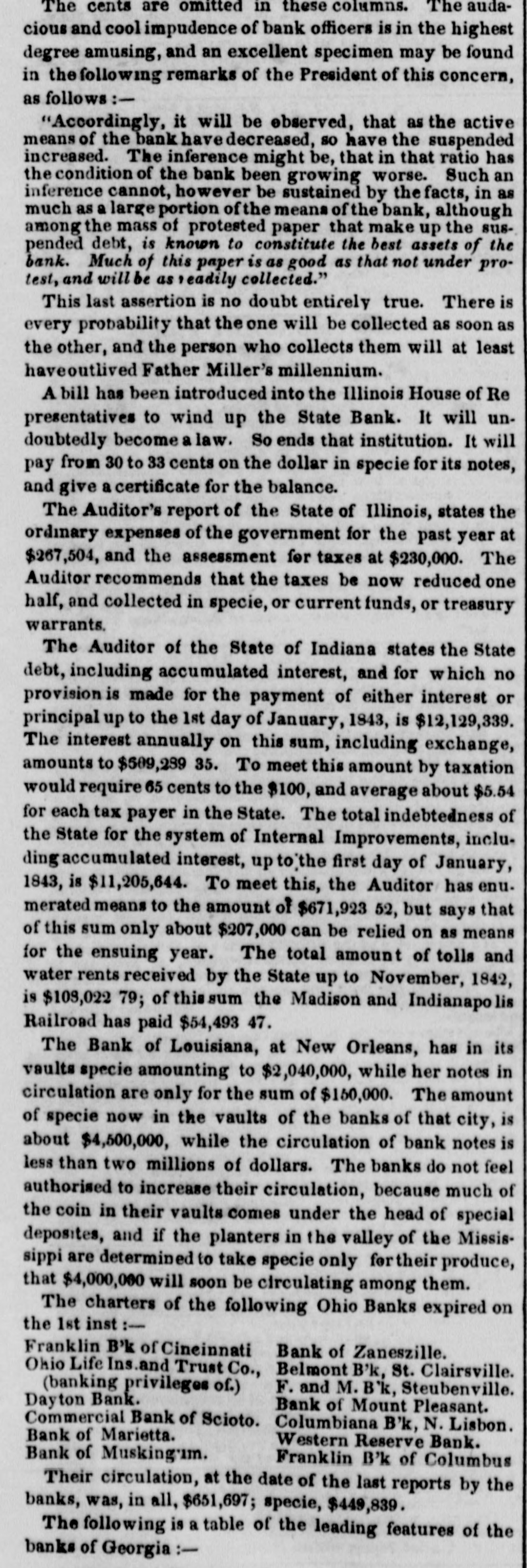
From these data, it will appear that there are at this time twentythree Banks in the State, all of which may be considred as justly entitled to full confidence. Of this number, however, the charters of thirteen expire on the first day of January, 1843, and of two others in January, 1844. The capital of these Banks paid in, from the best data at my command, amounts to about five millions of dollars. Thus, it will be seen, that ithout legislative action on this subject, within the present month, thirteen of the dtwenty-two Banks in the State must immediately cease business operation, and wo others in a year from this time.
This will necessarily require about 5 millions of capital, now engaged in furnishing a sound currency, to be withdrawn from that operation, to be collected and paid out to stock holders, many of whom reside in our State. This process must inevitably have the effect to increase existing embarrassment, retard the payment of debts, sink still further the market value of property, impoverish the debtor class of comtauni-ty, without any benefit to the creditor, and result only in advantage to the capitalist, who will be enabled to speculate upon the wrecked fortunes of debtors, who have only property wherewith to pay demands against them. The subject calls for, and I cannot doubt but it will command, the prompt, sincere and patriotic attention of the General Assembly. If Banks are to be tolerated at all, the renewal of the charters of such of them as are now about to expire, and are known to be perfectly solvent, in some forin, alike accessable to stockholders and the public, would seem to be demanded by every consideration of public interest and legislative duty.
If it shall be resolved by the Legislature, that the true interests of the State demand the destruction of all Banks and the exclusion of all Bank paper as a circulating medium, then it would be proper to permit the thirteen existing Banks, whose chartered powers are limited to January, 1843, and the two others, limited to January 1844, to expire. This would only leave eight Banking institutions in the State, whose charters falling in within a few years, would bring us by gradual steps to a metalic currency alone, so far as our own legislation could enforce such a state of things. However disastrous to the State such a course of policy might be, it would obviously inflict less evil upon the country, if arrived at by a slow process, than by a sudden and total change of the system now existing.
Should such a course of policy be adopted at the present session, in order to avoid the supposed evils of paper money, it will be necessary also to enact laws forbiding the circulating in this State of the Bank paper of any other State or country. The laws of trade will still bring Bank notes in Ohio, in despite of the exclusion of our own paper, whilst neighboring States have Banks, unless Bank paper of all descriptions shall be expelled from our borders by laws to that effect. If, however, the known will of a great majority of the people, and what has hitherto been considered our true interest, are taken as guides, it will hecome the duty, as I doube not it will be the pleasure of the Legislature, to adopt at the present session such a system in reference to this subject as will permanently establish