Article Text
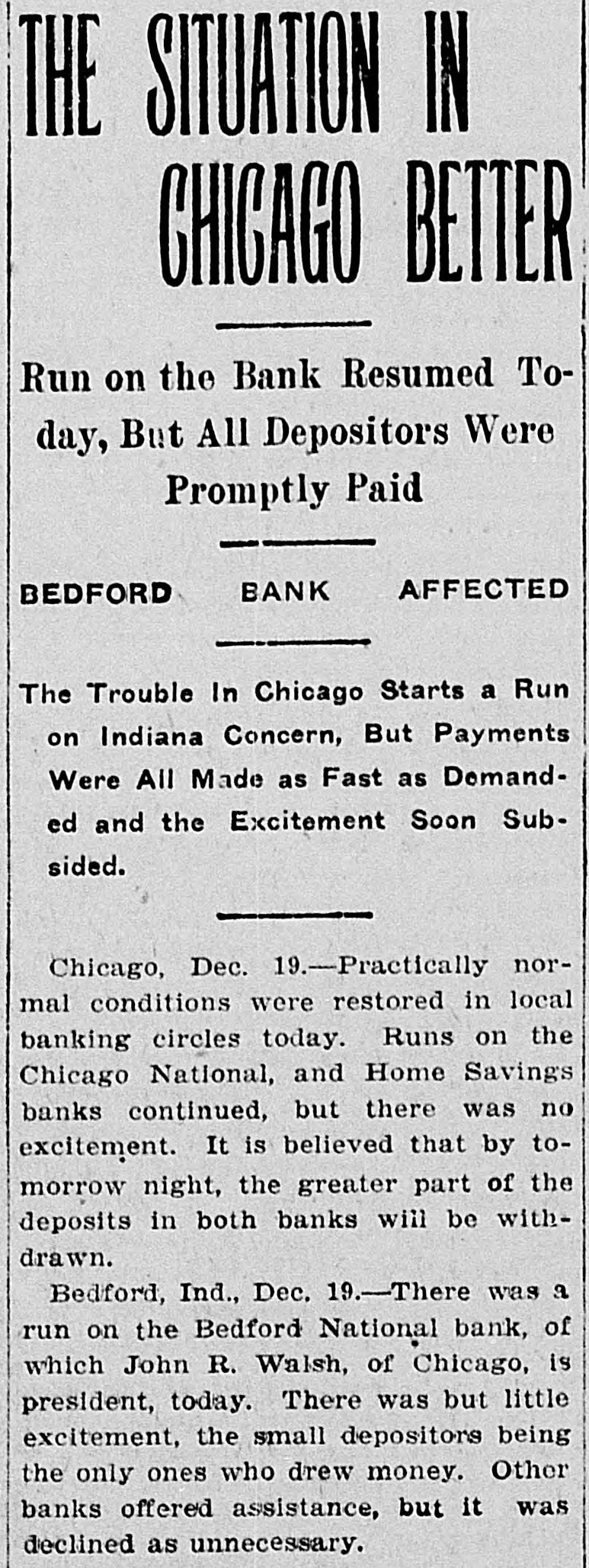
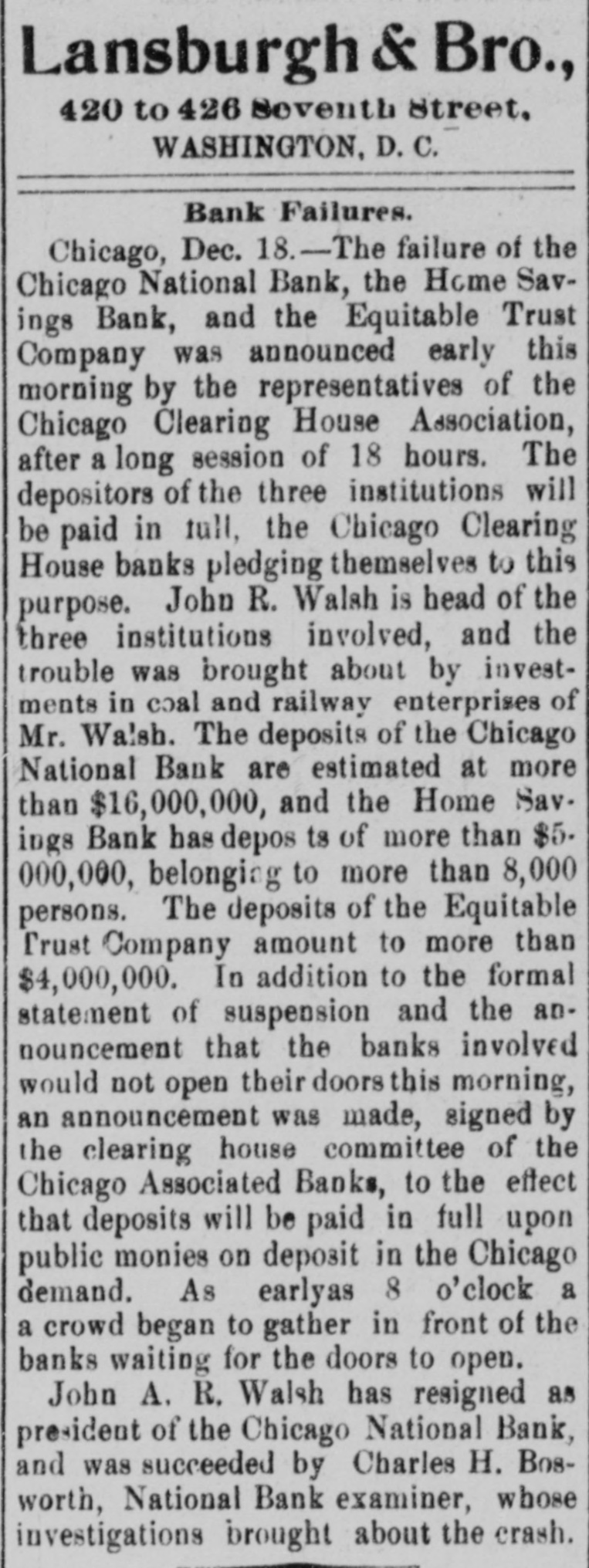
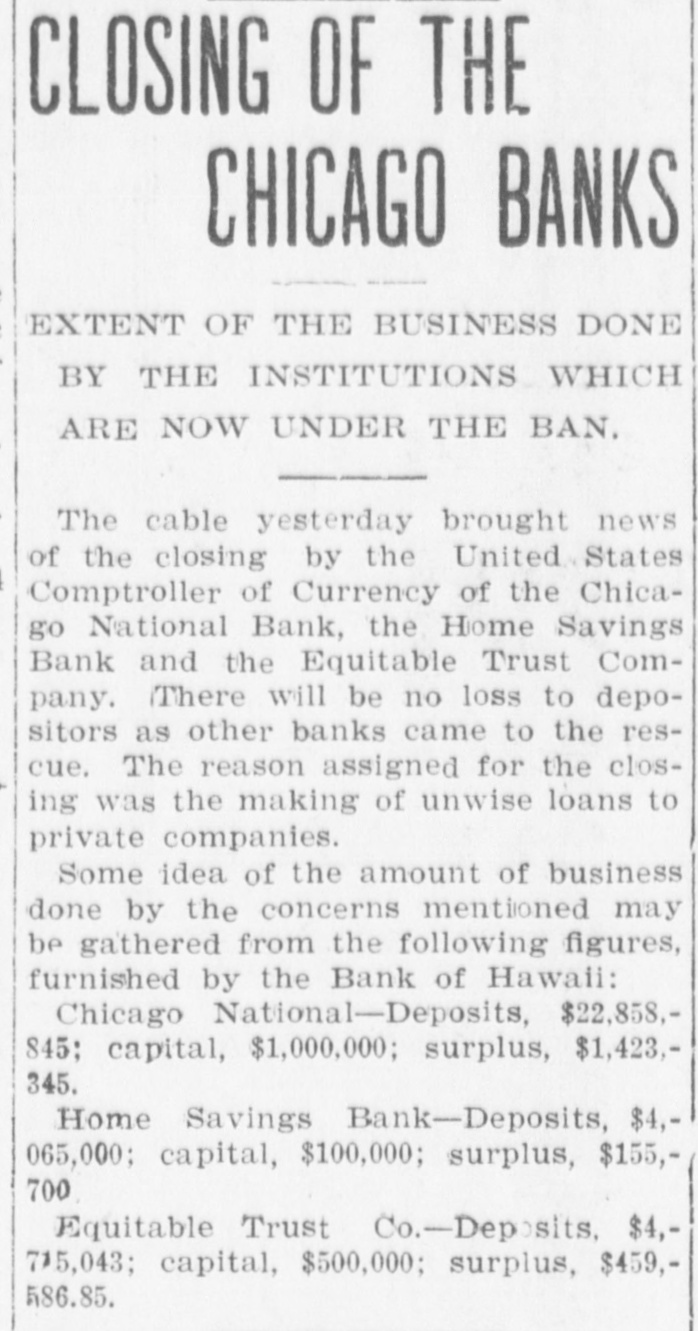
taken over on terms which will enable the three institutions to pay their depositors In full. "Mr." Ridgley, comptroller of the currency. and Captain Eubank of the auditor's department at Springfield, were seen and expressed themselves as greatly. pleased at the action of the Chicago banks and stated that it reflected great credit upon the Associated Banks of Chlcago, which have again indicated their ability to meet any emergency in a manner entirely satisfactory to the public." The meeting of the Chicago Clearing House association began at noon Sunday. Notices were sent to the members of the board by Mr. Forgan after it had been learned of the condition of the banks and the trust company. BEHIND CLOSED DOORS. Clerks were notified and fifty or more with ten stenographers hurried to the First National bank Behind closed doors the clearing house association began its work of finding a way that might enable them to ride the financial sea in safety. That a pante would be likely to follow was the first thought of the committee Resolutions were adopted and heads of other banks pledged themselves to give assistance. The amount involved in the failure would not be stated by the committee members. All information concerning the meeting of the committee was kept secret until 2 o'clock this morning and half an hour later the association gave the statement to the press The names of the committee who drew up the statement are: James B. Forgan, president, First National Bank, chairman; John G. Mitchell, president of the Illinois Trust and Savings Bank: Orson B. Smith. president of the Merchants Loan and Trust company: James B. Eckles president of the Commercial National Bank: Ernest A. Hamill, president of the Corn Exchange National Bank. DEPOSITORS NOTIFIED. In addition to the formal statement of the failure and the announcement that the banks involved, would not open their doors this morning. the following statement was made and signed by the clearing house committee of the Chicago Assoclated Banks: "To the public: Depositors of the Chicago National Bank. the Home Savings Bank and the Equitable Trust company. are respectfully advised that their deposits will be paid in full upon demand." RELIEVED CRITICAL SITUATION The following statement was given out later by Comptroller of the Currency WIIliam B. Ridgely: The action of the Chicago Clearing House banks in coming to the aid of the Chicago National bank. the Home Savings bank. and the Equitable Trust company, has relieved a most critical situation which, if it had not been taken properly in hand, might have led to very serious consequences, not only in Chicago, but elsewhere. The action of the Clearing House banks makes it absolutely certain that all the creditors of the three institutions will receive their money immediately and should thus relieve any apprehension on the part of the public in regard to the financial troubles in Chicago. The critical situation in which these three concerns have been placed, has been due to the large loans made to the railway, coal mining and other industries owned and controlled by Mr. John D. Walsh. This again emphasizes the danger of managing officers of banks being Interested in outside institutions, requiring large amounts of money. CONDITION CRITICIZED. The comptroller's office has for some time been criticizing the condition of the Chicago National bank, and calling upon its officers and directors to reduce the amount of these loans and the investments in bonds of Mr. Walsh's corporations. In spite of repeated promises that this should be done, these Items have been continued in the bank. and in order to prevent further encroachments it was necessary for the comptroller to take radical action The comptroller's office has for some time been endeavoring to make an examination of the Chicago National bank simultaneously with an examination of the state institutions by the state bank examiner, but was not able to bring this about until a few days ago. The result of the examinations revealed such a serious condition that it was necessary to take immediate action. The comptroller telephoned from Washington, instructing Bank Examiner Bosworth to bring the matter at once to the attention of the clearing house committee and left for Chicago on the first train to be on hand personally to take what-