23005. Bank of Benwood (Benwood, WV)

Bank Information

Episode Type
Suspension → Closure
Bank Type
state
Start Date
January 1, 1925*
Location
Benwood, West Virginia (40.018, -80.734)

Metadata

Model
gpt-5-mini
Short Digest
61942d01

Response Measures

None

Description

Articles describe the Bank of Benwood as defunct, with a receiver appointed and large losses reported; cashier pleaded guilty in 1925 to making false reports and was later charged with embezzlement. No article describes a depositor run prior to suspension — events are liquidation/receivership and legal/fee issues.

Events (3)

1. January 1, 1925* Suspension
Cause
Bank Specific Adverse Info
Cause Details
False reports to the banking commissioner and embezzlement by the cashier leading to the bank's collapse.
Newspaper Excerpt
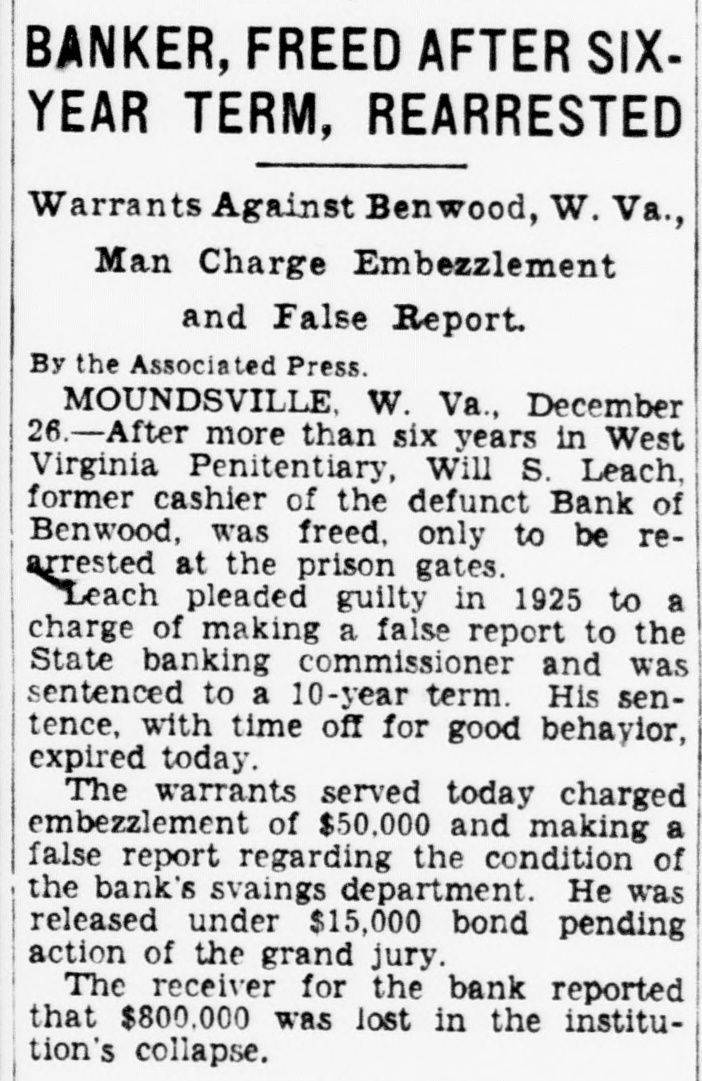
After more than six years in West Virginia Penitentiary, Will S. Leach, former cashier of the defunct Bank of Benwood...Leach pleaded guilty in 1925 to a charge of making a false report to the State banking commissioner...
Source
newspapers
2. August 26, 1932 Other
Newspaper Excerpt
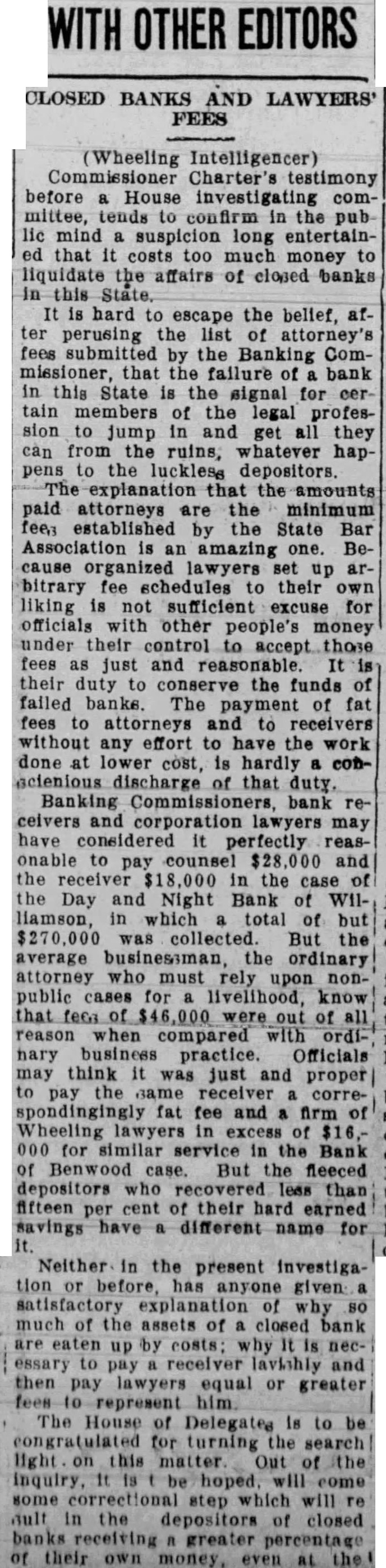
the payment of fat fees ... firm of Wheeling in of $16 000 for similar service in the Bank of Benwood case. But the fleeced depositors who recovered less than fifteen per cent of their hard earned savings have different name for it.
Source
newspapers
3. * Receivership
Newspaper Excerpt
The receiver for the bank reported that $800.000 was lost in the institution's collapse.
Source
newspapers

Newspaper Articles (2)

Article from Evening Star, December 27, 1931

Click image to open full size in new tab

Article Text

BANKER, FREED AFTER SIXYEAR TERM, REARRESTED Warrants Against Benwood, W. Va., Man Charge Embezzlement and False Report. By the Associated Press. MOUNDSVILLE, W. Va., December 6.-After more than six years in West Virginia Penitentiary, Will S. Leach, former cashier of the defunct Bank of Benwood, was freed, only to be rearrested at the prison gates. Leach pleaded guilty in 1925 to a charge of making a false report to the State banking commissioner and was sentenced to a 10-year term. His sentence, with time off for good behavior, expired today. The warrants served today charged embezzlement of $50,000 and making a false report regarding the condition of the bank's svaings department. He was released under $15,000 bond pending action of the grand jury. The receiver for the bank reported that $800.000 was lost in the institution's collapse.

Article from Hinton Daily News, August 26, 1932

Click image to open full size in new tab

Article Text

WITH OTHER EDITORS CLOSED BANKS AND LAWYERS' FEES (Wheeling Intelligencer) Commissioner Charter's testimony before House investigating committee, tends to confirm in the pub lic mind suspicion long entertained that it costs too much money to liquidate the affairs of closed banks in this It hard to escape the belief. after perusing the list of attorney's fees submitted by the Banking Commissioner, that the failure of bank in this State is the signal for cer. tain members of the legal profession to jump in and get all they can from the ruins, whatever happens to the luckless depositors explanation that the amounts paid attorneys are the minimum fee,3 established the State Bar Association is an amazing one. Because lawyers set up arbitrary fee schedules to their own liking is not sufficient excuse for officials other people's money under their control to accept those fees as just and reasonable It their duty the funds of failed banks. The payment of fat fees attorneys and to receivers without any effort to have the work done at lower cost, is hardly conscienious discharge of that duty. Banking Commissioners bank receivers and corporation lawyers may have considered perfectly reasonable to pay counsel and the receiver in the case of the Day and Night Bank of Williamson, in which total of but $270,000 was collected But the average businessman, the ordinary attorney who must rely upon nonpublic cases for livelihood, know that were out of reason when compared with ordihary business practice. Officials may think it was just and proper to pay the correspondingingly fat fee and firm of Wheeling in of $16 000 for similar service in the Bank of Benwood case. But the fleeced depositors who recovered less than fifteen per cent of their hard earned savings have different name for it. Neither in the present investiga tion or before has anyone given satisfactory explanation why so much of the assets of closed bank are eaten up by costs why necessary to pay receiver laviahly and then pay lawyers equal or greater fees to represent him The House of Delegates is to be for turning the search light on this matter Out of the is will come some step which will in the depositors of closed banks receiving greater percentage of their own even