
18464. Commercial National Bank (San Antonio, TX)

Bank Information

Episode Type
Run โ†’ Suspension โ†’ Unsure
Bank Type
national
Bank ID
12162
Charter Number
12162
Start Date
July 31, 1933
Location
San Antonio, Texas (29.424, -98.494)

Metadata

Model
gpt-5-mini
Short Digest
29dddff4d5cb37b6

Response Measures

Full suspension, Books examined

Other: Bank placed on restricted operation/closed and a conservator was named; criminal investigation by district attorney and Texas Rangers conducted.

Receivership Details

Date receivership started
1934-01-31
Date receivership terminated
1934-10-16

Description

Articles (early August 1933) report that Commercial National Bank of San Antonio purchased government bonds later identified as stolen; when depositors discovered this a run occurred and the bank was placed on restricted operation/closed. Officials were working on a plan to resume normal business, but these pieces do not confirm a reopening or permanent closure, so outcome is uncertain.

Events (6)

1. April 8, 1922 Chartered
Source
historical_nic
2. July 31, 1933 Run
Cause
Bank Specific Adverse Info
Cause Details
Depositors learned the bank had purchased government bonds later identified as stolen (Nov. 29, 1932 theft); disclosure prompted heavy withdrawals.
Measures
Bank was placed on restricted operation; officials (vice president/conservator) working on plan to resume normal business.
Newspaper Excerpt
when depositors discovered this, run was on. The bank closed.
Source
newspapers
3. July 31, 1933 Suspension
Cause
Bank Specific Adverse Info
Cause Details
Bank was placed on restricted operation/closed after disclosure it had bought stolen government bonds; authorities filed charges against former president and others tied to the purchase/concealment of the bonds.
Newspaper Excerpt
The Commercial National Bank placed on restricted operation Monday when became public the purchased bonds had been identified those stolen in New York on Nov. 29, 1932.
Source
newspapers
4. January 31, 1934 Receivership
Source
historical_nic
5. October 16, 1934 Restored To Solvency
Source
historical_nic
6. November 20, 1934 Voluntary Liquidation
Source
historical_nic

Newspaper Articles (3)

Article from The Wichita Beacon, August 2, 1933

Click image to open full size in new tab

Article Text

ACCUSE $500,000 Banker. Attorney Charged Receiving Stolen Property SAN ANTONIO, TEX., Aug. complaints were filed in justice court here today against D. Bonner, resigned president of the Commercial tional bank of San Antonio, and John H. Cunningham, prominent San Antonio attorney, in connection with the theft of $500,000 worth of government bonds from the Continental Bank and Trust of New company York. The men charged specifically with receiving and concealing stolen property. They named jointly with Harry Royster, San Antonio aviator, in conspiracy charge. Names of four others against whom charges were filed were withpending arrests. Decision file the charges reached last night conference between Walter Tynan, district torney, and bank officials, among them Ernest Baetz, vice president and conservator man, alleged have been the contact man in the transaction which were volved. said be under tection Texas Rangers after made ficers the He fear would be the spot' for his part the Tynan said eight would locally arising from the investicentered detectives followed chain leading to Boston, ChiKansas and Commercial bank placed on restricted operation Monday became public purchased bonds had been identified those stolen New York 29, 1932. An incipient run dangered the bank's reserves multaneously notice the bank's altered status came nouncement Bonner's resignaas reported the San Antonio paid for the stolen bonds, their face Officials of the bank have the bonds good and that they fight interest in them initiated by the New York stitution pointed out that whatever liability faces the matter the bonds, the San bank good condition Officials working plan for resumption normal which will submitted to Washington
Article from Tyler Morning Telegraph, August 3, 1933

Click image to open full size in new tab

Article Text

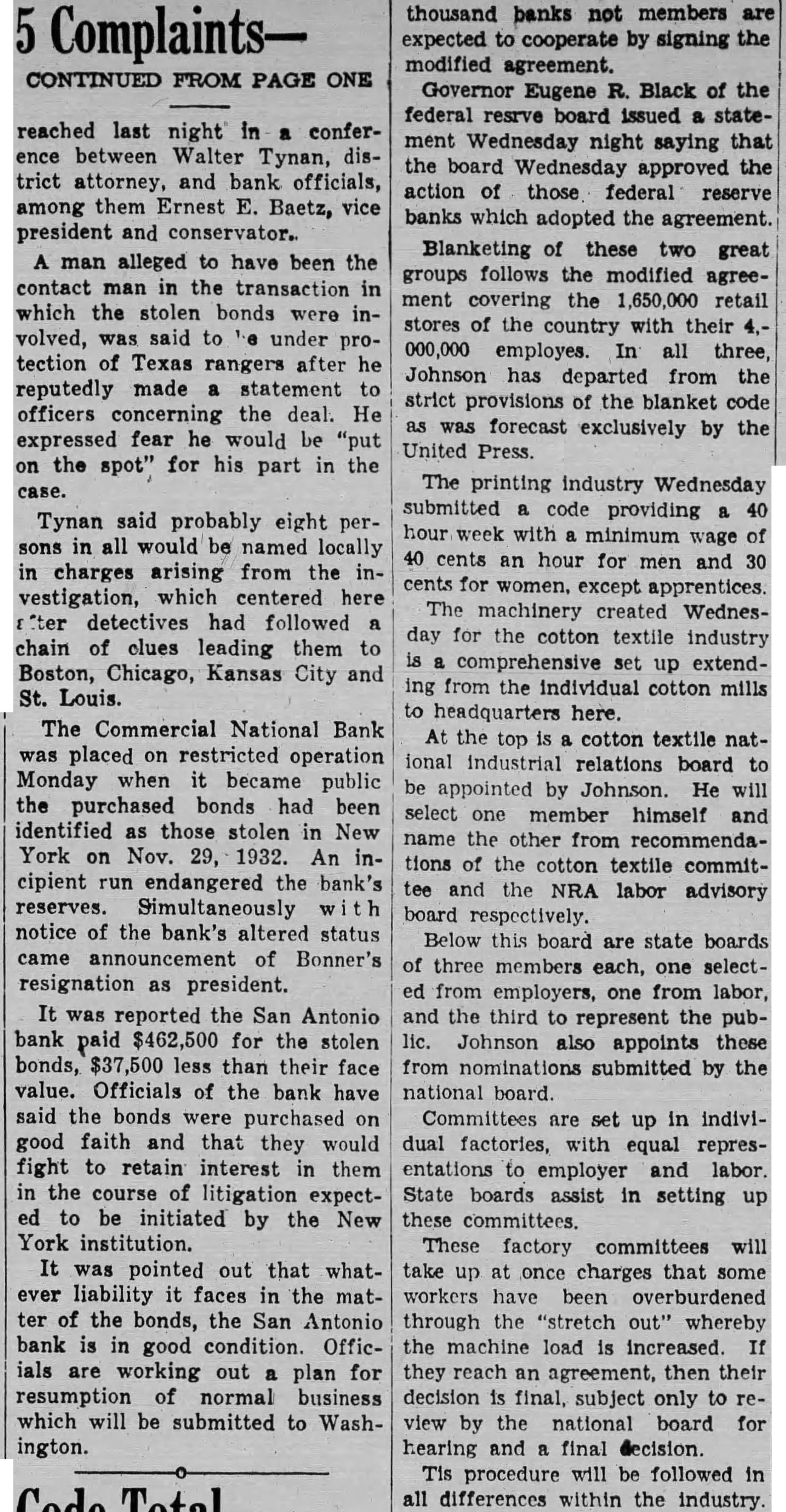
PAGE reached last night conferbetween Walter Tynan, trict attorney, and bank officials, among them Ernest Baetz, vice president and conservator. alleged to have been the contact man in the transaction in which the stolen bonds volved, said to under tection of Texas rangers he reputedly made statement officers concerning the deal. He expressed fear he would be "put the for his part in the Tynan said probably eight sons in all would be named locally charges arising from the vestigation, which centered here detectives had followed chain of clues leading them to Boston, Chicago, Kansas City and St. Louis. The Commercial National Bank placed on restricted operation Monday when became public the purchased bonds had been identified those stolen in New York on Nov. 29, 1932. An cipient endangered the bank's reserves. Simultaneously notice the bank's altered status came announcement of Bonner's resignation president. It reported the San Antonio bank paid $462,500 for the stolen bonds, less than their face value. Officials of the bank have said the bonds purchased good faith and that they would fight retain interest them the of litigation expected to be initiated by the York institution. It was pointed out that whatliability faces in the ter of the bonds, the San Antonio bank is good condition. Officials working out for plan resumption of normal business which will be submitted to Washington. thousand banks not members expected cooperate by signing the modified agreement. Governor Eugene Black of the federal resrve board issued statement Wednesday night saying that the board Wednesday approved the action of those federal reserve banks which adopted the agreement. Blanketing of these two great groups follows the modified agreement covering the retail stores of the country with their 000,000 employes. In all three, Johnson has departed from the strict provisions of the blanket code forecast exclusively by the United Press. The printing industry Wednesday submitted code providing hour with minimum cents an hour for men and for except apprentices. The machinery created Wednesday for the cotton textile industry comprehensive up extendfrom the individual cotton mills to here. At the cotton textile national industrial relations board be appointed by Johnson. He will select one member himself and name the other from tions the cotton textile committee and the NRA labor advisory board respectively. Below board are state boards three members each, one from employers, one from labor, and the third to represent the public. Johnson also appoints these from nominations submitted by the national Committees are set up in individual factories, with equal representations to employer and labor. State boards assist in setting up these committees. These factory committees will take up once charges that some workers have been through the "stretch whereby the machine load increased. they reach an agreement, then their decision final, subject only to view by the national board hearing and final decision Tis procedure will be followed in all differences within the


Article from The Enid Daily Eagle, August 14, 1933

Click image to open full size in new tab

Article Text

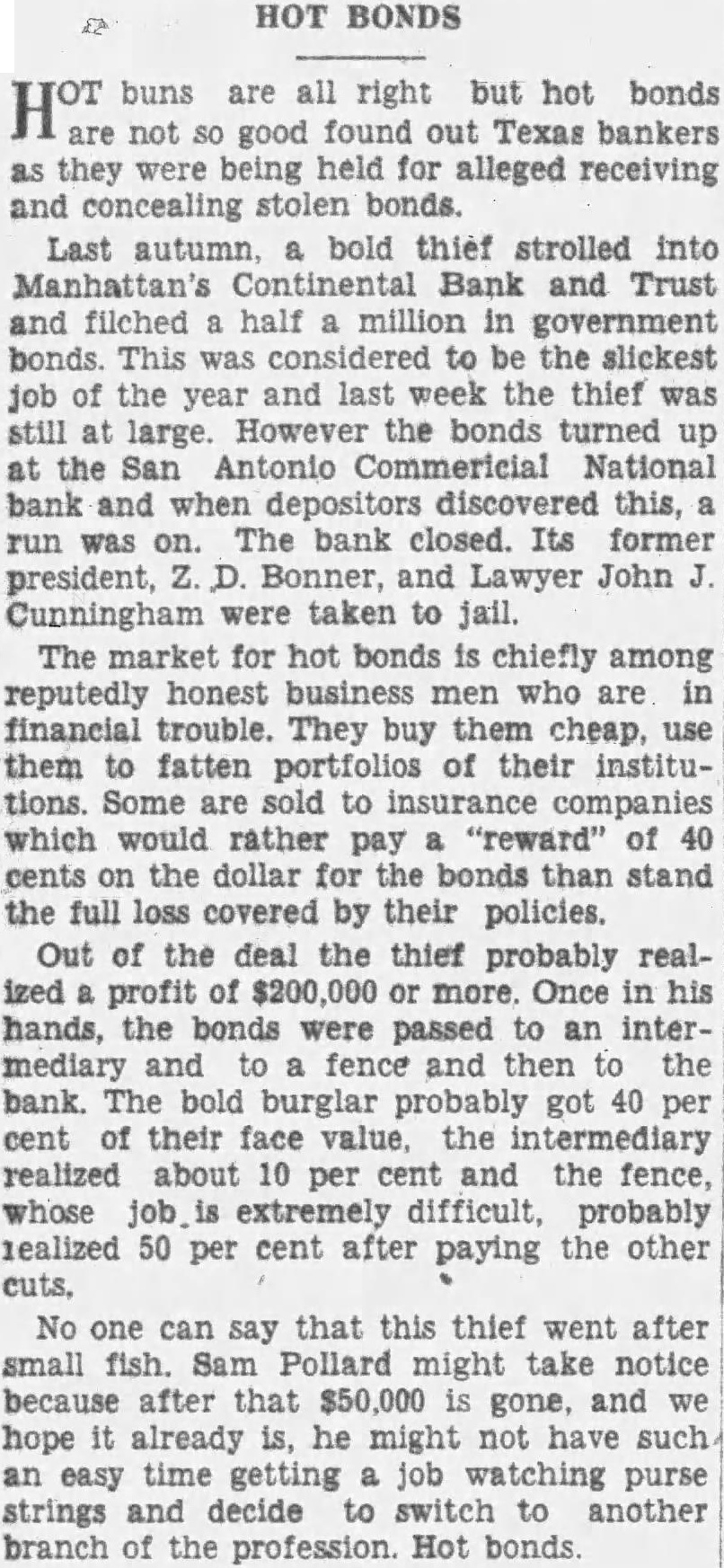
HOT BONDS buns are all right but hot bonds are not so good found out Texas bankers as they were being held for alleged receiving and concealing stolen bonds. Last autumn, bold thief strolled into Manhattan's Continental Bank and Trust and filched half million in government bonds. This was considered to be the slickest job of the year and last week the thief was still at large. However the bonds turned up at the San Antonio Commericial National bank and when depositors discovered this, run was on. The bank closed. Its former president, Bonner, and Lawyer John Cunningham were taken to jail. The market for hot bonds is chiefly among reputedly honest business men who are in financial trouble. They buy them cheap, use them to fatten portfolios of their institutions. Some are sold to insurance companies which would rather pay "reward" of 40 cents on the dollar for the bonds than stand the full loss covered by their policies. Out of the deal the thief probably realized profit of or more. Once in his hands, the bonds were passed to an intermediary and to fence and then to the bank. The bold burglar probably got 40 cent of their face value, the intermediary realized about 10 per cent and the fence, whose extremely difficult, probably realized 50 per cent after paying the other No one can say that this thief went after small fish. Sam Pollard might take notice because after that $50,000 is gone, and we hope it already is, he might not have an easy time getting job watching purse strings and decide to switch to another branch of the profession. Hot bonds.