17491. Citizens Bank (Seneca, SC)

Bank Information

Episode Type
Suspension โ†’ Closure
Bank Type
state
Start Date
January 1, 1930*
Location
Seneca, South Carolina (34.686, -82.953)

Metadata

Model
gpt-5-mini
Short Digest
b5cefbfdc129c890

Response Measures

None

Description

Articles describe The Citizens Bank of Seneca as having closed in January 1930 after unlawful loans were discovered; a receiver (Brazile) was later appointed (news coverage Feb 25, 1932). No mention of a depositor run. Cause of suspension/closure is bank-specific adverse information (unlawful loans/insolvency). OCR errors in articles corrected (e.g., 'Brazile'/'Brazille' variants).

Events (2)

1. January 1, 1930* Suspension
Cause
Bank Specific Adverse Info
Cause Details
Unlawful loans made by bank officials were reported to the state bank examiner; charges of unlawful loans and related insolvency preceded the bank's closure in January 1930
Newspaper Excerpt
the bank closed in January 1930
Source
newspapers
2. February 25, 1932 Receivership
Newspaper Excerpt
Circuit Judge B. Greene, Anderson, signed an order making Brazille receiver. The receiver's father paid in full his liability at stockhold... The Citizens Bank of Seneca. McDonald made unlawful loans which were called to the attention of the state bank examiner's office ... the bank closed in January 1930, ... the bank should [have been] prosecuted the bank officials, McDonald said (Greenville / Florence articles, 1932-02-25).
Source
newspapers

Newspaper Articles (2)

Article from The Greenville News, February 25, 1932

Click image to open full size in new tab

Article Text

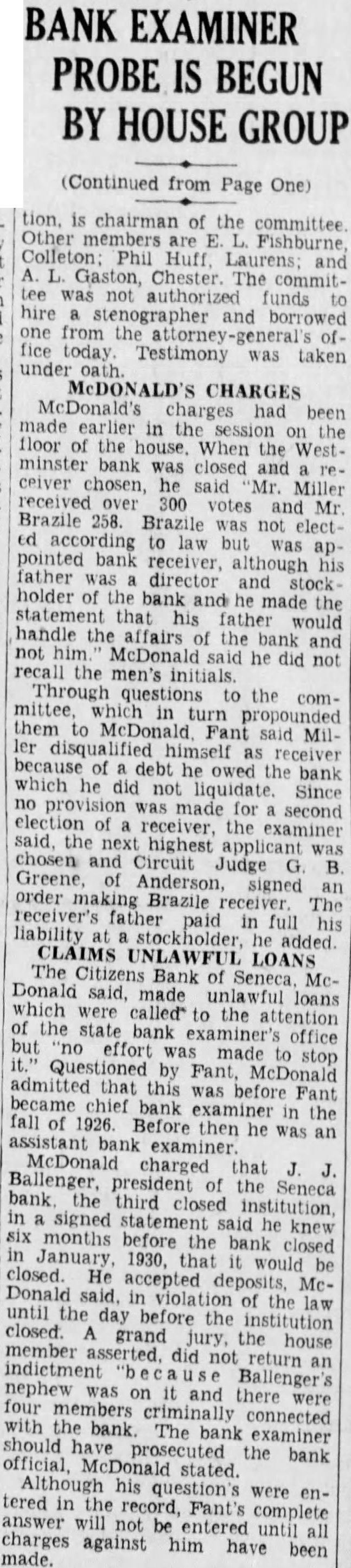
BANK EXAMINER PROBE IS BEGUN BY HOUSE GROUP (Continued from Page One) tion. is chairman of the committee are Phil and Chester was authorized funds stenographer from the Testimony was taken under McDONALD'S CHARGES McDonald's charges the floor the When the West. minster was closed and ceiver chosen, said Mr. Miller Mr Brazile 258. Brazile was not ed according law was appointed bank although father director and stock holder the he made the father would handle the affairs the and not McDonald did not the the comthem to McDonald said Miller receiver because debt he owed the bank which he did not Since no was made for second of receiver the examiner said the highest chosen and Circuit Judge Greene signed order Brazile The receiver's father in full liability CLAIMS UNLAWFUL LOANS The Citizens Bank Seneca, Mc. Donald said, made unlawful loans to the attention state bank but was office stop Questioned Fant, admitted that this was before Fant became bank in the fall 1926 Before then he was an assistant McDonald charged that president Seneca bank third closed institution statement he knew months the bank closed January, closed. He McDonald the closed. until the day before the law grand the house member did not return an indictment nephew was on and four members criminally connected The bank examiner should prosecuted the bank stated. his were entered the Fant's charges answer entered complete against him have been made.

Article from Florence Morning News, February 25, 1932

Click image to open full size in new tab

Article Text

Just Around the Corner! mittee, which in turn propounded them Fant said Milldisqualified receiver because debt owed the bank which he did not liquidate. Since provision was made for second election of receiver, the examiner said, the next highest applicant was chosen Circuit Judge B. Greene, Anderson, signed an order making Brazille receiver The receiver's father paid in full his liability at stockholdhe added The Citizens Bank of Seneca. McDonald made unlawful loans which were called to the tention of the state bank examinoffice but "no effort was made stop questioned by Fant, McDonald admitted that this was before Fant became chief bank examiner the 1926 Before then he was an assistant bank examiner. McDonald charged that Ballenger, president Seneca bank, third closed institution in signed statement said he six months the bank closed in January 1930, that would closed. He accepted posits, McDonald said, in violation the law until the day before the closed. grand jury. the house member did not return an indictment 'because Ballenger's nephew was on and there four criminalconnected the bank The bank should prosecuted the bank official, McDonald Although his question's were entered in the Fant's complete answer will not entered until all charges against him have been made. ed measure to bring this Stimson pointed out that the Washington conference of- 1922 which signed the nine-power treaty guaranteeing the territorial integrity China was fact an arms reduction conference and that the United agreed give up some its battleships abandon Guam and in the Philippines because believed the understanding reached about China would lessen danger of conflict the far east. The secretary state went to say the United States stands firmly by the John Hay open door policy promulgated 1899 and by the nine-power treaty adopted Washington 1922, when Charles Evans Hughes was secretary state, which put the door policy into more definite form. ment of property taxes until June without further penalty. Backers of the resolution successfully kept the from being sidetracked to the finance committee. its opponents sought, and had placed on the for sible consideration The vote against committee reference was 25 to 11. The resolution, which will have force of law, was introduced after Comptroller General Beattie announced he would not extend tax payments requested concurrent resolution passed by both houses. In debate on the resolution today, Senator Greneker, Edgefield. said the bill went the committee would "meet untimean death."