Click image to open full size in new tab
Article Text
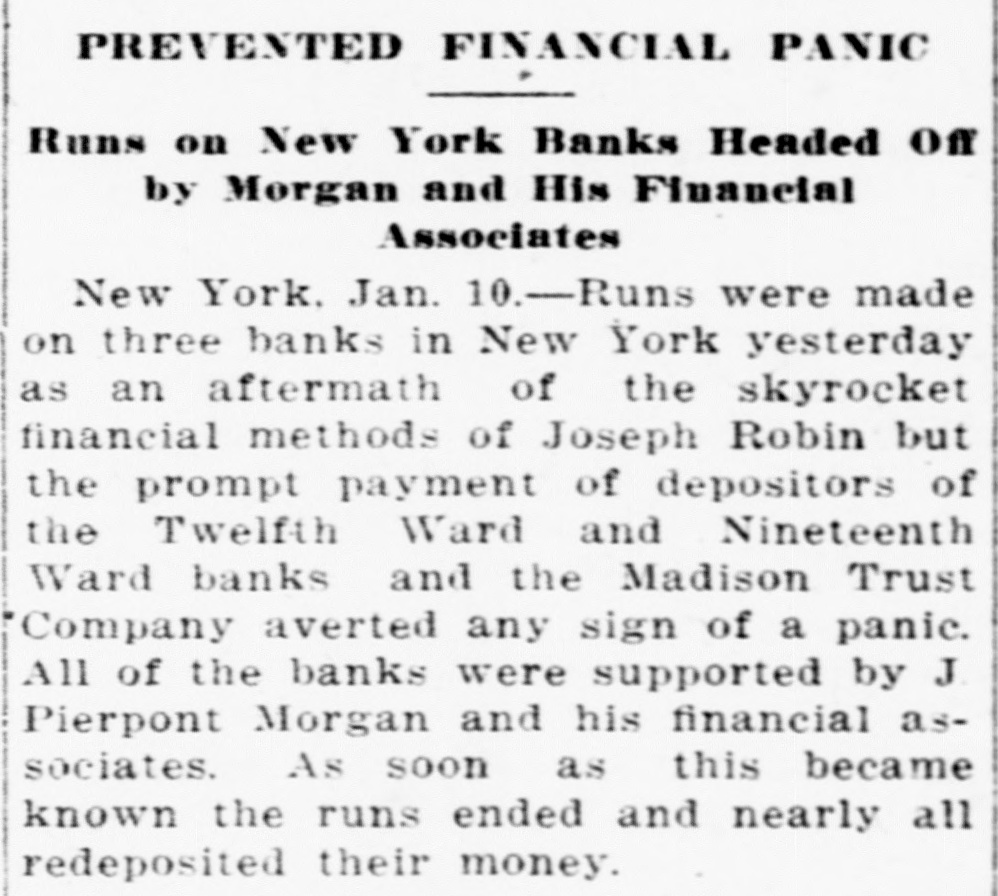
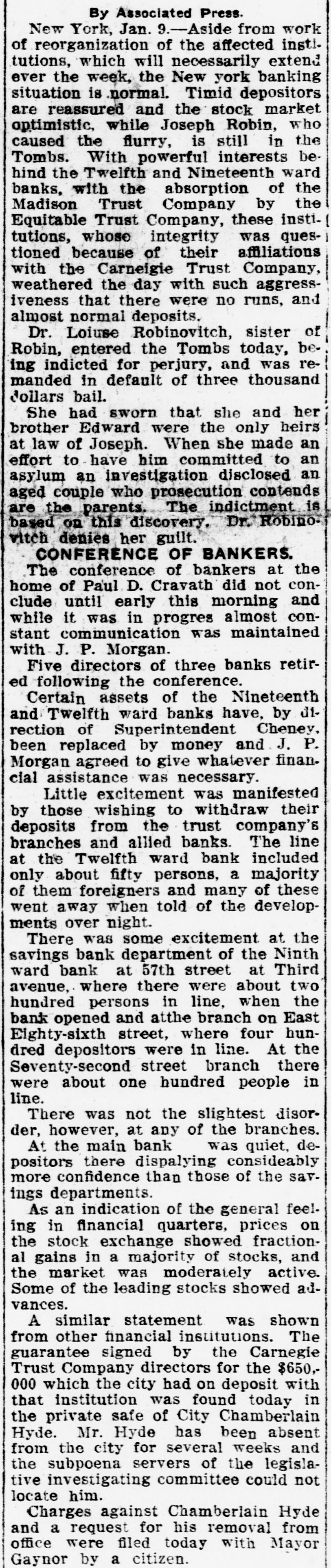
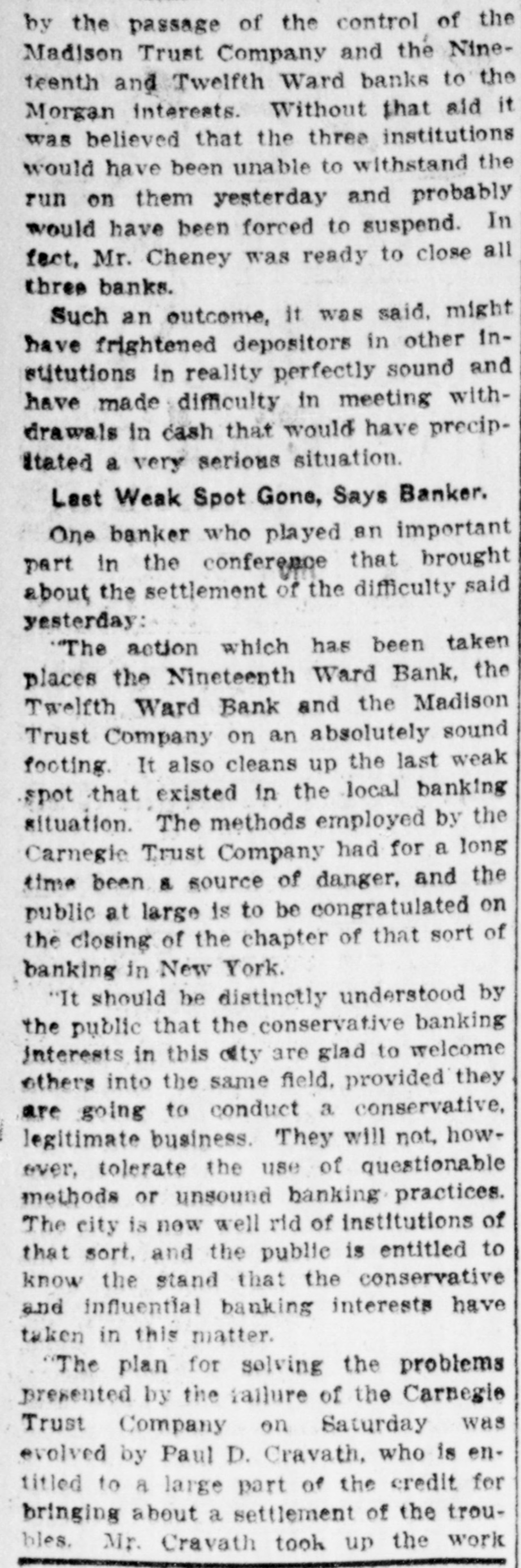
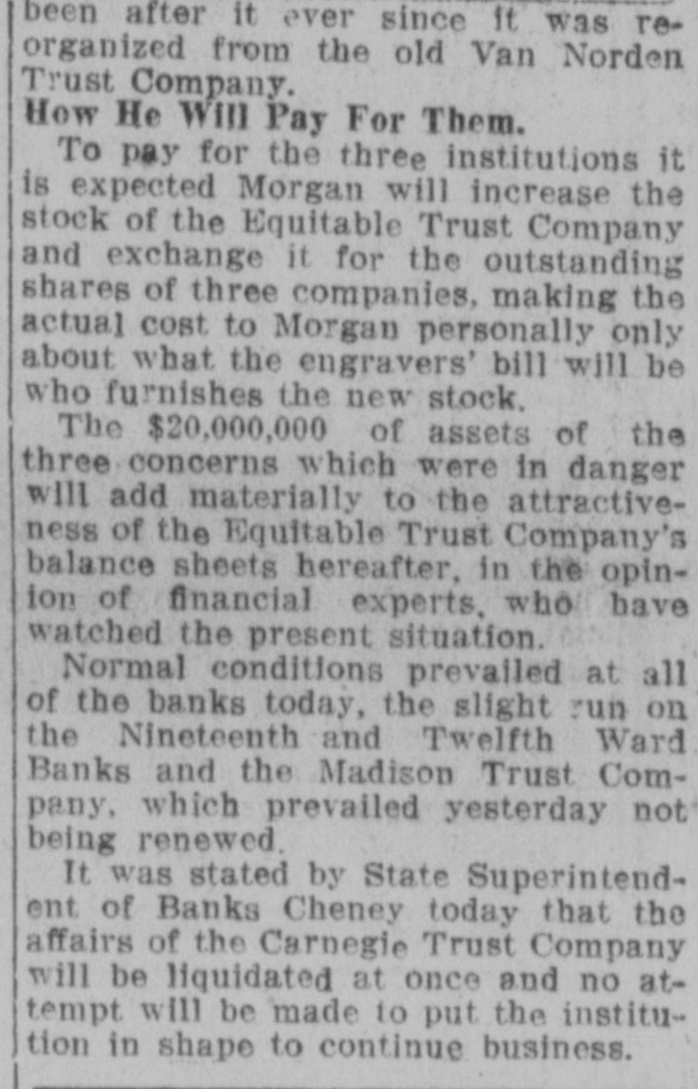
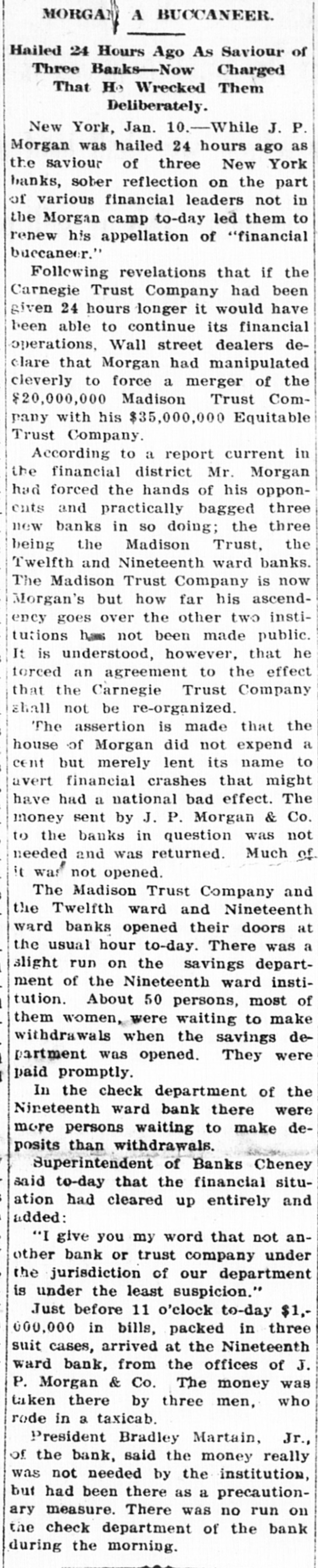
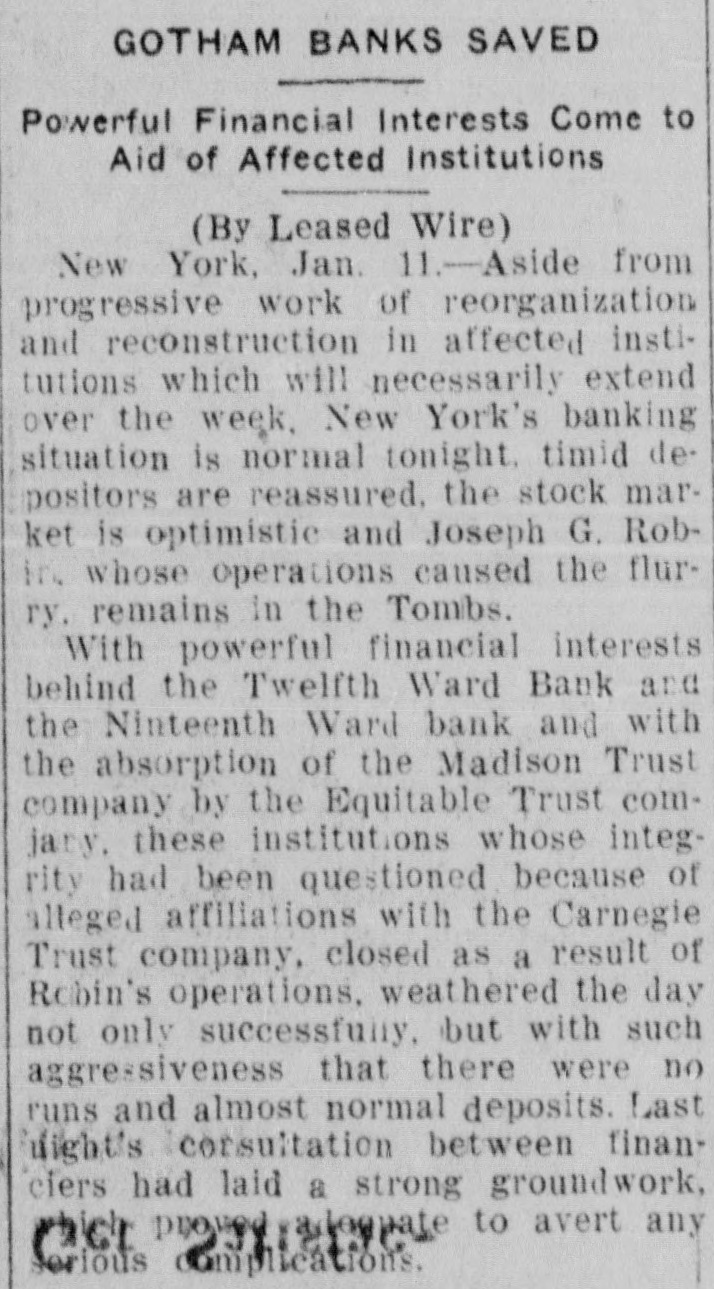
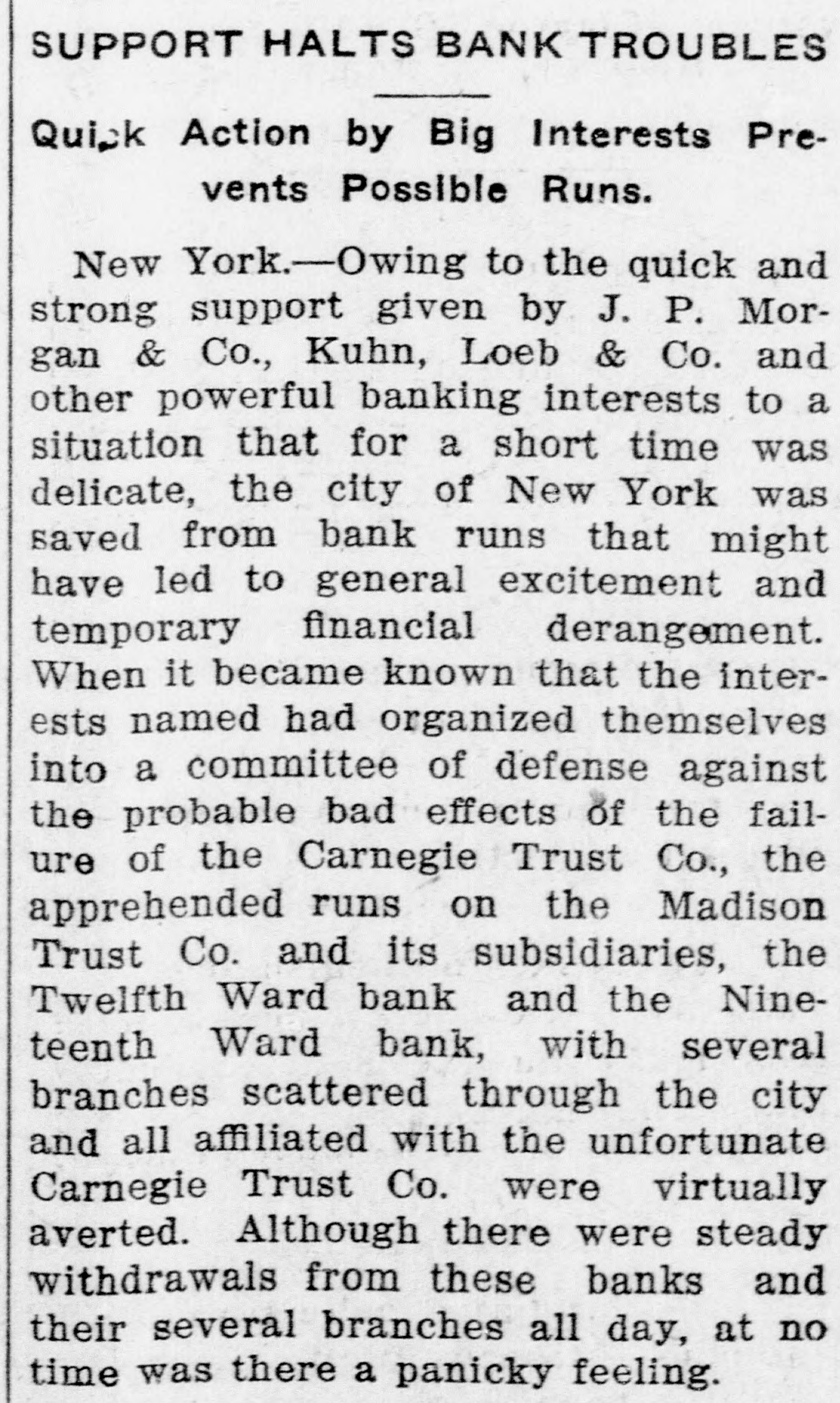
Didn't Risk a Cent and His Equitable Trust Absorbs Madison Institution. GOLD IS UNTOUCHED. Big Packages Sent to Avert Run Are Not Even Opened. In saving the Madison Trust Comany, the Nineteenth Ward Bank and be Twelfth Ward Bank from going the wall by the mere lending of his name to these institutions Mr. Morgan has added about $20,000,000 to the ten billions of dollars he already has under his control, and at the same time obtained possession virtually of the Madison Trust Company. It was learned to-day that the house of Morgan did not put up so much as a cent, because after the publication yesterday that Morgan had come to the rescue of the banks and trust company the Institutions threatened were able to meet the demands made on them from their own resources. Although money was sent to all the banks to be on hand in case it was needed, the big packages of gold and currency were not even opened. Bound to Avert Panic. Business men. and the public generally interpreted Morgan's intervention to mean that powerful financial interests had determined there should be no repetition of the monetary panic of 1907, and that any bank which might be in trouble would be supported. That, practically, is the situation, it is said, and although stockholders may have to pay dearly, the depositors will be protected. In addition to being willing to drive a good bargain the Morgan interests, it is asserted, do not desire any finanetal disturbance at this time, causing, as it would, the securities held by the various banks to be thrown on the stock market and reducing the prices there they have been so anxious to maintain. The Carnegie Trust Company synd:cate paid $315 a share for the Van Norden holdings in the Madison Trust Company. Mr. Morgan has agreed to take them over, it is understood at book. or liquidation value, which it is estimated will be about $184 a share. Got a Bargain Rate. According to Wall street information, the Mndison Trust Company was virtually forced into the Morgan arms. It was said that the Morgan interests for a long time had been determined to eliminate the Carnegie Trust Company and obtain control of the Madison, the majority of the stock of which was held by,a syndicate of Carnegie directors. In support of this a remark said to have been made by Joseph T. Howell. President of the Carnegie Company, was quoted. According to this Mr. Howell had said that the sudden closing of his company by the State Banking Department had been an outrage. Whether or not Mr. Howell made this remark, the sentiment attributed 10 him was held by many of his directors. "The company is absolutely solvent and will pay dollar for dollar," said former Judge Keener, one of its directors. Forced to Go to Morgan? "How, then, do you explain the action of the State Banking Department: he was asked. "That is for them say," he replied, with a shrug. To continue the Wall street story the Nineteenth and Twelfth Ward banks were forced by the State Banking Department to go to the Morgans for aid. The Nineteeuth Ward, it was said, had about 35 per cent. of its deposits in actual cash, and about $1,500,000 in commercial paper 50 good that it could have been sold anywhere. The State Banking Department, it was asserted. declined to give the management time to sell this and informed the bank that it would take possession on Monday morning if the institution had not by that time obtained the support of strong banking