Click image to open full size in new tab
Article Text
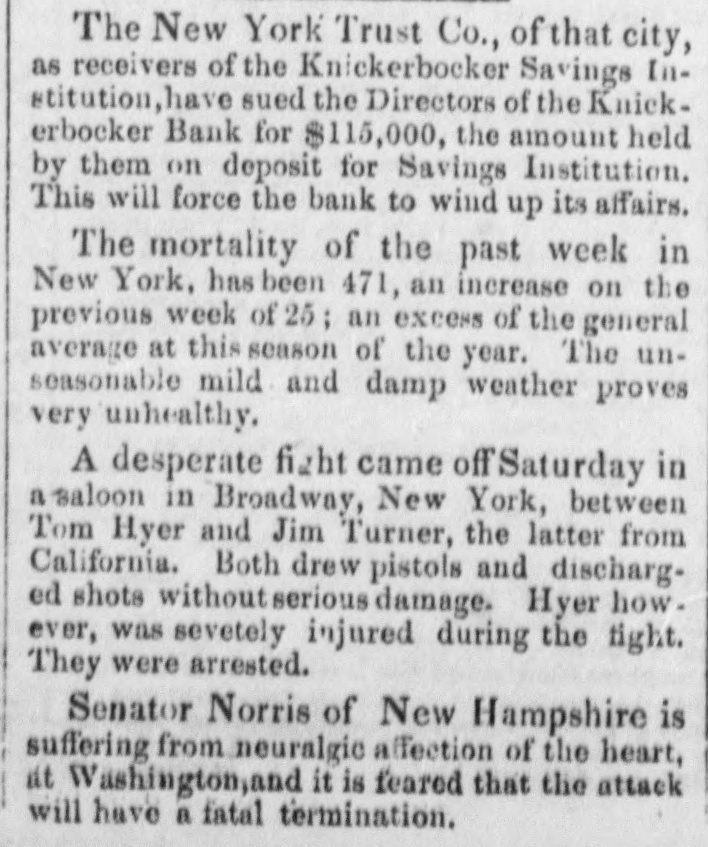
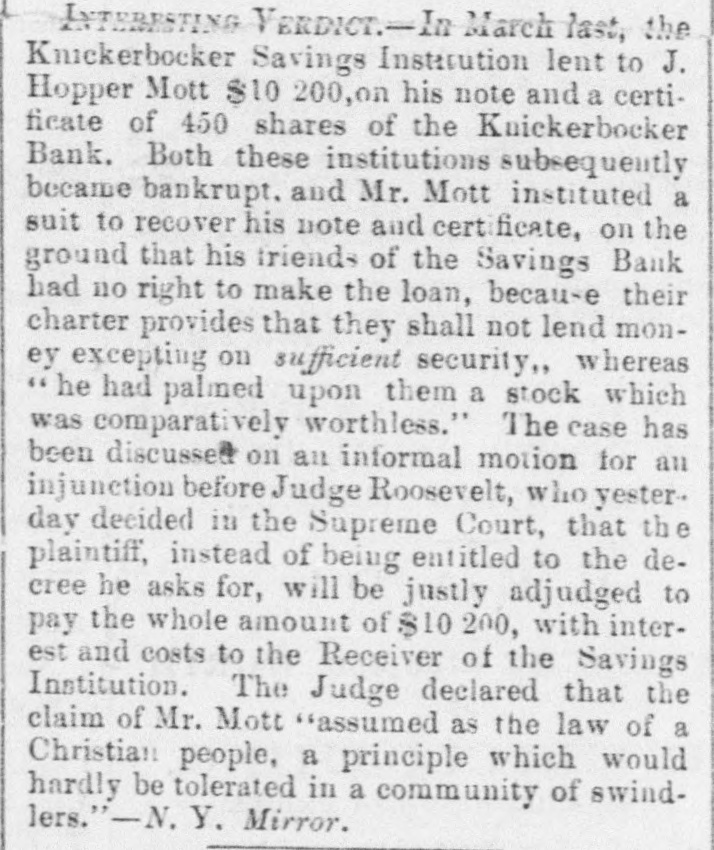
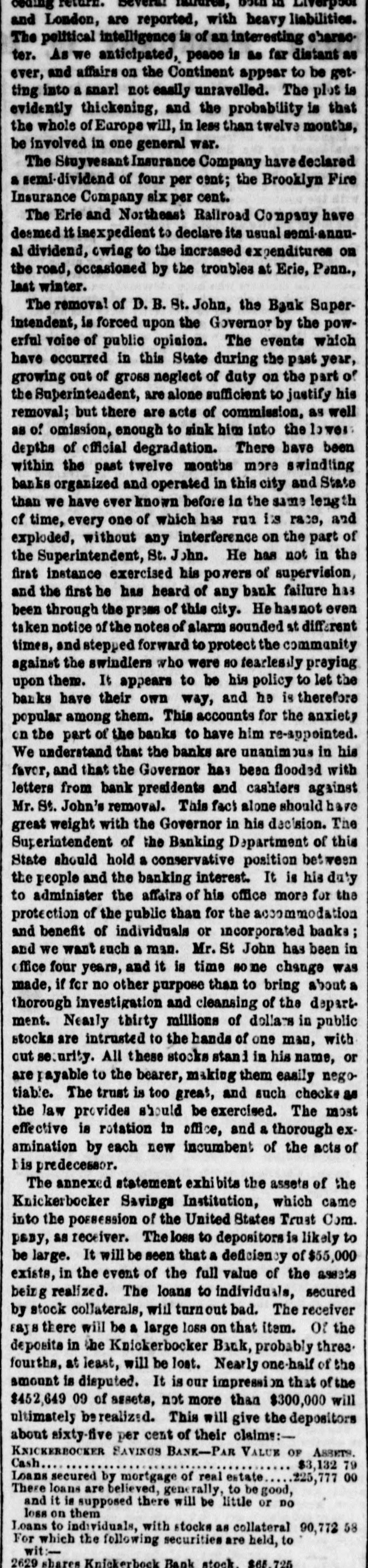
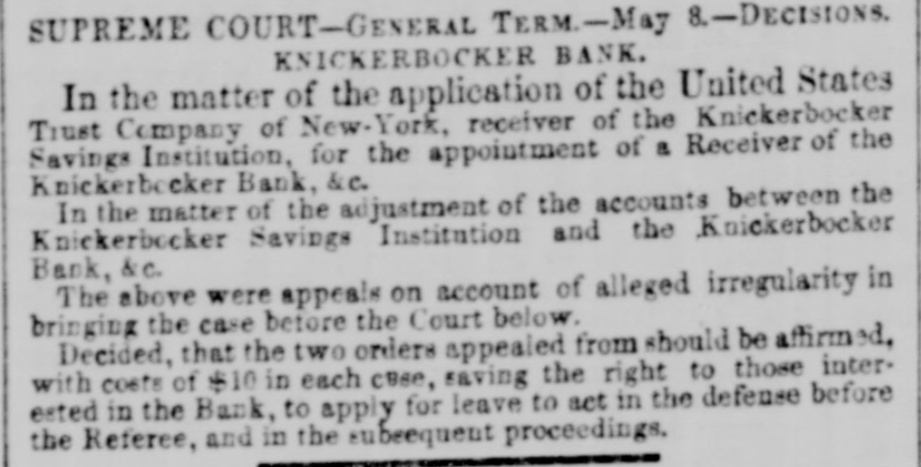
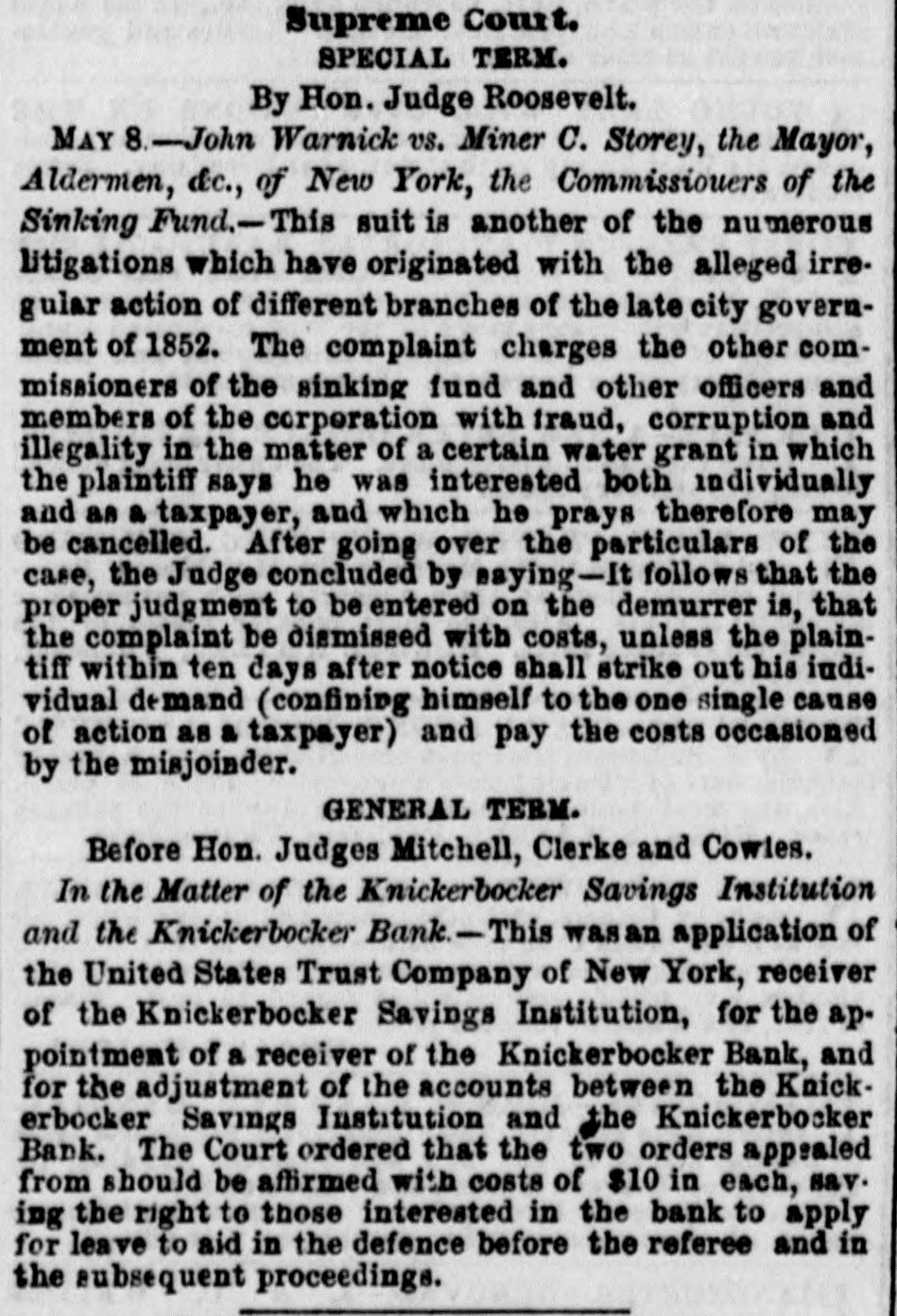
LA W INTELLIGENCE. UNITED STATES CIRCUIT COURT. DECISION IN THE INDIA RUBBER CASES. [Reported for The N. Y. Tribune Charles Goodyear agt. Bourn & Brown. This case was a bill in Equity in which the plaintiff sued the defendants for infringing his Vulcanizing India Rubber Patent, and was commenced in 1853, and injunction was prayed for, and was granted by Judge Nelson, to prevent the delivery of a quantity of shoes worth about $15,000. Pending this injunction the shoes were taken by process from the State Courts in behalf of the purchaser, and the present case came up on a motion by plaintiff to amend the bill-it appearing that other parties had purchased Goodyear's exclusive right to manufacture India rubber shoes before the suit was commenced, and necessarily should be parties to the same. The defendants objected to the other parties being made plaintiffs, upon the ground that it would change the entire cause of action as the amendment showed, and also moved that the injunetion be dissolved. The case was argued by James T. Brady for the plaintiff and N. Richardson for the defendants. The Court (Nelson, Judge) delivered the following opinion: 1. The amendments asked for in this cause cannot be allowed. It would in effect be the institution of a new suit against these defendants, materially different from the preset one both as to complainants and rights of action. This exceeds the province of amendment, as was held by the Supreme Court of the United States after the last term. 2. The preliminary injunction heretofore issued must be dissolved, as the answer supported by affidavits shows that the shoes in question were made under license from the complainant in the suit. The motion also for a further injunction must be denied for the same reasons, His Honor, Judge Nelson, also delivered an opinion in action in which the Ford Rubber Company and others were plaintiffs, joined with Charles Goodyear against Edwin McChaffee, and Bourn & Brown of Providence, R. I., for an alleged infringement of the Goodyear Vuleanizing India Rubber Patent. The plaintiffs moved for an injunction to restrain the defend. ants from the further prosecution of their business, which is carried on in Providence, R. I. The cause was argued by James T. Brady for the plaintiffs, and N. Richardson for the defendants. Judge Nelson filed the following opinion on Saturday: 1. The defendants waived any objection to the service of the subpena, by causing appearance to be entered and putting in an swer. It is unimportant, therefore, to inquire into the regularity of the service. 2. The motion for the injunction must be denied. The case shows that the defendants are residents of another jurisdiction, and also carry on the business which isclaimed to be inviolation of plaintiff's patent there, and consequently beyond the process of injunction; the issueing of it would therefore be inoperative and useless. If plaintiffs desire to enjoin the defendants they must file their bill in the jurisdiction where the business complained of is carried on. The following gentlemen have been drawn as the Petit Jury pannel for the May Term, to commence 14th inst.: W. Reed Adams, W m. D. Meekes, John E. Phillips, Charles H. Phillips, Daniel Phalen, J. W. Pharo, James Ewing, J. Thompson, C. T. illiamson, R. L. Pell, G. W. Reid, J. M. Jackson, John A. Jackson, Earl Douglas, J. Snelling, T. B. Merrick, J. Turner, J. Emery, J. Ernst, m. G. Lyon, Samuel Perry, Titus Merrick, E. O. Halstead, D. S. Halsted. Wm. McKenzie, C. N. Fearing, R. Clearwater, A. M. Clement, G. F. Paterson John Morse, P. Squires, F. Bellows, Ransom Beman, R C. Adams, J. D. Phillips, Wm. Craig, John L. Smith, J. M. Jones, Isaac Wm. Smith, Richard Makin, R. Emmett, Jr. Wm. inslow, J. C. Winne, S. N. Stubbs, A. M. Whitlock, T. L. Van Norden, John Carleton, R. ardell. SUPREME COURT-MAY 8-GENERAL TERM-Before Judges MITCHELL, CLERKE and COWLES. KNICKERBOCKER BANK. In the matter of the application of the United States Trust Company, of New-York, Receiver of the Knickerbocker Savings Institution, for the appointment of a Receiver of the Knickerbocker Bank. In the matter of the adjustment of the accounts between the Knickerbocker Savings Institution and the Knickerbocker Bank, &c, OPINION. MITCHELL, P. J.-The Bank became insolvent, and application was made to one of the Justices of this Court for the appointment of a Receiver under the act of 1849, ch. 226. The United States Trust Company was appointed Receiver by an order entitled as at Special Term. That Company had been previously appointed Receiver of the Knickerbocker Savings Institution, and in that capacity had sued the Bank, and claimed that $115,000 were due by the Bank to the Savings Institution: while the Bank disputed $49,000 of that amount. The Trust Company, thus being Receiver of both institutions, represented both the debtor and creditor, and applied to the Court for instruc. tions, and the Court ordered a reference to William Kent, Esq. to take the evidence as to the amount due, and to give notice of the reference to the three last Presidents of the Bank. It is objected that the appointment of the Receiver should have been by a Judge at Chambers and not in Court, and that the Trust Company, being plaintiff in a suit against the Bank, could not be a receiver of the Bank. The mere entitling an order, as at Special Term, which by law may be made before a Judge out of Court, or the mak of it by the Judge when sitting at Special Term instead of when sitting at Chambers, does not vitiate the order; he has the power to make the order as a Judge, and it detracts nothing from the force of the order made by him as a Judge that he makes it at the Special Term, or entitles it as made at the Special Term. And if such an order is to be appealed from, it is to be entered as if made at the Special Term. (Code sec. 350). If the appointment of Receiver was only for the purposes of the mit on behalf the Savings Institution, there would be & manifest impropriety in making the Trust Company, acting for that institut Receiver also of the Bank. But this was not the case. The Receiver of the Bank was to act for all the creditors of the Bank, and was disinterested, except as to the case of the one claim of the Savings Institution. is specially created by the Legislature, in part to aid suitors and the Court by as suming the exercise of trusts when it might be difficult to get others to execute them (as in this case) on account of the large. ness of the amount of security that would be required and the difficulty of obtaining persons competent to give such security and to manage such affairs. persons to take charge be of a trust like this, or more trustworthy, probably could not them, found. The papers on the appeal show no objection to un nor that any others were even named; and as there insolvent is no bending rule of law that one who is & creditor of an Reinstitution should not be its Receiver, the objection to the and ceiver falls to the ground. The Trust Company being lawfully appointed Receiver, Justice of the deriving its appointment from the Court or from for instructions, & and Court. it had a right to apply to the Court to make the application than where it was for such inin no case could it be more <<<<<<<<<<<<<<<<<<<<<<<<< the both creditor and debtor. It order of It was structions, and the Court made the in the form of the suit comuseless to keep up the litigation be allowed to progress in the menced, for even if that should the Receiver would be bound to act name for of the the bank, bank and as defendant be could in that suit seek for instructions here. Some notice was proper to be given to such such as sought as would be most likely to take care of the rights the persons bank, and none probably could be thought of more suit of able for this purpose than the late Presidents of the bank. If the appellants think that they can name any other persons who