Click image to open full size in new tab
Article Text
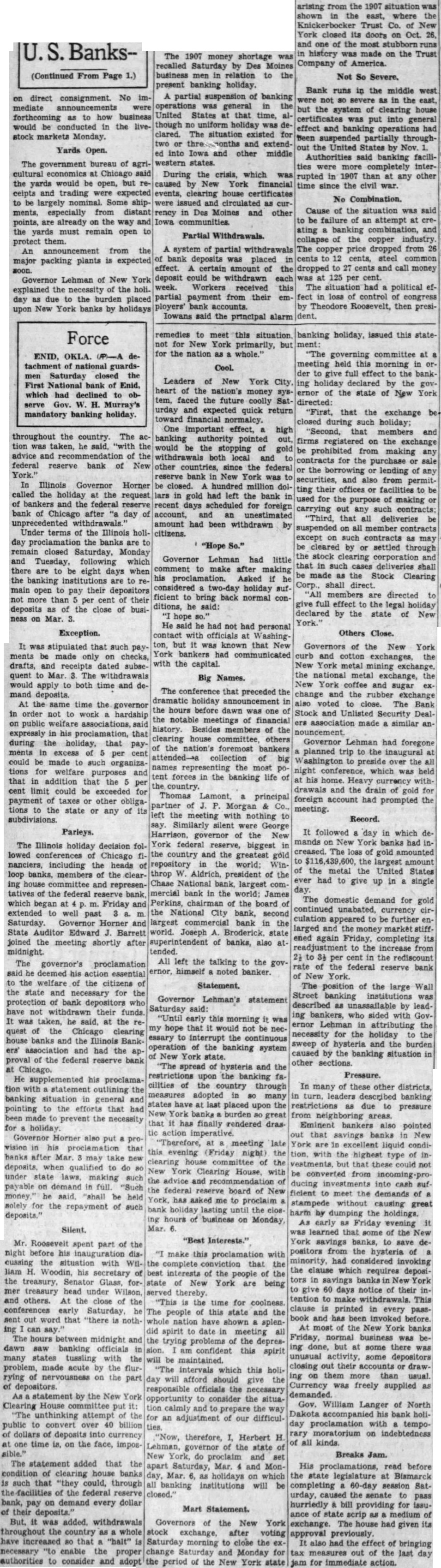
From 1.) direct consignment. No mediate announcements forthcoming to how business would be the livestock markets Monday.
Yards Open.
The 1907 money shortage recalled Saturday by Des Moines business relation to the present banking holiday. partial suspension of banking operations general in United States that time, though uniform holiday clared. The situation existed two and extended into Iowa and other middle The bureau of agri- western states. government cultural Chicago During the crisis, which the yards would be open, but caused by New York financial and trading expected events, house certificates to be largely Some ship- issued and as curments, especially from distant in Des Moines and other points, already the way and Iowa communities. the yards must remain open Partial Withdrawals. protect them. the system of partial withdrawals An announcement from bank deposits was placed major packing plants expected effect. certain amount of soon.
Governor Lehman of New York explained the necessity of the holiday due to the burden placed upon New York banks by holidays arising from the 1907 situation shown the east, where Knickerbocker Trust Co. New York closed its doors on Oct. and one of the most stubborn history made on the Trust Company of America.
Not So Severe.
Bank runs in the middle not in the east, the system of clearing house certificates was put into general effect and banking had the United States by Nov. said banking ties were completely rupted 1907 than any other time since the civil war.
No Combination. Cause of the situation be failure of an attempt ating banking collapse of the copper The copper price dropped from cents cents, steel common dropped to cents and call money deposit could be withdrawn at 125 per cent. week. Workers received The situation political partial payment from their in loss control of congress ployers' bank accounts. Theodore Roosevelt, then Iowans said the principal alarm dent. remedies to not for New York primarily, for the nation
Cool.
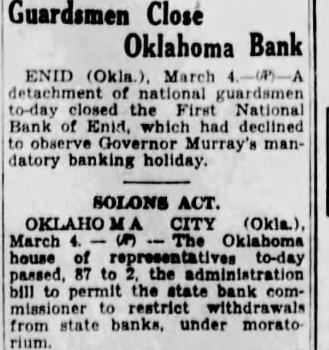
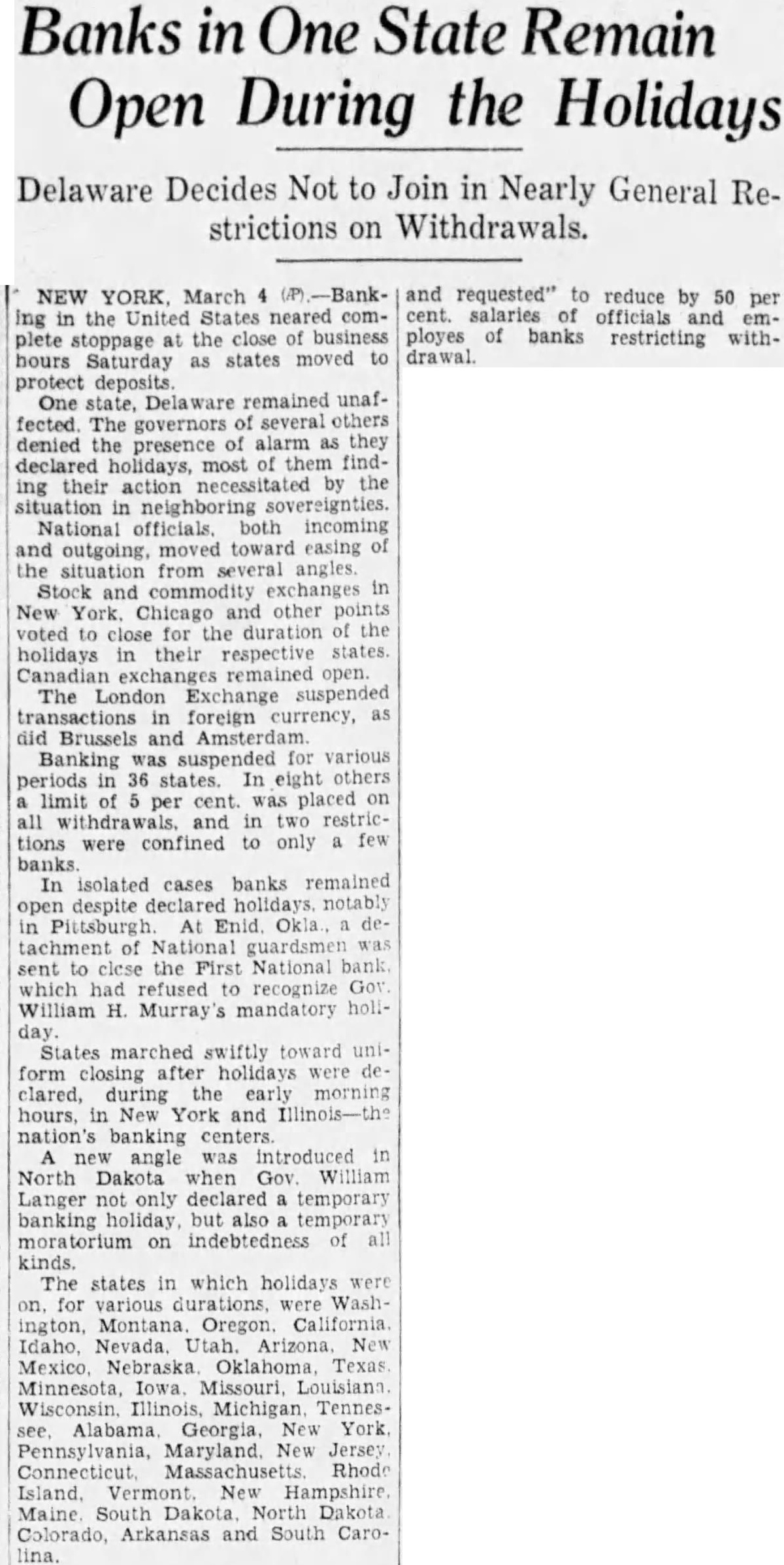
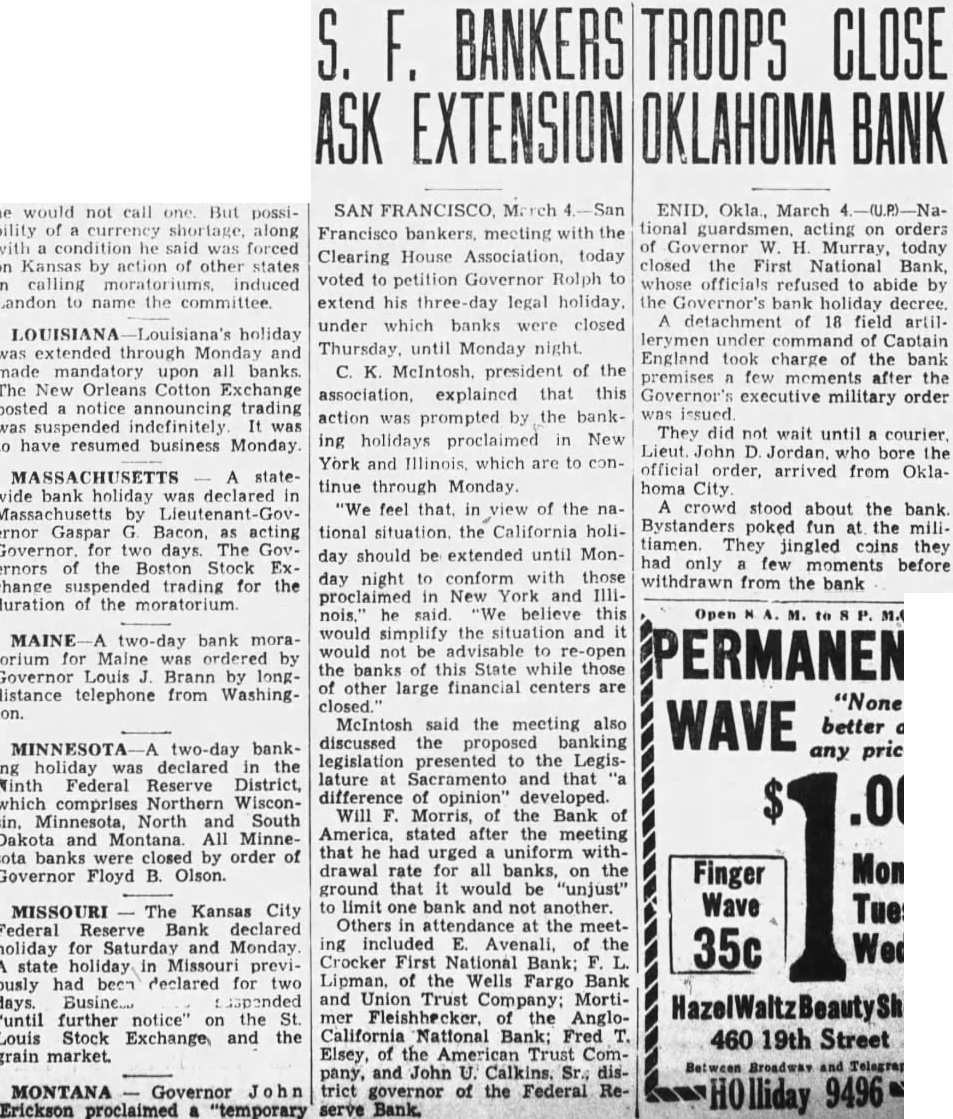
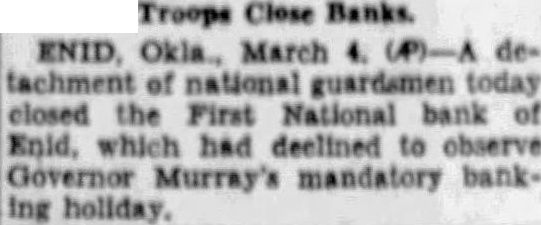
Leaders of New York First National bank Enid, heart of the money which had declined to obtem. faced the future coolly serve Gov. Murray's urday and expected quick return mandatory banking holiday. toward financial normalcy. One important effect, high throughout the country. The banking authority pointed out, tion was taken, he said, would be the stopping of advice the withdrawals both local and federal reserve bank of other countries, since the federal York." bank reserve New York was In Illinois Governor Horner closed. hundred million called the holiday the request in had left the gold bank bankers the federal reserve recent scheduled days for foreign bank of Chicago after day account, unestimated unprecedented amount had been withdrawn Under terms the Illinois holi- citizens. day proclamation the banks are remain closed Saturday, Monday Governor Lehman had little and Tuesday, following which there to make after making are eight days when his proclamation. Asked if the banking are to main two-day holiday sufopen pay their depositors ficient bring back normal not more than per cent their ditions, he said: deposits as of the close of business on Mar.
It was stipulated that such ments be made only on checks, drafts, and receipts dated subsequent to Mar. The withdrawals would apply both time and mand deposits. At the same time the governor order not work hardship public associations, expressly his proclamation, during the holiday, that ments in excess could be made such organizations for welfare purposes that in addition that the limit could be exceeded payment taxes other obligations to the state or any of subdivisions.
Parleys.
The Illinois holiday decision lowed conferences of Chicago nanciers, including the heads loop banks, members of the clearing house committee and representatives the federal which began Friday extended to well past Saturday. State Auditor Edward Barrett joined the meeting shortly after midnight. The governor's proclamation deemed his action essential the welfare the citizens the state and necessary for the protection of bank depositors not their funds. was he said. at the quest the Chicago clearing banks the ers' association and had the proval of the federal reserve bank Chicago. He supplemented his proclamation with statement outlining the banking situation general pointing to the efforts that made prevent the necessity for holiday. Governor Horner also put vision his banks after Mar. take may when qualified to under state making such on demand full. "Such "shall held solely for the of repayment deposits."
Silent.
Roosevelt spent part of night before discussing the with Woodin, his secretary the treasury, Glass, treasury head under and others. At the close of conferences early Saturday, word that "there hours between midnight and dawn saw banking officials many states tussling with the problem, made acute the rying nervousness on the depositors. statement by the New York Clearing House committee unthinking attempt of public to convert 40 billion of dollars of deposits into currency one time is, on the face, impossible." The statement added that the condition of clearing house banks such that "they could, through of the federal reserve bank, pay on demand every dollar their deposits." was added. withdrawals throughout the country whole increased 80 that the proper authorities consider and adopt
He said he had not had personal with officials but was known that New York bankers communicated with the capital.
Big Names.
The conference that preceded dramatic holiday announcement the hours before dawn one the notable meetings financial history. Besides members of clearing house committee, others the foremost bankers collection of names representing the most tent forces in the banking life country. Thomas principal partner of Morgan the meeting with nothing Similarly silent were George Harrison, governor the New York federal reserve, biggest the country and the greatest repository the Winthrop president the National bank, largest commercial bank in the James Perkins, the board the National City bank, second largest bank in the world. Joseph state superintendent of banks, also tended. All left the talking to the himself noted banker.
Statement.
Governor Lehman's statement Saturday said: early this morning was hope that it would not necessary to the operation the banking system New York state. "The spread of hysteria and the upon the banking cilities of the country through measures adopted many last placed upon New burden great that finally rendered drastic action imperative "Therefore, meeting this evening (Friday night) clearing committee New York Clearing House, the advice and the federal board of has asked to proclaim holiday lasting the closhours business on Monday, Mar.
"Best Interests." make this proclamation with the complete that the best interests of the people of the state New York are being thereby. "This the time for coolness. The people of this state and the nation have shown splenspirit to date in meeting the trying problems the depression. confident this spirit maintained. intervals which this day will afford should the give responsible officials the opportunity to the situation calmly and the prepare way for an adjustment of our difficul"Now, therefore, Herbert Lehman, governor of the state New York, proclaim set apart Saturday, Mar. and MonMar. holidays on which banking institutions will closed."
Mart Statement.
Governors of the New York stock after exchange, voting Saturday morning to close the change Saturday and Monday for period of the New York state banking holiday, issued this statement: governing committee held this morning der to give full effect to the bank holiday by the of the state of New York directed: "First, that the exchange closed during such holiday; "Second, that members firms registered on the exchange prohibited from making any for the purchase the borrowing lending securities, and also from ting their offices facilities to used for the purpose of making carrying out any such "Third, that deliveries suspended member contracts except on such contracts as cleared by settled through the stock clearing corporation that in such cases deliveries be made the Stock Clearing Corp., shall direct. members are directed give effect legal holiday declared by the state New York."
Others Close.
Governors of the New York and cotton New York metal mining exchange, the national metal exchange, New York coffee and sugar change and the rubber exchange also voted to The Bank Stock and Unlisted Security Dealassociation made similar nouncement. Governor Lehman had foregone planned trip to the Washington preside the conference, which was his home. Heavy withdrawals and the drain of gold for foreign account had prompted the meeting.
Record.
It followed which mands on New York banks had The loss of gold amounted the largest of metal the United States had to single day. The domestic demand for gold continued unabated, currency culation appeared to be further larged and the money market ened again Friday, completing its readjustment to the from to per cent the rediscount rate of the federal reserve bank New York. The position of the large Wall Street institutions as unassailable by ing bankers, who sided with Governor Lehman attributing the necessity for the holiday sweep of hysteria and the burden caused by the banking situation other sections.
Pressure. In many of these other districts, leaders described banking restrictions due to pressure from Eminent bankers pointed that savings banks New liquid condiwith the highest of type vestments, that these could converted from ducing into ficient meet demands stampede without causing great harm by dumping the holdings. early Friday evening learned that some of the York savings banks, to save positors from the minority, had considered invoking the which requires depositors savings give 60 days notice of their tention make clause printed every passbook and has been before. most the New York banks Friday, was ing done, but some there unusual some depositors closing out their accounts drawing them more than usual. Currency was freely supplied demanded. Gov. William Langer of North Dakota accompanied his holiday proclamation with tempomoratorium on indebtedness all kinds.
Breaks
His proclamations, read before the state legislature Bismarck completing 60-day session urday, the senate pass bill providing for ance of state scrip medium exchange. had given approval had the effect of bringing tax out the last day for immediate action.