Click image to open full size in new tab
Article Text
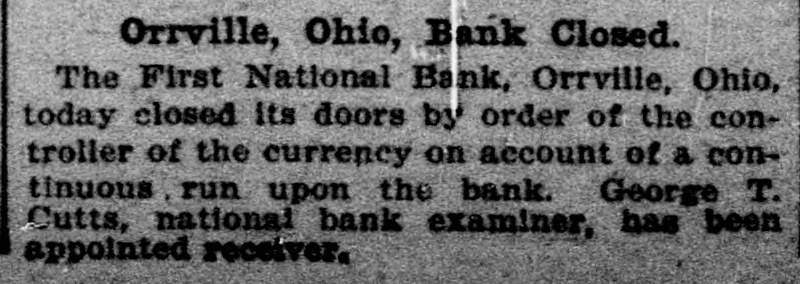
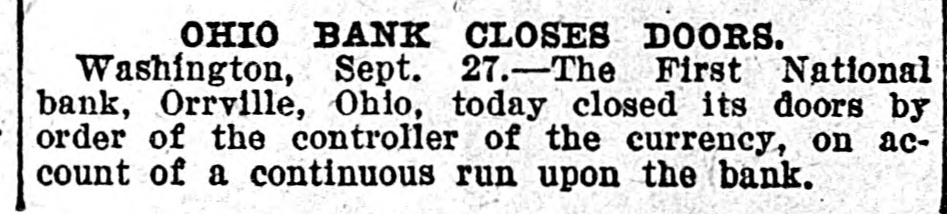
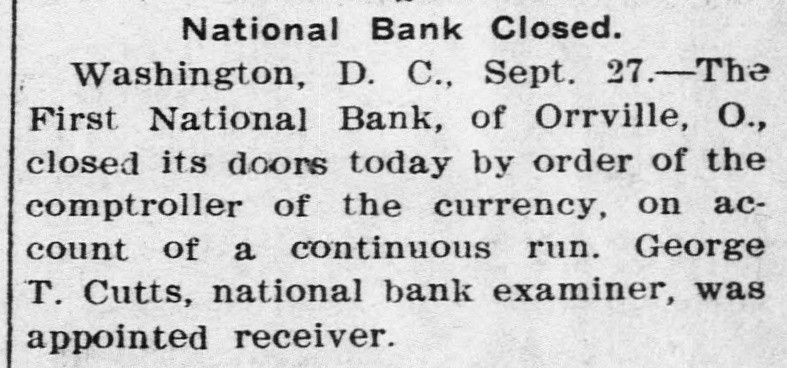
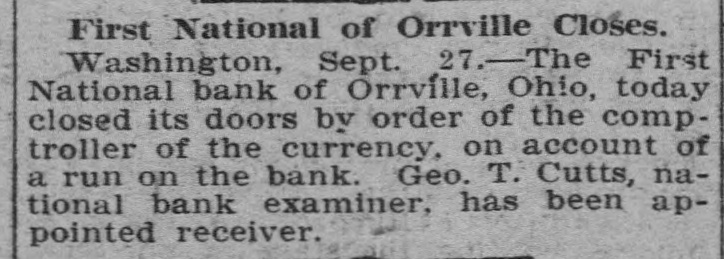
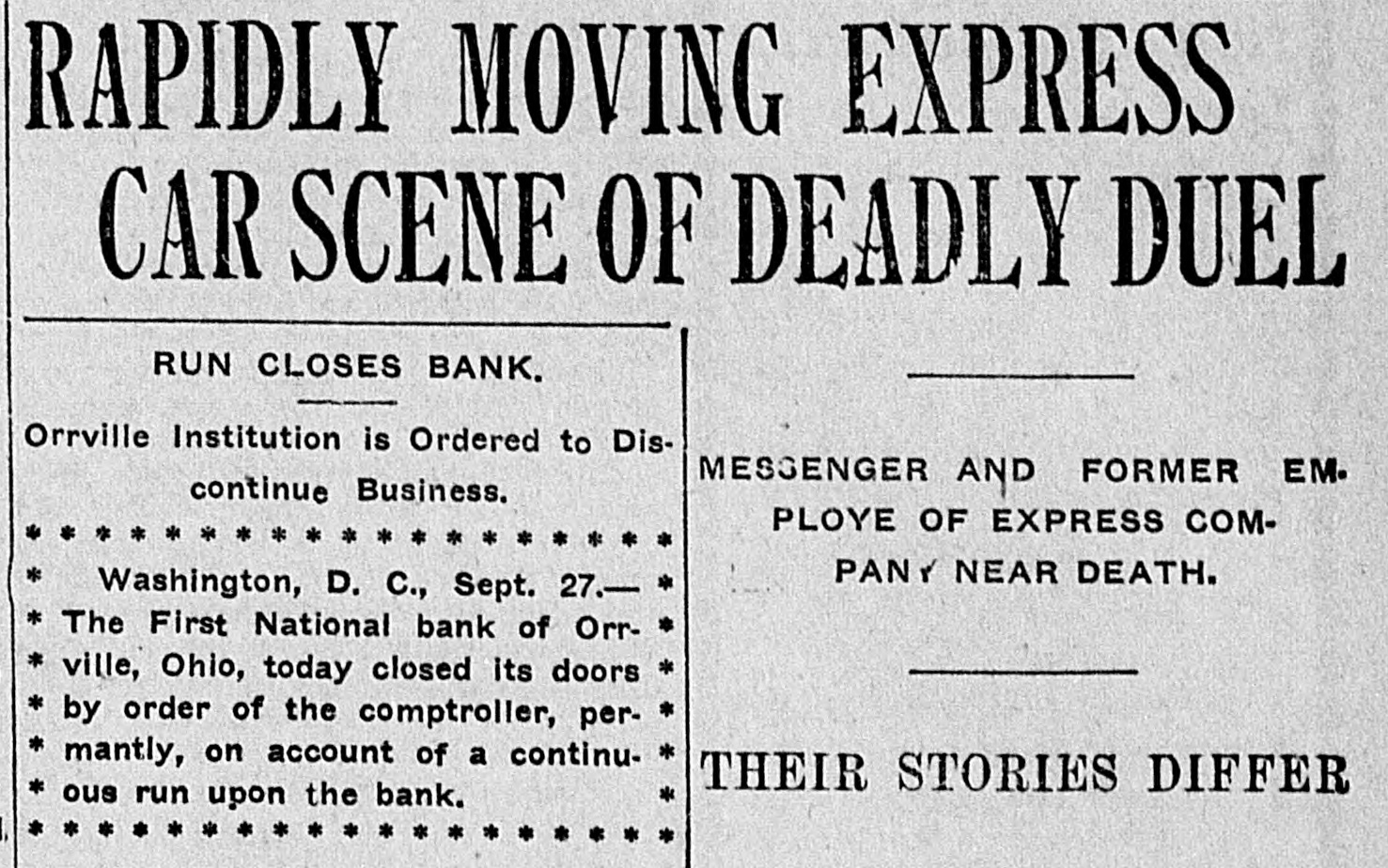
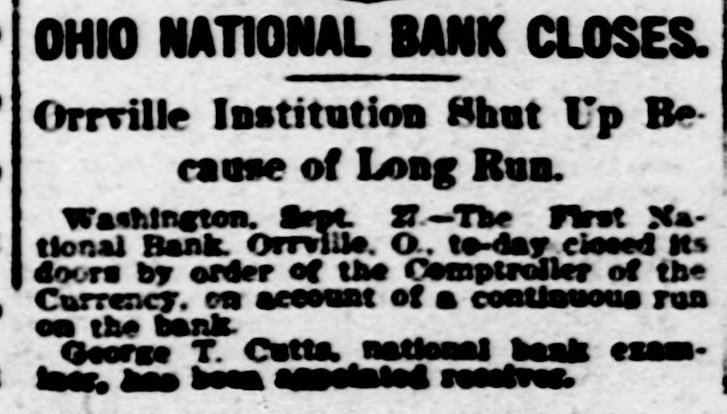
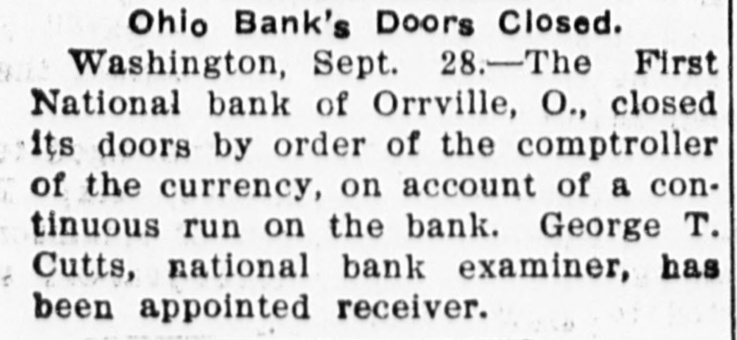
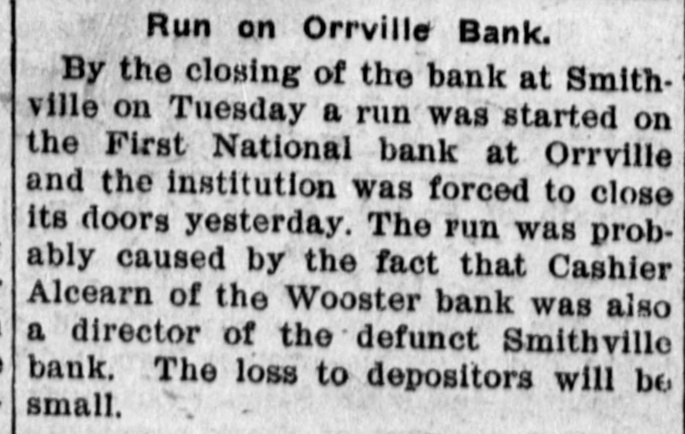
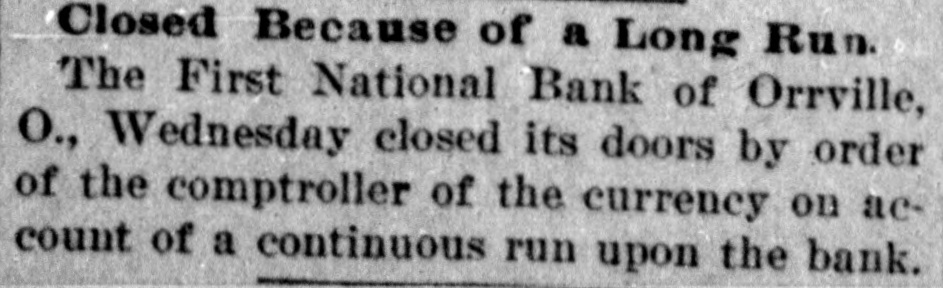
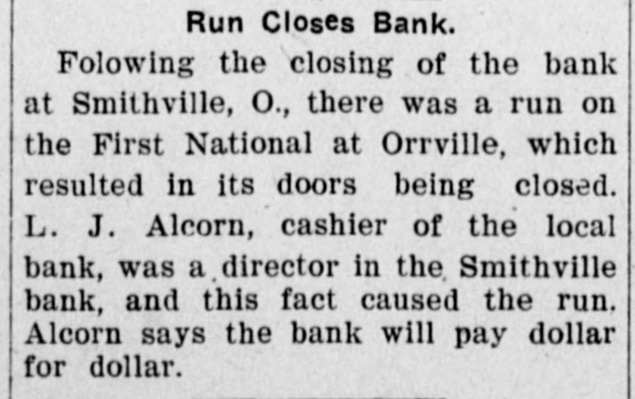
News of the Day. The Episcopal convention of the Diocese of New York voted against division yesterday. Bishop Potter, of New York, in his triennial charge to the clergy of his diocese, declares that climatic conditions and the manner of modern American living demand the observance of the Sabbath. The grand jury's investigation of the alleged election frauds in Richmond has been completed, and the jury now is engaged in preparing its report. It is understood that there will be no additional indictments found. The First National Bank, of Orrville, O., yesterday closed its doors by order of the Comptroller of the Currency, on account of a continuous run upon the bank. George T. Cutts, national bank examiner, has been appointed receiver. This is a small bank with a capital of $25,000. It is probable that Congressman John Sharp Williams, of Mississippi, the floor leader of the House, will make several speeches in Virginia in behalf of Congressman Swanson's candidacy. A barbecue has already been arranged for him at Salem, where he is to appear October 20. Senator-elect Isador Rayner, of Maryland, also has promised to lend a helping hand to the democrats of Virginia. A semi-official note issued in Paris Tuesday evening, after a lengthy conterence at the Foreign Office between Prince von Radolin, Premier Rouvier, Dr. Rosen, the new German Minister to Morocco, and M. Revoil, former Governor of Algiers, who has represented France in the negotiations with Dr. Rosen, states that the negotiators entirely agreed on the French point of view relative to the Moroccan situation. A dispatch from Gothenburg, Sweden, says that a severe earthquake was felt at 1:30 p. m. Tuesday at Lundby, Hisingen Island. It cracked the walls of houses and fissured the surface of the ground. Subterranean rumblings were quickly followed by the violent rocking of houses and the splitting of inner and outer walls, driving the inmates to seek safety in the open air. It many places fissures a foot wide were opened up while the level of the ground in the eastern part of the island sank appreciably. The disturbances lasted a minute. The liner Korea arrived at San Francisco yesterday from the Orient. Among her passengers were Secretary of War Taft and most of the members of a party which left with him for the far East on the Manchuria on July 8 last. In a lengthy interview Secretary Taft described the journey made by his party, outlining also its purposes. He says he and his party were warmly received wherever they stopped. They lunched with the Emperor of Japan. He spoke of the improvement of the government nila but said the political situation is not as good as it should be. The question of independence was discussed, but he says this must be postponed until another generation. The fire at Colon yesterday broke out in a building next to the residence of the Spanish Consul and soon destroyed the Phoenix Hotel, an American owned building, and two other hotels, several liquor saloons and several tenement buildings. Roweis Building, containing the postoffice, the offices of the municipality, of Governor Melendez, the port inspectors, the judiciary and other offices, together with the Treasury Building, also were burned. Nearly all the records and documents of the Government were destroyed. The burned region comprises two blocks. The American residential quarter was not touched. The sanitary authorities are erecting tents in the fire zone to shelter the homeless.