Article Text
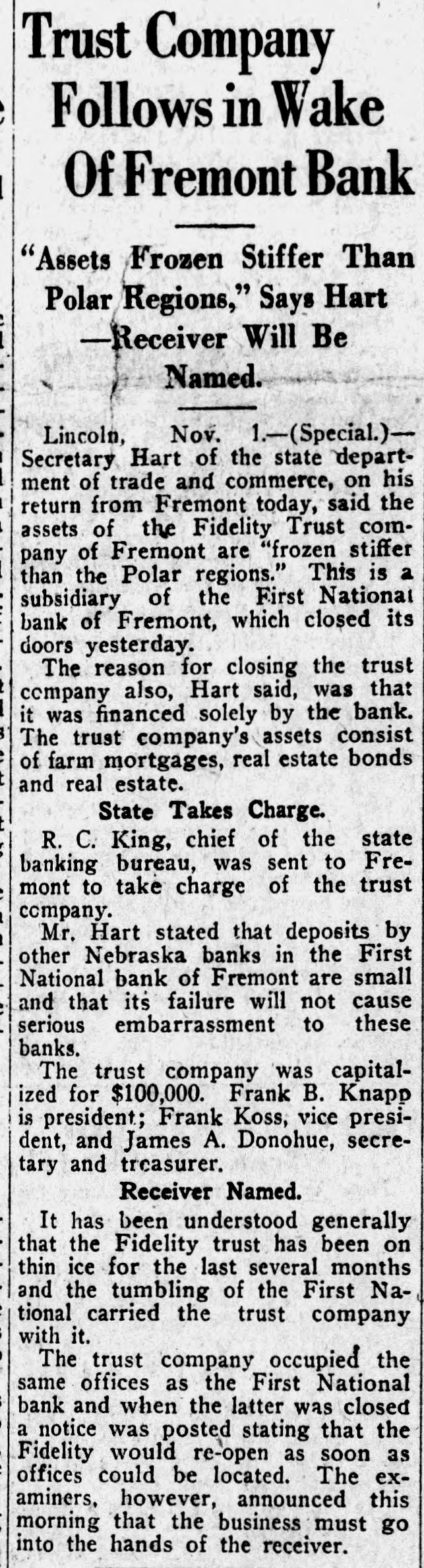
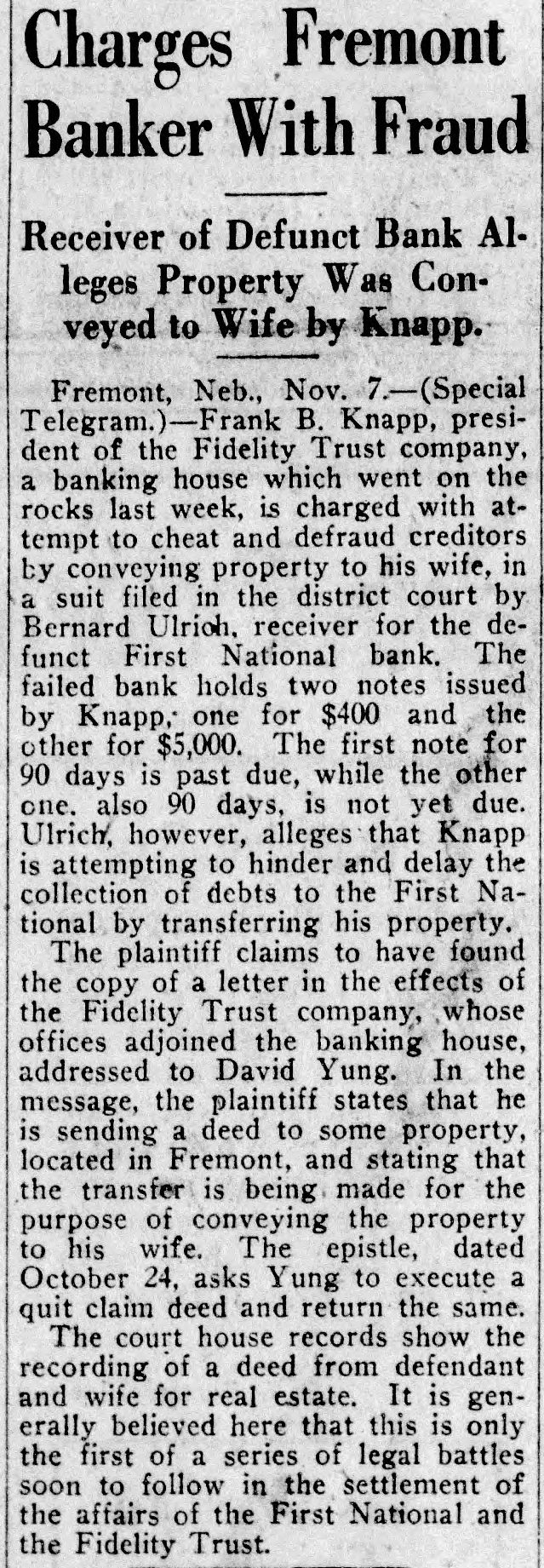
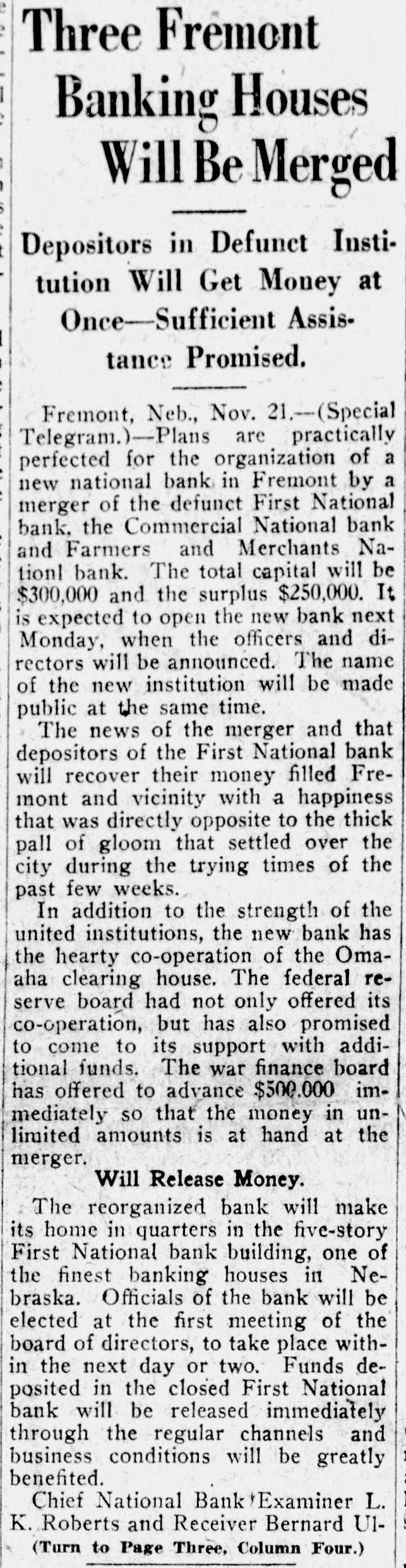
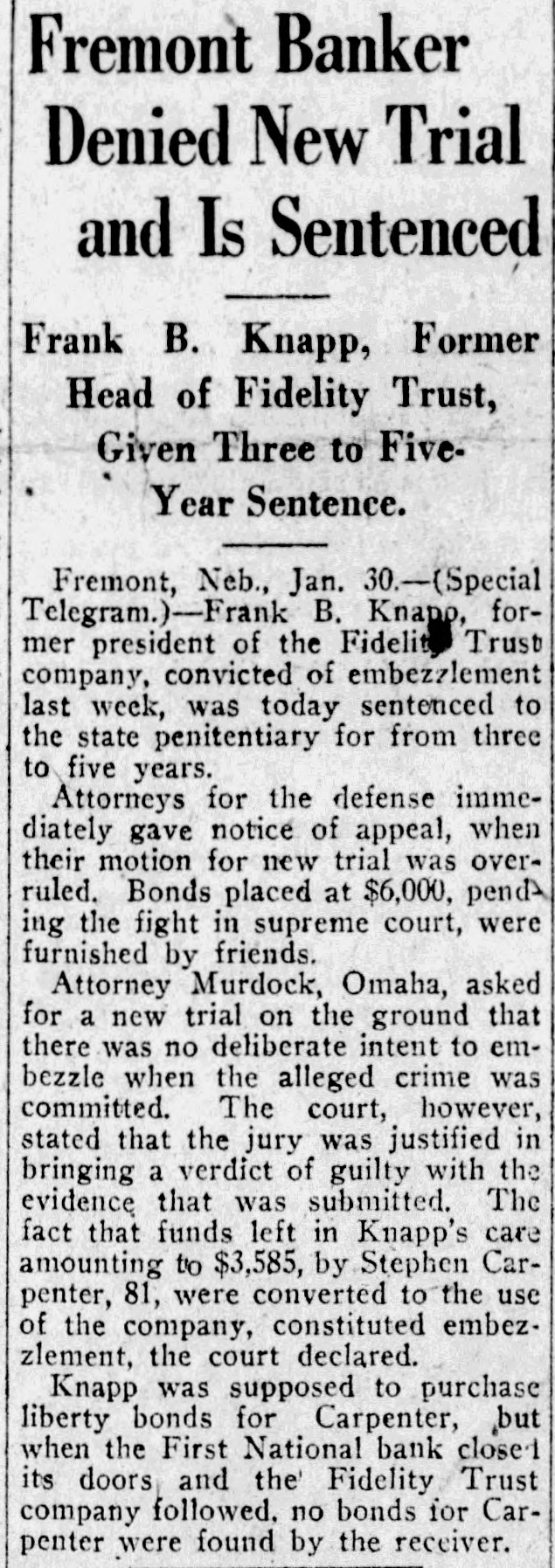
First Bank Of Fremont Is Closed National Examiner Takes Over Affairs of Institution Formerly Headed by E.R. Gurney. Depositors to Be Paid The First National bank of Fremont, Neb., failed to open for business Monday. Announcement was made that the bank's affairs are under the direction of Roy E. Smith, national bank examiner. Mr. Smith expressed a hope that the bank may reopen in a few this on of to days, its but officers depends arrange for the immedi- ability ate advances of cash, which is not thought likely. shrinkage of deposits, to over cent amounting Steady 25 per of the shown on hand Septemto on ber $855,000 6, and inability collect loans to meet depositors' demands caused the bank examiner's action. Officers of the bank expressed d belief that depositors will be paid in full. National is the largest bank The to First be involved in Nebraska since the series of bank disasters began several months ago. Managed by Gurney. The bank's embarrassment is an eventual result of the condition into which it fell during the presidency of E. R. Gurney, who managed its affairs from about 1901 until May, 1920. Gurney, during a part of this time and until April, 1921, was president of the Lion Bonding & Surety company of Omaha. He was inthe jury dicted for by alleged Douglas embezzlement county grand in connection with the affairs of the latter company and is now at liberty under bond, awaiting trial. The bank's statement September 6. showed deposits of $855,000 and loans of $691,000. It showed capital of $150,000. surplus, $20,000; bills payable, $58,000 and due federal reserve, $84,000. When it ended business Saturday deposits had fallen to $622,000. The United States National bank of Omaha is a creditor to the extent of nearly $100,000. The Chase National bank of New York claims $44,000 as its due and the Continental and Commercial National bank of Chicago, $43,000. Banks Withdraw Reserve. Since that time deposits have shrunk approximately 25 per cent. One of the heavy demands was that made by 25 out-state banks who maintained a part of their reserve in the Fremont bank. These banks had $223,000 on deposit there September 6 and had cut this amount to $140,000 by the end of last week. "The situation is simply the result of the general situation in an agricultural community," said S. S. Sidner, president of the bank. "The shrinkage of assets in the farming communities created a drain which this bank, already under heavy handicap, was unable to meet. "Let me cite one example: A farmer near Fremont sold a team of horses to a neighbor a year and a half ago for $300. Last week the same man (Turn to Page Three, Column Three.)