Article Text
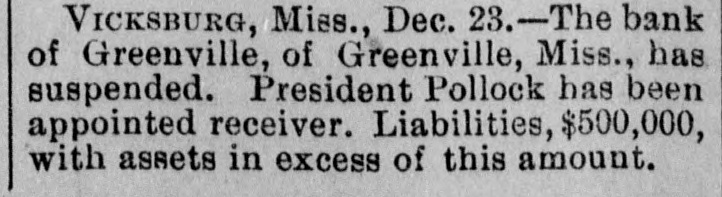
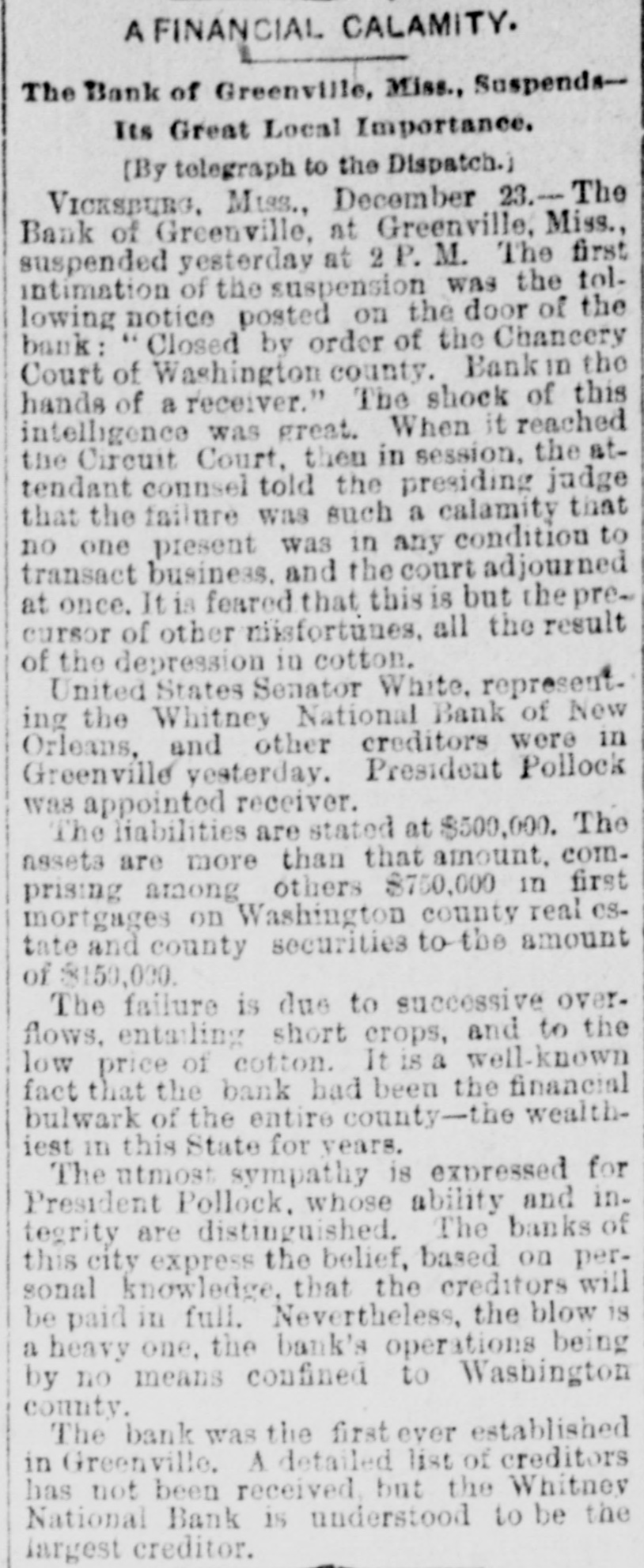
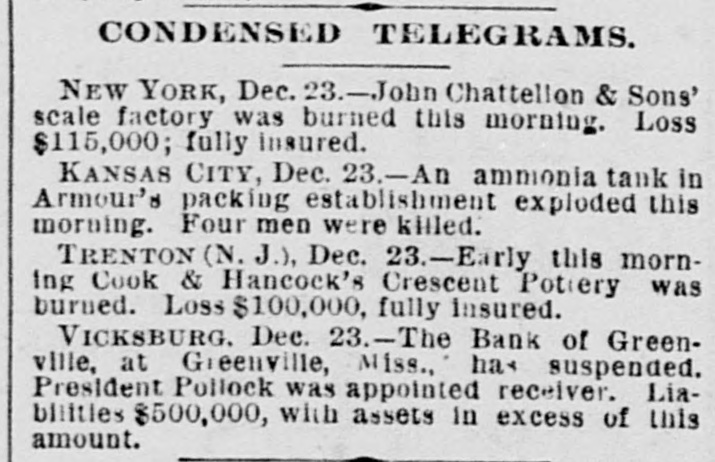
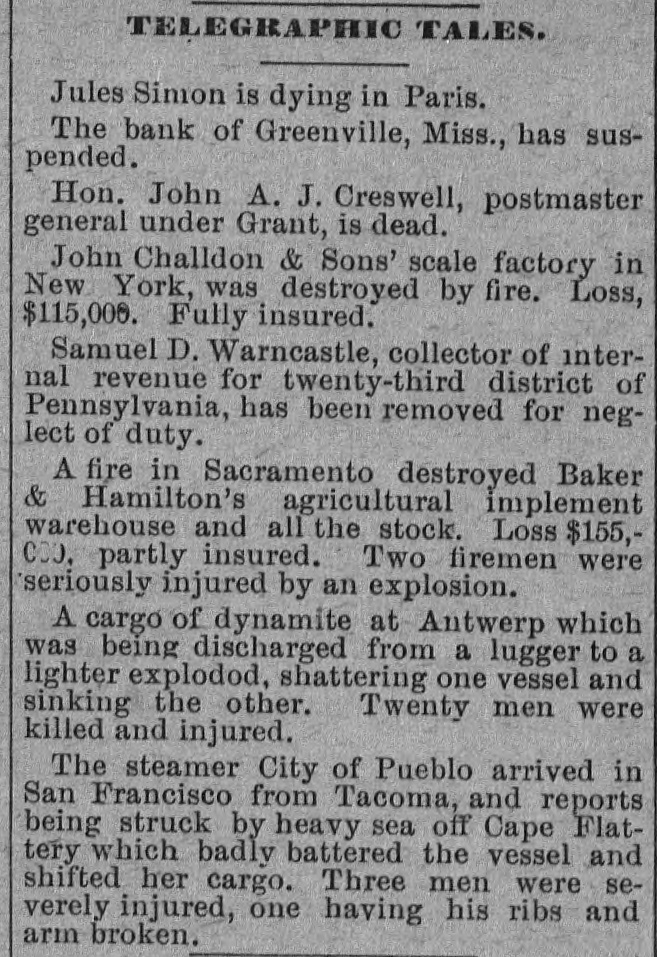
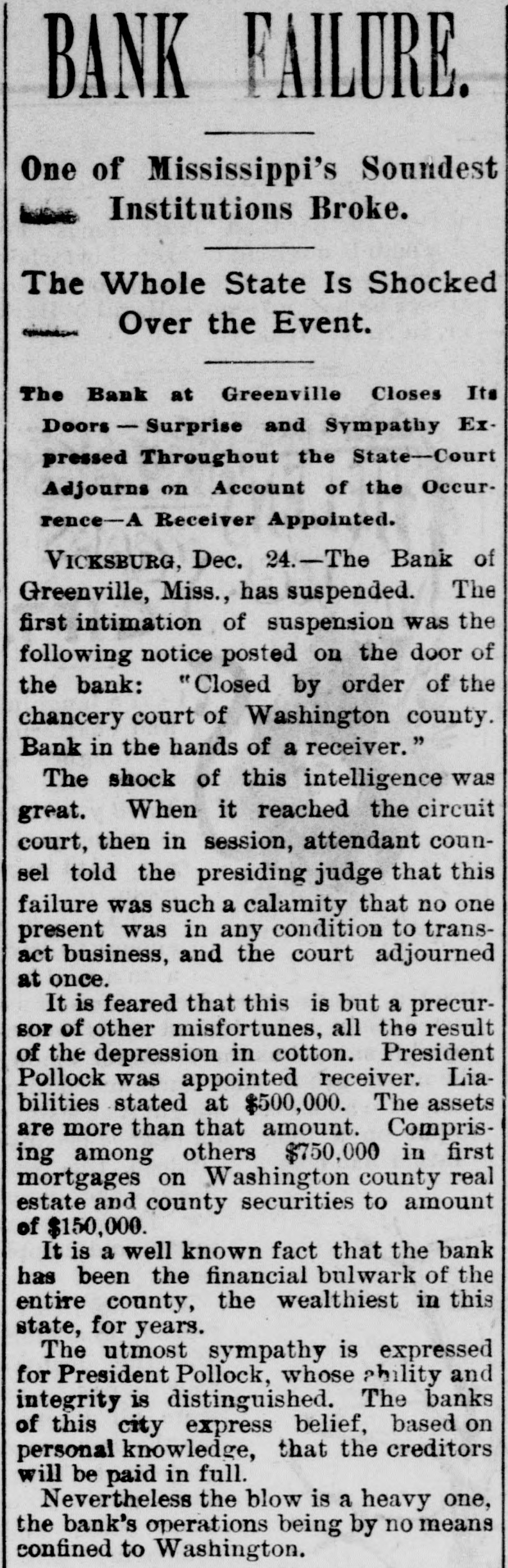
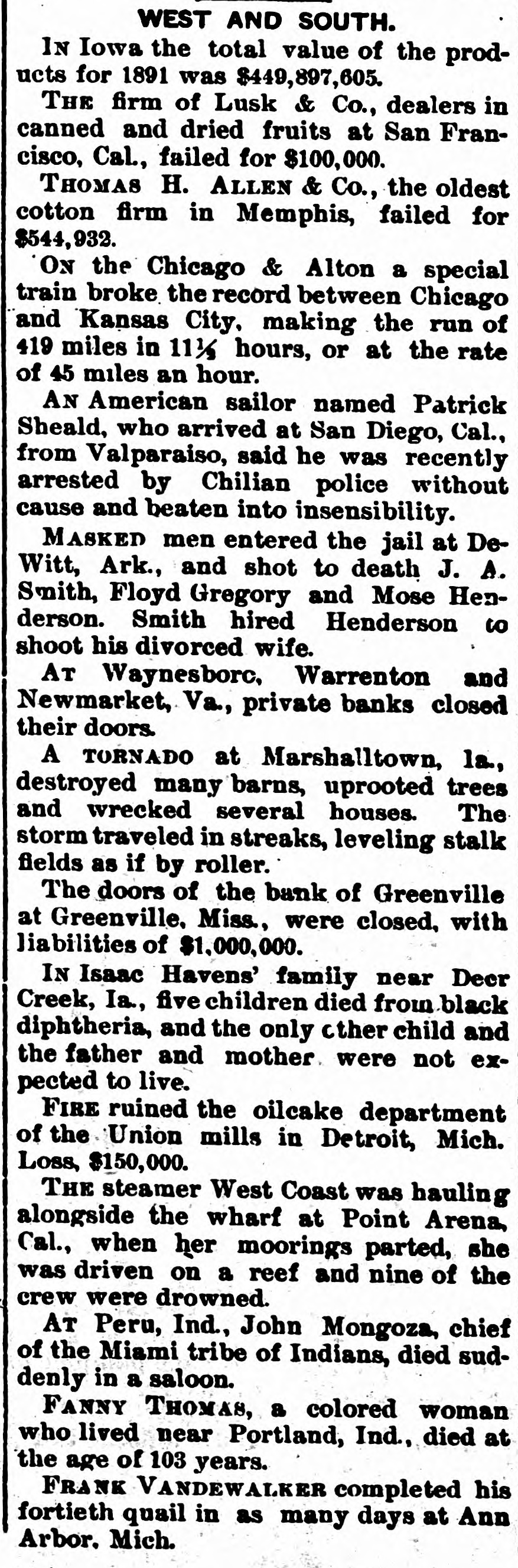
LATE TELEGRAMS. BOILED DOWN FROM PRIVATE, SPECIAL AND OTHER SOURCES. There ale no new developments in the Chili affair. Enos H. Nebeger of Ind., confirmed United States treasurer. Mills was worse last night than. at any time during his illness. Prosecution rests case in the GravesBarnard case and defense opens. The rich merchants of St. Petersburg subscribe nothing for relief. Senator Plumb's remains remain in state at Topeka today until 2 p. in. Billy Meyer knocks out Jimmy Carrol in 43 rounds at New Orleans. Topeka is crowded with state politicians clamoring for Plumb's place. Two electric power employes killed at New Albany, Ind,. by a live wire. Outlawry is mercilessly repressed in Russia to prevent it becoming general. The Kansas senate is assembled to do duty at Plumb's funeral in Topeka. Steamer Cavalier is believed to have been wrecked on Sicily islands, and all lost. Revenue deficiency in province of Veronezh, Russia, will reach 5,000,000 roubles. Cyclone rages around Central Iowa unroofing houses, barns and other buildings. Russia reports an enormous falling off in revenue in the famine stricken provinces. Bank of Greenville, Miss., suspends. Liabilities $1,000,000; creditors aresaid to be safe. Classen and Simmone, who wrecked the 6th national bank, N. Y., get 6 years each. Another attempt was made Saturday to arrest Minister Egan's son in Valparaiso. Regimental officers forego all banquets and give equivalent to the starring masses. Jerome I. Case, owner of Jay I. See, horse man and manufacturer is dead at Racine, Wis. San Diego receives a car load of American tin, 26,000 pounds, from Temecula mines. Steamer West Coast capsized at Point Arena, Cal., and 9 drowned. Vessel a total loss. Dan Bates receives $1,000 on the do or die dodge at Vinton, Ia., but is arrested at the depot. Chinese commissioner comes to investigate the question of Chinese World's fair exhibit Superintendent Sullivan, Frankfort, Ky. penitentiary, disappears. with a grip in his hand. Nicholas Fox, jealous, shoots his wife at Omaha and cuts his throat. She will live, he will die. Passport and labor laws, with other restrictions are abolished in Russia to enable the poor to remove. Governor Humphrey indignantly denies his intention of resigning to be appointed Plumb's successor. Experts swear to Graves' handwriting on the fatal bottle of whisky which figures in the Denver trial. Another crank visits Russell Sage's house and is pushed through the door by Mrs. Sage before he can get in his work. Sullivan will fight Slavin for $10,000 & side before the club offering the biggest purse inside of 15 weeks,$2,500 forfeit. Severe wind, rain and hail visits central Iowa, floods Des Moines and blows down some buildings in Maishaltown. Ohio proposes to secure through the American press general relief from all over this country for Russia's starving millions. Rev. Father Kroeger, of St. Vincent's cathedral, Elkhart, Ind., disappears, owing $17,000, more,than se cured by valuable papers. Judge Hartford, Seattle, Wash., decides that Chinese merchants from U. S., visiting Victoria, B. C., may return and not liable to arrest. Memphis, St. Louis and Augusta show cotton receipts slightly in ex-