Click image to open full size in new tab
Article Text
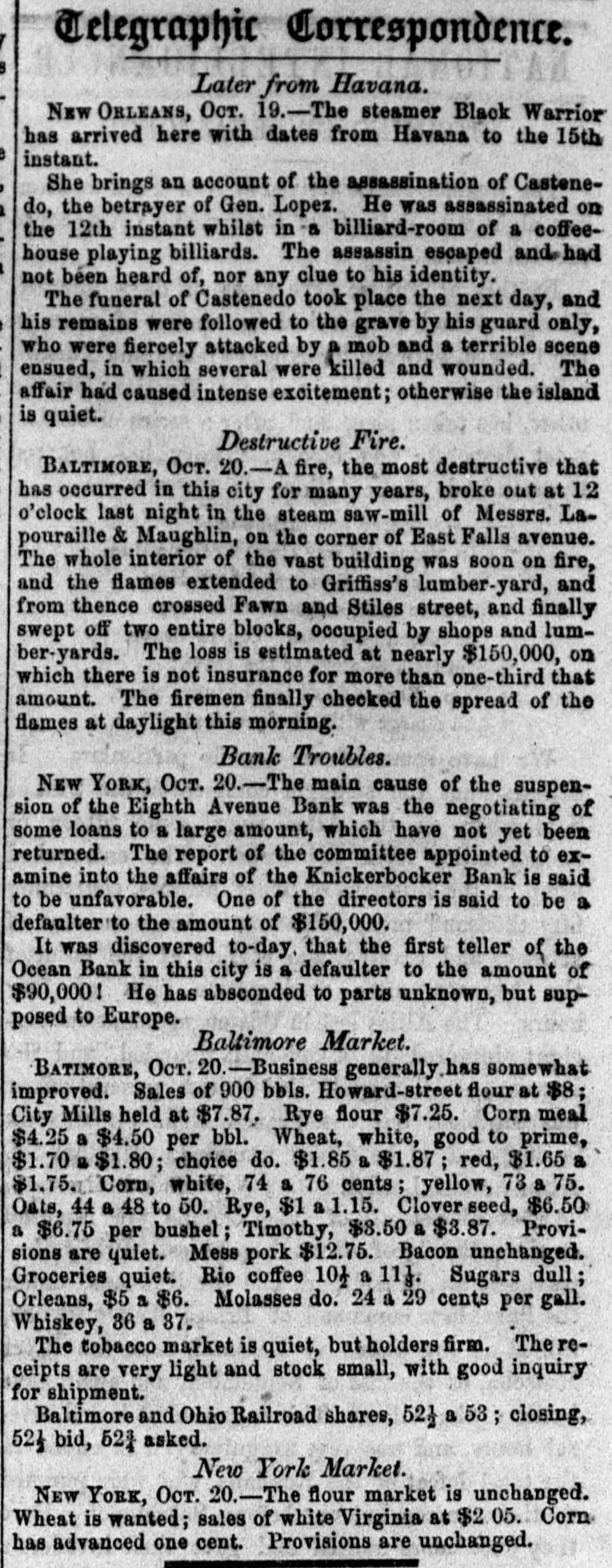
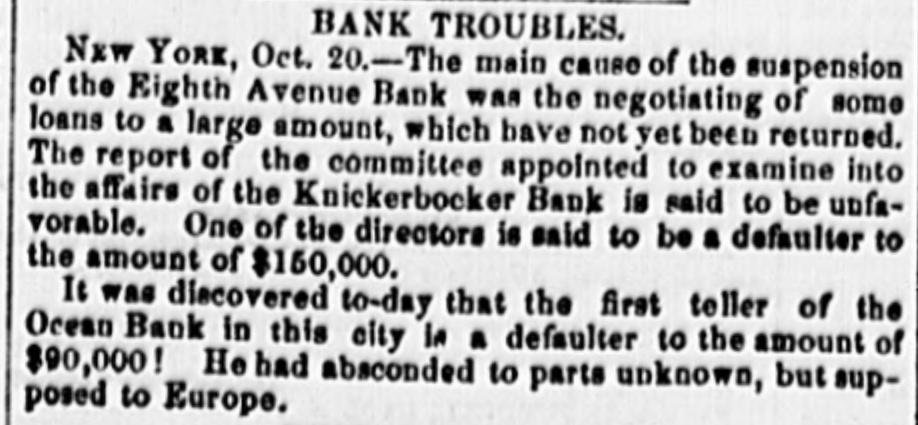
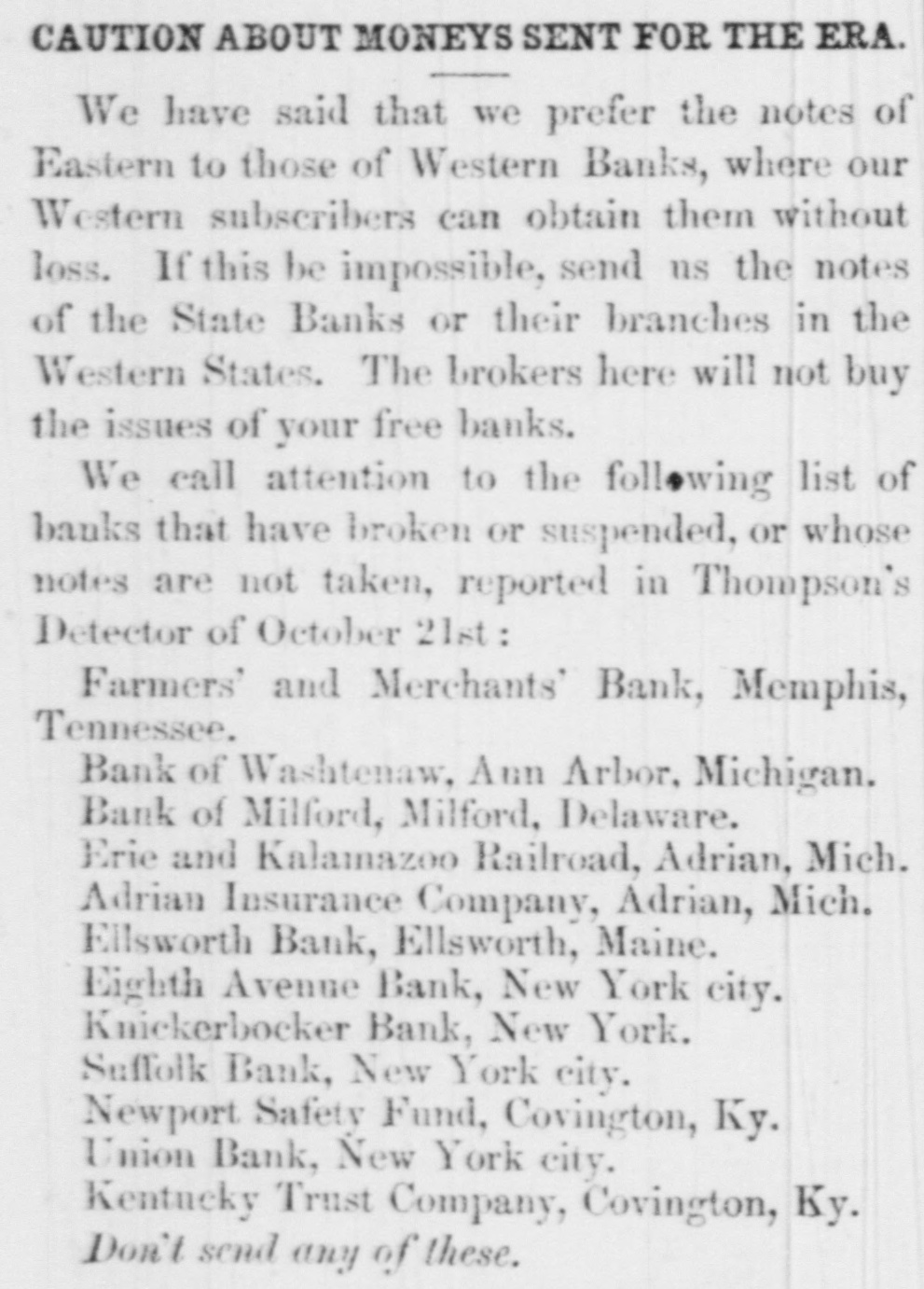
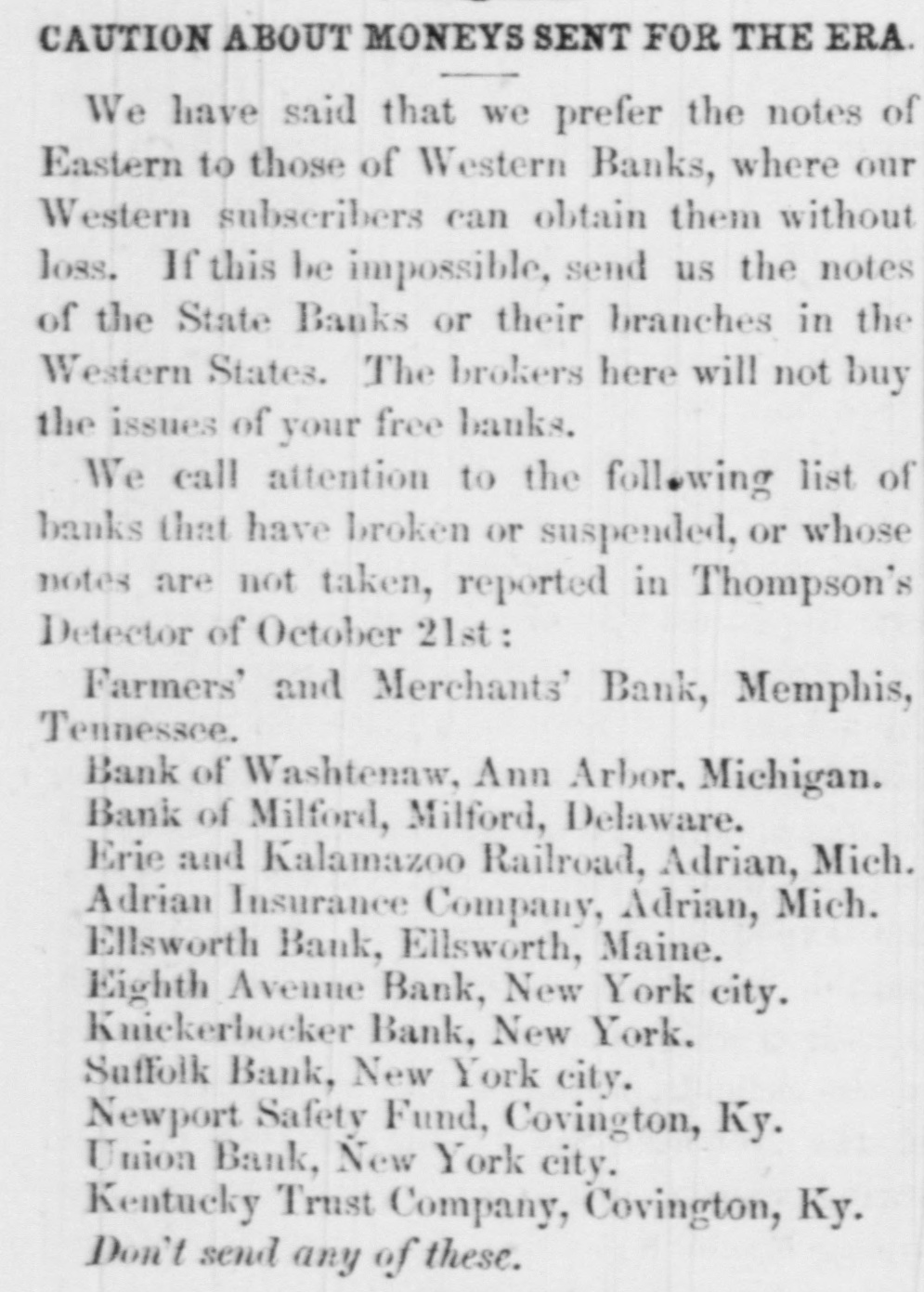
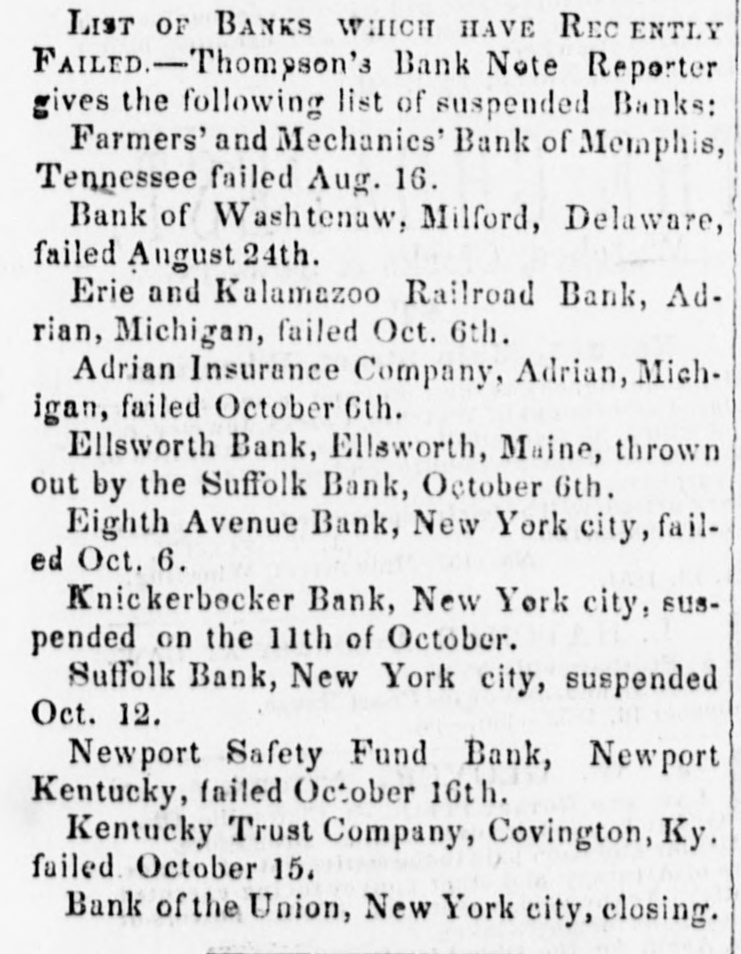
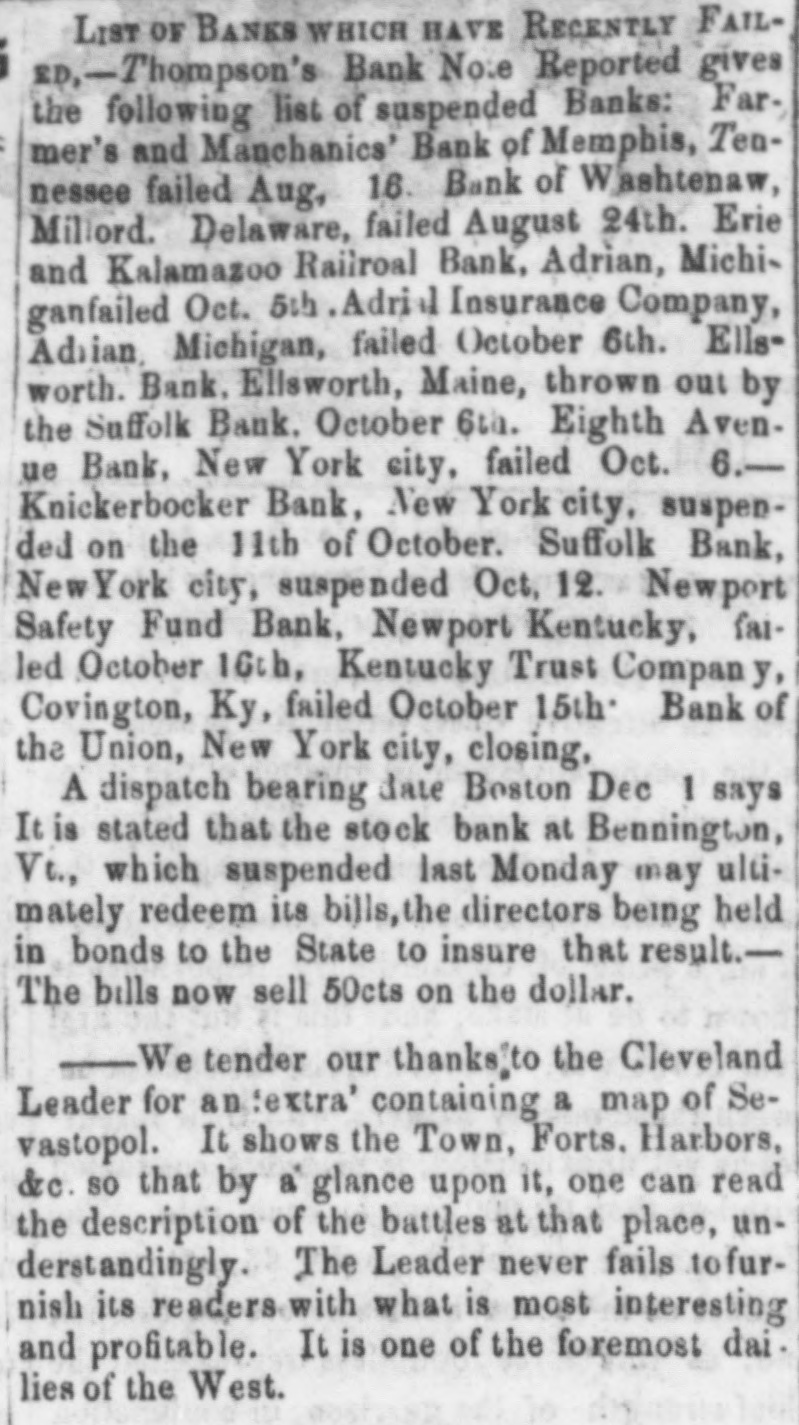
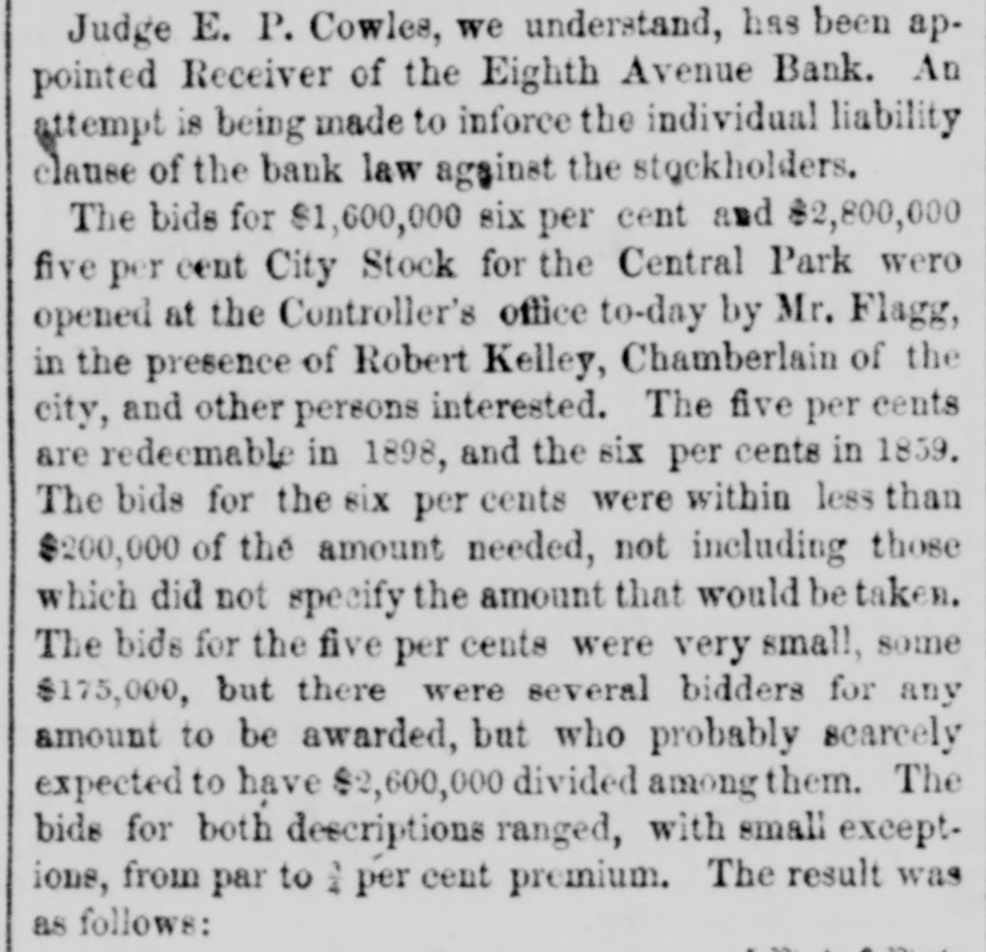
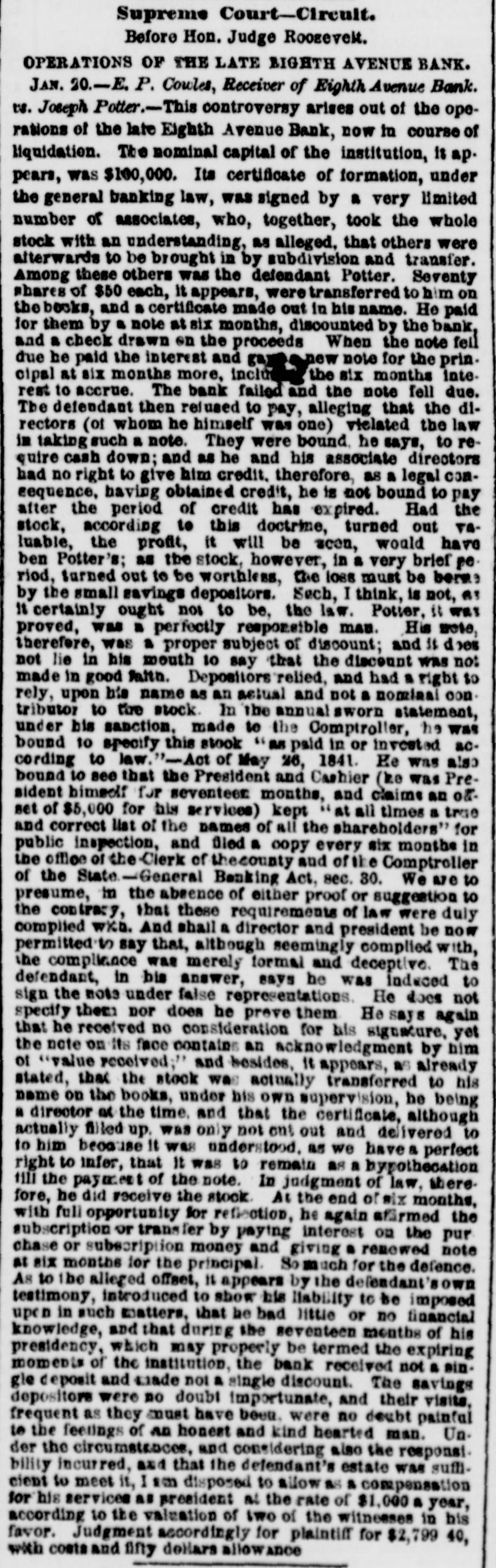
BANKING OPERATIONS- THE EIGHTH AVENUE BANK.
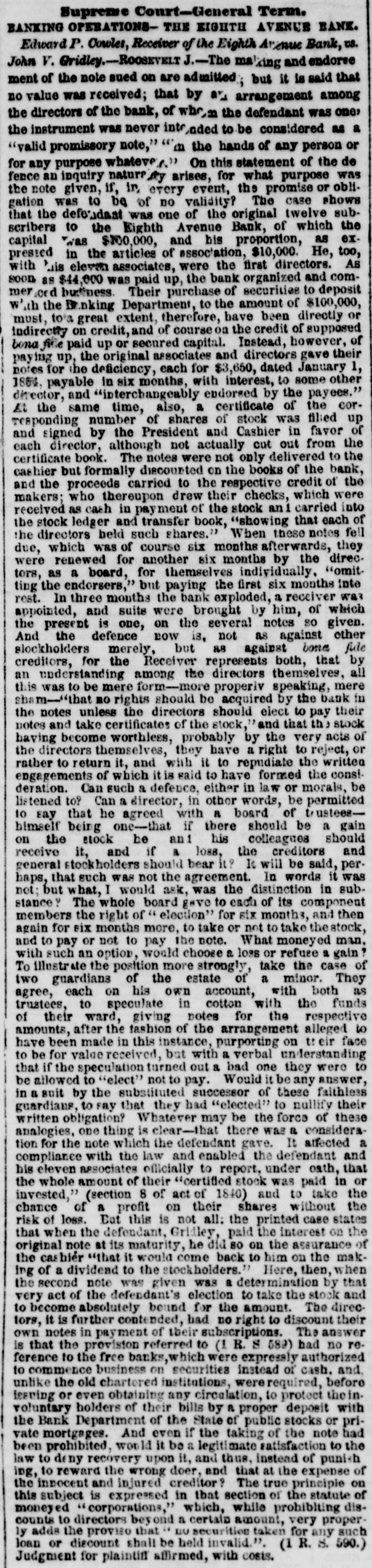
Edward P. Cowles, Receiver of the Eighth Avenue Bank, us. John V. Gridley.--ROOSEVELT J.-The making and endorse- ment of the note sued on are admitted; but it is said that no value was received; that by a arrangement among the directors of the bank, of when the defendant was one, the instrument was never intended to be considered as a "valid promissory note," "in the hands of any person or for any purpose whatever." On this statement of the de- fence an inquiry natursty arises, for what purpose was the note given, if, in, every event, the promise or obli- gation was to be of no validity? The case shows that the defendant was one of the original twelve sub- scribers to the Eighth Avenue Bank, of which the capital was $30,000, and his proportion, as ex- pressed in the articles of association, $10,000. He, too, with his eleven associates, were the first directors. As soon as $44,000 was paid up, the bank organized and com- mer.ord burtiness. Their purchase of securities to deposit with the Banking Department, to the amount of $100,000, must, to a great extent, therefore, have been directly or Indirectly on credit, and of course on the credit of supposed bona fice paid up or secured capital. Instead, however, of paying up, the original associates and directors gave their A for the deficiency, each for $3,650, dated January 1, 1854, payable in six months, with interest, to some other director, and "interchangeably endorsed by the payees." At the same time, also, a certificate of the cor- responding number of shares of stock was filled up and signed by the President and Cashier in favor of each director, although not actually cut out from the certificate book. The notes were not only delivered to the cashier but formally discounted on the books of the bank, and the proceeds carried to the respective credit of the makers; who thereupon drew their checks, which were received as cash in payment of the stock an i carried into the stock ledger and transfer book, "showing that each of the directors beld such shares." When these notes fell due, which was of course six months afterwards, they were renewed for another six months by the direc- tors, as a board, for themselves individually, "omit- ting the endorsers," but paying the first six months inte- rest. In three months the bank exploded, a receiver wa appointed, and suits were brought by him, of which the present is one, on the several notes so given. And the defence now is, not as against other slockholders merely, but as against bona fide creditors, for the Receiver represents both, that by an understanding among the directors themselves, all this was to be mere form-more properiv speaking, mere sham "that no rights should be acquired by the bank in the notes unless the directors should elect to pay their notes and take certificates of the stock," and that the stock having become worthless, probably by the very acts of the directors themselves, they have a right to reject, or rather to return it, and with it to repudiate the written engagements of which it is said to have formed the consi- deration. Can such a defence, either in law or morals, be listened to? Can a director, in other words, be permitted to say that he agreed with a board of trustees- himself being one-that if there should be a gain on the stock he an 1 his colleagues should receive it, and if loss, the creditors and general stockholders should bear it? It will be said, per- haps, that such was not the agreement. In words it was not; but what, I would ask, was the distinction in sub- stance? The whole board gave to each of its component members the right of "election" for six six months, and then again for six months more, to take or not to take the stock, and to pay or not to pay the note. What moneyed man, with such an option, would choose a loss or refuse a gain? To illustrate the position more strongly, take the case of two guardians of the estate of a minor. They agree, each on his own account, with both as trustees, to speculate in cotton with the funds of their ward, giving notes for the respective amounts, after the fashion of the arrangement alleged to have been made in this instance, purporting on their face to be for value received, but with a verbal understanding that if the speculation turned out a bad one they were to be allowed to "elect" not to pay. Would it be any answer, in a suit by the substituted successor of these faithless guardians, to say that they had "elected" to nullify their written obligation? Whatever may be the force of these analogies, one thing is clear-that there was a considera- tion for the note which the defendant gave. It atfected a compliance with the law and enabled the defendant and his eleven associates officially to report, under oath, that the whole amount of their "certified stock was paid in or invested," (section 8 of act of 1840) and to take the chance of a profit on their shares without the risk of loss. Eut this is not all: the printed case states that when the defendant, Gridley, paid the interest on the original note at its maturity, he did so on the assurance of the cashier "that it would come back to him on the mak- ing of a dividend to the stockholders." Here, then, when the second note was given was a determination by that very act of the defendant's election to take the stock and to become absolutely bound for the amount. The direc- tors, it is further contended, had no right to discount their own notes in payment of their subscriptions. The answer is that the provision referred to (1 R. S. 589) had no re- ference to the free banks, which were expressly authorized to commence business on securities instead of cash, and, unlike the old chartered institutions, were required, before issuing or even obtaining any circulation, to protect the in- voluntary holders of their bills by a proper deposit with the Bank Department of the State of public stocks or pri- vate mortgages. And even if the taking of the note had been prohibited, would it be a legitimate satisfaction to the law to deny recovery upon it, and thus, instead of punish- ing, to reward the wrong doer, and that at the expense of the innocent and injured creditor? The true principle on this subject is expressed in that section of the statute of moneyed "corporations," which, while prohibiting dis- counts to directors beyond a certain amount, very proper- ly adds the proviso that no securition taken for any such loan or discount shall be held invalid.". (1 R. S. 590.) Judgment for plaintiff affirmed, with costs. as