Union Exchange National Bank (New York, NY)

Episode Information

Episode UID
936001373
Episode Type
Suspension β†’ Closure
Bank Type
national
Bank ID
93600 national
Charter Number
9360
Start Date
May 27, 1914
Location
New York, New York (40.714, -74.006)

Metadata

Model
gpt-5-mini (chosen from majority vote of a three-model LLM ensemble)
Short Digest
d8663251e62aecc8

Response Measures

None

Description

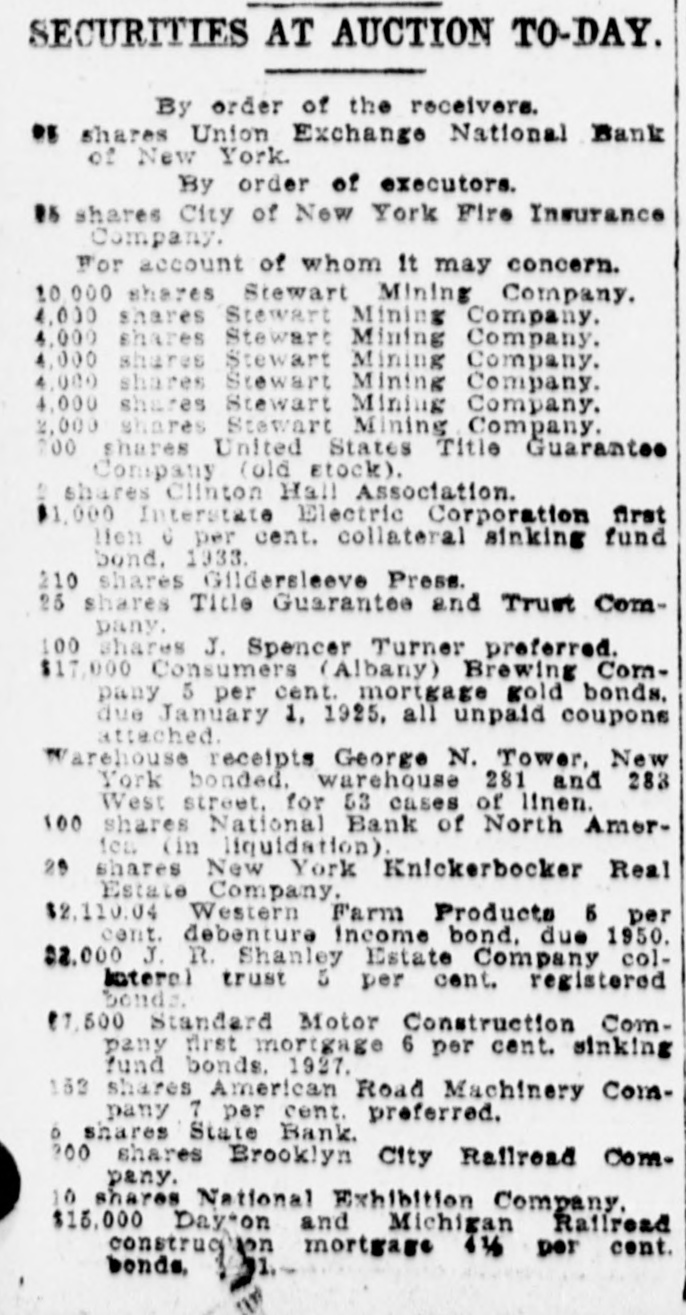
Article lists shares sold By order of the receivers, indicating the bank was in receivership/liquidation.

Events (3)

1. March 15, 1909 Chartered
Source
historical_nic
2. May 27, 1914 Receivership
Newspaper Excerpt
By order of the receivers. 25 shares Union Exchange National Bank of New York.
Source
newspapers
3. August 10, 1922 Voluntary Liquidation
Source
historical_nic

Newspaper Articles (12)

Article from Rock Island Argus, October 19, 1909

Click image to open full size in new tab

Article Text

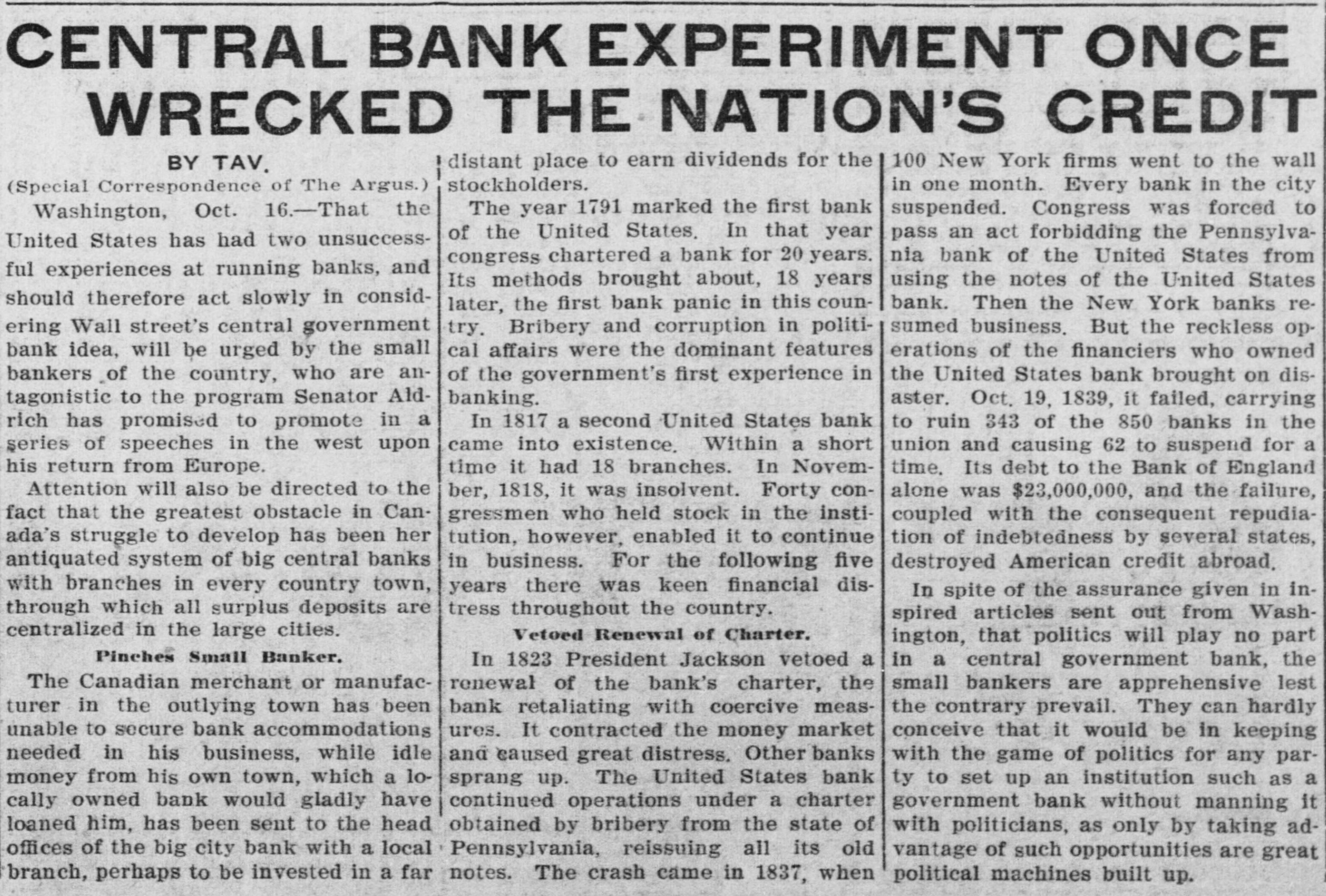
CENTRAL BANK EXPERIMENT ONCE WRECKED THE NATION'S CREDIT 100 New York firms went to the wall distant place to earn dividends for the BY TAV. stockholders. in one month. Every bank in the city (Special Correspondence of The Argus.) suspended. Congress was forced to The year 1791 marked the first bank Washington, Oct. 16.-That the of the United States. In that year pass an act forbidding the PennsylvaUnited States has had two unsuccessnia bank of the United States from congress chartered a bank for 20 years. ful experiences at running banks, and Its methods brought about, 18 years using the notes of the United States should therefore act slowly in considbank. Then the New York banks relater, the first bank panic in this counering Wall street's central government try. Bribery and corruption in politisumed business. But the reckless opcal affairs were the dominant features erations of the financiers who owned bank idea, will be urged by the small bankers of the country, who are anof the government's first experience in the United States bank brought on distagonistic to the program Senator Aldbanking. aster. Oct. 19, 1839, it failed, carrying In 1817 a second United States bank to ruin 343 of the 850 banks in the rich has promised to promote in a came into existence. Within a short series of speeches in the west upon union and causing 62 to suspend for a time it had 18 branches. In Novemhis return from Europe. time. Its debt to the Bank of England Attention will also be directed to the ber, 1818, it was insolvent. Forty conalone was $23,000,000, and the failure, fact that the greatest obstacle in Cangressmen who held stock in the insticoupled with the consequent repudiaada's struggle to develop has been her tion of indebtedness by several states, tution, however, enabled it to continue antiquated system of big central banks in business. For the following five destroyed American credit abroad. with branches in every country town, years there was keen financial disIn spite of the assurance given in inthrough which all surplus deposits are tress throughout the country. spired articles sent out from Washcentralized in the large cities. Vetoed Renewal of Charter. ington, that politics will play no part Pinches Small Banker. In 1823 President Jackson vetoed a in a central government bank, the The Canadian merchant or manufacrenewal of the bank's charter, the small bankers are apprehensive lest turer in the outlying town has been the contrary prevail. They can hardly bank retaliating with coercive measunable to secure bank accommodations ures. It contracted the money market conceive that it would be in keeping needed in his business, while idle and caused great distress. Other banks with the game of politics for any parmoney from his own town, which a losprang up. The United States bank ty to set up an institution such as a cally owned bank would gladly have continued operations under a charter government bank without manning it loaned him, has been sent to the head obtained by bribery from the state of with politicians, as only by taking adoffices of the big city bank with a local Pennsylvania, reissuing all its old vantage of such opportunities are great branch, perhaps to be invested in a far notes. The crash came in 1837, when political machines built up.
Article from The Roswell Daily Record, November 29, 1909

Click image to open full size in new tab

Article Text

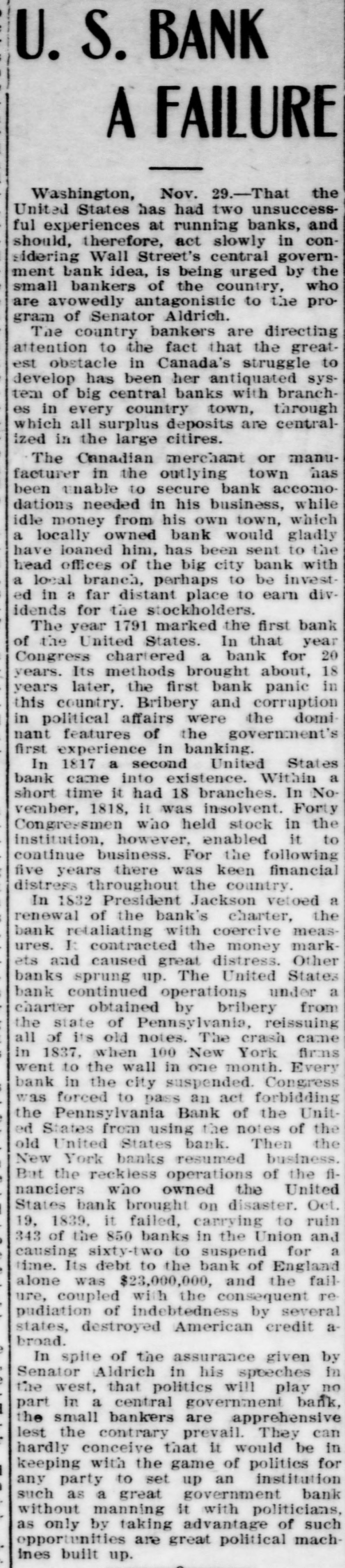
U. S. BANK A FAILURE Washington, Nov. 29.-That the United States has had two unsuccessful experiences at running banks, and should, therefore, act slowly in considering Wall Street's central government bank idea, is being urged by the small bankers of the country, who are avowedly antagonistic to the program of Senator Aldrich. The country bankers are directing attention to the fact that the greatest obstacle in Canada's struggle to develop has been her antiquated systerm of big central banks with branches in every country town, through which all surplus deposits are centralized in the large citires. The Canadian merchant or manufacturer in the outlying town has been unable to secure bank accomodations needed in his business, while idle money from his own town, which a locally owned bank would gladly have loaned him, has been sent to the head offices of the big city bank with a local branch, perhaps to be invested in a far distant place to earn dividends for the stockholders. The year 1791 marked the first bank of the United States. In that year Congress chartered a bank for 20 years. Its methods brought about, 18 years later, the first bank panic in this country. Bribery and corruption in political affairs were the domi nant features of the government's first experience in banking. In 1817 a second United States bank came into existence. Within a short time it had 18 branches. In No. vember, 1818, it was insolvent. Forty Congressmen who held stock in the institution, however, enabled it to continue business. For the following five years there was keen financial distress throughout the country. In 1832 President Jackson vetoed a renewal of the bank's charter, the bank retaliating with coercive measures. I: contracted the money markets and caused great distress. Other banks sprung up. The United States bank continued operations under a charter obtained by bribery from the state of Pennsylvania, reissuing all of its old notes. The crash came in 1837, when 100 New York firms went to the wall in one month. Every bank in the city suspended. Congress was forced to pass an act forbidding the Pennsylvania Bank of the United States from using the notes of the old United States bank. Then the New York banks resumed business. But the reckless operations of the financiers who owned the United States bank brought on disaster. Oct. 19, 1839. it failed, carrying to ruin 343 of the 850 banks in the Union and causing sixty-two to suspend for a time. Its debt to the bank of England alone was $23,000,000, and the failure, coupled with the consequent ren pudiation of indebtedness by several states, destroyed American credit abroad. In spite of the assurance given by Senator Aldrich in his speeches in the west, that politics will play no 1 part in a central government bank, the small bankers are apprehensive [ lest the contrary prevail. They can hardly conceive that it would be in I keeping with the game of politics for any party to set up an institution such as a great government bank without manning it with politicians, as only by taking advantage of such opportunities are great political machines built up. :


Article from New-York Tribune, December 9, 1913

Click image to open full size in new tab

Article Text

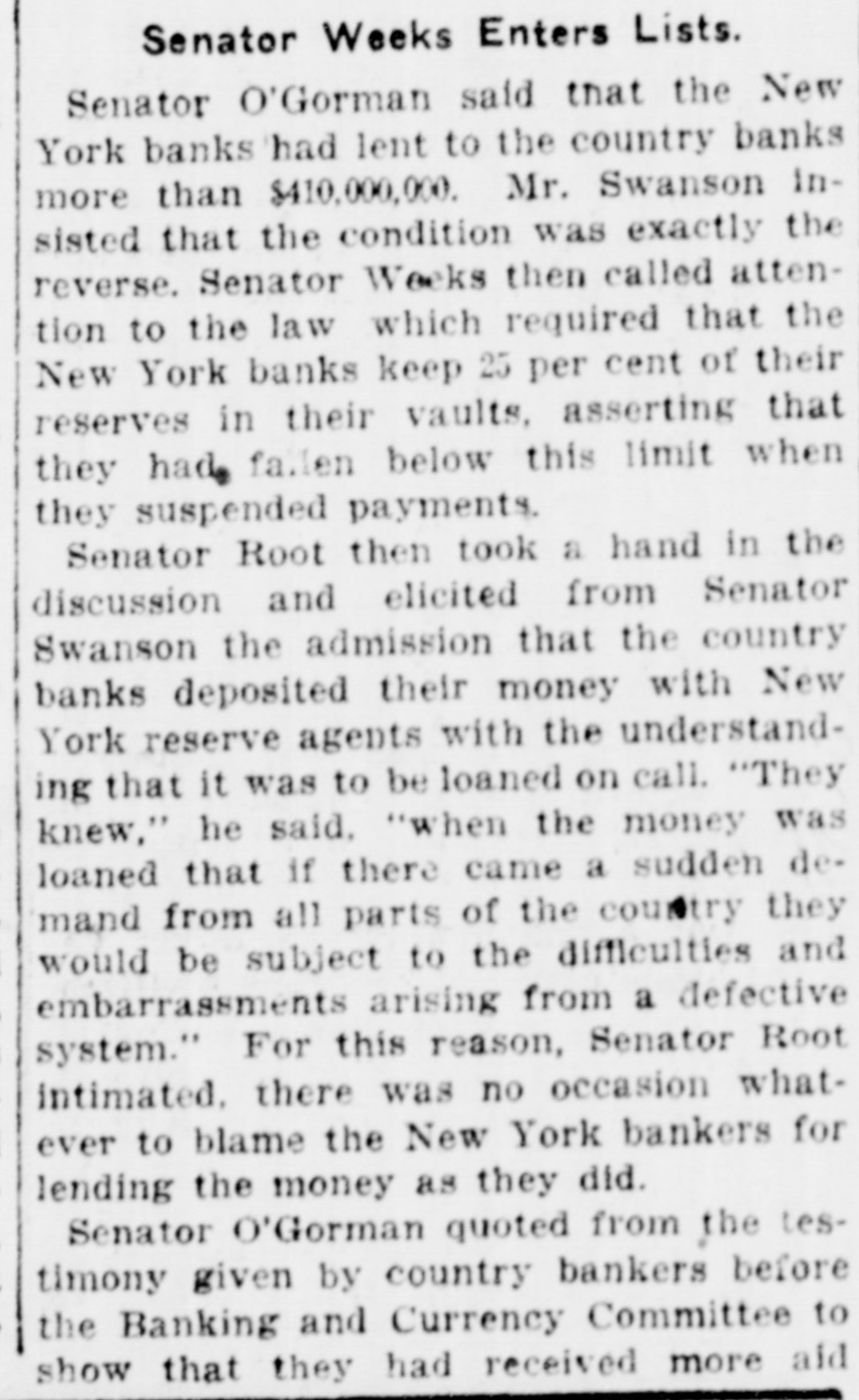
# Senator Weeks Enters Lists. Senator O'Gorman said that the New York banks had lent to the country banks more than $410,000,000. Mr. Swanson insisted that the condition was exactly the reverse. Senator Weeks then called attention to the law which required that the New York banks keep 25 per cent of their reserves in their vaults, asserting that they had fallen below this limit when they suspended payments. Senator Root then took a hand in the discussion and elicited from Senator Swanson the admission that the country banks deposited their money with New York reserve agents with the understanding that it was to be loaned on call. "They knew," he said, "when the money was loaned that if there came a sudden demand from all parts of the country they would be subject to the difficulties and embarrassments arising from a defective system." For this reason, Senator Root intimated, there was no occasion whatever to blame the New York bankers for lending the money as they did. Senator O'Gorman quoted from the testimony given by country bankers before the Banking and Currency Committee to show that they had received more aid


Article from The Sun, May 27, 1914

Click image to open full size in new tab

Article Text

# SECURITIES AT AUCTION TO-DAY. By order of the receivers. 25 shares Union Exchange National Bank of New York. By order of executors. 25 shares City of New York Fire Insurance Company. For account of whom it may concern. 10,000 shares Stewart Mining Company. 4,000 shares Stewart Mining Company. 4,000 shares Stewart Mining Company. 4,000 shares Stewart Mining Company. 4,000 shares Stewart Mining Company. 4,000 shares Stewart Mining Company. 2,000 shares Stewart Mining Company. 700 shares United States Title Guarantee Company (old stock). 2 shares Clinton Hall Association. $1,000 Interstate Electric Corporation first lien 6 per cent. collateral sinking fund bond, 1933. 210 shares Gildersleeve Press. 25 shares Title Guarantee and Trust Company. 100 shares J. Spencer Turner preferred. $17,000 Consumers (Albany) Brewing Company 5 per cent. mortgage gold bonds, due January 1, 1925, all unpaid coupons attached. Warehouse receipts George N. Tower, New York bonded, warehouse 281 and 283 West street, for 53 cases of linen. 100 shares National Bank of North America (in liquidation). 29 shares New York Knickerbocker Real Estate Company. $2,110.04 Western Farm Products 6 per cent. debenture income bond, due 1950. $2,000 J. R. Shanley Estate Company collateral trust 5 per cent. registered bonds. $7,500 Standard Motor Construction Company first mortgage 6 per cent. sinking fund bonds, 1927. 152 shares American Road Machinery Company 7 per cent. preferred. 6 shares State Bank. 200 shares Brooklyn City Railroad Company. 10 shares National Exhibition Company. $15,000 Dayton and Michigan Railroad construction mortgage 4Β½ per cent. bonds, 1.


Article from New Britain Herald, August 3, 1914

Click image to open full size in new tab

Article Text

WILL ISSUE CLEARING HOUSE CERTIFICATES Bankers Believe Country's Gold Supply Should Be Protected. New York, Aug. 3.-The clearing to at a meeting today decided `house clearing house certificates to meet issue the currency situation brought about by the European war crsis. The decision to issue certificates was of reached after a general discussion foreign situation and its bearing the the business conditions here. It was the unanimous on opinion that in view should of foreign situation every means adopted to protect the country's therebe It was voted, gold supply. that for the present and until itfurther fore notice the association place self upon a certificate basis. Additional Resolution Adopted. additional resolution was adopt- of An making available in payment issued ed all forms of currency on balances authority of the national government. This indicates the desire by the bankers to use freely the currency isthe national currency associa- rethe fullest extent for and sued tion to to correspondents the quirements of their the needs of interior exchange. Largely Meeting Attended. meeting was largely attended, bankpractically The all of the sixty-one ers and trust companies being represented. This is the first emergency measure the taken by the association since panic of 1907 when similar action was taken. Secretary McAdoo of the treasury department, who came from Washinglast night to attend a conference the with ton New York bankers, left for capital at 9:30 'clock today to attend meeting this afternoon with finan- Kela various cities. John H. Williams, comptroller ton ciers from of W. the P.G. currency; Charles S. Hamlin and members of the federal rewho came from serve Harding. board, remained Washing- here ton with Mr. McAdoo, subin conference at the during the and treasury were morning. Mr. Williams has made preparations 5 to forward the emergency bank notes to the various :banks as soon as they arrive. Sixty Day Clause. Decision to enforce the sixty day clause before withdrawal of deposits today by members of the York State Savings New was reached Bank the state association. All savings banks in are affected. Withdrawal at the private banks on the east side, the bulk of whose depositors are foreigners, have been heavy this forenoon, but there has in TT 00.00 been disorder Between $40,000,000 and $50,000,000 ofemergency,currency,arivedin New York today. from Washington and was taken at once to the subtreasury. This announcement was made at the sub-treasury after the secretary of the treasury had started back to Washington. β‚Ή Brokers Reconcile Themselves. Stock exchange brokers reconciled themselves today to the probability of a prolonged suspension of the market here. W. G. Van Antwerp, a member of the board of governors. said he believed it probable the exchange would remain closed while the European war was on. Although immediate resumption of business is not expected. brokers have to by dismissing chinery hesitated disorganize employes their ma- and off private wires, for in case sudden re-opening cutting of a of the exchange they would be unable to transbusiness. Most of the contracts the priact with telegraph companies for permitvate wires contain a clause the lessees to discontinue the on days' service ting thirty notice. Such of notice was given today by several the wire houses, with the expectation that should trading be resumed in the meantime the wire would be reengaged. Situation More Acute. The general situation has been made more acute by the poor business which Wall Street experienced for many months. More than one house in the street, according to general opinion, has not made expenses for the last year or more. "But there won't be a stock exchange broker,' said Mr. Van Antwerp, "who will whimper. They will give New York an exhibition of their fine spirit.' Special Committee Meets. The special committee of five met it was today, brokers and appointed said last week, would continue early in session each day during the time that the exchange is closed. This committee will attend to the settlement of such points as may require adjustment, acting as representatives of the stock exchange firms. The Wall Street army of salaried employes was particularly anxious for the future. In the New York Stock Exchange Employes' association there are 9,800 enrolled members, which a represents only fraction of the nummen or upon the of directly ber exchanges of indirectly, whose this city. livelihood So depends, far various dis- as could be learned, no wholesale missals of clerks and other employes


Article from The Times Dispatch, August 3, 1914

Click image to open full size in new tab

Article Text

liams. Comptroller of the Currency 'd шаша pur Ρ‡ΡƒΡˆΠ΅Π½ 'S Charles Harding, members of the Federal serve Board. Until far into the they discussed relief measures with group of leading bankers. The New York Clearing House mittee to-day called a mΓ©eting of Clearing-House Association. to be before banking hours to-morrow, Issuance ] Joj certificates Banks of New York and other cities completed arrangements to out many millions of dollars of gency currency to-morrow. Recommendations were made that savings banks and the private of this State enforce the clause. empowering them to decline pay out money within that period depositors. The New York State Savings Association will meet before bankin hours to-morrow. and it was stood to-night that the clause would go into effect. Many of New York's foremos financiers attended to-night's ence. They included J. Pierpont can and his partner, Henry P. Davisor Frank A. Vanderlip. president of National City Bank. and A. Hepburn. chairman of the Chase tional Bank. The recommendation to be made the clearing-house committee to the sociation to issue clearing-house tificates was regarded here to-night virtually certain of adoption. Thes certificates, while not legal currency were accepted during the panic of by the banks in settlement of transac 111 pue 1 Buown citles were circulated In lieu of tender. New York bankers were emphatic their statements that there need be fear of disastrous developments. am JO banks ey: 10 position cpunj SEM 'ples SEM 11 B SE mentally strong. Bankers were in conference through out the day. During the morning wires to Washington were kept in almost constantly, and after the dent and Mr. McAdoo had been formed of the views of the New bankers it was decided that the am demand 01 SU yons SUM non ence of the Washington officials at financial centre. Before they left capital a special telegraph wire installed in the subtreasury with direc connections with the Treasury Depart ment. 10 meeting E same *he 1V executive committee of the Nation: Currency Commission and the Clearin House Committee was in session. anssi 01 [esodord tificates met with opposition both the ground that it was unnecessary for the reason that It might alarm. The opponents to the plan won over, however, when news of the commencement of hostilities Germany, France and Russia. Bankers considered It highly probable that the outpouring of to Europe would continue if for other reason than It would be almos AUB 11 diys 01 ] of safety. Insurance rates last were almost,prohibitive, and it was sumed that the insurance companie would refuse to take on further under present conditions UNSER LXHKGLVLS BY SECRETARY MeADO The conference between the Wash ington officials and the bankers in session until midnight. At its Secretary McAdoo said: "Arrangements were perfected issuance by New York banks of 31 eddition JO 000'000 quired, to enable them to respond calls of correspondent banks for to meet the demands for crop ment. I intend to permit the Issuan of similar currency to banks in sections of the country upon their plication to the Treasury Departme and their compliance with the visions of the act.' The secretary prefaced his stateme MeN 01 come pay ay Supies sq for"a conference with the leading ers about the issuance of emergeno currency, and for a discussion of measures for protection of the Widdns p[o.3 S,A,11 He added that the country was splendid shape, and that with precautions It should be possible overcome the difficulties of the struction que The present financial situation, was explained here to-day by banker was brought about by a number causes. For months business has backward and capital timid. The came the spectre of the European 01 SUM effect esoym financial markets of Europe, resultin in the suspension of the world's ing stock exchanges. including the York exchange. An important cause of disturbance here was Europe enormous demand for American Last week these exports were well to $50,000,000. The probability e uş P[40M PIO and 411M would be a severe reaction upon merce and industry here. as well as troubled state of public sentimen made the outlook still worse.


Article from Newark Evening Star and Newark Advertiser, August 3, 1914

Click image to open full size in new tab

Article Text

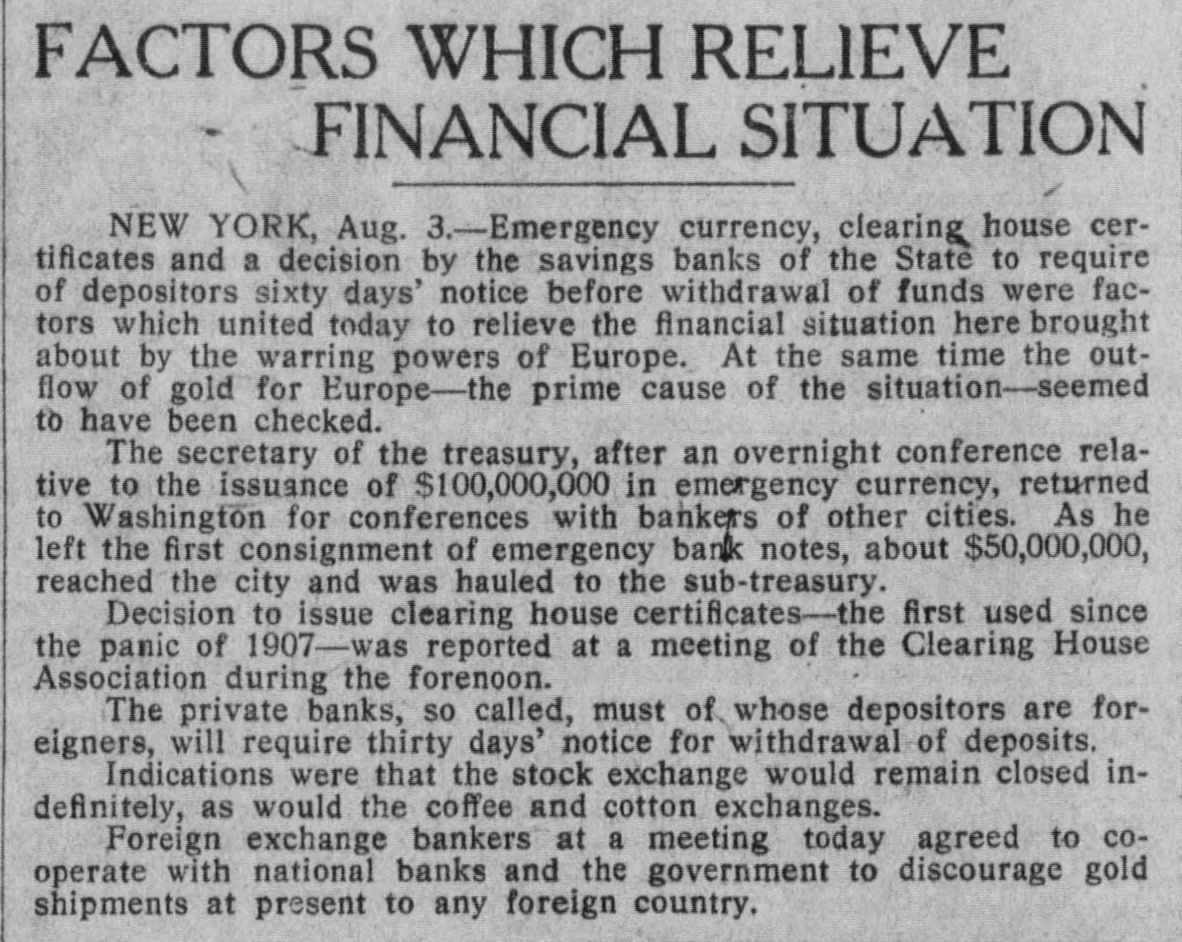
FACTORS WHICH RELIEVE FINANCIAL SITUATION NEW YORK, Aug. 3.-Emergency currency, clearing house certificates and a decision by the savings banks of the State to require of depositors sixty days' notice before withdrawal of funds were factors which united today to relieve the financial situation here brought about by the warring powers of Europe. At the same time the outflow of gold for Europe-the prime cause of the situation-seemed to have been checked. The secretary of the treasury, after an overnight conference relative to the issuance of $100,000,000 in emergency currency, returned to Washington for conferences with bankers of other cities. As he left the first consignment of emergency bank notes, about $50,000,000, reached the city and was hauled to the sub-treasury. Decision to issue clearing house certificates-the first used since the panic of 1907-was reported at a meeting of the Clearing House Association during the forenoon. The private banks, so called, must of whose depositors are foreigners, will require thirty days' notice for withdrawal of deposits. Indications were that the stock exchange would remain closed indefinitely, as would the coffee and cotton exchanges. Foreign exchange bankers at a meeting today agreed to cooperate with national banks and the government to discourage gold shipments at present to any foreign country.


Article from Albuquerque Morning Journal, August 4, 1914

Click image to open full size in new tab

Article Text

New York, Aug. -The manchu position of this country to all appearances was appreciably better tonight than was the case twenty-four hours ago. Prompt relief measures composed a which for a time to ominous. situation become While threatened it is yet too early to measure the full effect upon domestic affairs of the Euroupheaval and its attendant embankers pean barrassments, who last troubled, night admitted the outlook was expressed confidence tonight that the energette steps taken would meet all needs, The same opinion was expressed by Williams, comptroller of the who spent at John currency, Skelton the day close the sub-treasury and kept a watch over each development. At the close of the day Mr. Williams said all was serene. The finances of the country," he "are in excellent shape and is no need there added, absolutely situation for any well one to worry. We have the in There are no financial in sight. All the squalls hand. time currency is in that is necessary at this circulation." There probably never was another on day in the history of the country which such a variety of comprehensive measures were put of this and other Banks into large force. to cities isthe country decided to house an additional throughout sue clearing certificates, medium of cirin settlement of culation furnish millions transactions of dolamong banks, Many ars of emergency currency, provided for by the Aldrich-Vreeland law, finan- were shipped to New York and other elal centers. Savings banks and private banking ininstitutions in New York state put H effect the clause which permits deo hem to stop payment of funds to t positors for sixty days and thirty days, for after applications t are made. respectively, withdrawals The Europe, recent enormous outflow of gold to n of the chief causes of the unset- to led one situation here, was believed been stopped effectually. t for these steps sevyesterday, it r have vere While arranged plans various this took mornhours of rapid work Until ral them into operation. ng been accomplished was under g hat ial to district had put something passed the finan- with- of strain but as the hours it serious difficulties, the tension the day reut at the close of street was abnormally private banks were Wall axed until closed, dull. Two but of mall were no other occurrences from here nature, and withdrawals were his while heavier than usual, uneasiness, anks, lot large enough to signify widespread public result of today's action, currency there As a in circulation more the his8 now at any previous time in house han of the country. Clearing about $20.ory certificates to the value of exwere issued, and it amounts was 00,000 that further large banks ected be demanded by the the would During the 1907 panic ishortly. amount of certificates that time, maximum $103,000,000. At outued was the amount of bank notes than Iso, was somewhat larger currency tanding but the present total of ow, all other periods. xceeds the time the clearing the house usDuring are in circulation, statement certificates weekly detailed bank was al be issued. This course bare ill not in 1907 when only a ummary ursued of the weekly bank operani by ons was exchange published. brokers settled for down it al Stock long period of inactivity, the marda r a general opinion that for sev55 as the not be re-opened et Commission pr ral which of would weeks. inquiries showed houses for stocks there rest eived considerable demand it was ge as a investors. In most cases, from all om offers were made ranging than the th av Thursday ize notations id, as e suspended to three prevailing points higher to when stop night. transac- trading made prith Efforts stocks were by irresponsible taking po sid ons in some of which, of the exati te concerns, of the suspension themselves ivantage ange, endeavored A committee to set of stock to m in business. appointed tio brokers was publishers newspaper bit change ) advertisements to peal ject to objectionable an om such persons.


Article from The Sun, August 4, 1914

Click image to open full size in new tab

Article Text

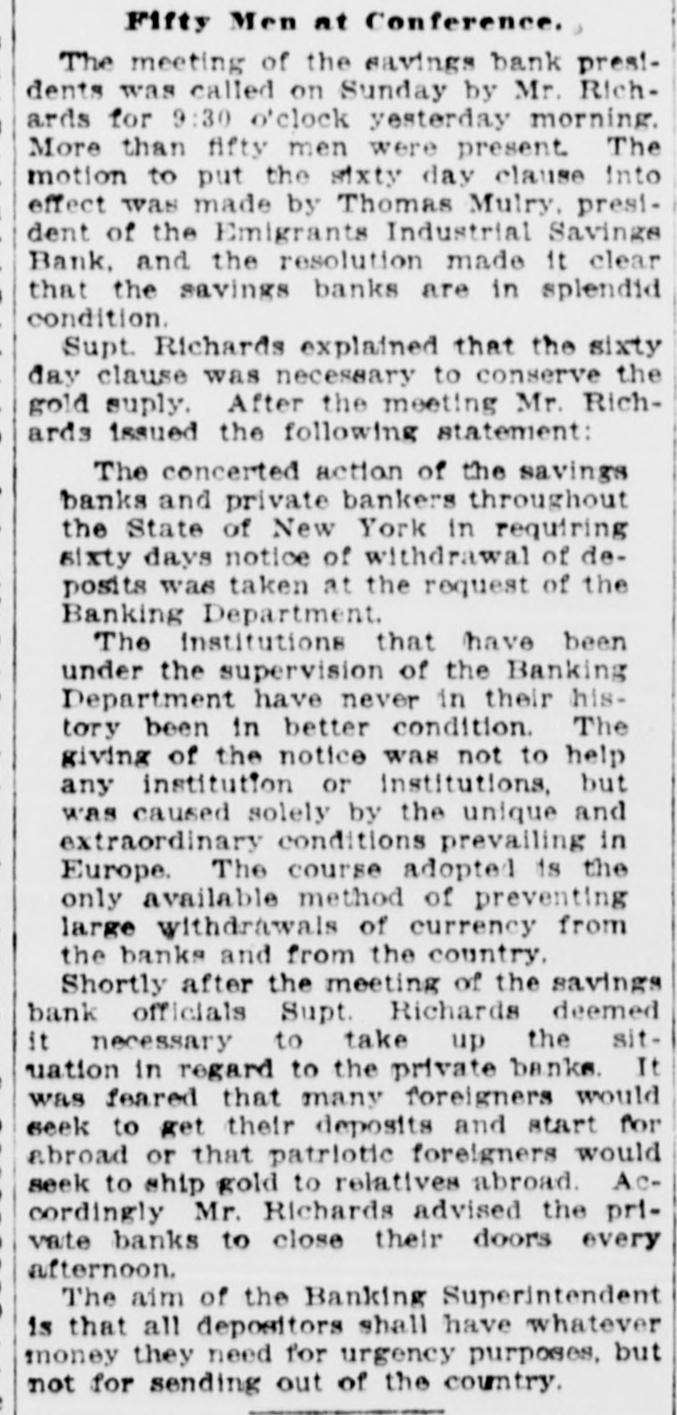
Fifty Men at Conference. The meeting of the savings bank presidents was called on Sunday by Mr. Richards for 9:30 o'clock yesterday morning. More than fifty men were present The motion to put the sixty day clause into effect was made by Thomas Mulry. president of the Emigrants Industrial Savings Bank, and the resolution made it clear that the savings banks are in splendid condition. Supt. Richards explained that the sixty day clause was necessary to conserve the gold suply. After the meeting Mr. Richards issued the following statement: The concerted action of the savings banks and private bankers throughout the State of New York in requiring sixty days notice of withdrawal of deposits was taken at the request of the Banking Department. The institutions that have been under the supervision of the Banking Department have never in their history been in better condition. The giving of the notice was not to help any institution or institutions, but was caused solely by the unique and extraordinary conditions prevailing in Europe. The course adopted is the only available method of preventing large withdrawals of currency from the banks and from the country. Shortly after the meeting of the savings bank officials Supt. Richards deemed it necessary to take up the situation in regard to the private banks. It was feared that many foreigners would seek to get their deposits and start for abroad or that patriotic foreigners would seek to ship gold to relatives abroad. Accordingly Mr. Richards advised the private banks to close their doors every afternoon. The aim of the Banking Superintendent is that all depositors shall have whatever money they need for urgency purposes, but not for sending out of the country.


Article from The Citizen-Republican, August 6, 1914

Click image to open full size in new tab

Article Text

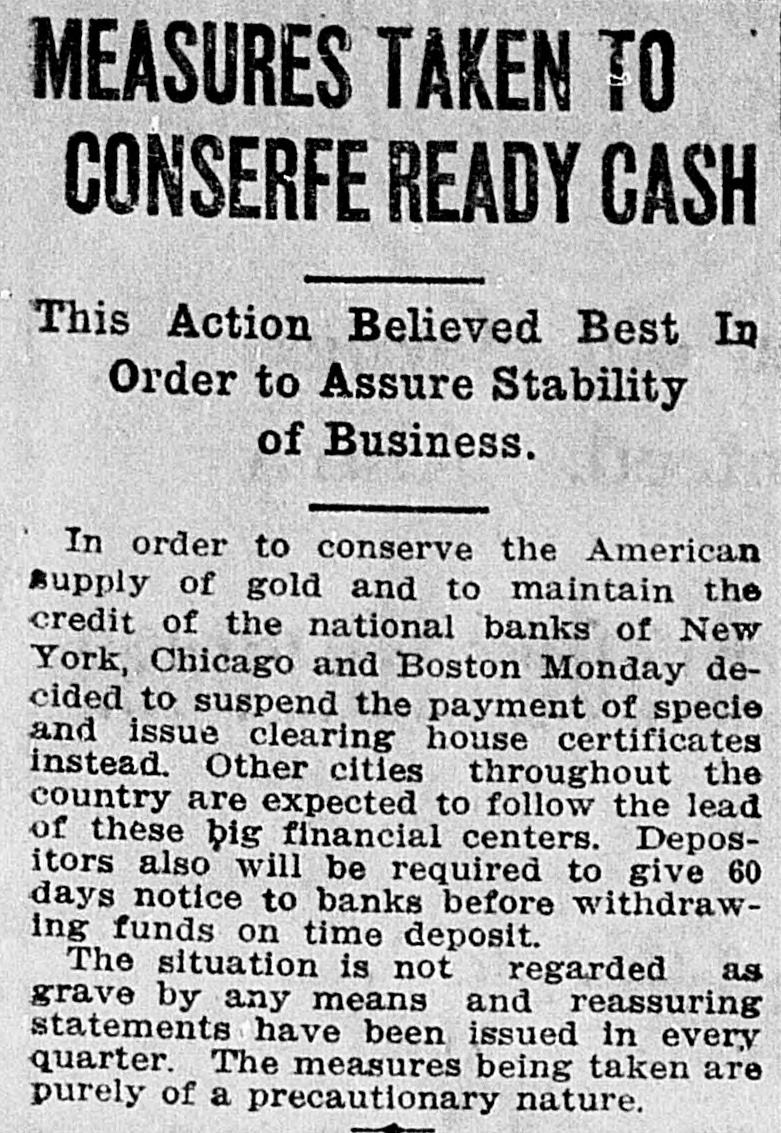
MEASURES TAKEN TO CONSERFE READY CASH This Action Believed Best In Order to Assure Stability of Business. In order to conserve the American supply of gold and to maintain the credit of the national banks of New York, Chicago and Boston Monday decided to suspend the payment of specie and issue clearing house certificates instead. Other cities throughout the country are expected to follow the lead of these big financial centers. Depositors also will be required to give 60 days notice to banks before withdrawing funds on time deposit. The situation is not regarded as grave by any means and reassuring statements have been issued in every quarter. The measures being taken are purely of a precautionary nature.


Article from The Tabor Independent, August 6, 1914

Click image to open full size in new tab

Article Text

MEASURES TAKEN TO CONSERFE READY CASH This Action Believed Best In Order to Assure Stability of Business. In order to conserve the American supply of gold and to maintain the credit of the national banks of New York, Chicago and Boston Monday decided to suspend the payment of specie and issue clearing house certificates instead. Other cities throughout the country are expected to follow the lead of these big financial centers. DeposItors also will be required to give 60 days notice to banks before withdrawing funds on time deposit. The situation is not regarded as grave by any means and reassuring statements have been issued in every quarter. The measures being taken are purely of a precautionary nature.


Article from Evening Star, August 7, 1914

Click image to open full size in new tab

Article Text

be prevented, or, at least, its effects minimized can by the proper organization sysand control of a country's banking tem. No such premium upon money or taken such collapse of credit has of in of the leading that the last 100 years as Noplace general Europe during any States countries in in the United in December of 1907, war and social witnessed vember periods and of condition revolution. except of similar disastrous for a and credits in England one must Namoney back to the time of the wars of go while in Germany no such foun- ocpoleon, has taken place since the shown currence of the empire. France has the dation such a banking condition but once that in was several generations, and last defeat at the hands of Prussia, war after her payment of her billion-dollar troubles. indemity the and bitter internal There have been suspensions of banks and great failures of business and banking houses in Failures Abroad Not these countries just the same as as Heavy as Here. in the United States, yet these disasters have not (as so offen has been the case here) been alIowed to paralyze the credit of the country. In Great Britain, the powerful firm of Overend Gurney failed in 1866, the Bank of Glasgow in 1878 and the house of Baring Bros. in 1890. Yet, on each occasion, the trouble was confined and no national financial convulsion followed. In France the same ability to avert financial panic was shown upon the failof such great banking institutions as ure the Union Generale in 1882 and the Comptoir d' Escompte in 1899; while in Germany the failure of the famous Leipziger Bank in 1901 is another example. in the United States, the suspension of Yet, payments by the New York banks has been followed by distress from Maine to California. Although banking reform had been demanded for a number of years, it took the panic of 1907 to insure a thorough prosecution of the task. Minor changes in our banking laws had been made from time to time, but the great prosperity of the country caused Congress to shrink from the responsibility of undertaking extensive reconstruction of the laws to under any which business had attained such mighty proportions. * * In 1000 Congress pased a currency act for the better support of the greenbacks, the Treasury notes of 1890 Better Support of and the silver Greenbacks by Law. dollars. After the panic of 1007 the Aldrich-Vreeland act was promulgated, which provided that the national banks might organize themselves into national currency assoclations, and that a member bank, with outstanding note circulation secured by States bonds equal to 40 per cent of might extend its United its capital, note issues upon other classes of securities until the total was equal to the sum of its capital and surplus. This act was intended only to be an emergency measure, and was enacted to expire by limitation June 30, 1914. The provision for increasing their note issue up to the present has not been taken advantage of by the banks The act has been extended to June 30. 1915. Further, following the panic, the national monetary commission was established, for the purpose of investigating means for improving credit arrangements in this country. Members of this commission visited England, France and Germany, and made thorough studies of the banking systems in vogue in these coun- of tries. The banking arrangements Canada, Scotland, Belgium, Sweden. Switzerland, Italy, Russia, Mexico and Japan were also investigated. The findings of the commission were published in reforty volumes, which form a good view of the world's banking business. Out of these studies grew proposals for the establishment of a National Reserve Association, a representative association the banks, the units of which were of to all be the clearing house associations which the banks of each city now mainThe democratic Congress rejected this tain. plan in favor of the federal reserve whose provisions, wisely enforced. act, will probably be found better suited to needs of the country than would have been the any one among the numberless plans which have been proposed.