Article Text
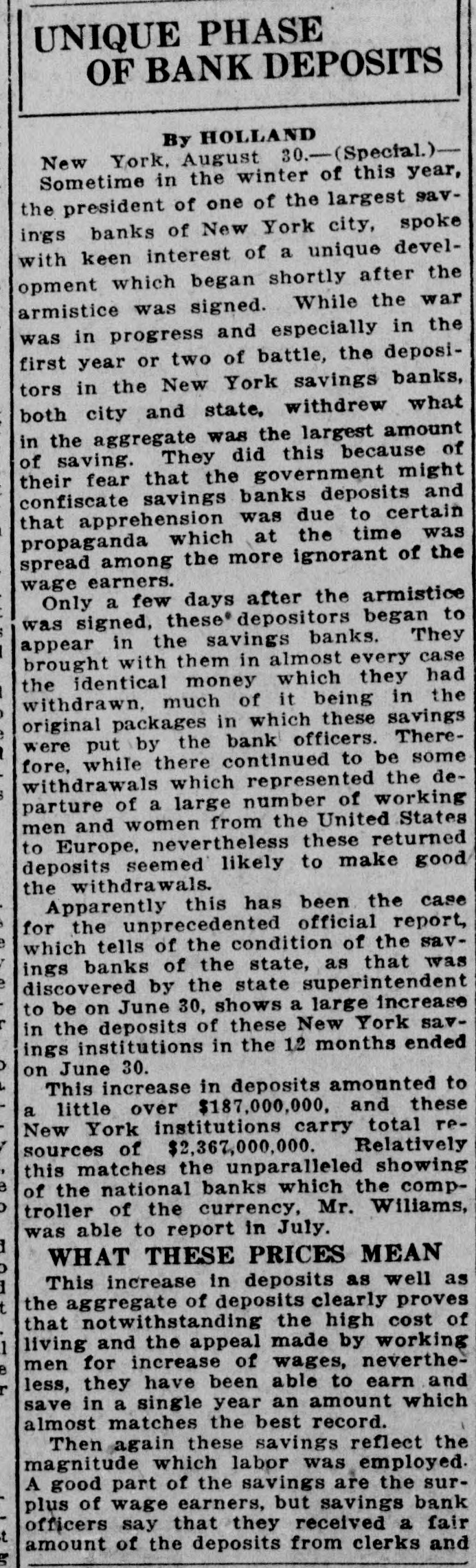
UNIQUE PHASE OF BANK DEPOSITS By HOLLAND New York, August 30.-(Special.)Sometime in the winter of this year, the president of one of the largest savings banks of New York city, spoke with keen interest of a unique development which began shortly after the armistice was signed. While the war was in progress and especially in the first year or two of battle, the depositors in the New York savings banks, both city and state, withdrew what in the aggregate was the largest amount of saving. They did this because of their fear that the government might confiscate savings banks deposits and that apprehension was due to certain propaganda which at the time was spread among the more ignorant of the wage earners. Only a few days after the armistice was signed, these depositors began to appear in the savings banks. They brought with them in almost every case money much of it the withdrawn, identical which being they in had the packages in which these savings the bank there continued some fore, original were while put by officers. to be Therewithdrawals which represented the departure of a large number of working men and women from the United States to Europe, nevertheless these returned deposits seemed likely to make good the withdrawals. Apparently this has been the case for the unprecedented official report, which tells of the condition of the savings banks of the state, as that was discovered by the state superintendent to be on June 30, shows a large increase in the deposits of these New York savings institutions in the 12 months ended on June 30. This increase in deposits amounted to a little over $187,000,000, and these New York institutions carry total resources of $2,367,000,000. Relatively this matches the unparalleled showing e of the national banks which the comp5 troller of the currency, Mr. Wiliams, was able to report in July. I WHAT THESE PRICES MEAN This increase in deposits as well as 1 the aggregate of deposits clearly proves t that notwithstanding the high cost of living and the appeal made by working 1 men for increase of wages, neverthee less, they have been able to earn and r save in a single year an amount which almost matches the best record. Then again these savings reflect the magnitude which labor was employed. A good part of the savings are the surplus of wage earners, but savings bank officers say that they received a fair amount of the deposits from clerks and