Click image to open full size in new tab
Article Text
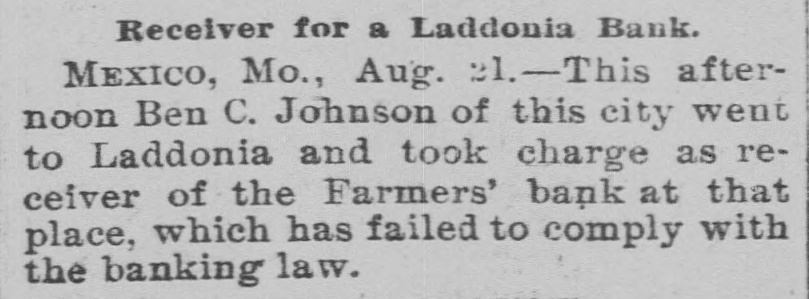
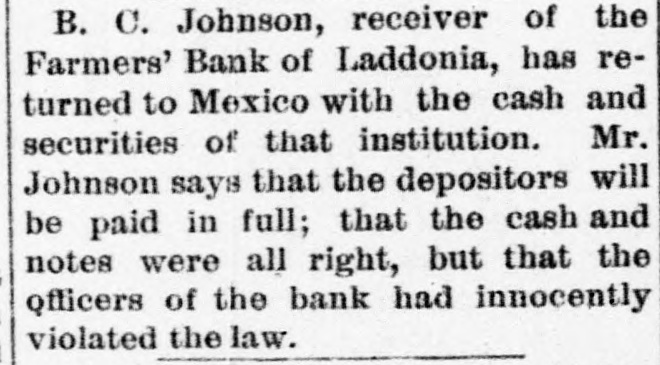
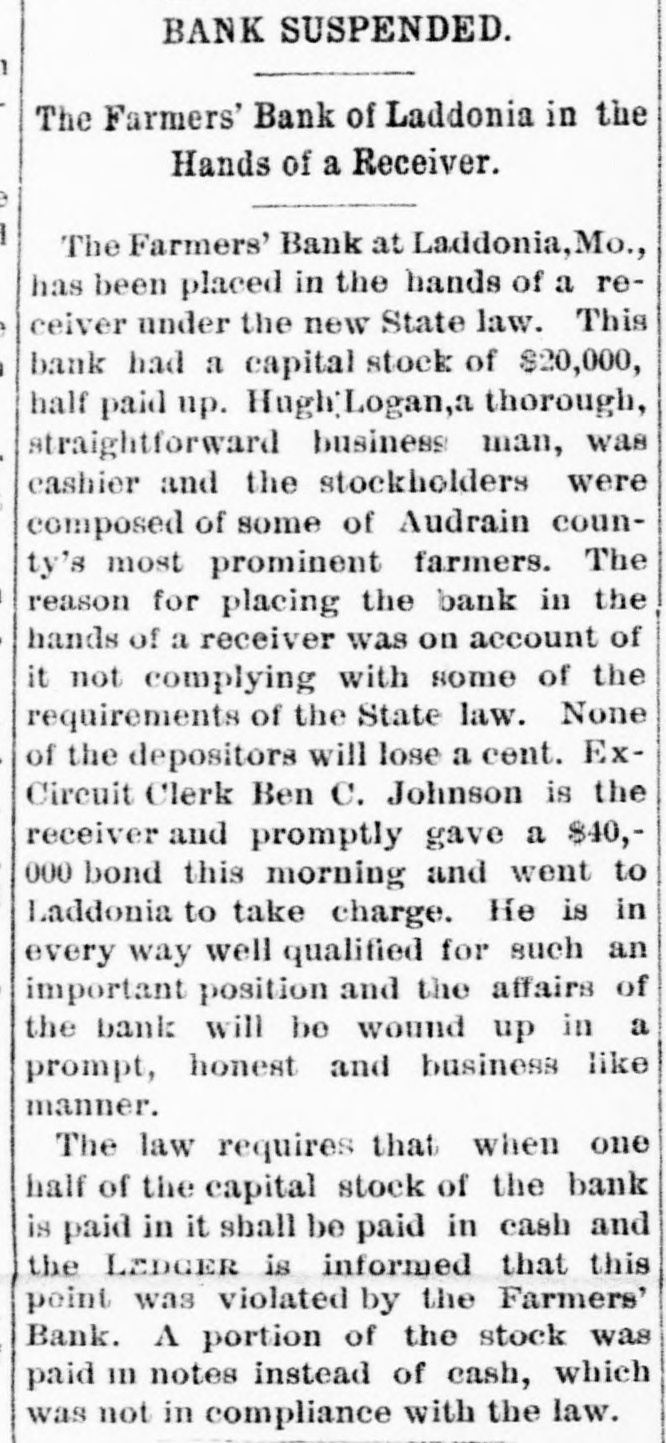
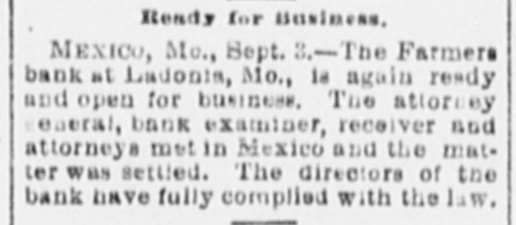
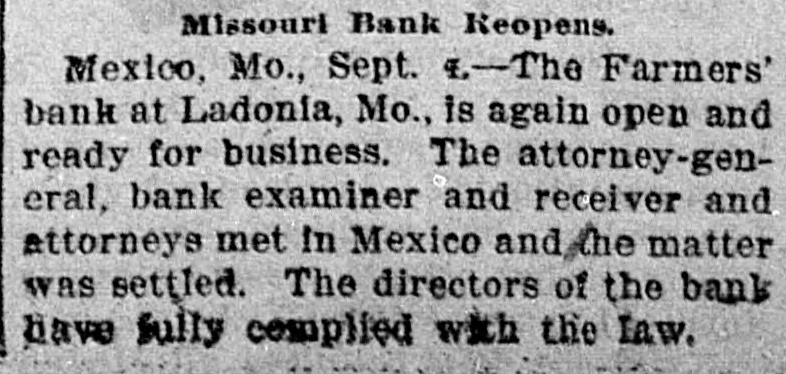
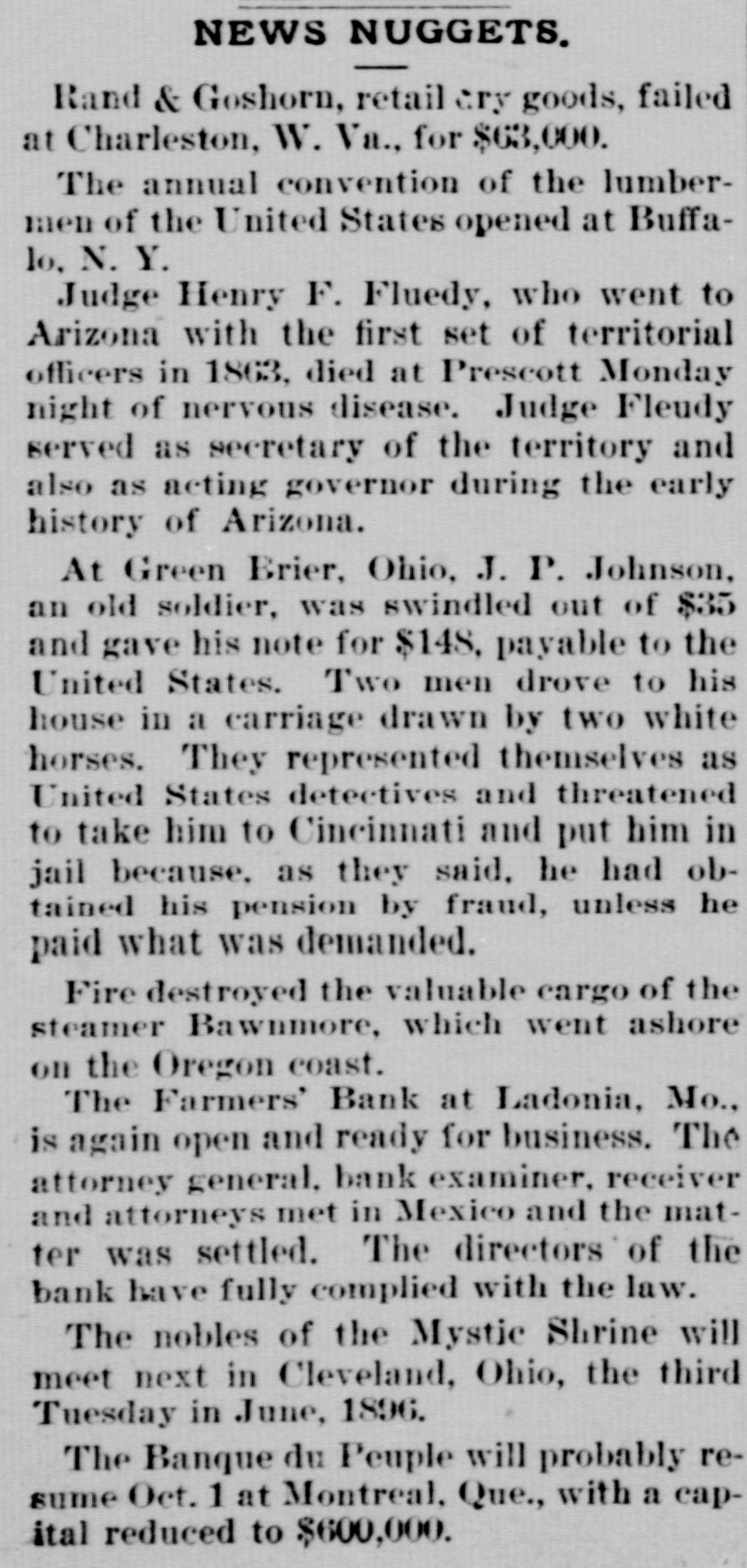
THE NEWS. Compiled From Late Dispatches. DOMESTIC. WILLIAM BUTCHER, a desperate negro, was taken from jail at Hickman, Ky., by a mob and his head was shot off and his body riddled with bullets. THE coinage at the mints of the United Statesduring August amounted to $4,517,600, as follows: Gold, $3,672.200; silver, $748,000; minor coins, $97,400. THE prevalence of cholera in Honolulu and the orient has created a scare at San Francisco and Portland, Ore., and the local boards of health were adopting stringent measures to repel its invasion. COUNTY JUDGE BULLOCK, of Lexington, Ky., will appoint women for election and registration officials. This will be the tirstinstance of the kind in Kentucky, if not in the United States. ANGELO ANDREW, the largest wall paper and paint dealer in Akron, O., assigned to James V. Welch. FIRE at Evansville, Ind., destroyed the Hellman flour mill, an elevator and 100,000 bushels of wheat, the loss being $100,000. A TOTAL eclipse of the moon was observed at many places in the United States. THE tug L. D. Smith was the first American craft to pass through the new Canadian ship canal. MRS. JOHN B. GRIFFIN and a little daughter were the only survivors of a family of six at Little Rock. Ark., three children having died of starvation and the father of alcoholism. THE annual convention of the lumbermen of the United States opened in Buffalo, N. Y. NAPOLEA C. RATTE, his wife and three daughters were poisoned at Akron, O., by paris green in boiled cabbage. Mrs. Ratte and Alice, aged 15. could not live. RAND & GOSHORN, the large retail dry goods and shoe house of Charleston, W. Va., failed. THE trial of William Henry Theodore Durrant for the murder of Blanche Lamont commenced in San Francisco. JOSEPH B. NORTON was hanged at Jasper, Fla., for the murder of James Denmark on January 4 last. THE receipts of the government for the two months of the current fiscal year were $58,022,394, against $75,226,945 for the corresponding months of the last fiscal year. Expenditures for the like period were $71,136,248, against $68,305,218 for the last fiscal year. The treasury deficit for the fiscal year, or the excess of expenditures over receipts, was stated at $13,113,854. Last year for a like period receipts exceeded the expenditures $6,921,726. THE visible supply of grain in the United States on the 3d was: Wheat, 35,480,000 bushels; corn, 5,412,000 bushels; oats, 3,417,000 bushels; rye, 445,000 bushels; barley, 99,000 bushels. THE livery stable of Fleming Bros.' at Petersburg. Ind., was burned, twenty-eight valuable horses being destroyed. A hotel was also burned, the guests losing all their valuables. AMBROSE E. DEAN and his wife while driving were struck by a Wabash train near Montpelier, O., and instantly killed. THE boycot of national bank notes ordered by General Master Workman Sovereign, of the Knights of Labor, was said by Washington officials to be a failure thus far. THE new flag law was observed at most of the public school buildings in Illinois. THE public debt statement issued on the 4th showed that the debt increased $2,815,413 during the month of August. The cash balance in the treasury was $184,039,156. The total debt, less the cash balance in the treasury, amounts to $942,924,232. A TREASURY statement shows a net decrease of money of all kinds in circulation in the United States on September 1 of $10,950,958, making the total of circulation $1,603,583,028, or $22.87 per capita, based on 70,137,000 population. As compared with September 1, 1894, there is a decrease in circulation of $43,000,000. A STORM of wind and rain did great damage in Illinois, Iowa, Indiana, Michigan and other states, while southern states did not escape unscathed. The rainfall in some sections amounted to 7 inches in ten hours, the heaviest ever recorded. Growing crops and fruit were very seriously damaged throughout a large section of country. THE Farmers' bank at Ladonia, Mo., is again open and ready for business. THE trial of Rev. W. E. Hinshaw, a Methodist minister at Belleville, Ind.,