Article Text
EPITOME OF THE WEEK.
CURRENT PARAGRAPHS.
The British Parliament has been further prorogued until the 30th of November.
Rev. Samuel Lunt Caldwell, D.D., was, on the 12th, elected President of Vassar College.
Lomer Griffin, the oldest man in the United States, died, at his residence, in Lodi, Ohio, on the evening of the 16th. He was 106 years old.
A Berlin dispatch of the 16th says the Emperor William had so far recovered from his late wounds that he proposed to assume the reins of Government, on the 1st of October.
The Oregon Legislature convened, on the 9th, and effected a permanent organization on the 10th. The vote for Governor was canvassed, and showed Thayer's majority to be sixty-nine.
It is said that the Russians at Kustendje, on the Black Sea, are again arming the batteries which they dismantled a month ago, and that the orders for the embarkation of troops have been countermanded.
Dr. Nobeling, the man who attempted the assassination of the Emperor of Germany, some months ago, died on the 10th, from paralysis of the lungs, the result of his self-inflicted wounds at the time of his arrest.
A nitro-glycerine and dynamite magazine, near Bradford, Pa., exploded a few days ago, and N. B. Pulver (owner of the magazine), J. B. Burkholder, Andrew P. Higgins and Charley Page were blown into fragments.
The elections in Spain, recently completed, have resulted in a large Governmental majority. The Opposition were successful only in Almeria and Barcelona. A conspiracy has been discovered in Seville to establish a Federal Republic.
Sec'y Sherman, on the 16th, issued the seventy-first call for the redemption of $5,000,000 of 5-20 bonds of 1865—$2,000,000 coupon and $3,000,000 registered. The principal and interest will be paid on and after Dec. 16, interest to cease on that day.
Officials tables of the census of the District of Columbia were published on the 16th. The population of Washington is given at 131,947; Georgetown, 11,571, and of the county, 16,533. Total in the District, 160,051, of which 106,427 are white and 53,624 colored.
In Berkley, Tex., a few days ago, George Lynch was shot, by an assassin, and left for dead. While he was lying unconscious, the murderer brained his whole family, consisting of seven children, the oldest being a girl of seventeen. Lynch was likely to recover, at last accounts.
The vote for Governor in Maine, at the late election, is given approximately as follows: For Connor (Rep.), 58,000; Smith (Greenback), 37,000; Garcelon (Dem.), 29,000. There being no choice by the people (a majority of all the votes cast being required to elect), the Legislature will have to designate the Governor.
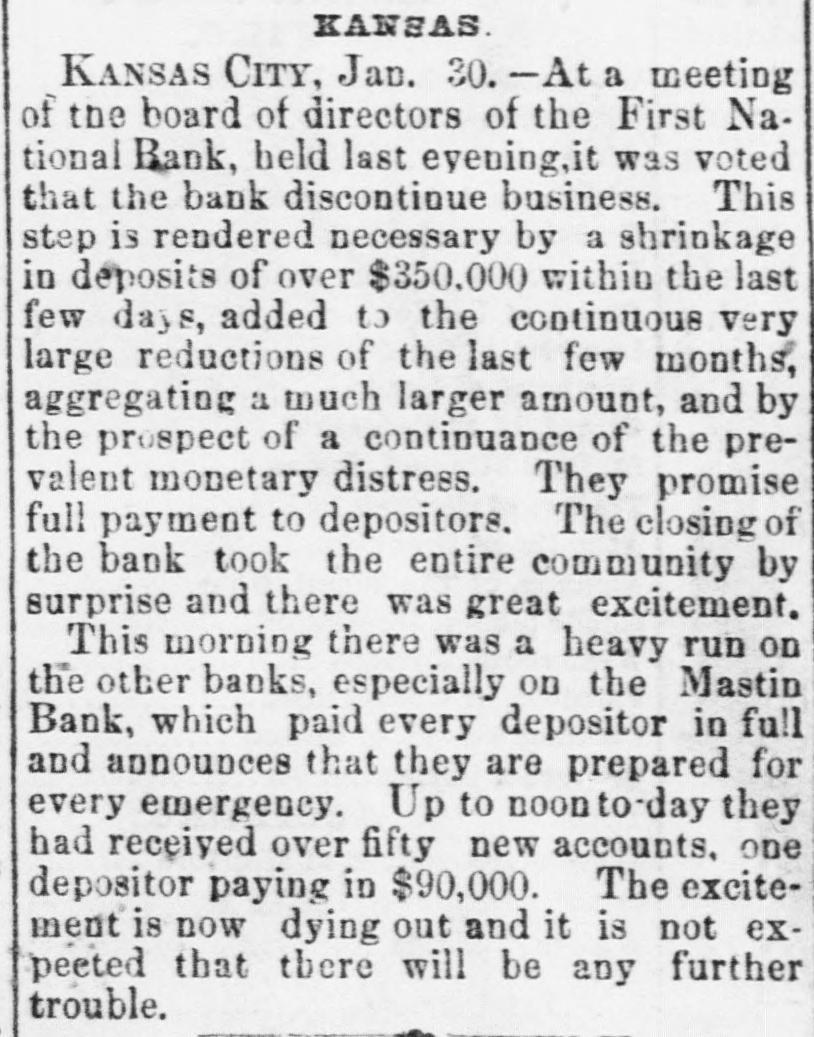
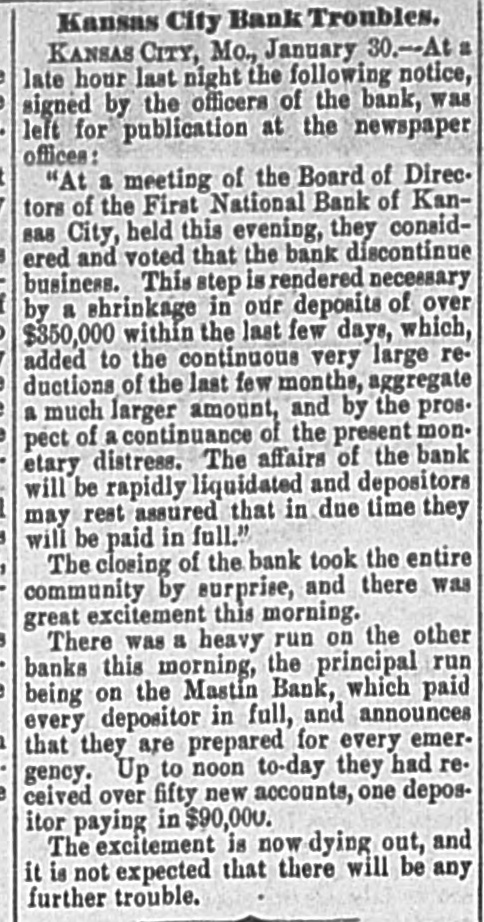
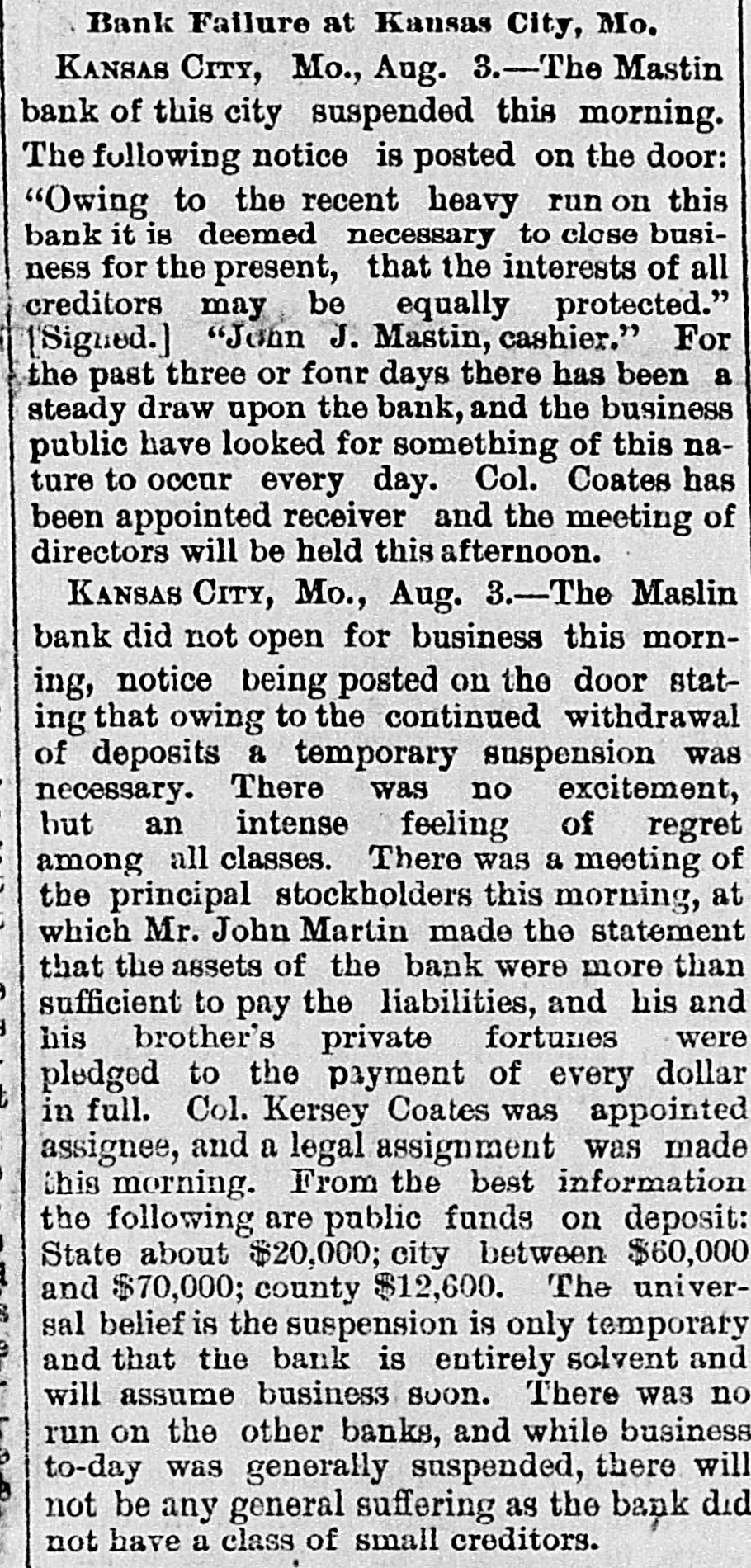
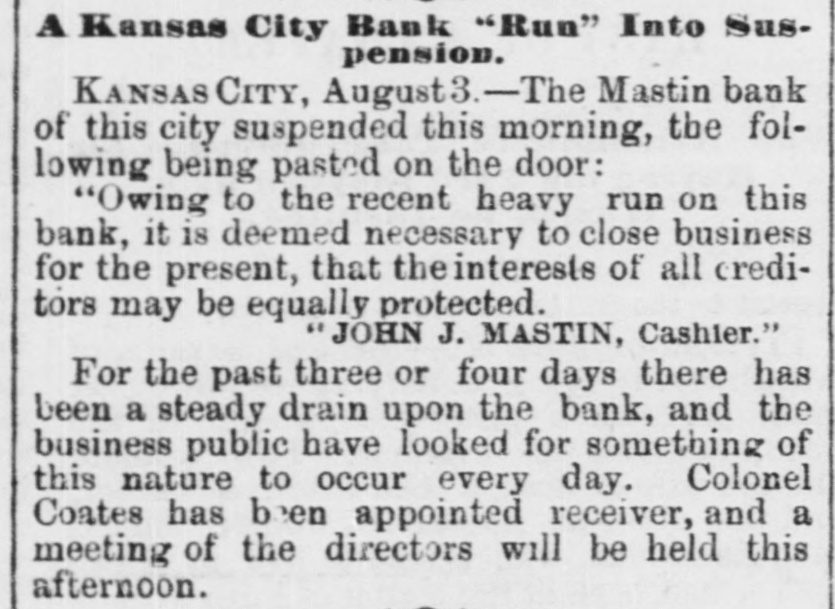
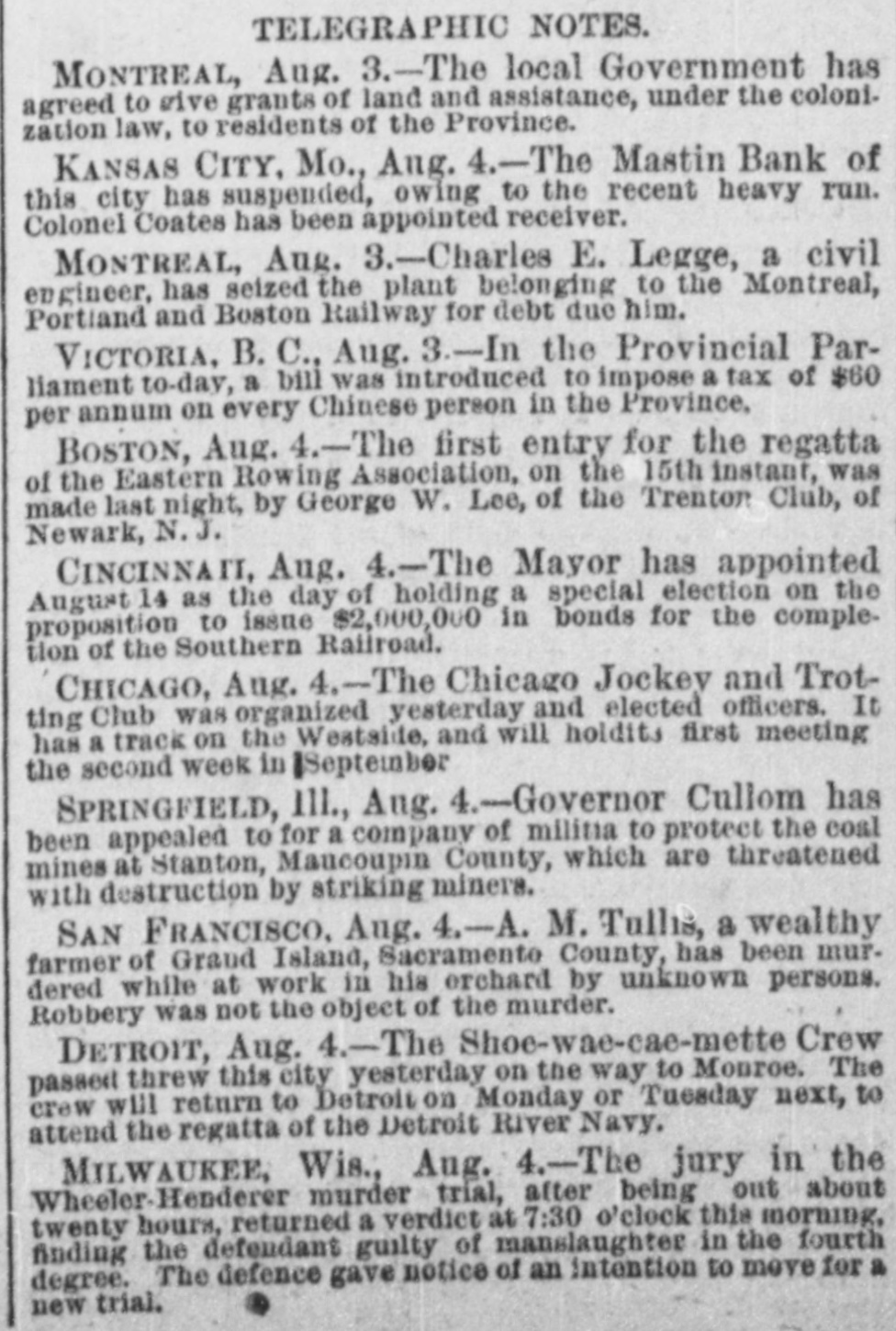
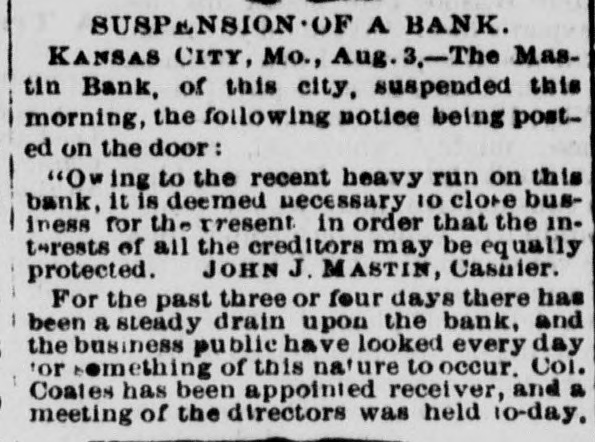
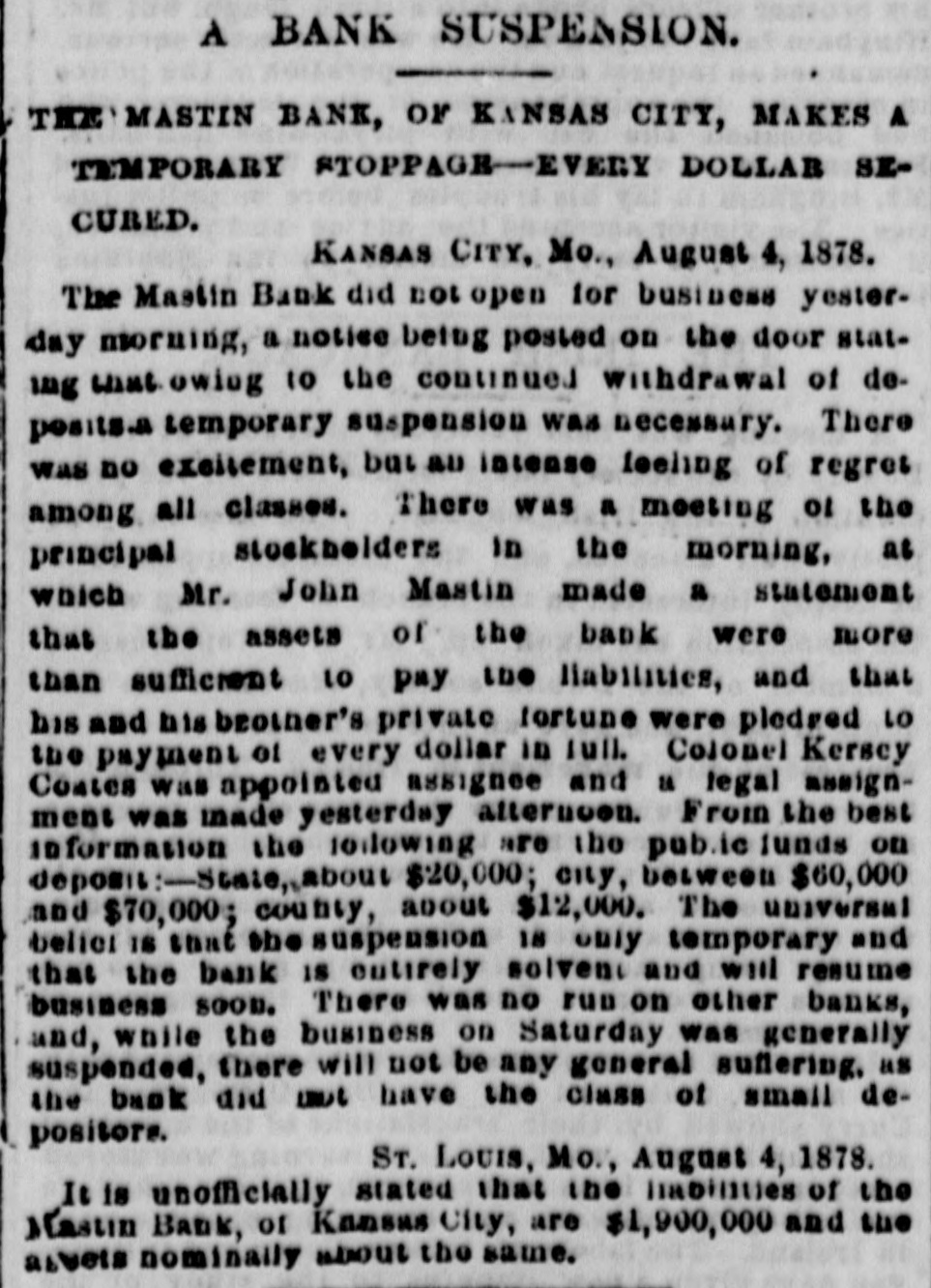
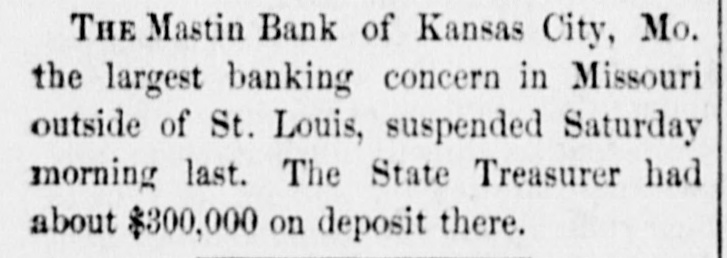
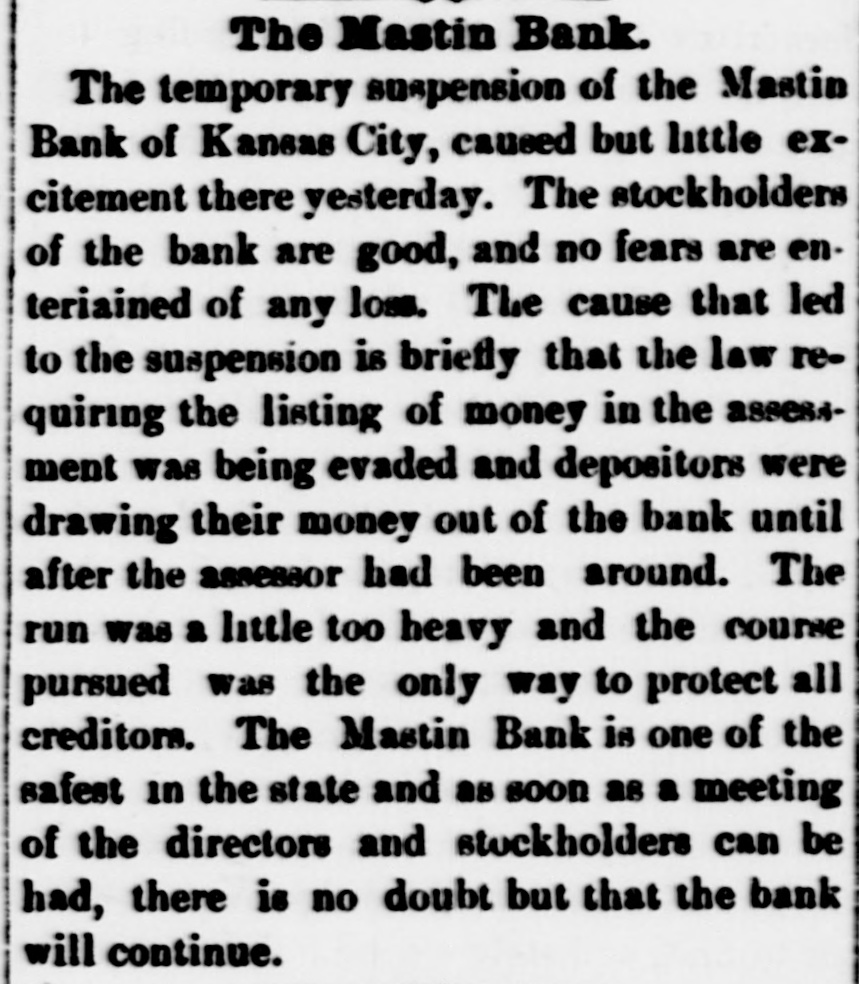
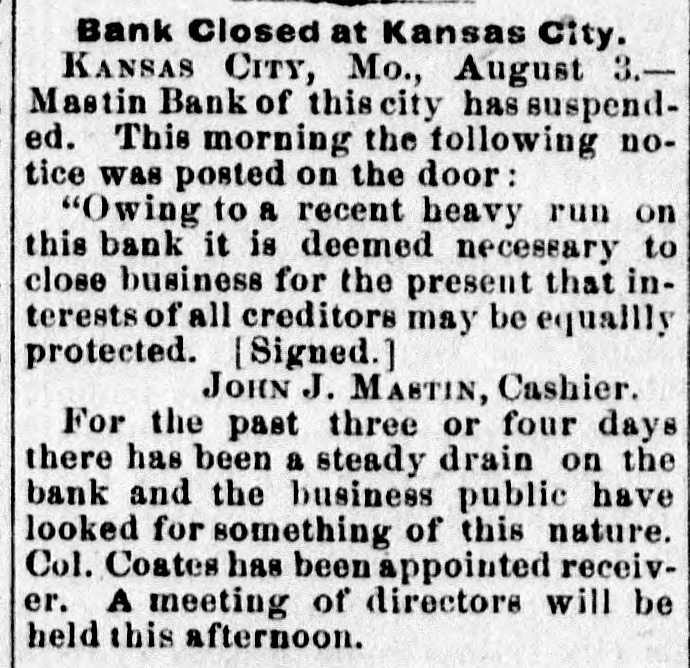
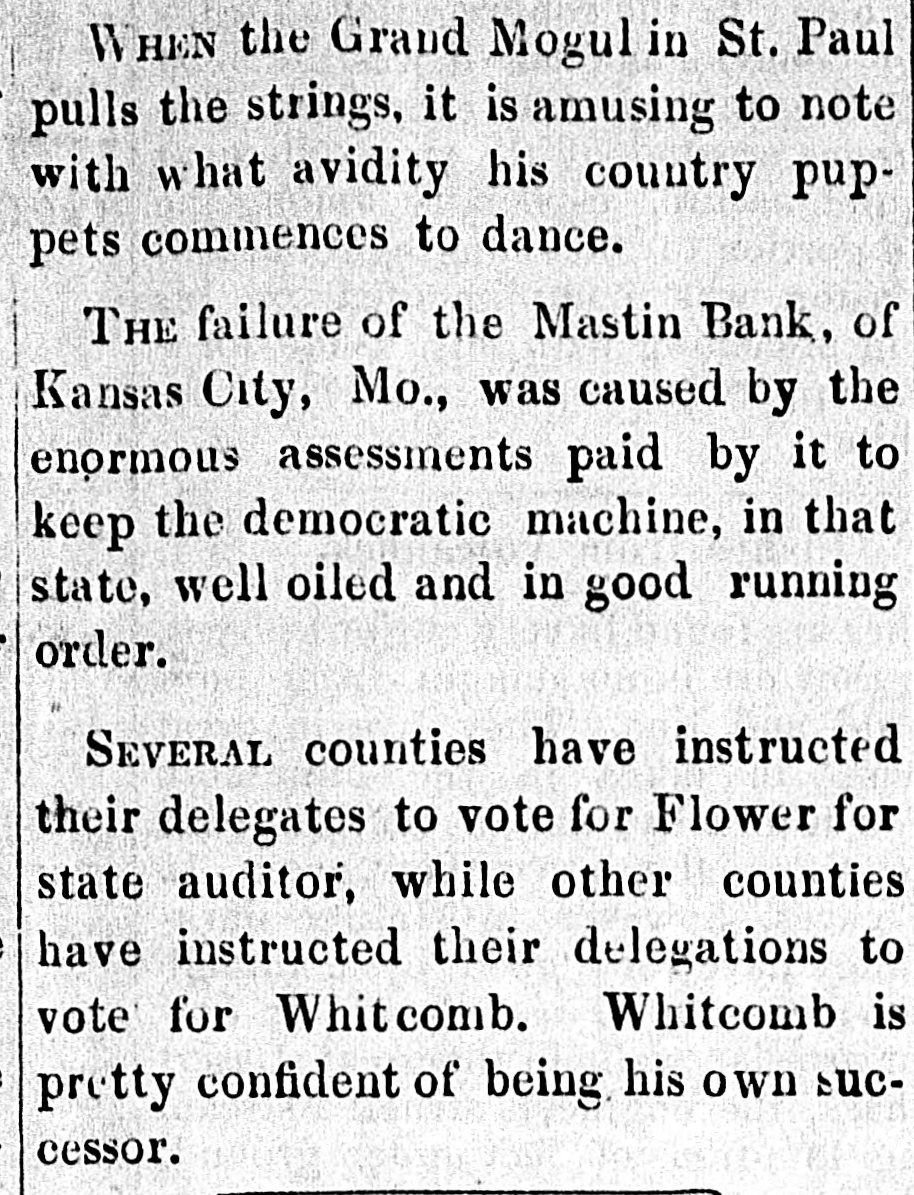
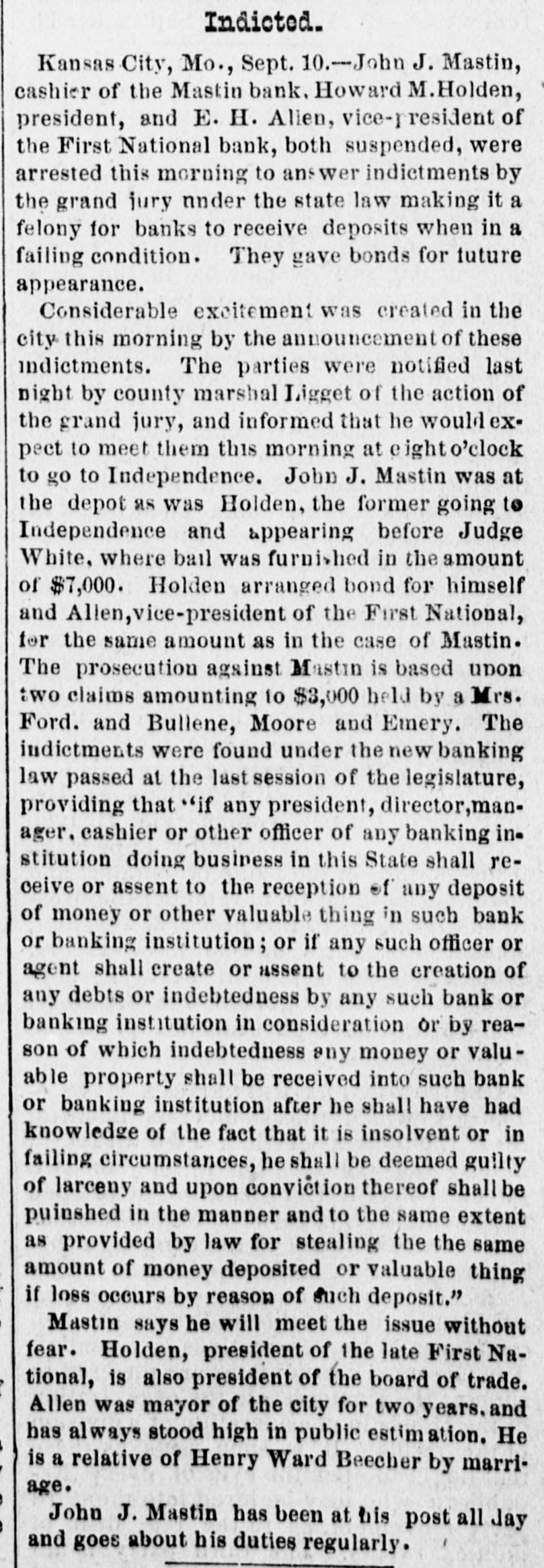
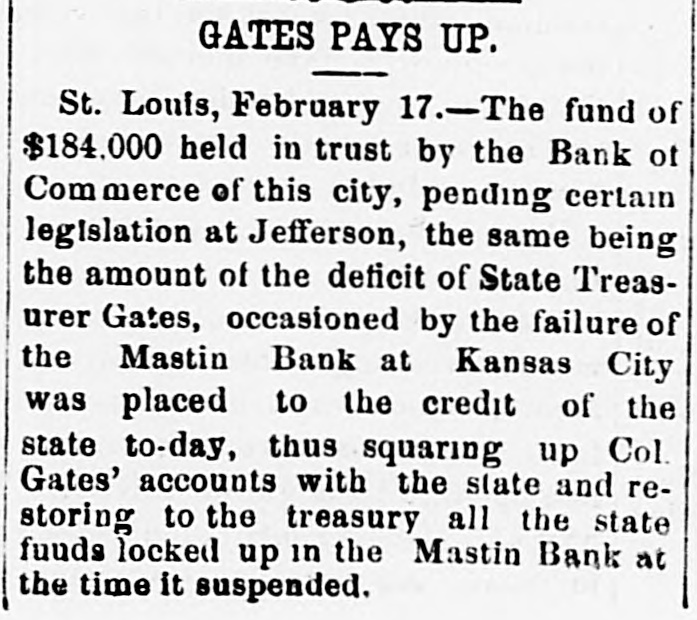
H. M. Holden, President of the suspended First National Bank of Kansas City, Mo.; E. H. Allen, Vice-President and J. J. Mastin, Cashier of the late Mastin Bank, of that city, were arrested, on the 10th, on the charge of receiving deposits when they knew their banks were failing. They were each held to bail in the sum of $7,000.
President Hayes and party arrived in Chicago, on the morning of the 13th, from their trip to the Northwest. He visited the Board of Trade, where he met with a hearty welcome, and made a few remarks relative to the business prospects of the country at large. He was escorted to the Lake Shore & Michigan Southern Depot in the evening, and he and his family and suite left on the night train for Fremont, Ohio.
A very severe storm swept over Ohio, Pennsylvania and other Eastern States, beginning on the 9th and reaching its climax on the night of the 12th. A great number of bridges on the various trunk railways were washed out, and in some cases lives were lost. The storm was particularly severe at Meadville, Pa., where a train ran into a washed-out culvert, and six persons on board lost their lives. The Welland Canal was also injured, and traffic has been for the present suspended.
The currency balance in the United States Treasury, on the 10th, was $11,380,000, including the $10,000,000 for the redemption of fractional currency, and $236,963,000 in coin, including about $10,000,000 in standard silver dollars. Of the $10,000,000 of fractional currency issued in 1862, over $4,000,000 were still outstanding. Of the three and five-cent pieces issued in 1863, probably over $2,000,000 were outstanding. The entire amount of fractional currency outstanding was $16,351,000.
On the afternoon of the 13th, the Secretary of the Treasury issued an order postponing the execution of the recent orders directing the exchange of standard dollars for United States notes. The reason assigned for this action is that the Secretary had been advised that such exchange was a substantial resumption, and that he had no authority to anticipate the time fixed by law for the resumption of specie payments. The announcement is made that silver dollars will be paid out for coin obligations and for common currency demands upon the Treasury.
THE United States Treasurer has issued a circular stating that for the present 120 National Banks "designated depositories of the United States," will be supplied by the Treasury, upon their application, with standard silver dollars from the mint, free of expense, in accordance with Sec. 3,527, R. S. It is expected that the coin furnished will be put in circulation by being furnished to public disbursing officers, to manufacturing and other establishments; to other banks and bankers for distribution in like manner by them, and generally where it is to be used as current money.
GENERAL.
Up to the evening of the 10th, over 600 bodies had been recovered from the wreck of the Princess Alice.
At a Democratic caucus held in Boston, on the evening of the 10th, to choose delegates to the Massachusetts State Convention, representatives were selected from nearly every ward in favor of Gen. Butler, who had already accepted a nomination for Governor as an Independent Workingman's candidate.
The New Hampshire Republicans held their State Convention, on the 10th, and nominated Nat Head for Governor. The platform indorses specie resumption and the payment of the public debt "according to the spirit and letter of the law."