Click image to open full size in new tab
Article Text
The Decision in the Bank Case.
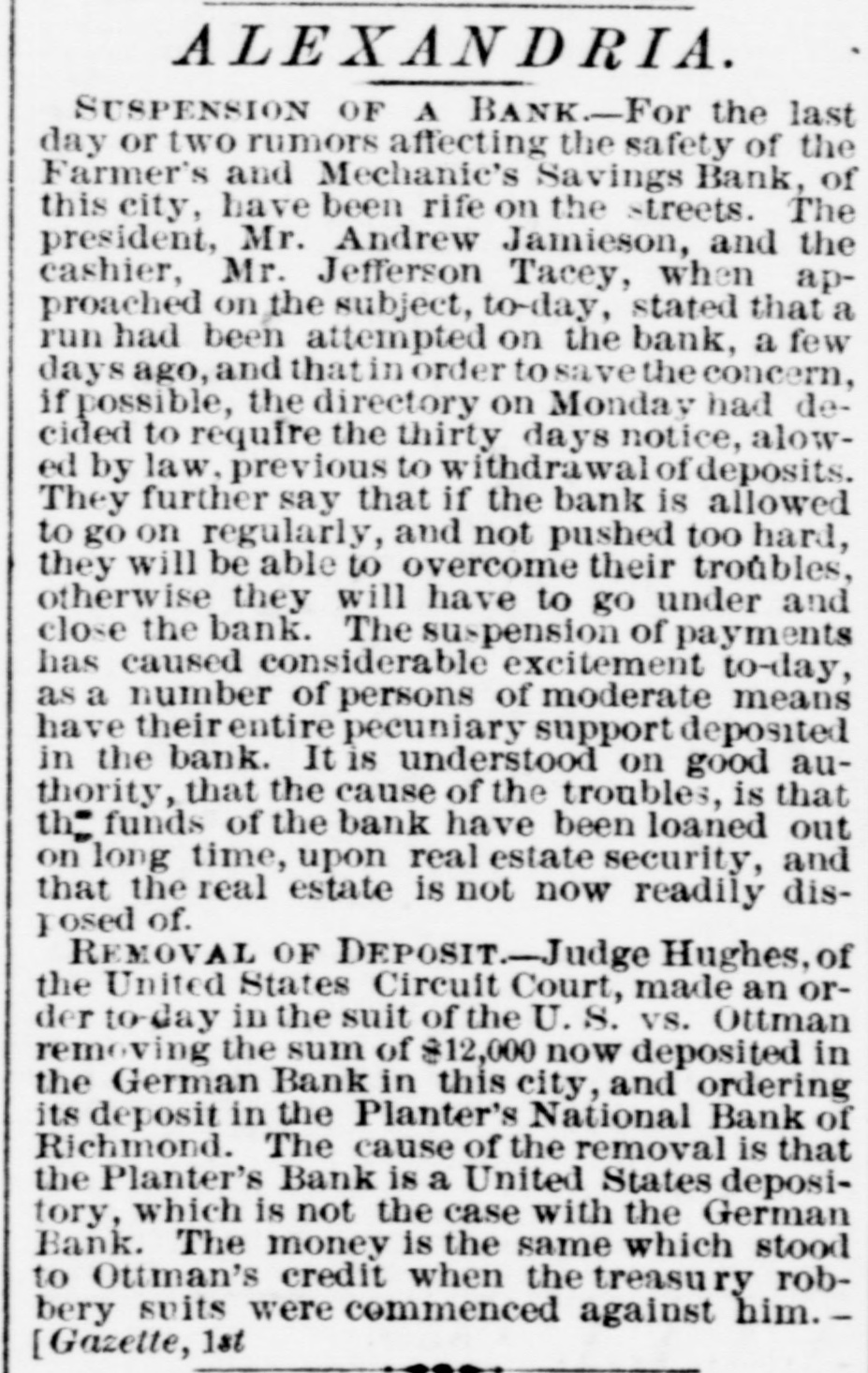
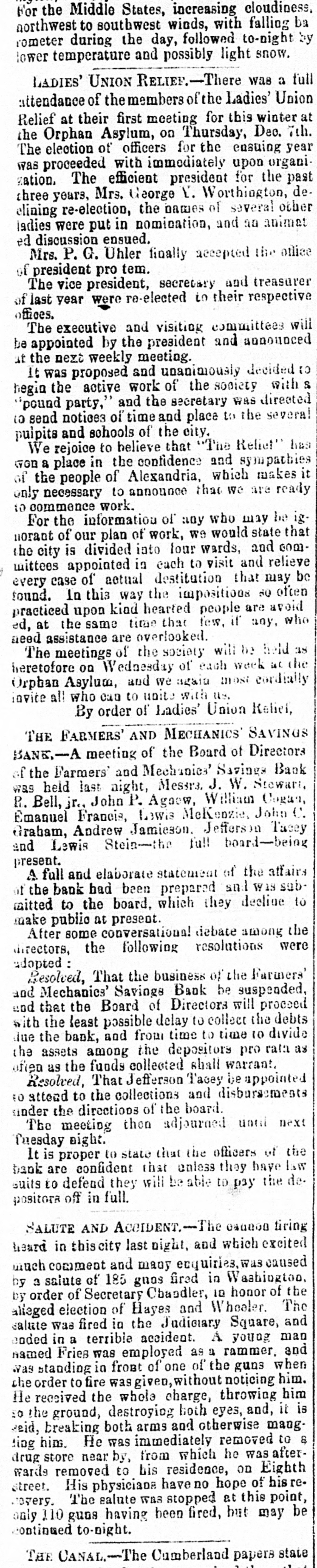
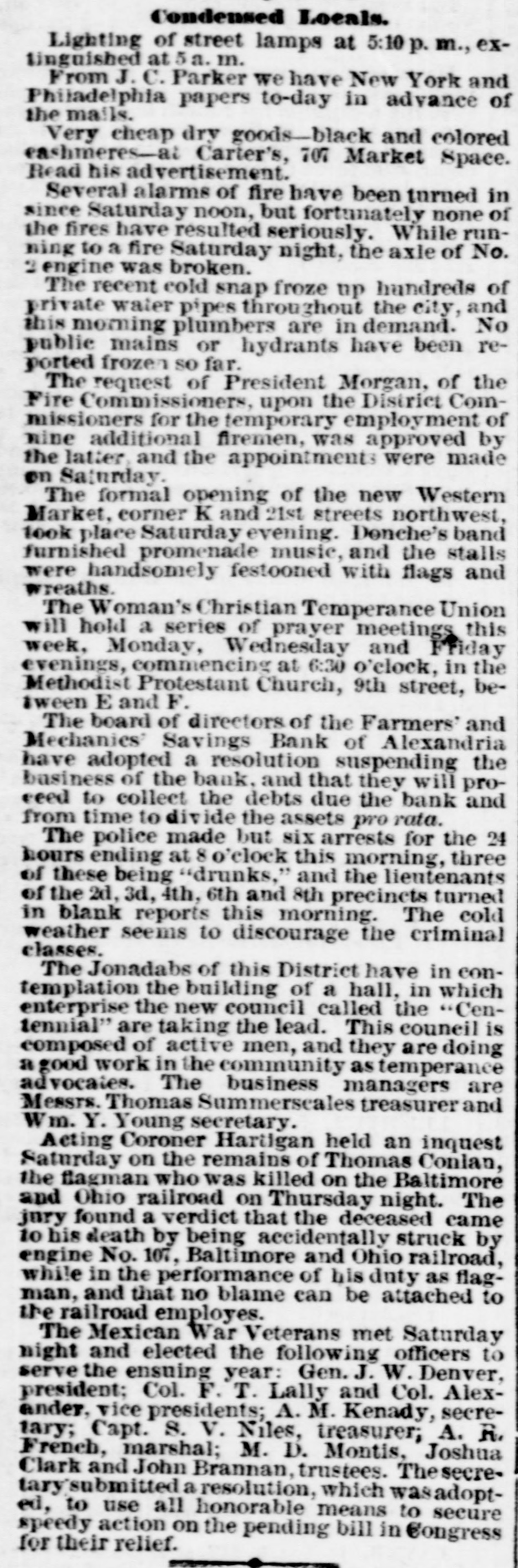
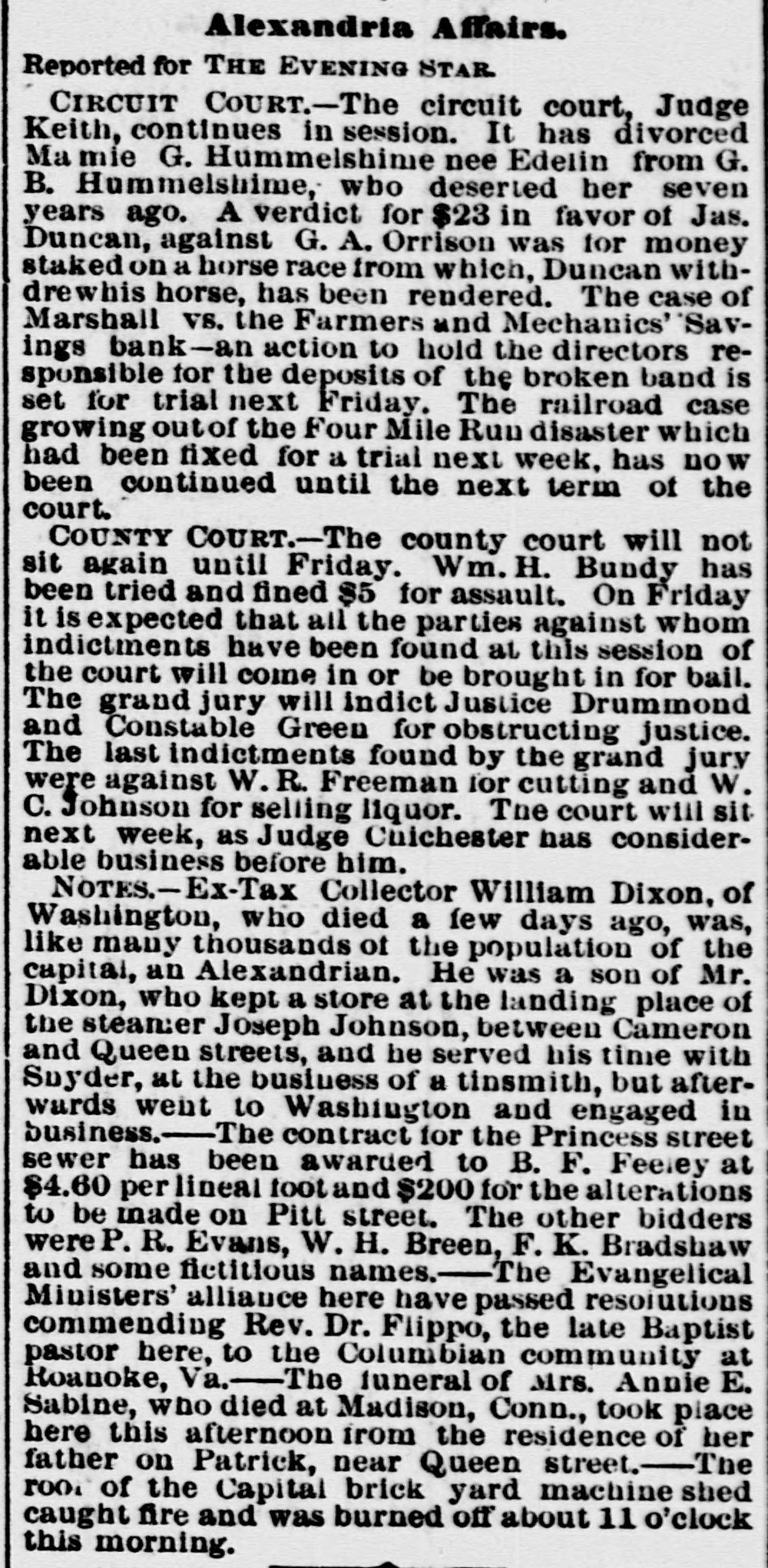
In the Court of Appeals Thursday Judge Lacy, in delivering the opinion in the case of the Farmers and Mechanics' Savings Bank of this city, after reciting that the di- rectors had been grossly negligent in the dis- charge of their duties, and were therefore responsible to the depositors for the money wasted away, said:
We cannot better close the discussion upon this question than by citing the case of the bank against Bossieux, much relied on be the counsel for the appellant, who says: This question has been the subject of inves- tigation and julieni determination by the United States Circuit Court for the Eastern district of Virginia. Judge Hughes, in an elaborate opinion stating the law with great force and clearness, exhibiting a clear and patient examination of all the authorities, held the defendant directors liable upon this ground: 'Gross inattention and negli- gence, sllowing fraud or misconduct on the part of agente, officers, or co directors, which could have been prevented if they bad given ordinary care and attention to their duties. Jadeed this opinion is not only the most thorough examination but the ablest exposi- tion of the law upon the subject the writer has been able to fiad, after examining many authorities, and he might well be content to rest the law of this case upon the opinion of Judge Hughes."
We will, continued Judge Lacy, pro- ceed to briefly review the facts of this case to which this well established rule of law is to be applied.
The question arises in this case as between the directors and the depositors, not between the directors and the stockholders. The by- laws of this bank prescribed weekly meet- ings. Lis conceded that these were scarce- ly ever held, the answers admitting that formal meetings were not held. The decree of the Circuit Court of Alexandria city that it appears to the Court that there has been no such dereliction of duty on the part of the directors or any of them as to fix upon theto personal responsibility cannot be sus- tained upon ney seund principle whatever. Upon what principle can the president be held not to be personally liable for the acts already detailed concerning him? The Commissioner reports that he withdrew without authority bonds of the bank depo ited elsewhere and caused their sale; that he overdrew his account and in other ways converted the property of the bank, aggre- gating $11,713 97. The passenger railway was allowed to overdraw its account to the amount of thousande-$11,314 91 at one time. The no es of the company were dis- counted to the amount of $6,500, and at ma- tuzity were neither protested, renewed, collec- ted, nor sued on. The overdraft was allowed to increase for a year and more without se- curity until it reached $7,530.45, which was entirely lost to the bank the president of the bank boing president of this company part of the time and one of the bank direct ors being president of the company the oth- er part of the time in question, while the treasurer of the railway compa- ny was the cashier of this savings bank. Stil-on was allowed to withdraw the sole valuable security for his note of $2,000, and that was lost. The president, lent his brother $3311 62 practically without any security, and that was lost, and actually lent him $1,211 62 a few months before the bank closed its doors lending to bis brother with no security except worthless endorsers $2300 when he had already gone to protest on a note of $590 But the co directors seek to escape responsibility for all this, includ- ing the large loss to the Washington and Ohio railroad, by claiming to have no actual knowledge of it at all. Did they exercise ordinary diligence to inform themselves, as their duty certainly required that they should? They were required to meet week- ly by their own by-laws. They did not al- ways meet semi-annually, meeting some- times once a year as we have stated.
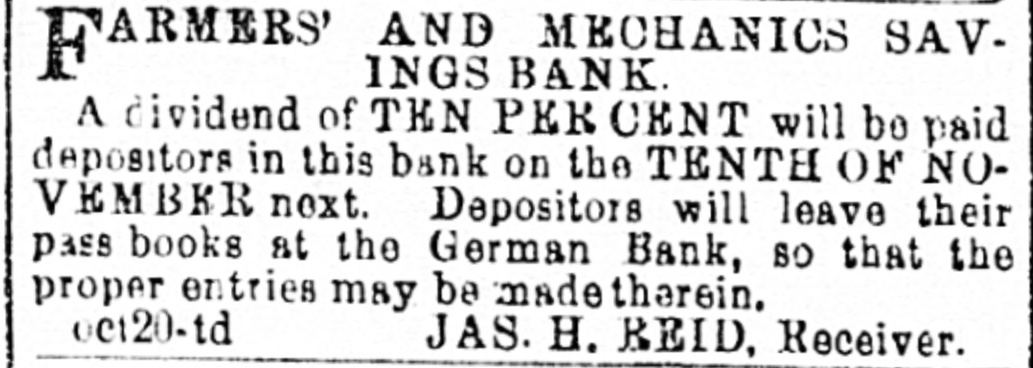
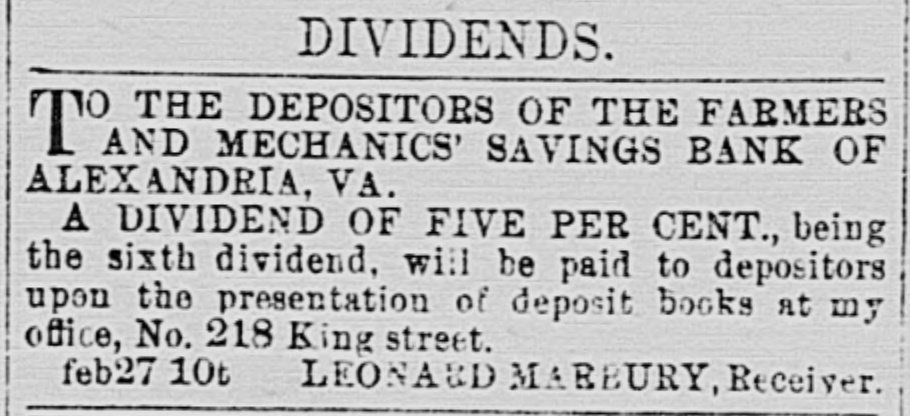
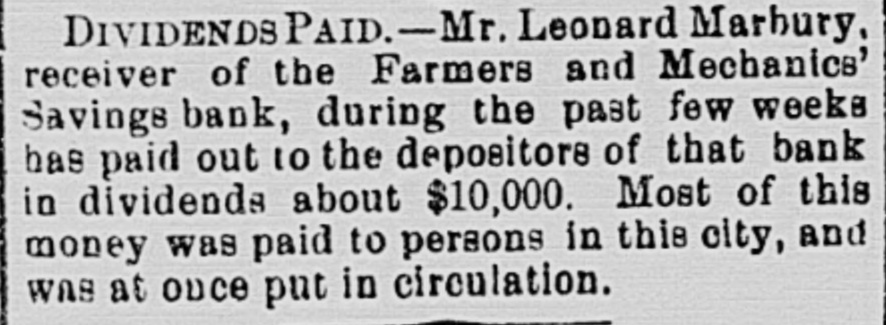
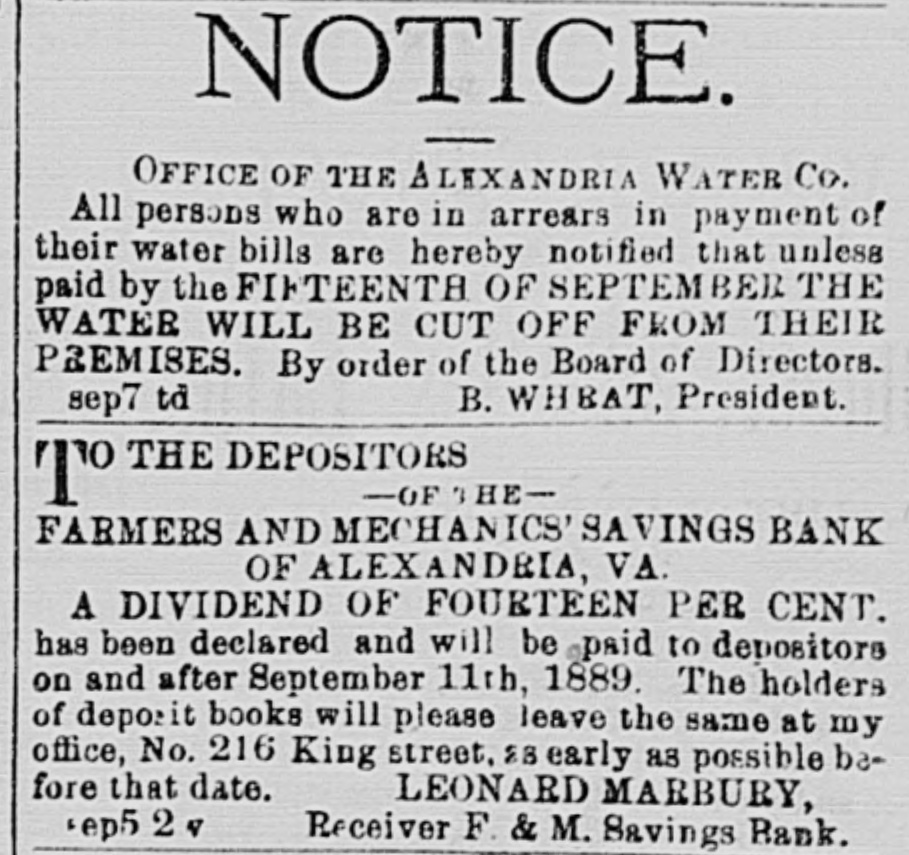
The directors, continued Judge Lacy, were in duty bound to cause the books of the bank to be examined at regular inter- vale. This they never did at ali through- out their whole career, nor did they ever call for a statement of their accounts with other banks. Their vaults and their cash- drawer were emptied by illegal abstractions sed insolvent loans, and they admit that they never knew it, and plead this as their exculpation. The stock subscribed for was not paid up, as has been stated, and yet such part as was. paid up was treated as a lone and interest paid on it; and a large part had never been paid up at the time of the suspension, and some of it has not yet been paid up. Having a bank with so small a nominal capital, with empty vauits and despoiled cash drawer, they owed at the sus pension of the bank to depositors who had Intrusted to tirem their money $53,063 63, on which they have been able to pay only 10 per cent.
If these directors had any duty to perform what- fter toward their depositors, the records of this Bedo not show its performance. They plead ig- rance One of their number was the president of the Washington and Onio railroad in its last 90's and knew its condition and secured him- sel int the notes of the bank were allowed to Step unprotested, unsecared, unrecorded, uncol- lected, and unsued on. One of their number was the president of the Alexandria Passenger Railroad Company and Anew its condition. One of their number was the brother of a debtor, who was insolvent at the time of the loan of thousands to him without secarity.
It is difficult to conceive that they could have been ignorant of all this; but suppose they were, their duty required that they should have looked well into sit these matters, and if they neg- Hently trusted them to others and loss has oc cand should it fall upon them or upon the de- positors who hal trusted them and whose trust they had a cepted and to whom they had solemn- promised such care and attention as was to be expected of good business-men?
We think the record shows that these directors, And all of them, have been guilty of such negli rence in the premises as makes them personally hable for the losses caused by their negligence,