Click image to open full size in new tab
Article Text
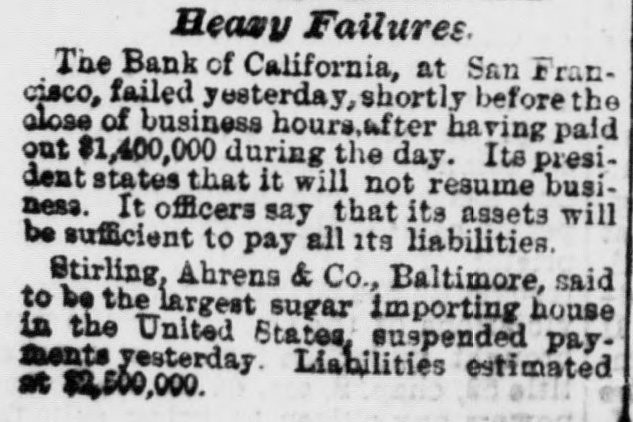
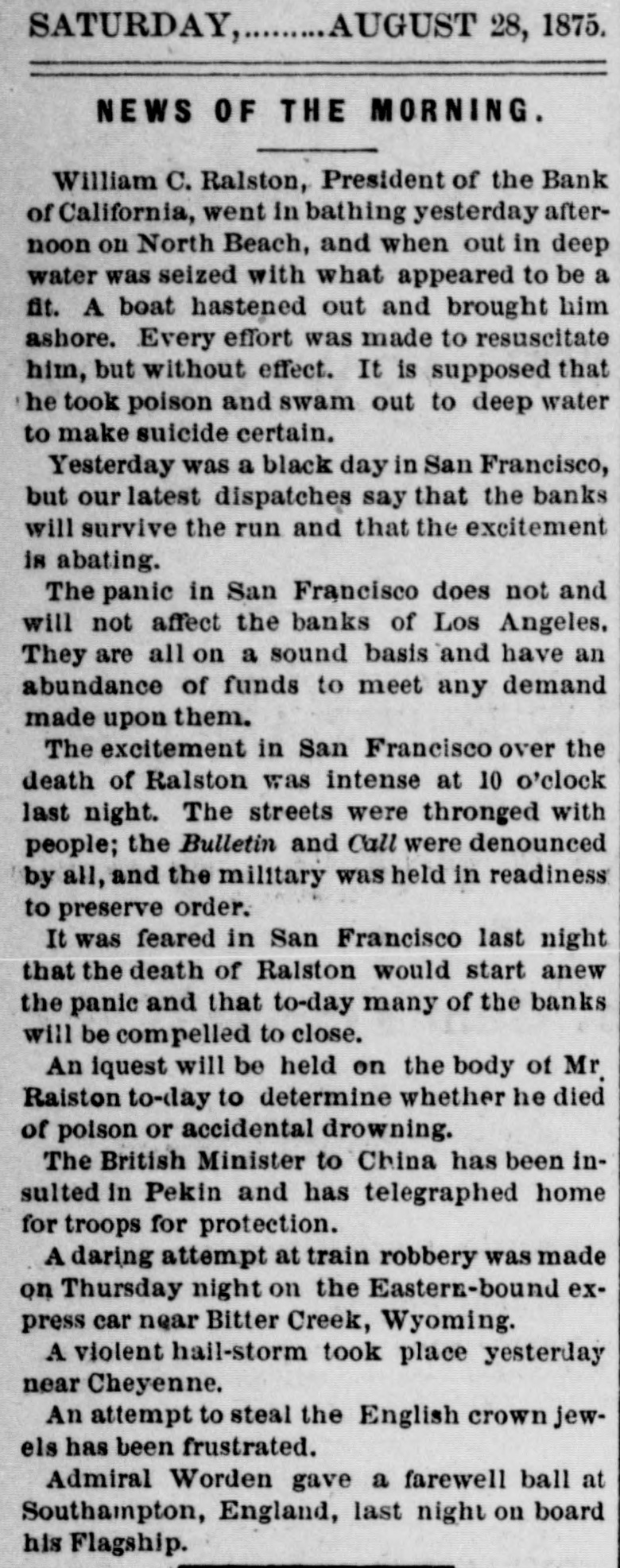
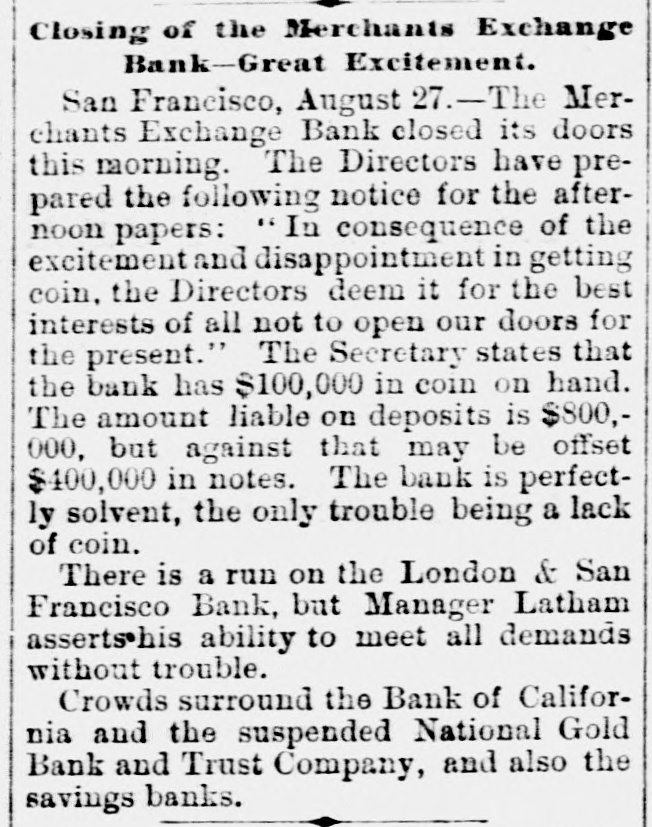
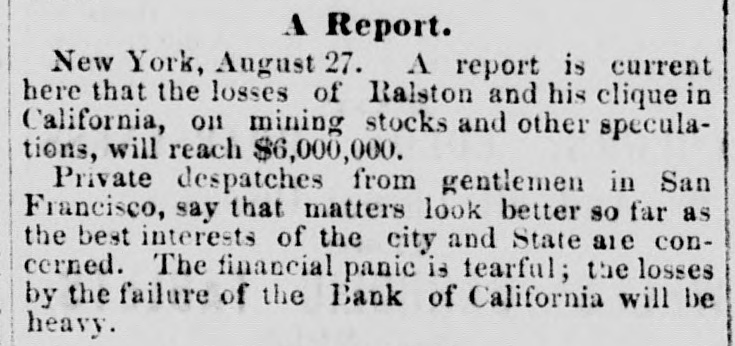
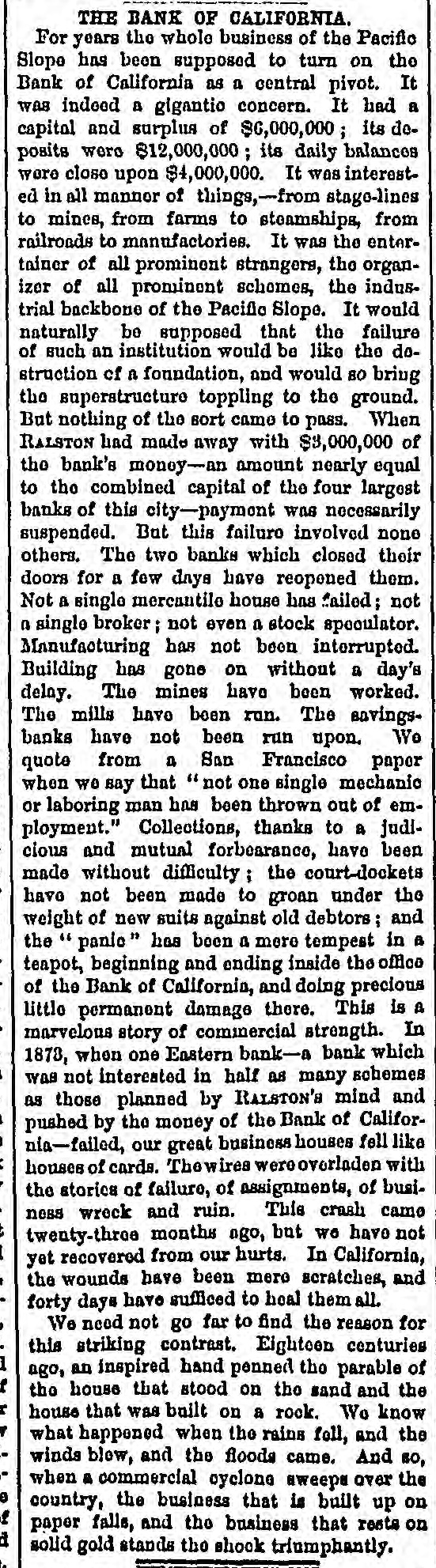
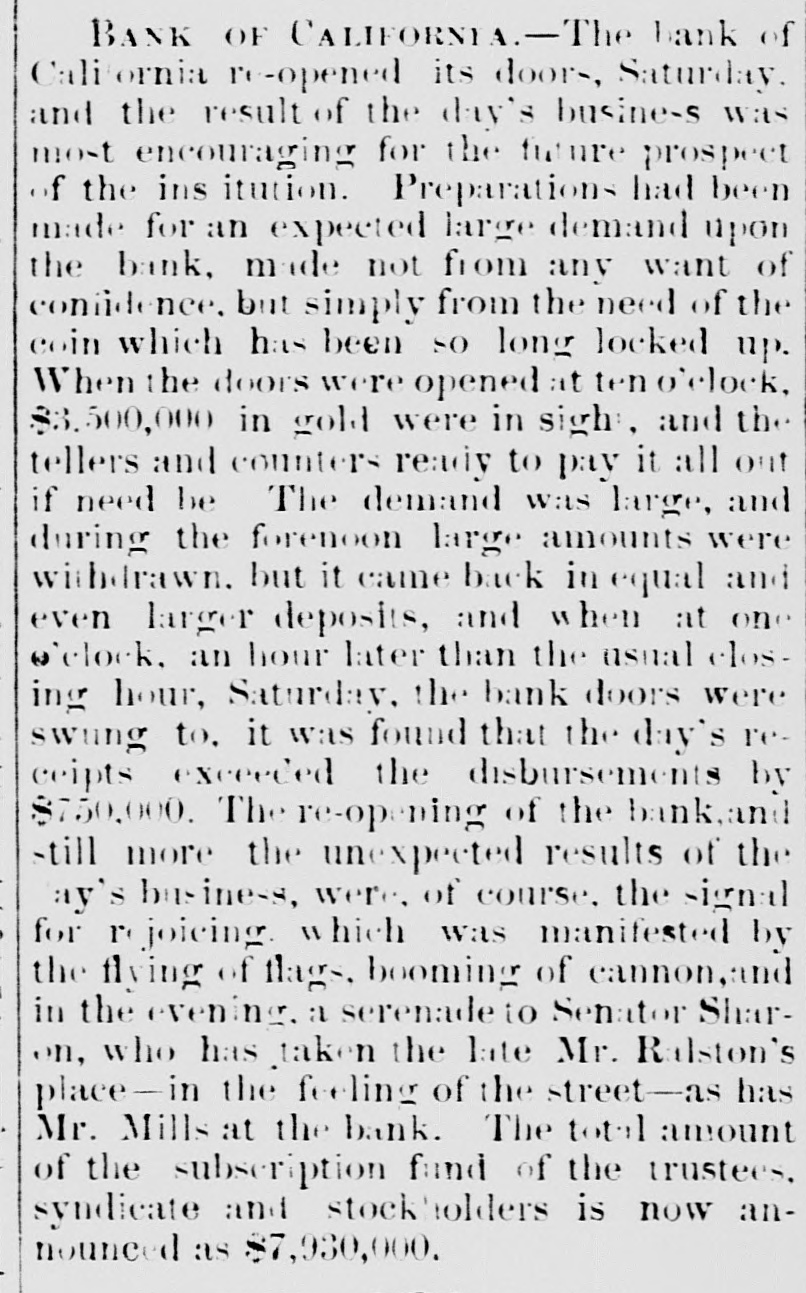
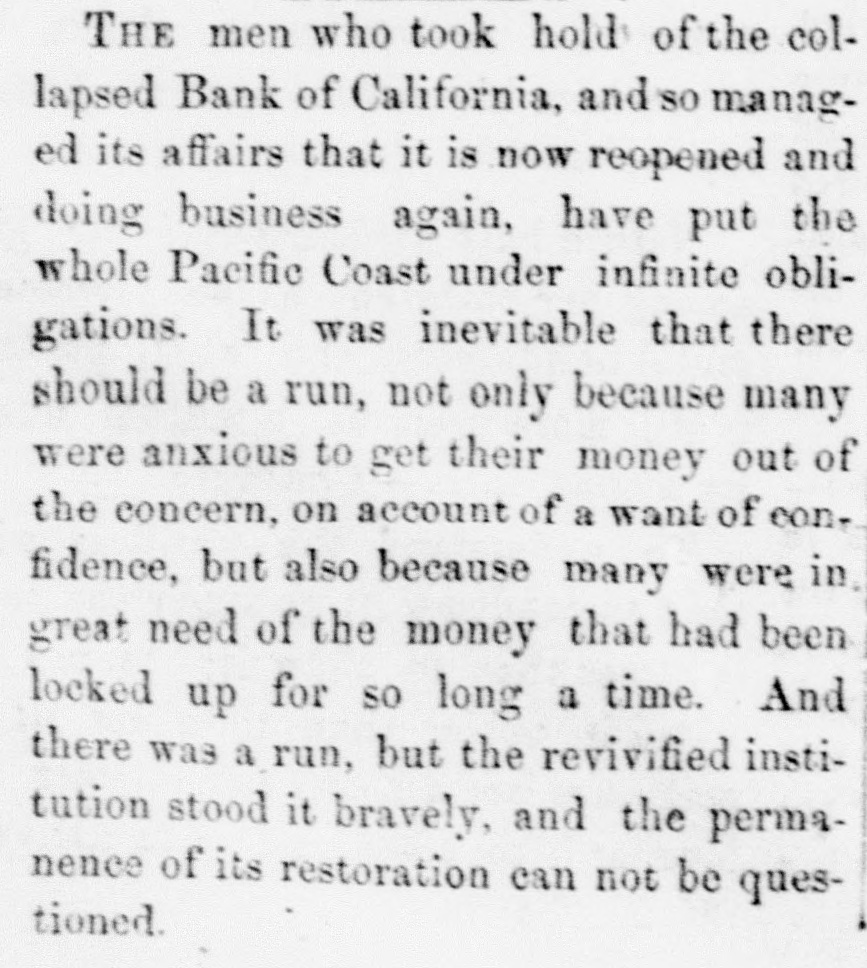
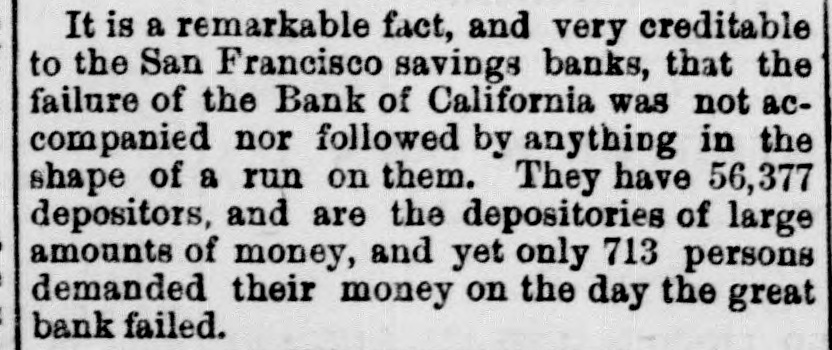
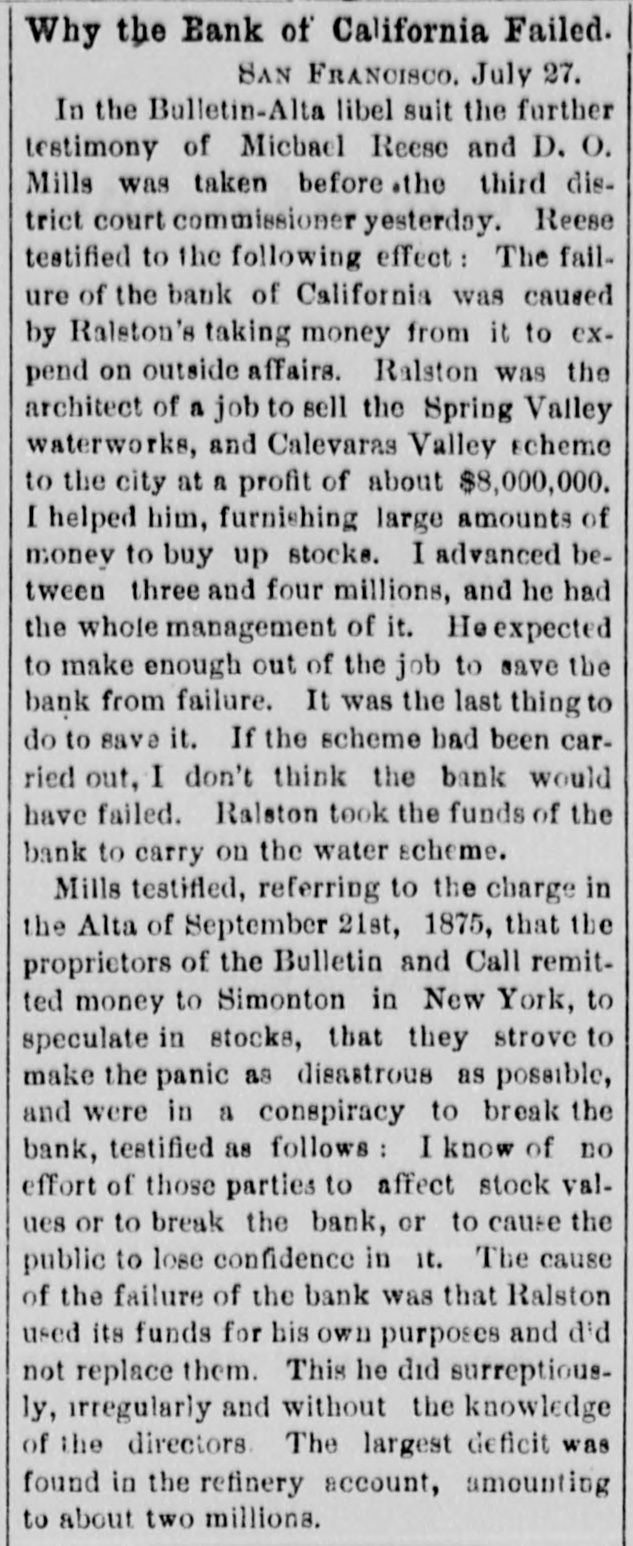
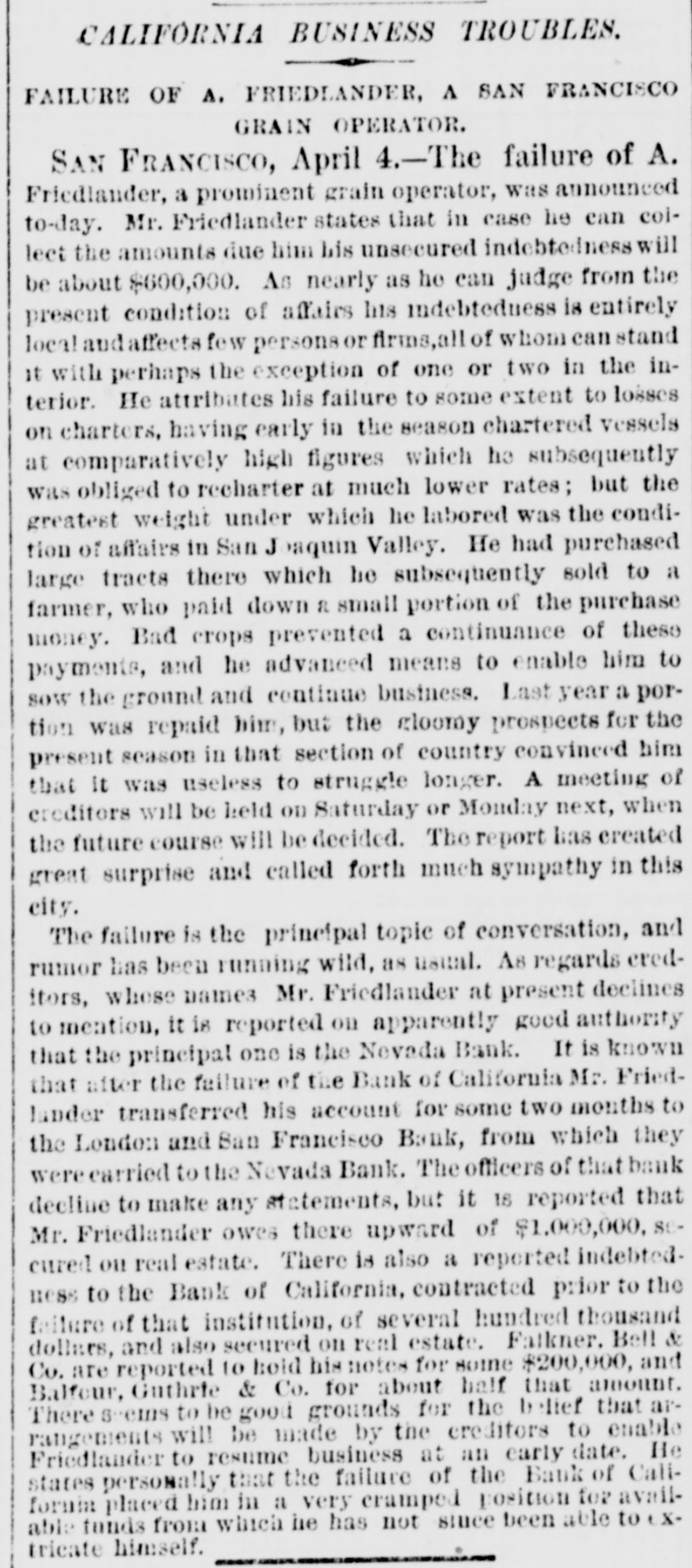
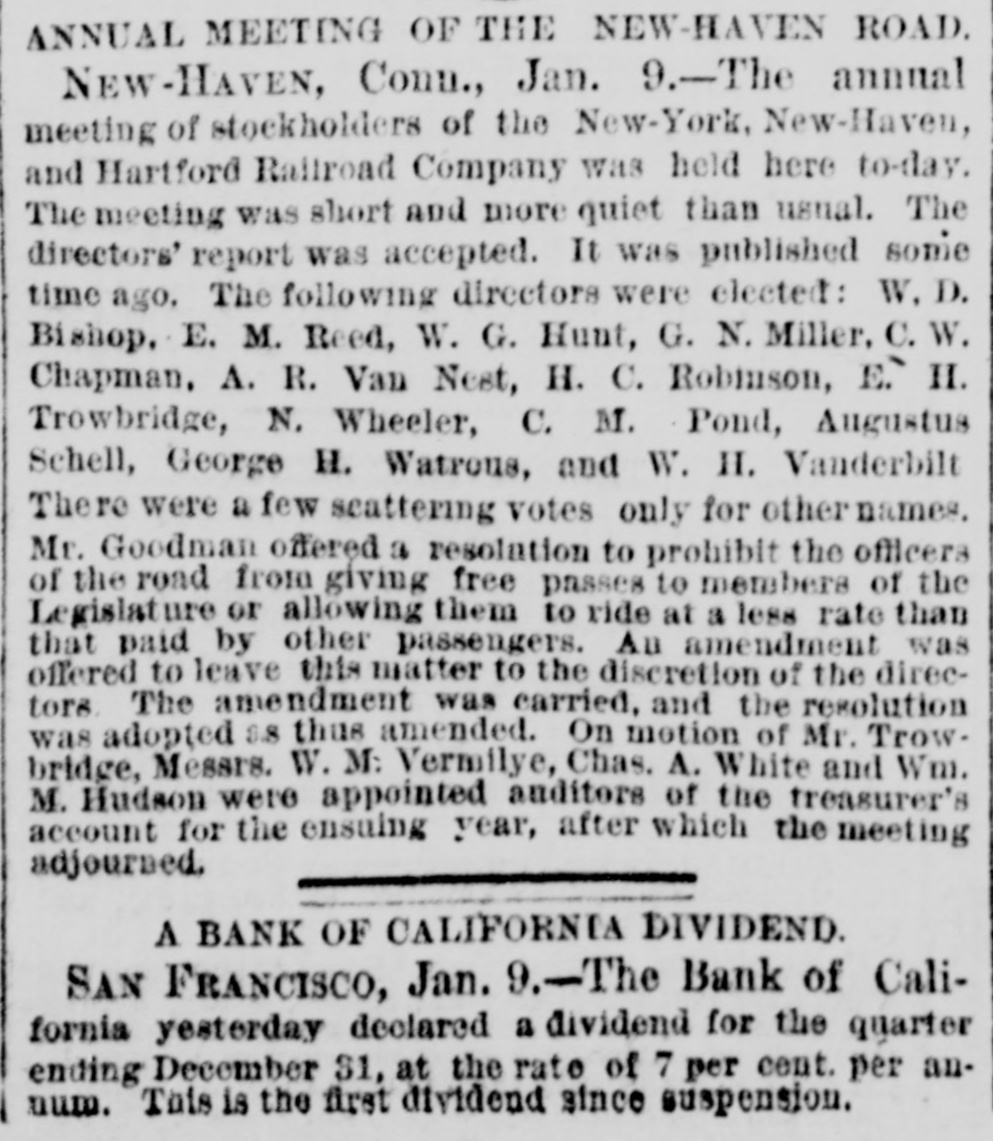
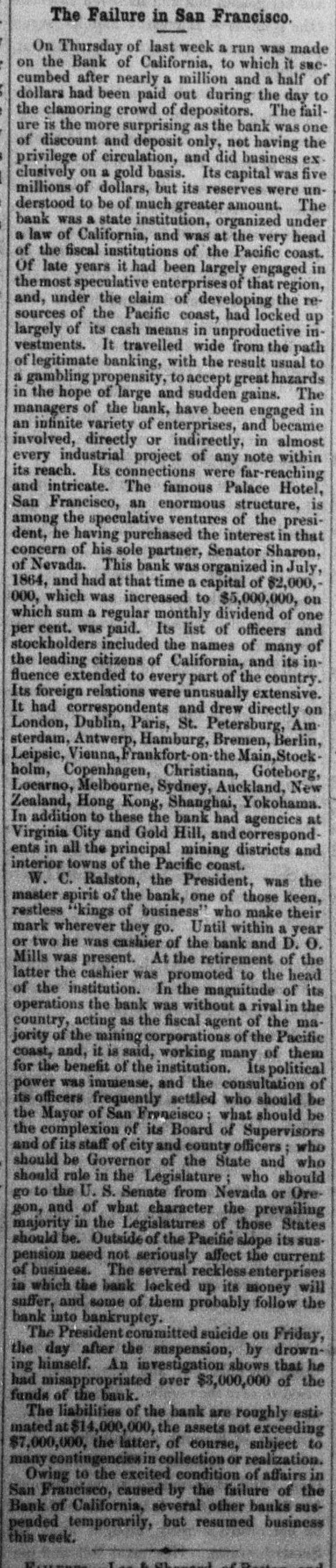
The Failure in San Francisco. On Thursday of last week a run was made on the Bank of California, to which it succumbed after nearly a million and a half of dollars had been paid out during the day to the clamoring crowd of depositors. The failure is the more surprising as the bank was one of discount and deposit only, not having the privilege of circulation, and did business exclusively on a gold basis. Its capital was five millions of dollars, but its reserves were understood to be of much greater amount. The bank was a state institution, organized under a law of California, and was at the very head of the fiscal institutions of the Pacific coast. Of late years it had been largely engaged in the most speculative enterprises of that region, and, under the claim of developing the resources of the Pacific coast, had locked up largely of its cash means in unproductive investments. It travelled wide from the path of legitimate banking, with the result usual to a gambling propensity, to accept great hazards in the hope of large and sudden gains. The managers of the bank, have been engaged in an infinite variety of enterprises, and became involved, directly or indirectly, in almost every industrial project of any note within its reach. Its connections were far-reaching and intricate. The famous Palace Hotel, San Francisco, an enormous structure, is among the speculative ventures of the president, he having purchased the interest in that concern of his sole partner, Senator Sharon, of Nevada. This bank was organized in July, 1864, and had at that time a capital of $2,000,000, which was increased to $5,000,000, on which sum a regular monthly dividend of one per cent. was paid. Its list of officers and stockholders included the names of many of the leading citizens of California, and its influence extended to every part of the country. Its foreign relations were unusually extensive. It had correspondents and drew directly on London, Dublin, Paris, St. Petersburg, Am sterdam, Antwerp, Hamburg, Bremen, Berlin, Leipsic, Vienna, Frankfort-on the holm, Copenhagen, Christiana, Goteborg, Locarno, Melbourne, Sydney, Auckland, New Zealand, Hong Kong, Shanghai, Yokohama. In addition to these the bank had agencies at Virginia City and Gold Hill, and correspondents in all the principal mining districts and interior towns of the Pacific coast. W. C. Raiston, the President, was the master spirit of the bank, one of those keen, restless "kings of business" who make their mark wherever they go. Until within a year or two he was cashier of the bank and D. O. Mills was present. At the retirement of the latter the cashier was promoted to the head of the institution. In the maguitude of its operations the bank was without a rival in the country, acting as the fiscal agent of the majority of the mining corporations of the Pacific coast, and, it is said, working many of them for the benefit of the institution. Its political power was immense, and the consultation of its officers frequently settled who should be the Mayor of San Franeisco what should be the complexion of its Board of Supervisors and of its staff of city and county officers who should be Governor of the State and who should rule in the Legislature who should go to the U. S. Senate from Nevada or Oregon, and of what character the prevailing majority in the Legislatures of those States should be. Outside of the Pacifie slope its suspension need not seriously affect the current of business. The several reckless enterprises in which the bank locked up its money will suffer, and some of them probably follow the bank into bankruptey. The President committed suieide on Friday, the day after the suspension, by drowning himself. An investigation shows that he had misappropriated over $3,000,000 of the funds of the bank. The liabilities of the bank are roughly estimated at $14,000,000, the assets not exceeding $7,000,000, the latter, of course, subject to many contingencies in collection or realization. Owing to the excited condition of affairs in San Francisco, caused by the failure of the Bank of California, several other banks suspended temporarily, but resumed business this week.