Click image to open full size in new tab
Article Text
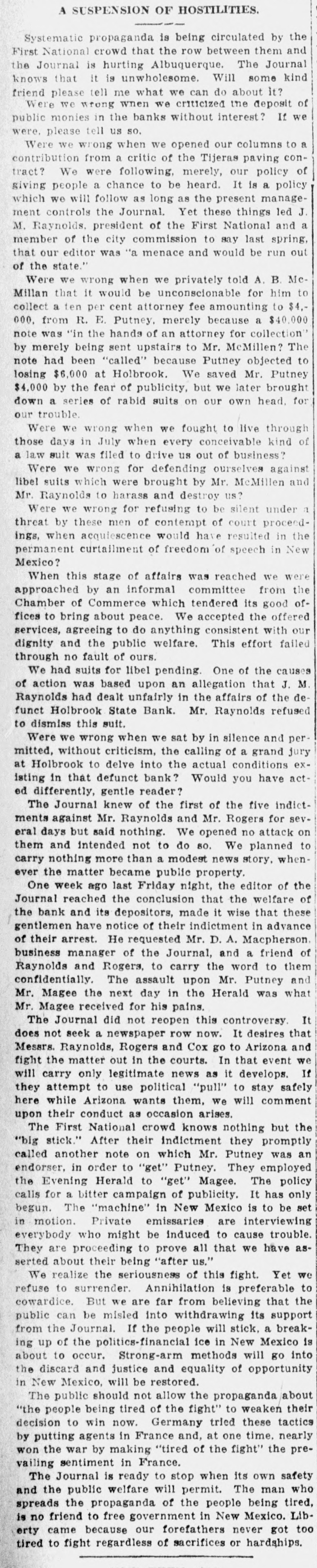
A SUSPENSION OF HOSTILITIES.
Systematic propaganda is being circulated by the First National crowd that the row between them and the Journal is hurting Albuquerque. The Journal knows that it is unwholesome. Will some kind friend please tell me what we can do about it? Were we wrong when we criticized the deposit of public monies in the banks without interest? If we were, please tell us so.
Were we wrong when we opened our columns to a contribution from a critic of the Tijeras paving contract? We were following, merely, our policy of giving people a chance to be heard. It is a policy which we will follow as long as the present management controls the Journal. Yet these things led J. M. Raynolds, president of the First National and a member of the city commission to say last spring, that our editor was "a menace and would be run out of the state."
Were we wrong when we privately told A. B. McMillan that it would be unconscionable for him to collect a ten per cent attorney fee amounting to $4,000, from R. E. Putney, merely because a $40.000 note was "in the hands of an attorney for collection" by merely being sent upstairs to Mr. McMillen? The note had been "called" because Putney objected to losing $6,000 at Holbrook. We saved Mr. Putney $4,000 by the fear of publicity, but we later brought down a series of rabid suits on our own head, for our trouble.
Were we wrong when we fought to live through those days in July when every conceivable kind of a law suit was filed to drive us out of business? Were we wrong for defending ourselves against libel suits which were brought by Mr. McMillen and Mr. Raynolds to harass and destroy us? Were we wrong for refusing to be silent under a threat by these men of contempt of court proceedings, when acquiescence would have resulted in the permanent curtailment of freedom of speech in New Mexico?
When this stage of affairs was reached we were approached by an informal committee from the Chamber of Commerce which tendered its good offices to bring about peace. We accepted the offered services, agreeing to do anything consistent with our dignity and the public welfare. This effort failed through no fault of ours.
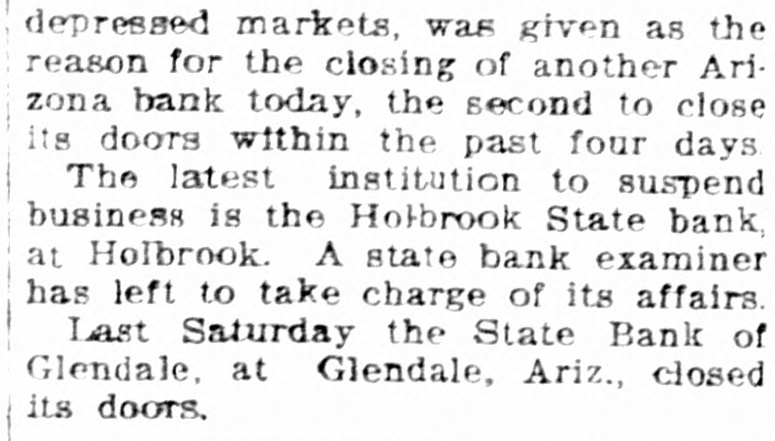
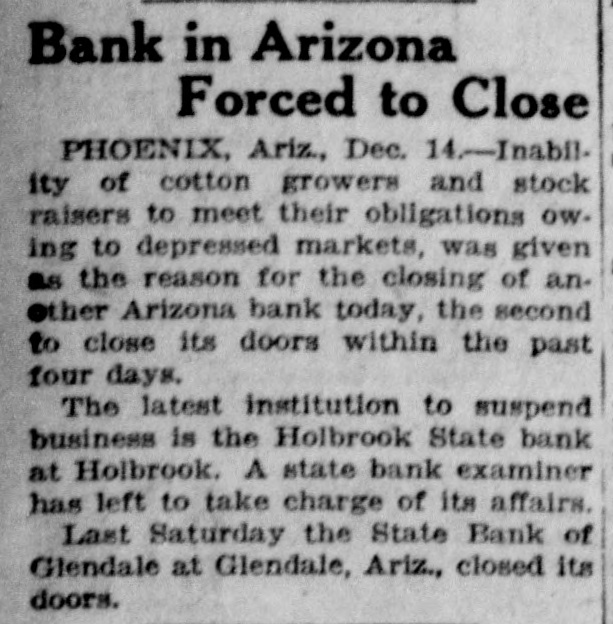
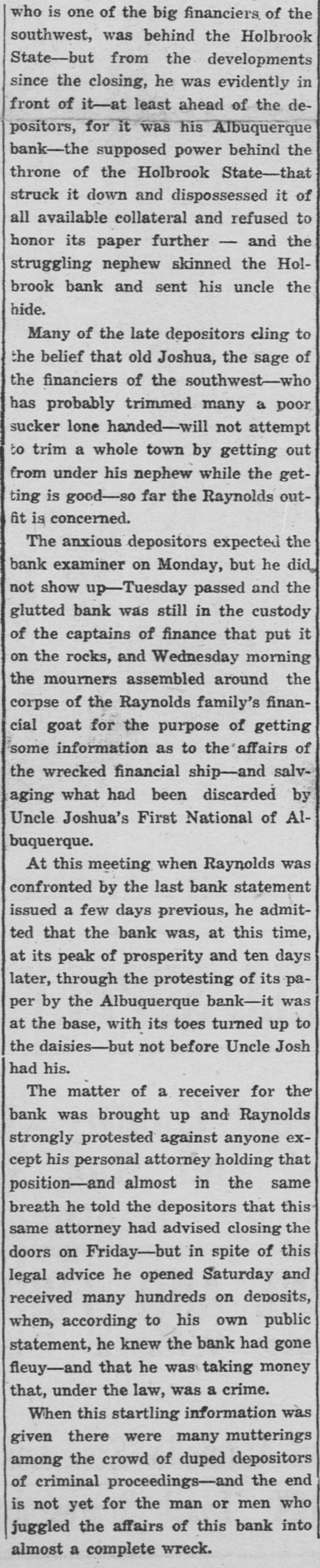
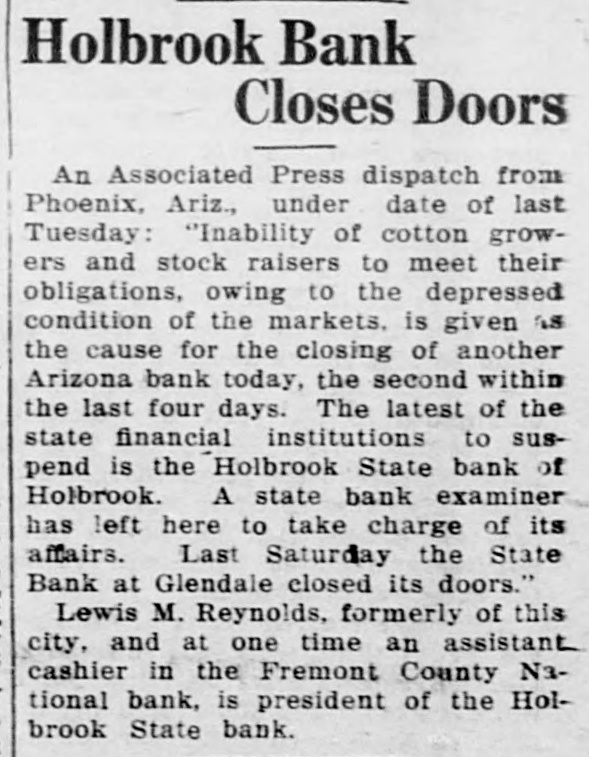
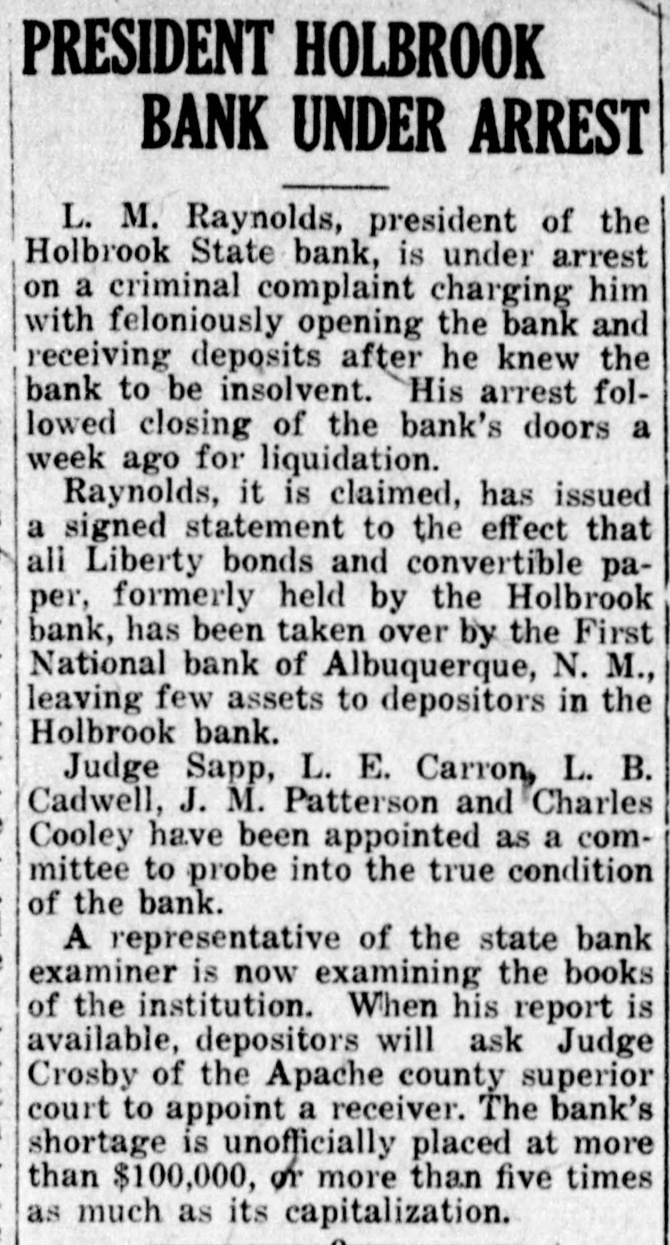
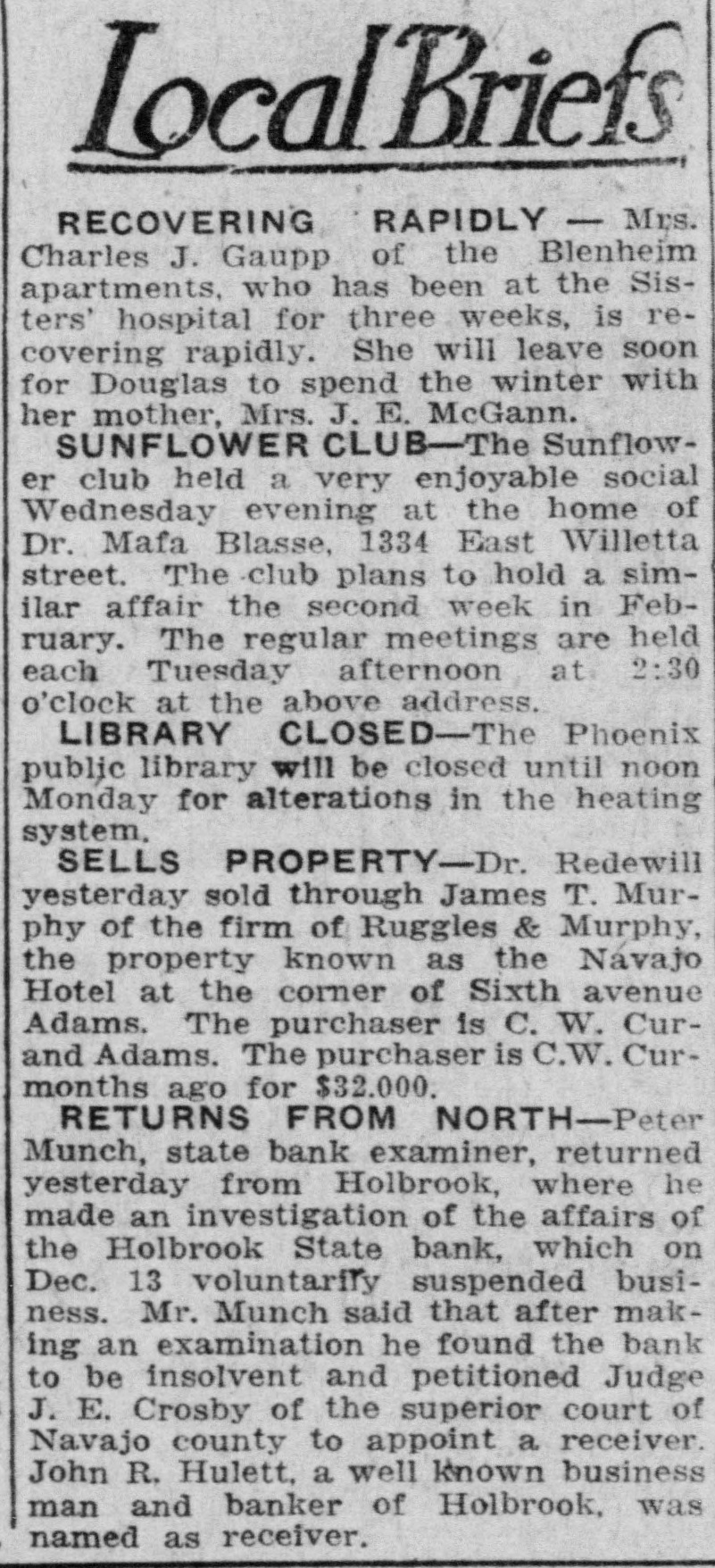
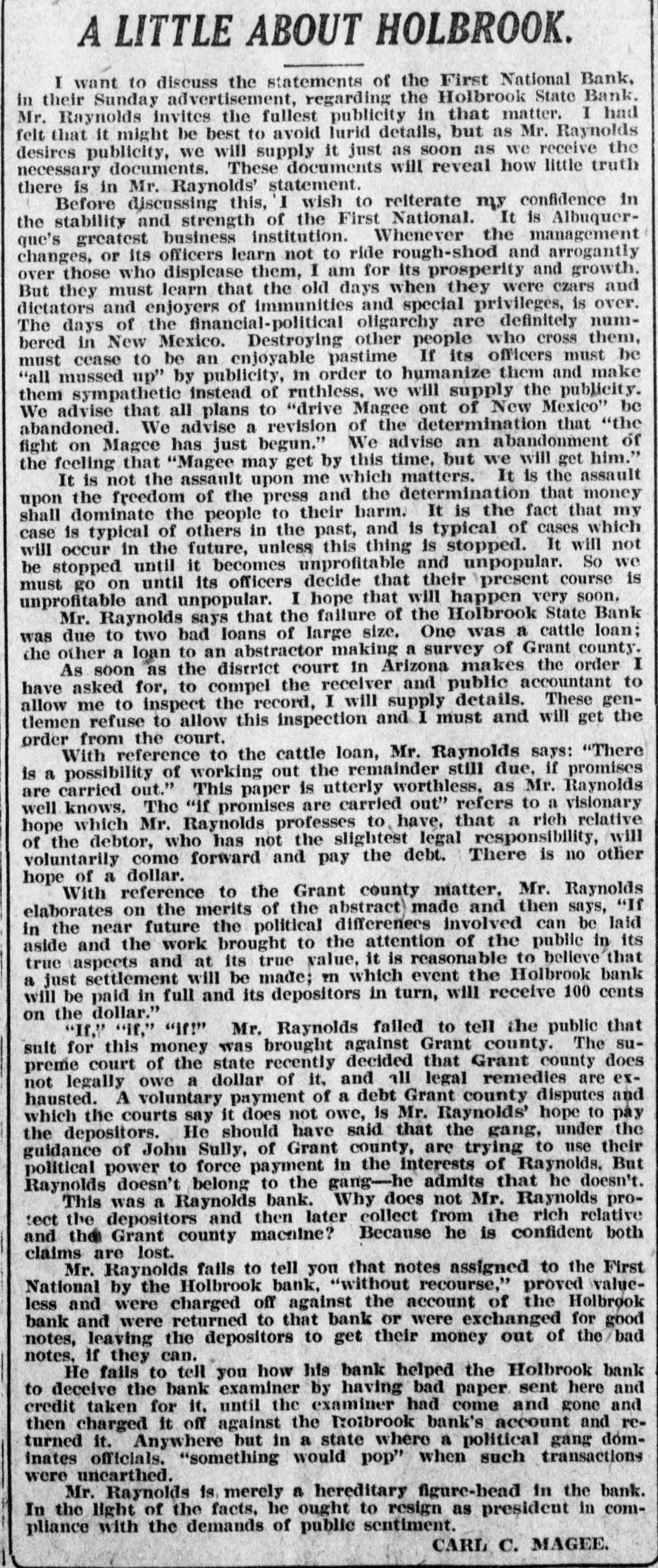
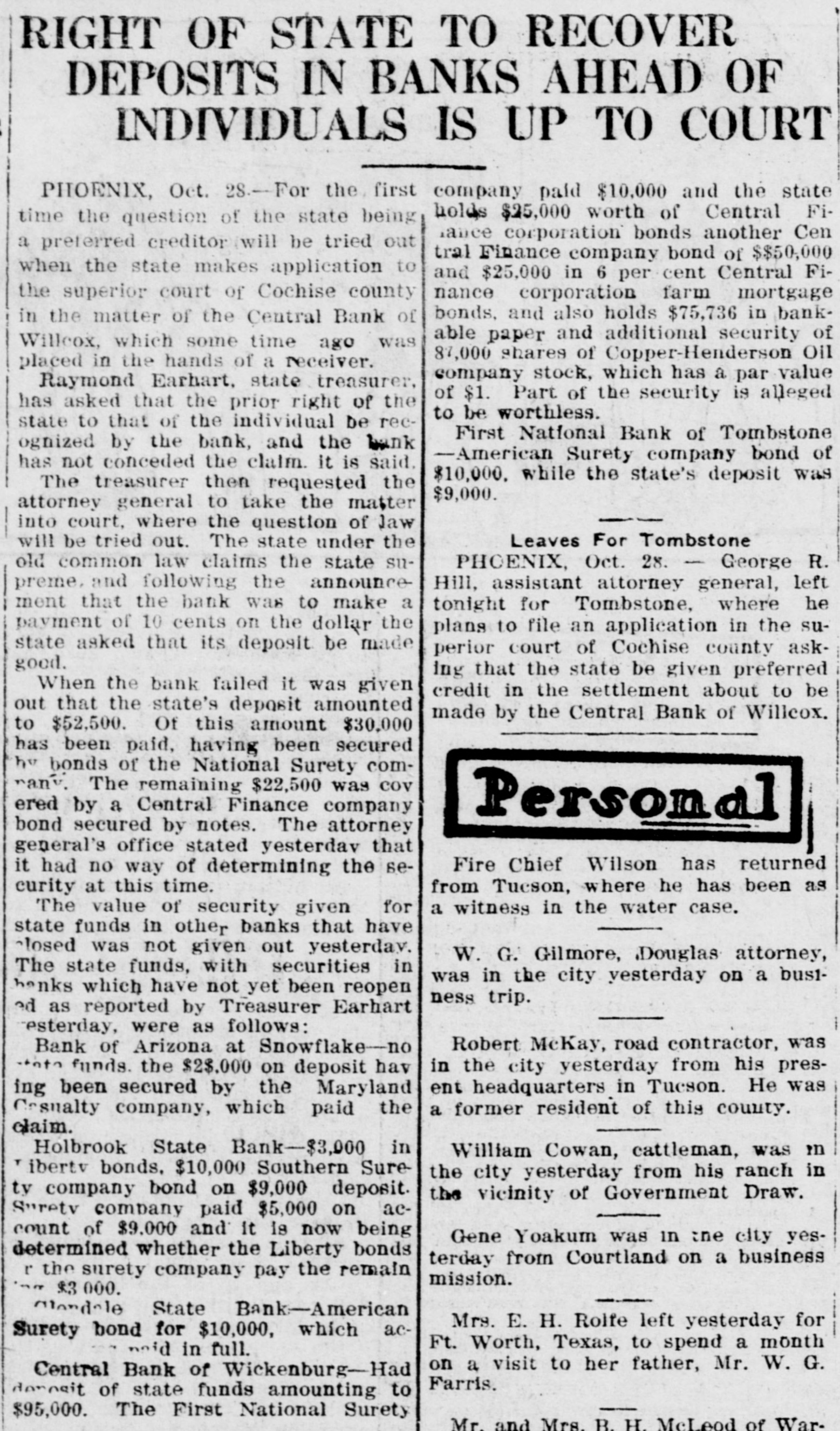
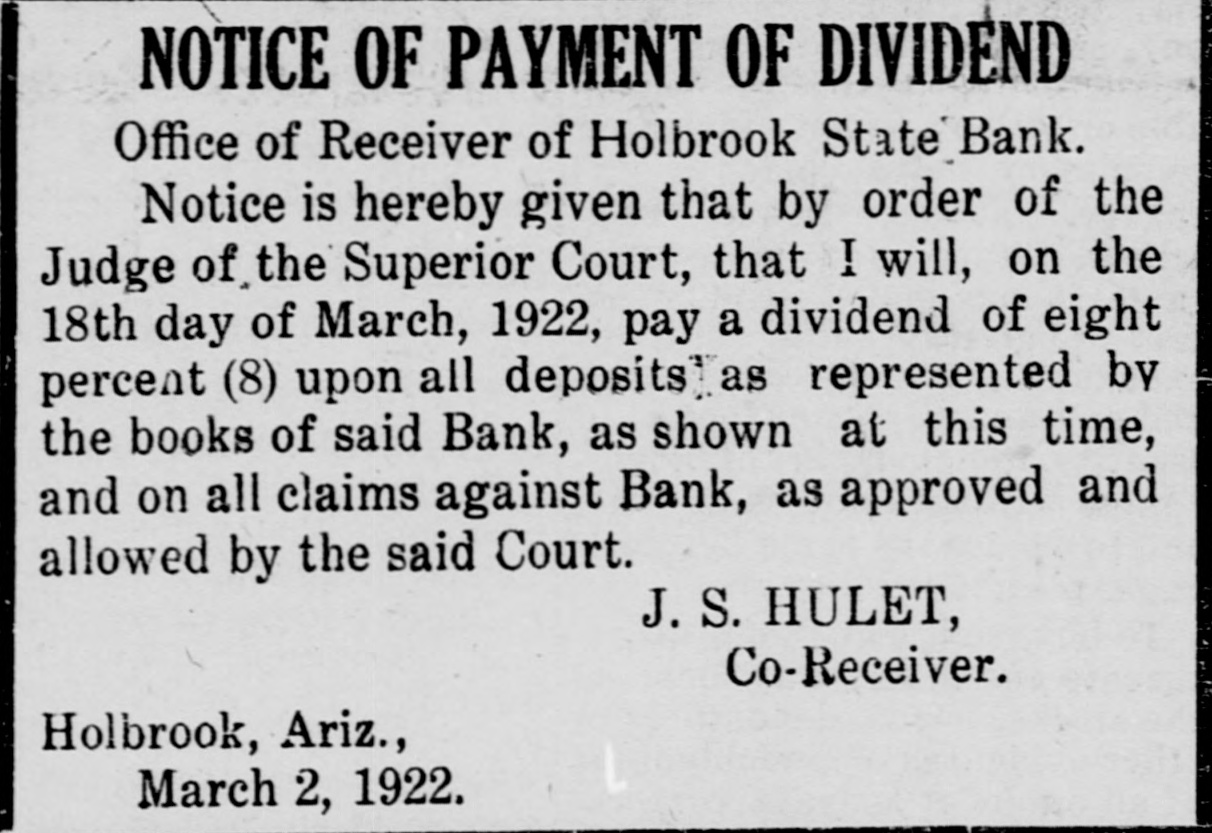
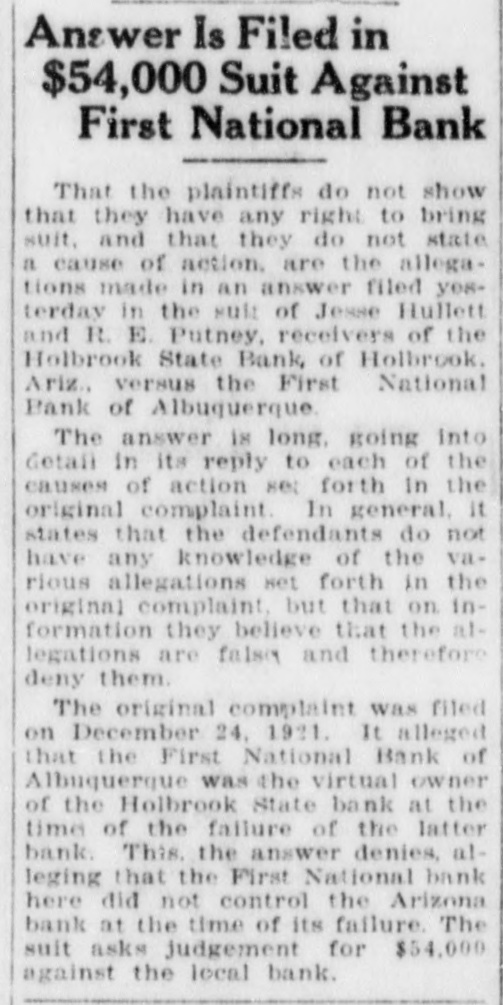
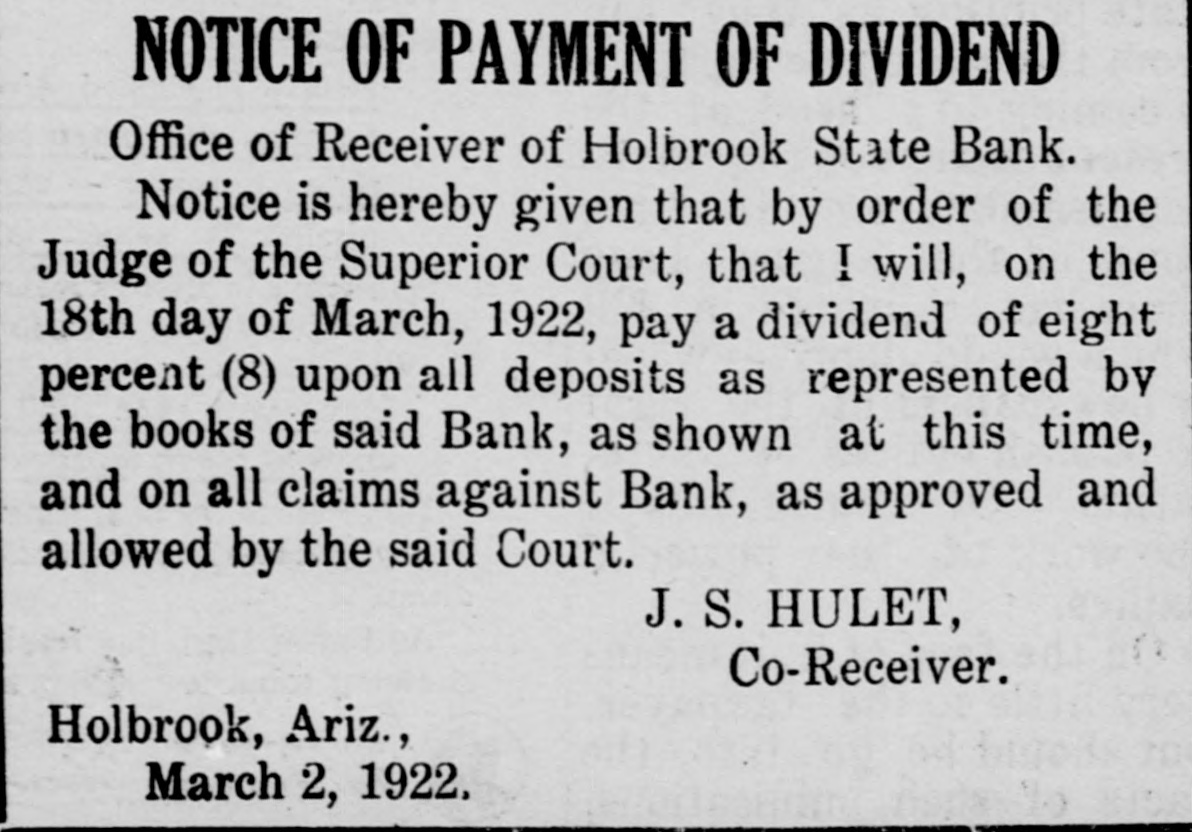
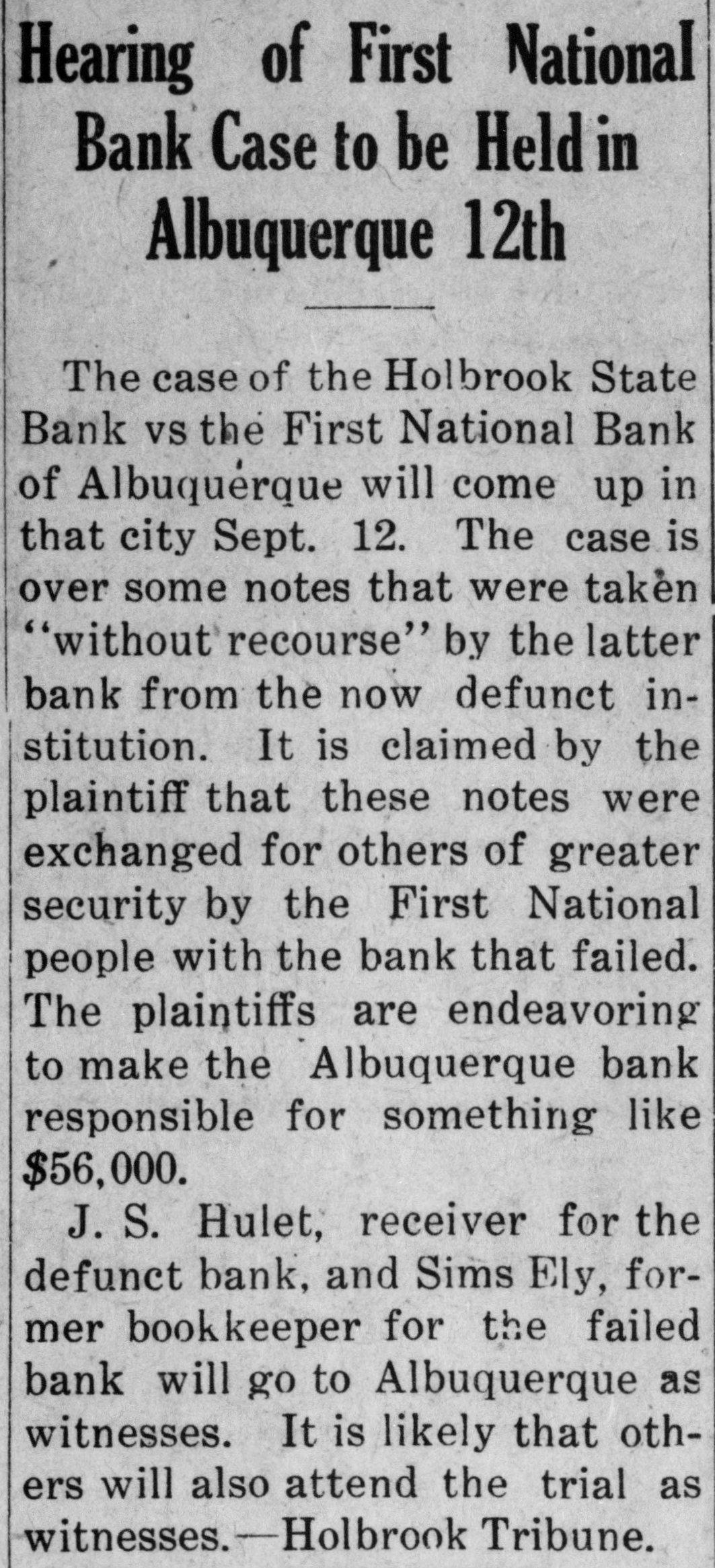
We had suits for libel pending. One of the causes of action was based upon an allegation that J. M. Raynolds had dealt unfairly in the affairs of the defunct Holbrook State Bank. Mr. Raynolds refused to dismiss this suit. Were we wrong when we sat by in silence and permitted, without criticism, the calling of a grand jury at Holbrook to delve into the actual conditions existing in that defunct bank? Would you have acted differently, gentle reader?
The Journal knew of the first of the five indictments against Mr. Raynolds and Mr. Rogers for several days but said nothing. We opened no attack on them and intended not to do so. We planned to carry nothing more than a modest news story, whenever the matter became public property.
One week ago last Friday night, the editor of the Journal reached the conclusion that the welfare of the bank and its depositors, made it wise that these gentlemen have notice of their indictment in advance of their arrest. He requested Mr. D. A. Macpherson, business manager of the Journal, and a friend of Raynolds and Rogers, to carry the word to them confidentially. The assault upon Mr. Putney and Mr. Magee the next day in the Herald was what Mr. Magee received for his pains.
The Journal did not reopen this controversy. It does not seek a newspaper row now. It desires that Messrs. Raynolds, Rogers and Cox go to Arizona and fight the matter out in the courts. In that event we will carry only legitimate news as it develops. If they attempt to use political "pull" to stay safely here while Arizona wants them, we will comment upon their conduct as occasion arises.
The First National crowd knows nothing but the "big stick." After their indictment they promptly called another note on which Mr. Putney was an endorser, in order to "get" Putney. They employed the Evening Herald to "get" Magee. The policy calls for a bitter campaign of publicity. It has only begun. The "machine" in New Mexico is to be set in motion. Private emissaries are interviewing everybody who might be induced to cause trouble. They are proceeding to prove all that we have asserted about their being "after us."
We realize the seriousness of this fight. Yet we refuse to surrender. Annihilation is preferable to cowardice. But we are far from believing that the public can be misled into withdrawing its support from the Journal. If the people will stick, a breaking up of the politics-financial ice in New Mexico is about to occur. Strong-arm methods will go into the discard and justice and equality of opportunity in New Mexico, will be restored.
The public should not allow the propaganda about "the people being tired of the fight" to weaken their decision to win now. Germany tried these tactics by putting agents in France and, at one time, nearly won the war by making "tired of the fight" the prevailing sentiment in France.
The Journal is ready to stop when its own safety and the public welfare will permit. The man who spreads the propaganda of the people being tired, is no friend to free government in New Mexico. Liberty came because our forefathers never got too tired to fight regardless of sacrifices or hardships.