Article Text
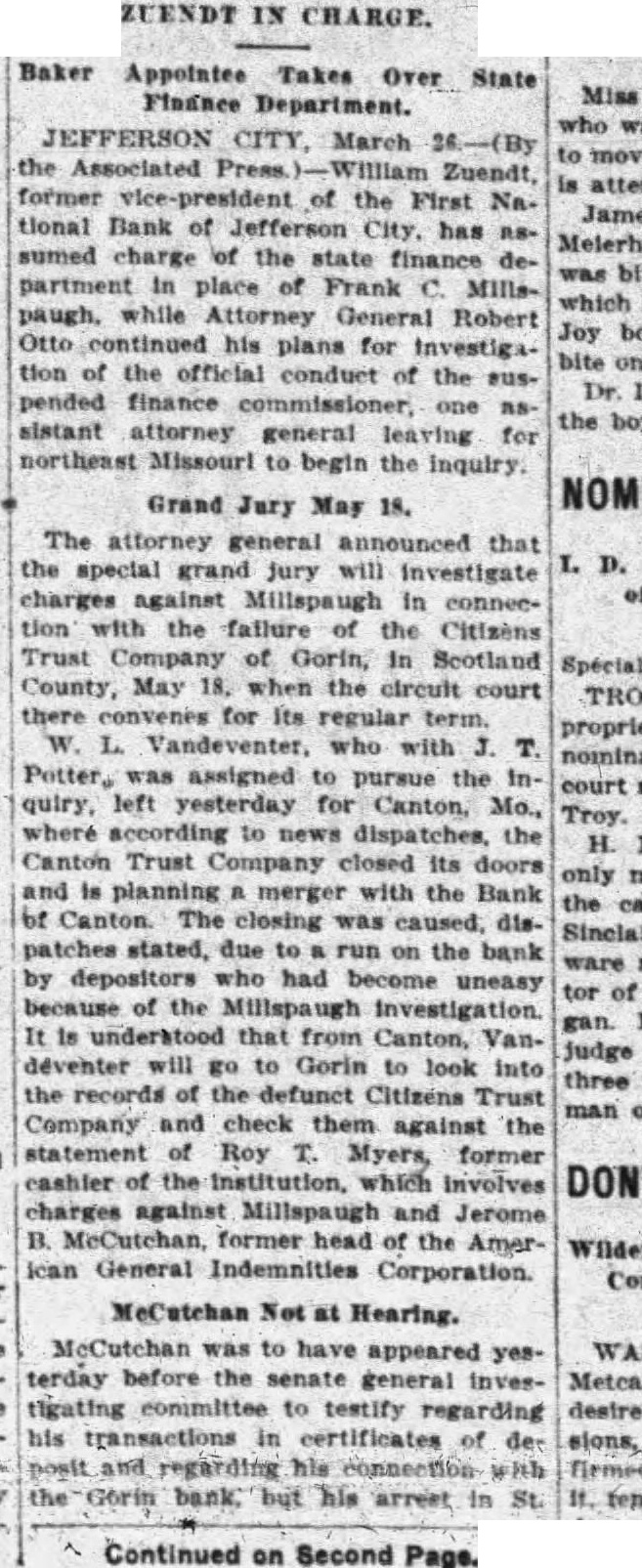
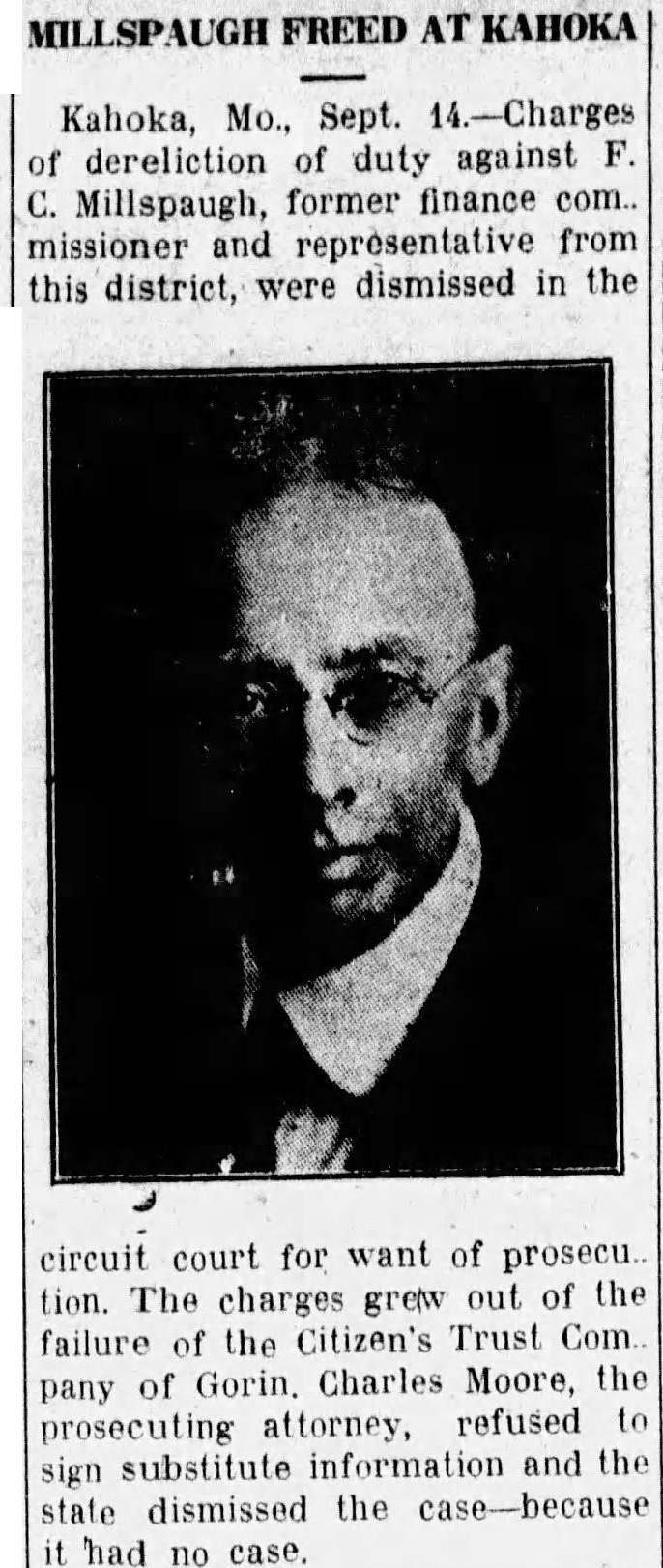
Otto Continues Plans Investigation of Official Conduct of Suspended chan's His Appearance Before Senate Probers. Associated City, March William Zuendt, former president First National Jefferson today assumed charge the state finance department place of Frank Millspaugh. while Attorney General Robert Otto continued his plans for Investigation the official conduct the suspended finance commissloner. assistant attorney general leaving for northeast Missouri inquiry. The attorney general announced today that special grand jury Investigate charges against Millspaugh connection with the the Citizens Trust Company Gorin. be called Scotland county. May when the circuit there convenes its regular term. Trust Company Closes. Potter. assigned pursue the inquiry. today for Canton. where. according to the Canton Trust Company closed its doors today and merger with Bank Canton. The closing due. disthe bank depositors had been uneasy because the investigation. understood that from Canton that will Gorin look into the records of the defunct Citizens Trust Company and check them against the statement Roy Myers. former the Institution which involves charges against Millspaugh and Jerome McCutchan. former head the American General Indemnities Corporation. McCutchan was 10 have appeared today before the senate general vestigating committee testify garding transactions in certificates deposit and regarding his connection with the Gorin bank. but arrest Louis yesterday charge of larceny of note from the trust company of Gorin precluded his appearance. Martin, special deputy finance In charge the Citizens Trust Company, under subpoena teatify before committee today. other business, understood connection with the Canton Trust Company closing, prevented his pearance. Letter Made Public. General Otto today made public letter wrote to Finance Commissioner Millspaugh March information why prosecution had not been begun Citizens and requesting the tions McCutchan with the institution. This letter was not swered, the attorney general although record telephone calls showed Millspaugh had Otto's office March when the torney out of and information that had ceived letter and would regarding when he Charles Moore. prosecuting torney Scotland county. had ference with Attorney General Otto today relative investigation: Records from the Citizens Trust Company were here by the Scotland county prosecutor inspection of attorney general. Contained the written more than fourteen pages long. of notes given the bank by McCutchan. Jefferson City, March Assistant Attorney General left late today accompany Special Deputy Finance Martin ton, where, according the Canton Trust Company closed today and planning the Bank Canton. the closing trust the had state finance department late Suspended State Finance Frank formerly stockthe Canton trust company. for going made Attorney General Robert Vandeventer the two assistant atorneys assigned by Otto to into charges against Millspaugh connection with the failure the Citizens Trust pany Gorin. Certificates Issued. Frank Page, Canton Trust Company testified sonate general committee recently that has issued (Continued