Click image to open full size in new tab
Article Text
# Cashier Barron's Remarkable Crime
WHAT INDUCED HIM TO COMMIT IT.
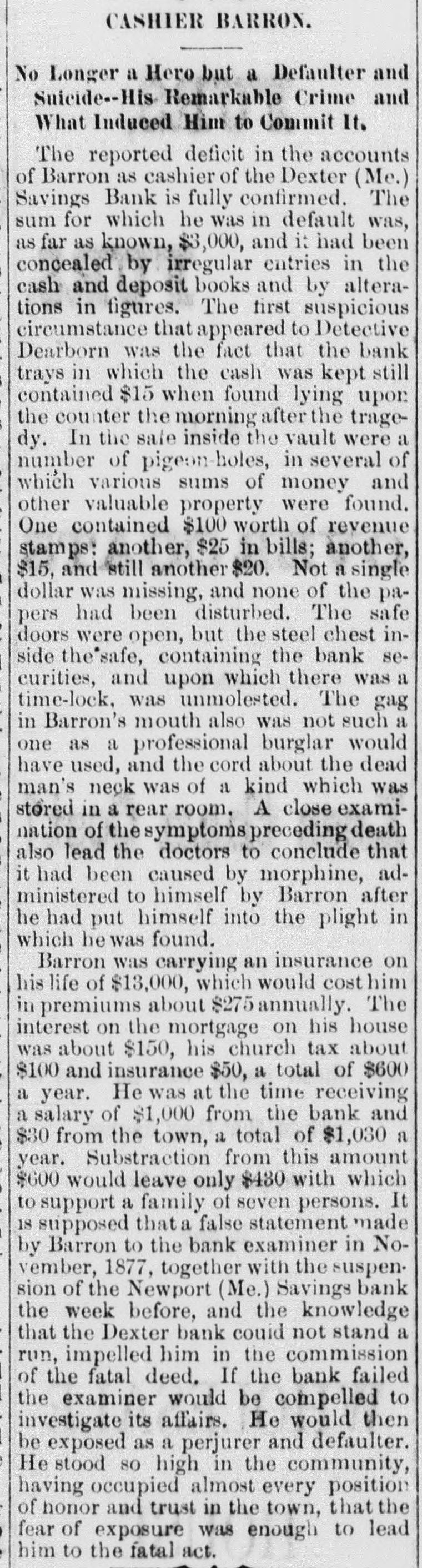
The reported deficit in the accounts of Barron as cashier of the Dexter (Me.) Savings Bank is fully confirmed. The sum for which he was in default was, as far as known, $3.600, and it had been concealed by irregular entries in the cash and deposit books and by alterations of figures. The first suspicious circumstance that appeared 10 Detective Dearborn was the fact that the bank trays in which the cash was kept still contained the sum of $15 when found lying upon the counter the morning after the tragedy. In the safe inside the vault were a number of pigeon-holes, in several of which various sums of money and other valuable property were found. One contained $100 worth of revenue stamps; another $35 in bills; another $15, and still another $20.
Not a single dollar was missing, and none of the papers had been disturbed. The safe doors were cpen, but the steel chest inside the safe, containing the bank's securities, and upon which there was a time-lock, was unmolested. The gag in Barron's mouth also was not such a one as a professionai burglar would have used, and the cord about the dead man's neck was of a kind which was stored in a rear room. A close examination of the symptoms preceding death also lead the doctors to conclude that it had been caused by morphine, administered to himself by Barron after he had put himself in the plight in which he was found.
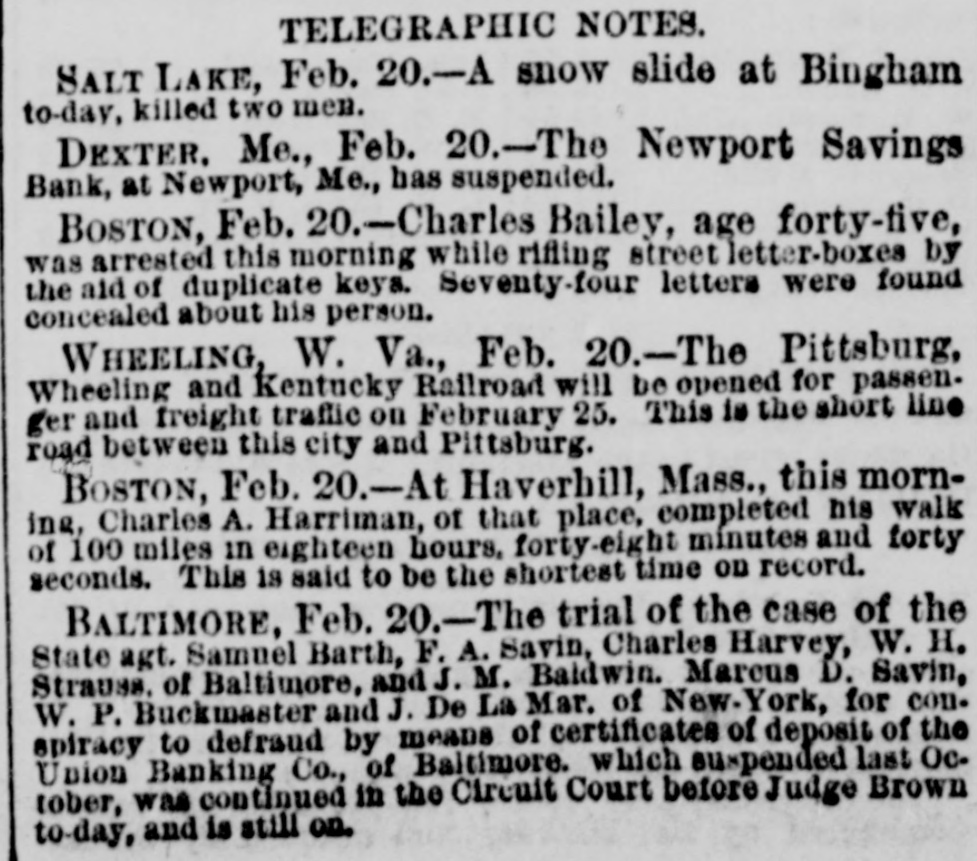
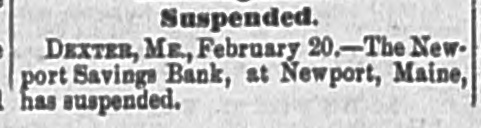
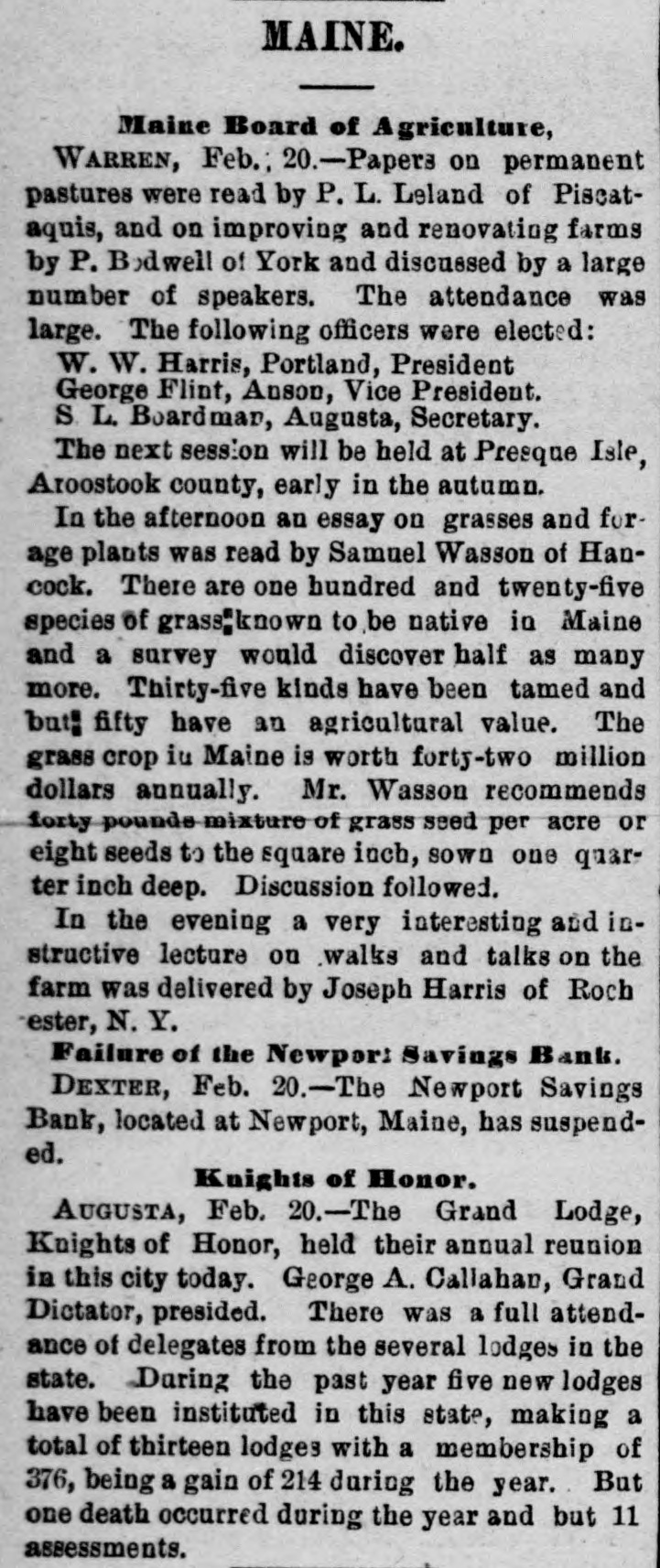
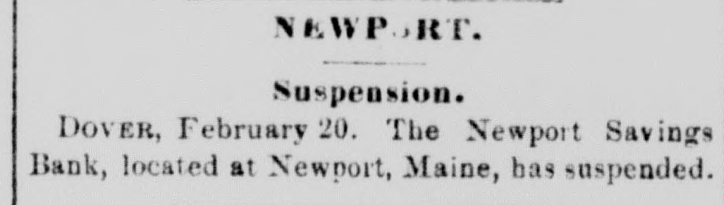
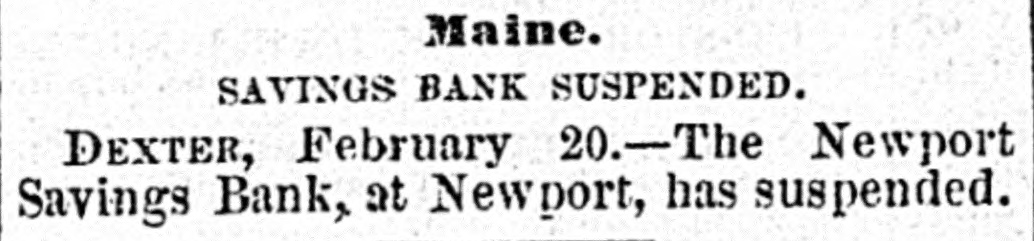
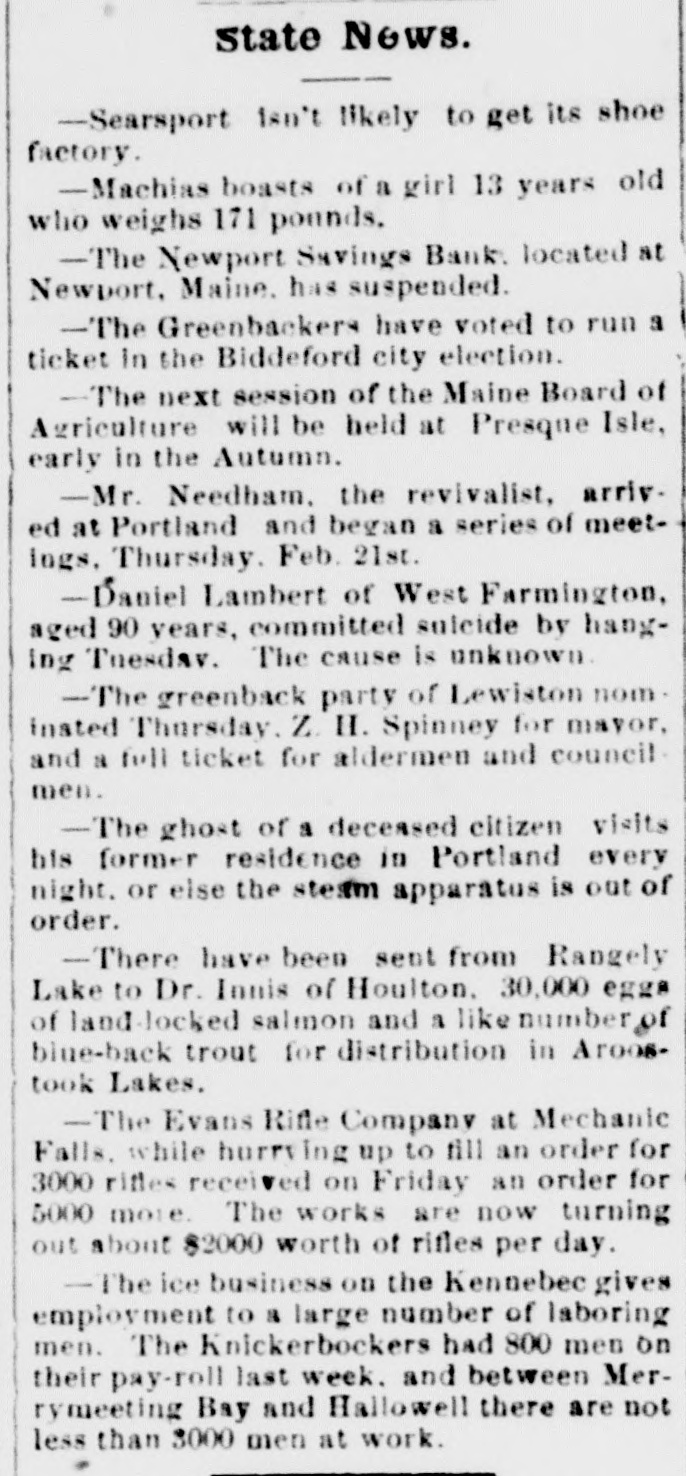
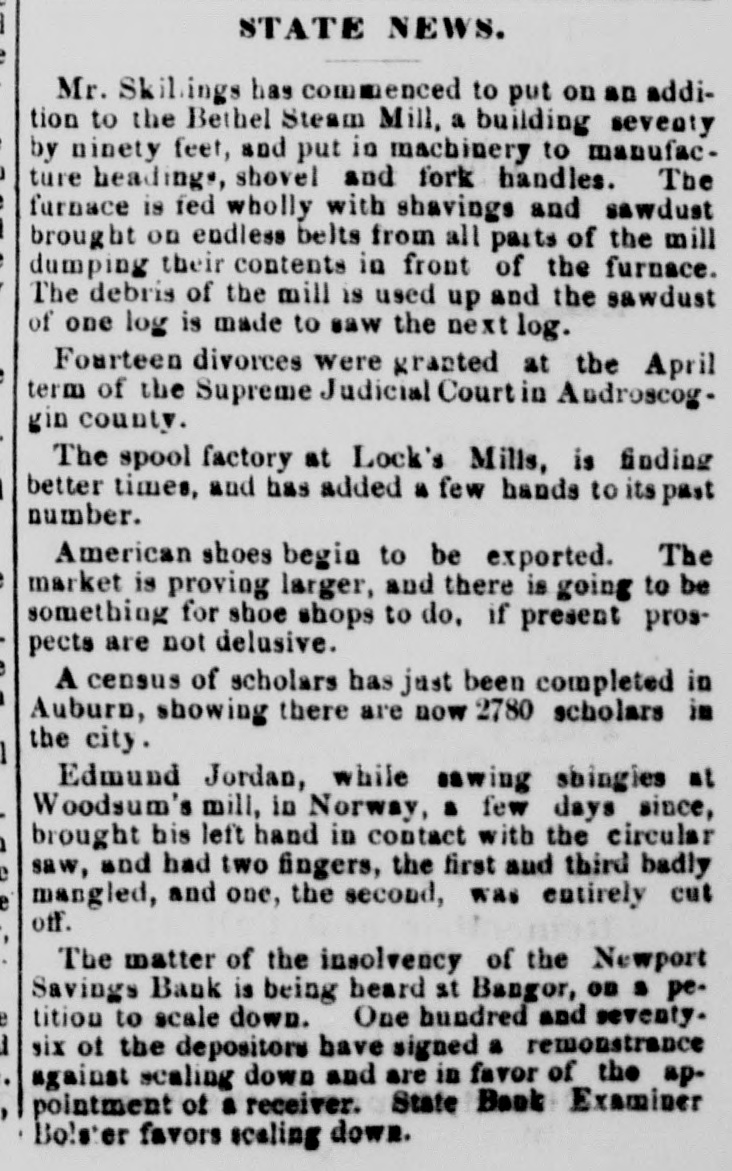
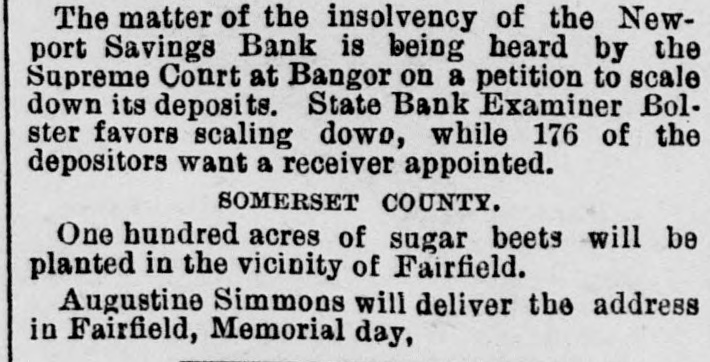
Barron was carrying an insurance on his life of $13,000, which would cost him in premiums $275 annually. The interest on the mortgage on his house was about $150, his church tax about $100 and insurance $50, a total of $600 a year. He was at the time receiving a salary of $1,000 from the bank and $30 from the town, a total of $1,030 a year. Subtracting from this amount $600 would leave only $430 with which to support a family of seven persons. It is supposed that a false statement made by Barron to the bank examiner in November, 1877, together with the suspension of the Newport (Me) Savings bank the week before, and the knowledge that the Dexter bank could not stand a run, impelled him in the commission of the fatal deed. If the bank failed the examiner would be compelled to investigate its affairs. He would then be exposed as a perjurer and a defaulter. He stood so high in the community, having occupied almost every position of honor and trust in the town, that the fear of expo-sure was enough to lead him to his fatal act.
DYING TO AVOID FAULT-FINDING. - Clara Loenke, aged eighteen, of No. 16 Park avenue, Hoboken, N. J., employed in a factory in West Broadway, this city, died Thursday morning. after several days of suffering, from a dose of París green. Medical attendance was not engaged for her until it was too late. The girl acknowledged before she died that she had taken the poison. Mr. Loenke, her father, a man who drinks, had found much fault with his daughter for what seems to have been a harmless intimacy with a young man named Morris W. Blunt, of No. 110 River street, son of the pi-lot of the Hoboken ferry boat Seacaucus. In the girl's room a letter was found, addressed to young Blunt, saying she loved him alone, and that she could expect no peace on earth, as her father found fault with her all the time. A post mortem examination put an end to certain scandalous rumors that were circulated about the girl. At the funeral services yesterday the father was intoxicated. Blunt was absent. He declares that he showed to Miss Loenke only civil attentions.-[N. Y. Tribune, 1st.
"SPORT'S" MATRIMONIAL TROUBLES.-The most interested spectator of "Sport's" six days' walk with O'Leary in Gilmore's Garden, last month, was the young woman whom he had married the day before beginning his task. She was then described as a shrewd Yankee girl, of the brunette type, with "steely gray eyes and classical features." "Sport" took the $4,000 which he received and furnished a house lux-uriously in Waterbury, Conn. He put Brussels carpet down in every room, including the kitchen. He had been married and divorced two or three times before. On Thursday, according to the report of the proceedings in court, Mrs. Campana insisted on receiving two lady friends, whom "Sport" disliked exceeding-ly. He remonstrated, and from words they came to blows. She says he choked her and bundled her out of the house. She appealed to the police, and an officer arrested "Sport" the same evening. Ball was accepted in $100, and "Sport" allowed to go home. He found that Mrs. Campana had left the house and gone to her father's, taking with her a very expensive wardrobe, which "Sport," had given her out of the proceeds of his walk. "Sport" appeared in court the next morning to answer the charge of assault and battery, but his wife failed to appear against him, and the case was remanded. [N. Y. Sun, 31st.