Click image to open full size in new tab
Article Text
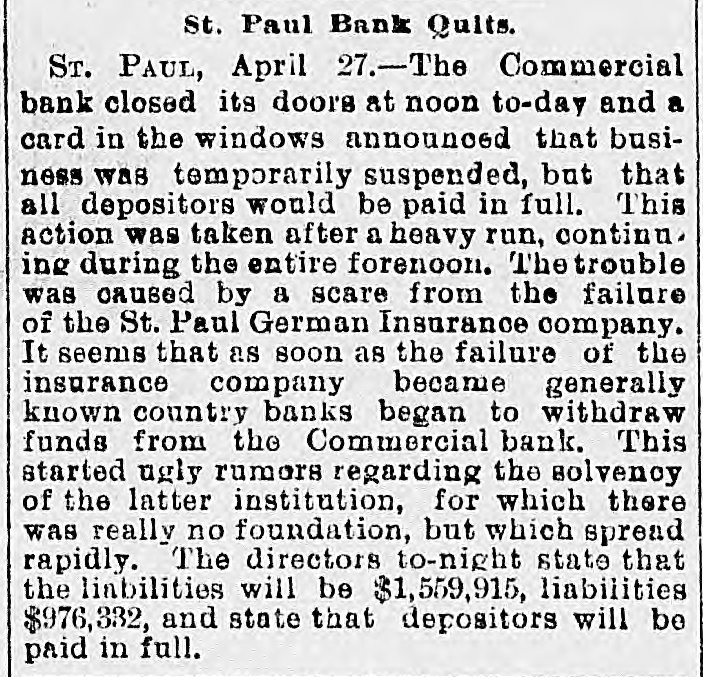
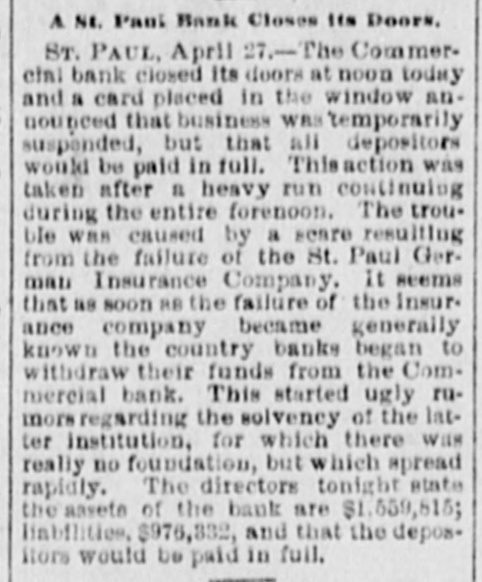
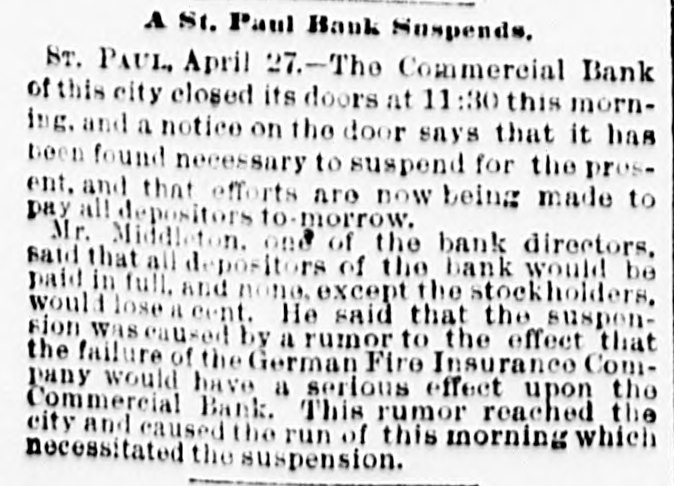
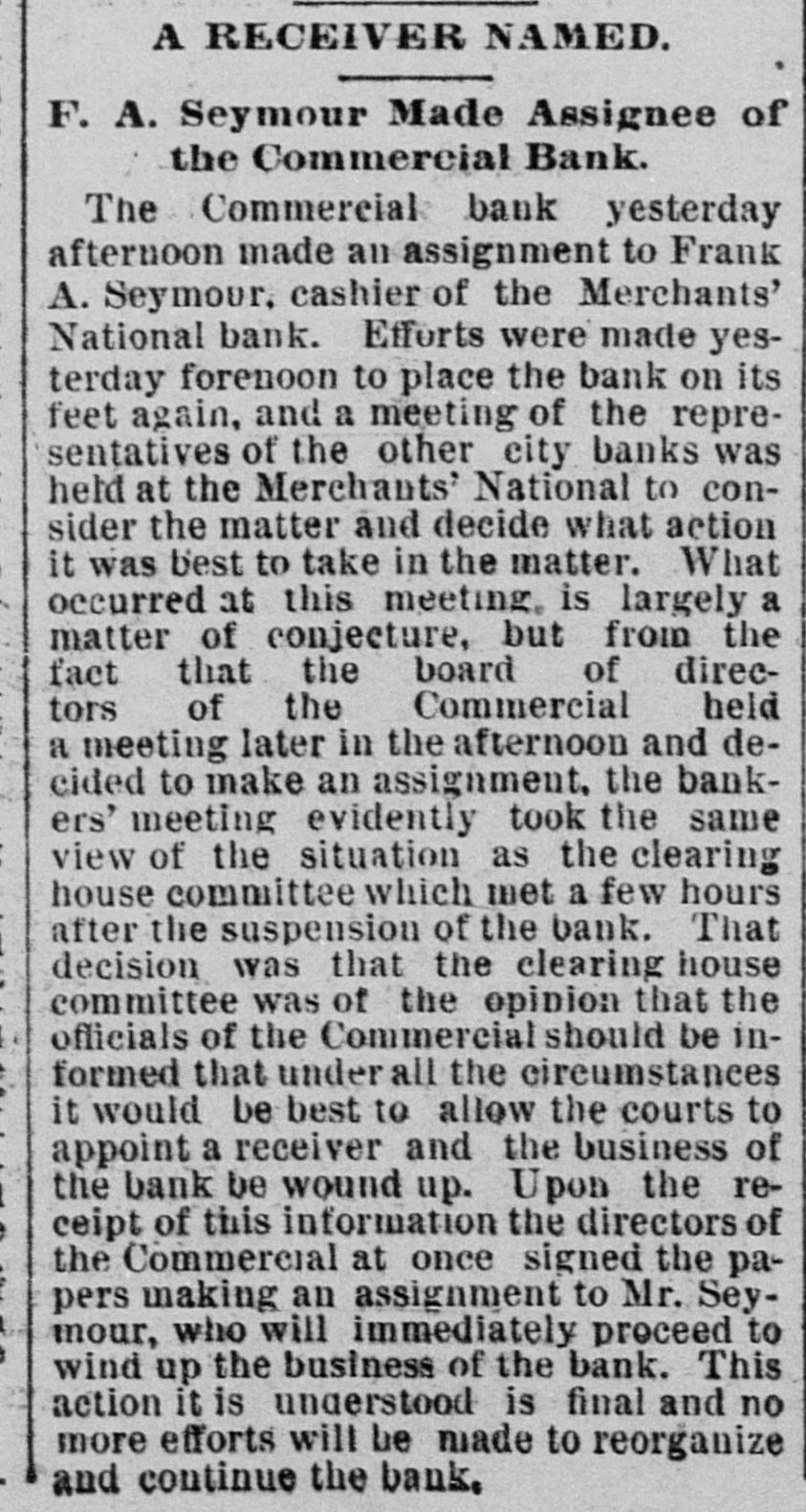
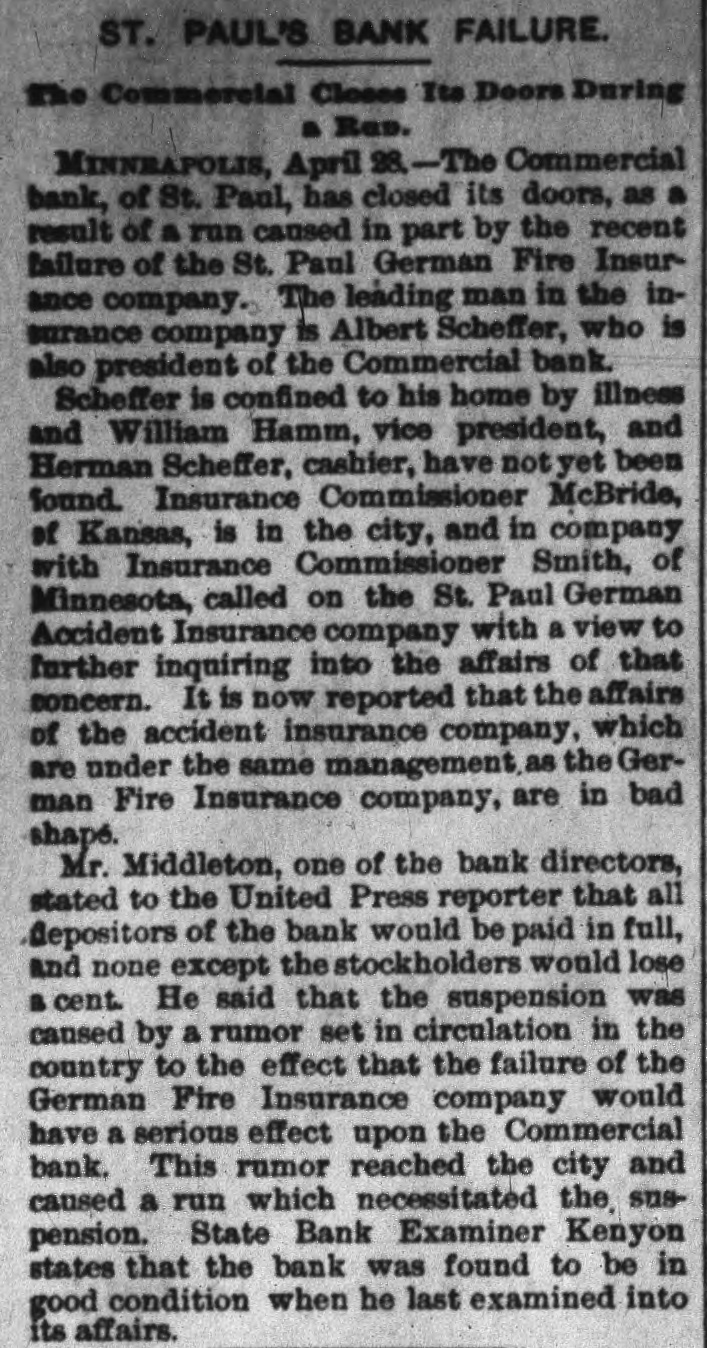
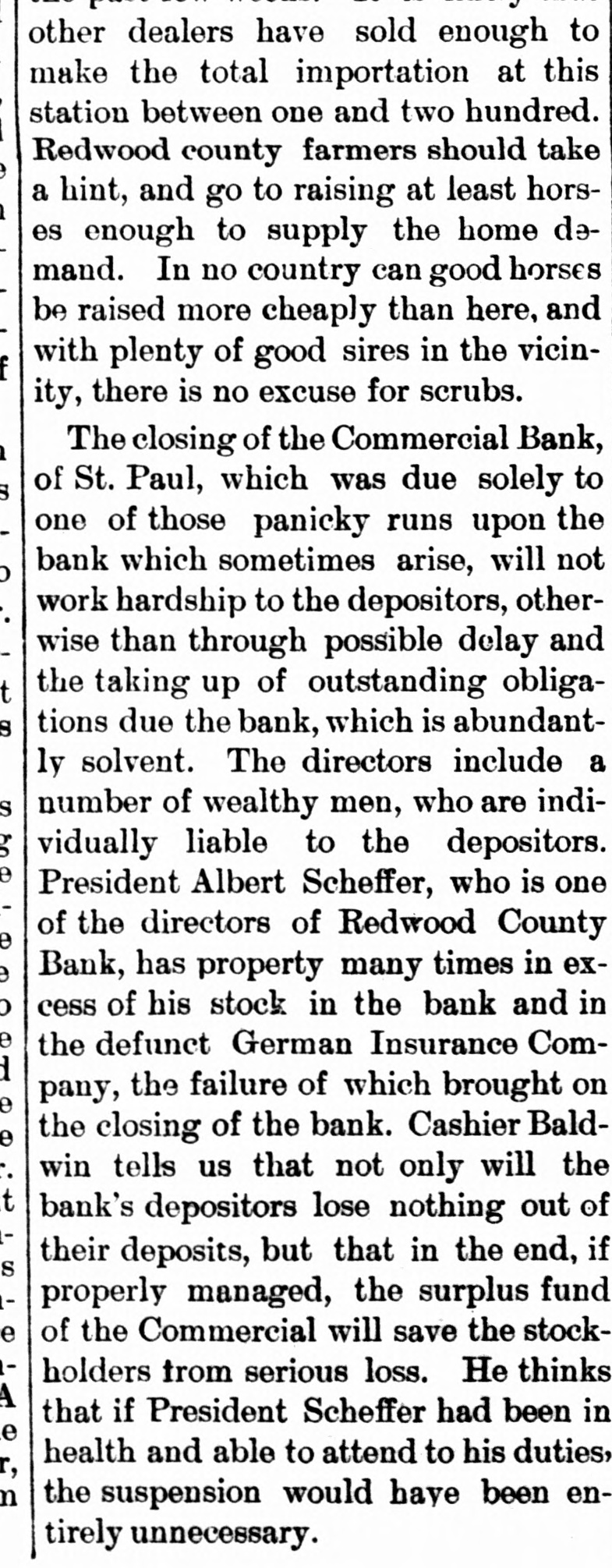
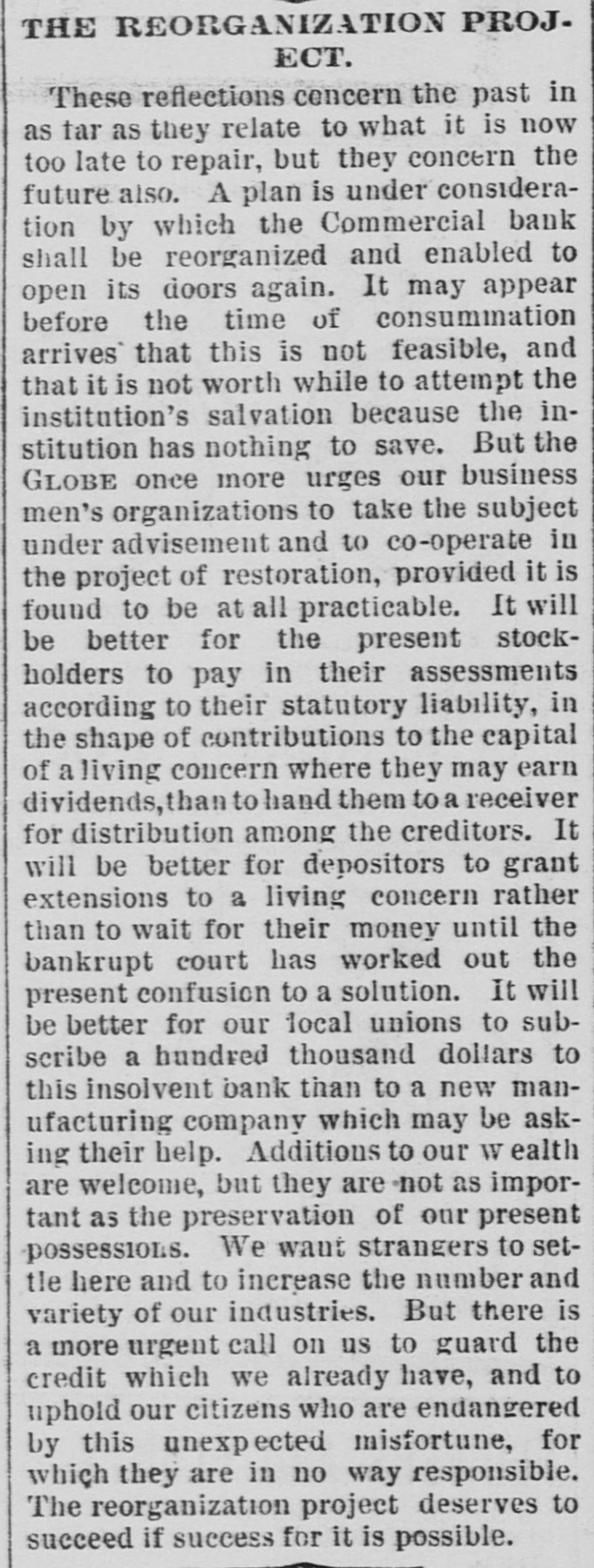
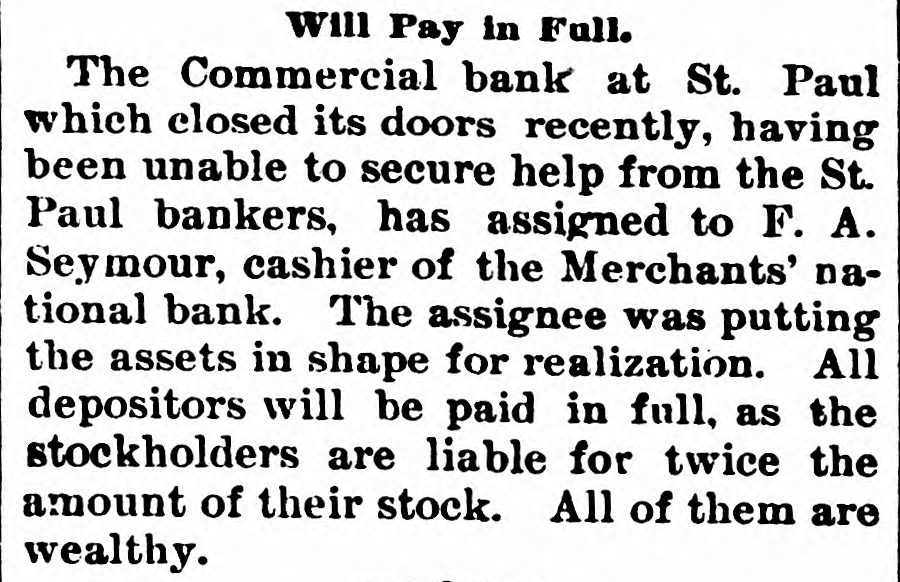
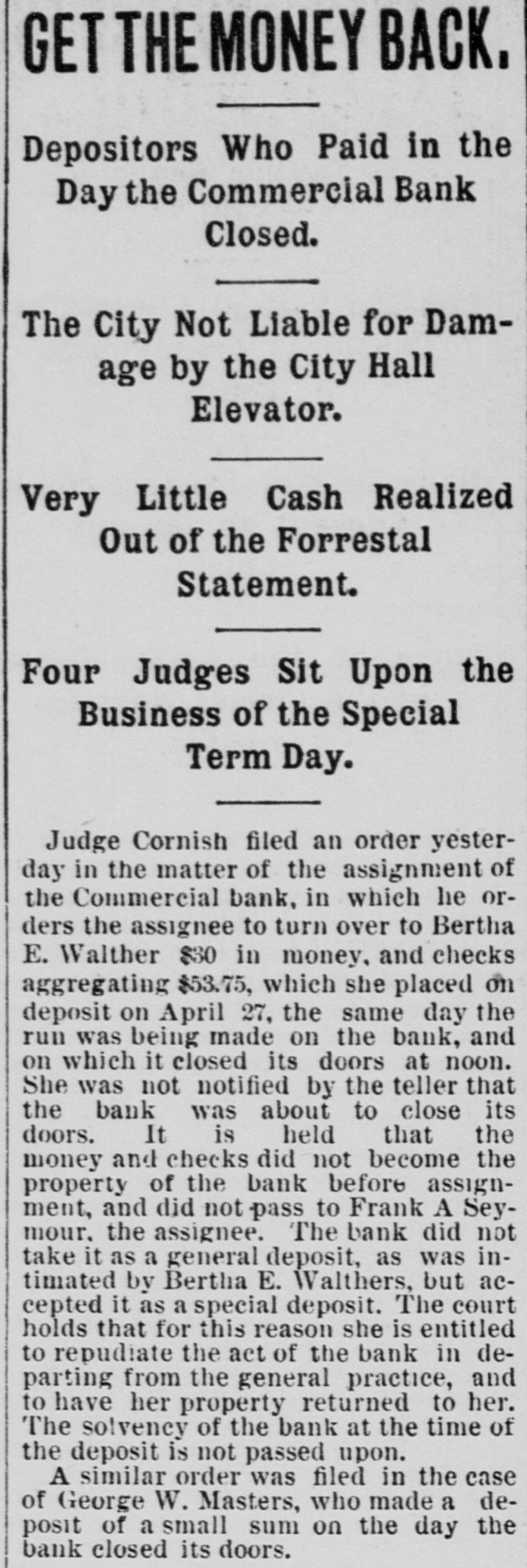
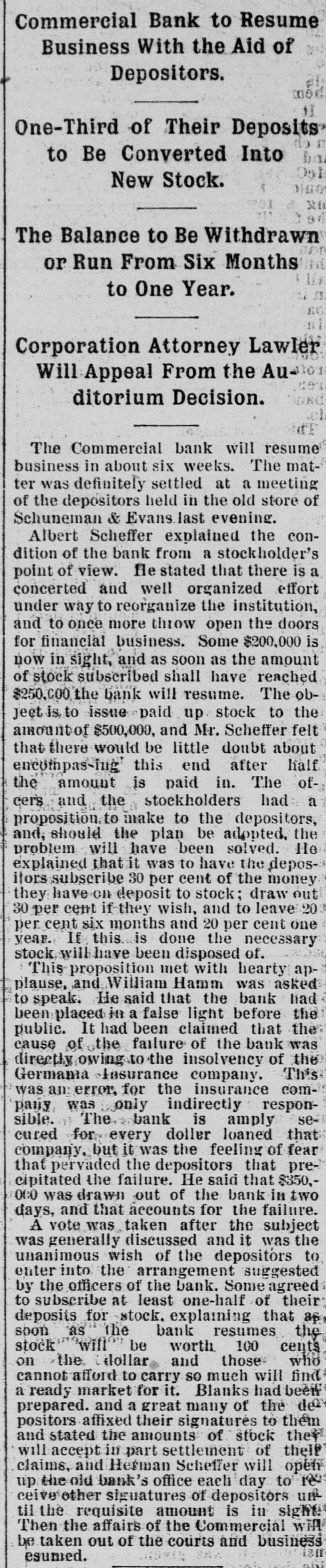
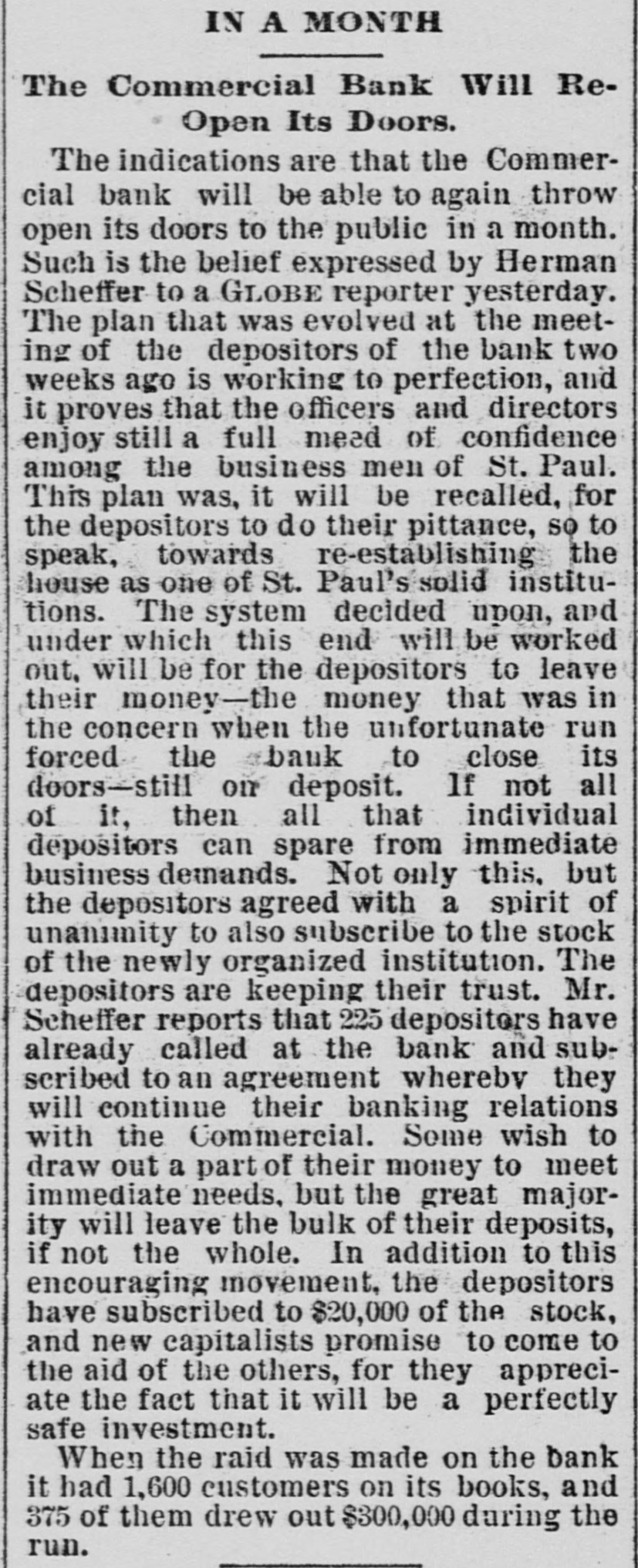
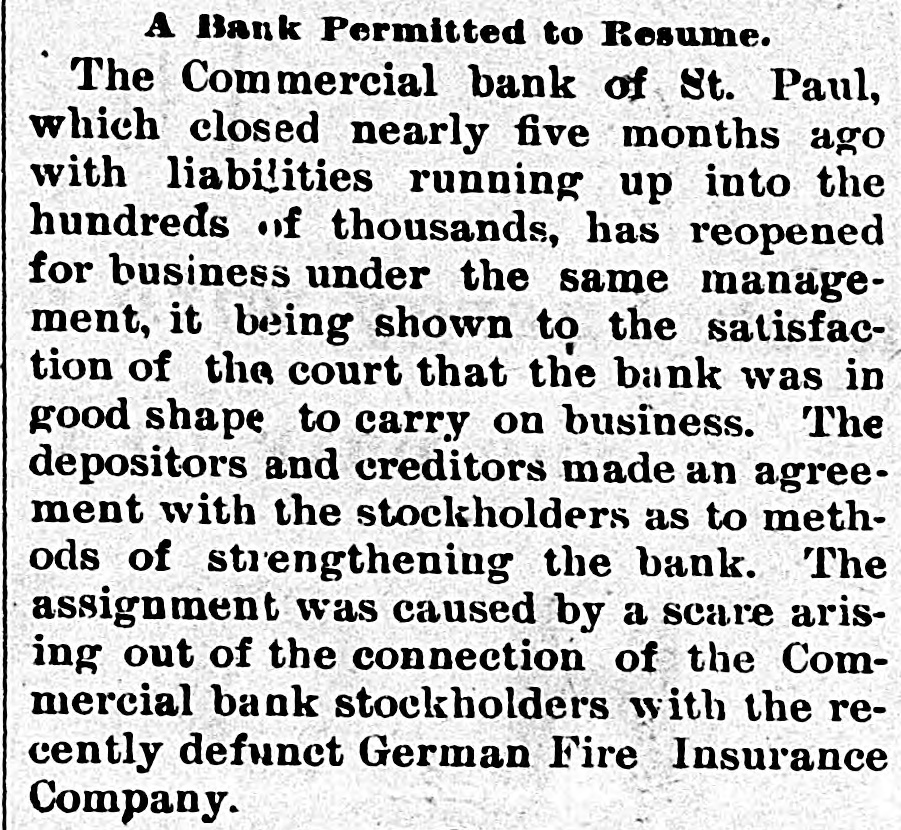
office of president in the insurance company, as well as the bank, alarmed some of the local banks throughout the Northwest having accounts with the Commercial, and they commenced withdrawing their funds. This in itself was not a matter of sufficient moment to Cause Any Trouble, but it speedily became known in the city and was whispered around among the many depositors, and the run was started. The Commercial bank on March 1 last had nearly $1,000,000 of deposits, belonging to over 1,400 different people. It has been a popular bank and an especial favorite with the smaller merchants, as will be seen from the number of the depositors, which is nearly twice as great as most banks with double the amount of deposits. On account of the great number of depositors the run was perhaps made a great deal worse than it would have been otherwise. The report furnished the papers last evening by the cashier, Herman Scheffer, shows that since the run commenced over $300,000 have been drawn out, the amount due depositors at the present time being $699,419.44, against which the bank shows assets in notes, real estate, bonds, etc., of $1,559,815.35. This apparent surplus is reduced, however, by rediscounts amounting to $276,912.60. The full statement of Herman Scheffer, the cashier of the suspended bank, follows: "It IS well known that banking business is largely founded on confidence. The fact that the German Insurance company, which lately closed its doors, has been generally supposed to be closely allied to the Commercial bank, Albert Scheffer being president of both Institutions, has, without reason, caused the opinion to become prevalent among the depositors that the future of the one Involved the Other. "This has caused a feeling of uncertainty among depositors, which has resulted in their withdrawing from the deposits over $300,000 in cash within the last few days. Today the run became so strong that the officers considered that justice to all depositors required them to suspend payment temporarily. The assets are ample for the protection of all depositors, and an effort is bring made to effect an arrangement by which the bank will be enabled to pay off its depositors speedily. Mr. Scheifer furnished the following statement of assets and liabilities: Liabilities $699,419 4 Due depositors Rediscounts 276,912 60 Total $976,352 Assets $1,559,815 Notes, real estate, etc At the commencement of business yesterday morning the bank officials had no idea that they would be obliged to close up. Aid from other banks had been promised and a considerable amount advanced. The clearing house association met yesterday morning, and after looking over the situation suspended the bank before the clearing hour. This was with the assent of Cashier Herman Scheffer, and was made necessary by the fact that the bank did not have the funds with which to meet the heavy drafts. When this news reached the bank the payment of all demands was continued for a time, several of the other banks having volunteered the funds. Some of this money was furnished, but several of the volunteers desired time to consult with their fellow officers, and this delay was fatal to the success of the plan. At 2 o'clock the members of the clearing house committee, which is made up of President W. B. Merriam, of the Merchants' National: E. H. Bailey, cashier of the First National, and WillJam Dawson Jr., cashier of the Bank of Minnesota, met in Gov. Merriam's private office and made an examination of the assets of the suspended bank. A good part of the afternoon was spent at this task, and when it was completed it was agreed that the board of directors of the Commercial bank should be advised that, under the circumstances, the clearing house committee is under the Impression that it will be best to allow the courts to Appoint a Receiver to wind up the business of the bank. The committee estimated that it would require $500,000 to help the bank through as the opening would precipitate another rush. The clearing house was willing to furnish $200,000, but not $500,000. While this decision of the clearing house does not settle the fate of the bank, it means that if it IS reopened the aid will have to be furnished from outside the members of the association. According to the vice president of the Commercial bank, E. A. Hendrickson, this adverse report of the clearing house is largely due to the idea given by the