Click image to open full size in new tab
Article Text
UNITED STATES SUPREME COURT.
WASHINGTON, Feb. 25, 1876.
In the United States Supreme Court to-day the following cases were heard:
No. 165. Piedmont and Arlington Insurance Company vs. Ewing, administrator of Howes-Error to the Circuit Court for the Eastern District of Missouri. -In this case Howes had his life insured for $5,000, paying a part of the semi-annual premium by an advertisement for the company in his paper-the People's Tribune-published at Jefferson City. This was on September 1, 1871; the balance was paid on the 14th of October to a sub-agent by Howes' partner. The money reached the agent on the 15th, which was Sunday, and he on that day countersigned as of the 16th and sent it in. It turned out that Howes died on the 14th, the day on which the balance of the premium was paid.
The defence was that when making his application Howes had declared that he was not troubled with dyspepsia falsely, and had also falsely stated that he was not given to the intemperate use of liquor. There was evidence that he had habitually used liquor, and that he died of inflammation of the stomach and intestines, as was believed. The Court instructed the jury that they were to inquire not as to the habitual use of liquor but as to the intemperate use of it, and that as to the question of the disease of which Howes died, they were to inquire whether it was chronic dyspepsia, known as a disease, and not whether from a temporary attack brought on by some indiscretion, overeating or the like. As to the final payment the instruction was that if it was made before the death of Howes, no matter how ill, and the agent did not afterward demand the surrender of the policy and tender back the money, his act was a ratification which bound the company. This ruling is assigned as error. Hill, Ewing & Smith for plaintiffs in error; Flanigan, Cheras & Senrie for defendants.
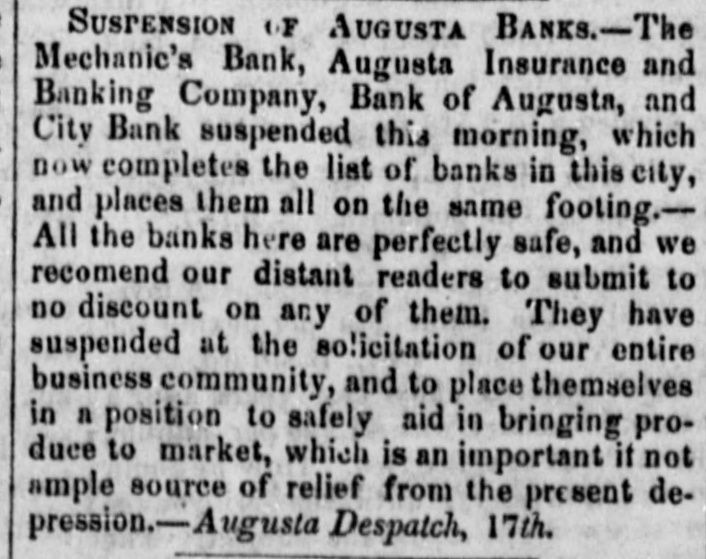
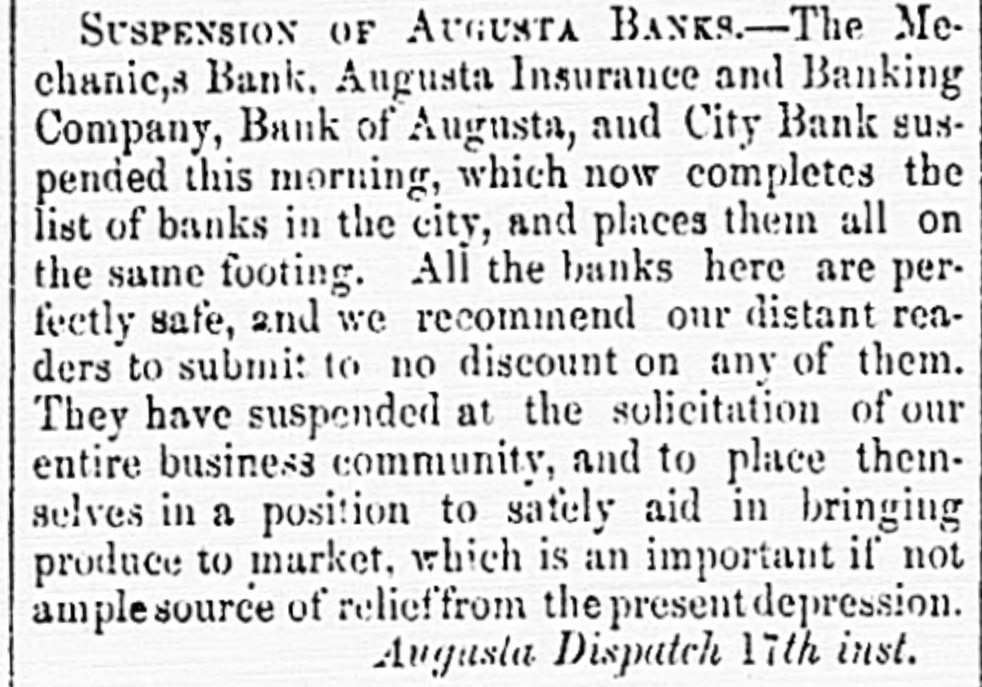
No. 166. Ferry vs. Tubman-Error to the Circuit Court for the Southern District of Georgia. -This was an action by Tubman to make the plaintiff in error personally responsible to him as holder of certain bills of the Bank of Augusta issued for circulation. The action was based upon a section of the charter of the bank making the stockholders personally liable for the redemption of the bills. The judgment was for the holder, and it is here insisted that personal liability did not attack until after assignment of the bank and before the application of its assets toward the extinguishment of the demand. Plaintiff in error in person; W. H. Hull for defendant.