Click image to open full size in new tab
Article Text
'THE STORY OF ELIZABETH
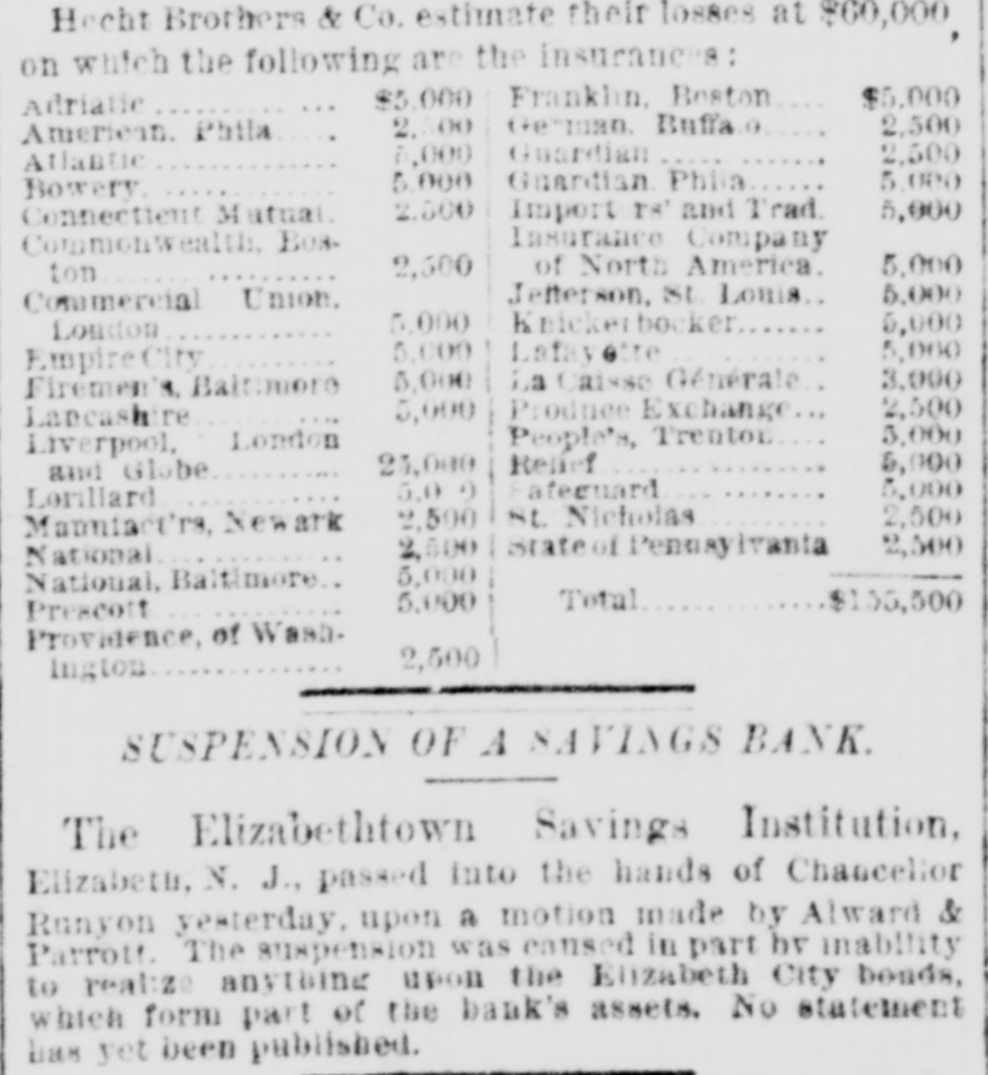
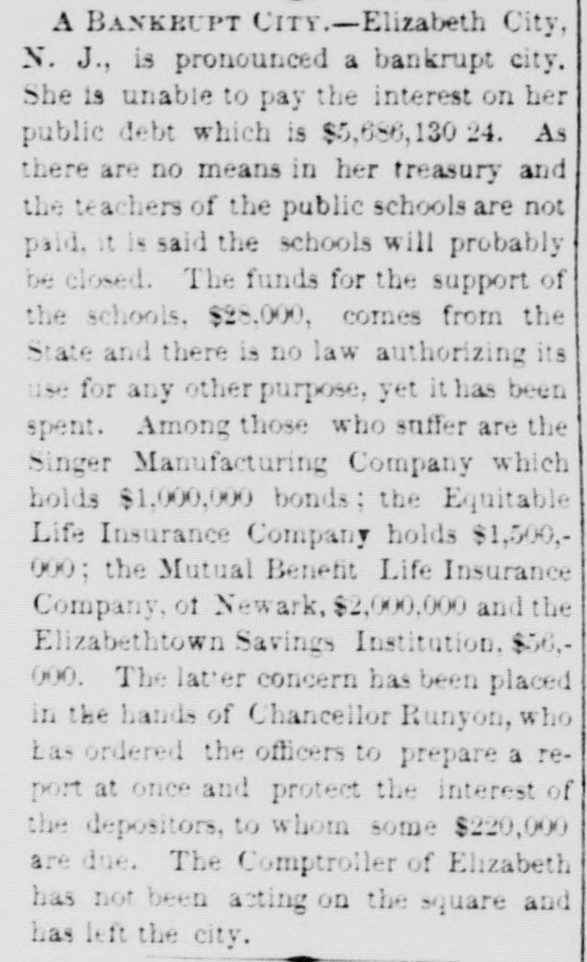
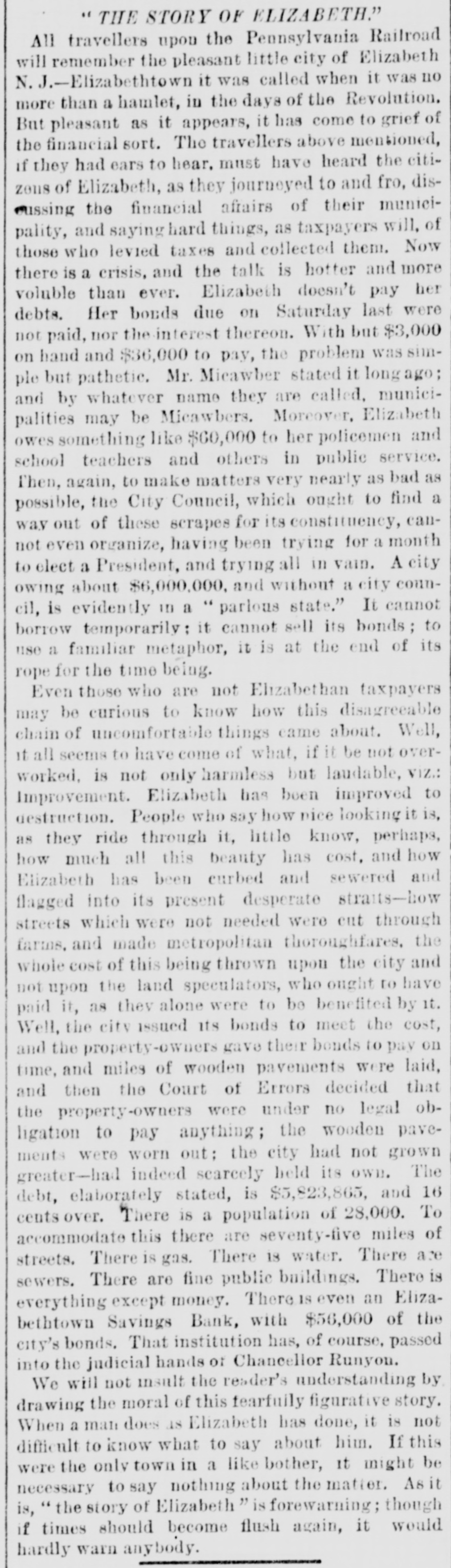
" All travellers upon the Pennsylvania Railroad will remember the pleasant little city of Elizabeth N. J.-Elizabethtown it was called when it was no more than a hamlet, in the days of the Revolution. But pleasant as it appears, it has come to grief of the financial sort. The travellers above mentioned, if they had ears to hear. must have heard the citizens of Elizabeth, as they journeyed to and fro, discrussing the financial afrairs of their municipality, and saying hard things, as taxpayers will, of those who levied taxes and collected them. Now there is a crisis, and the talk is hotter and more voluble than ever. Elizabeth doesn't pay her debts. Her bonds due on Saturday last were not paid, nor the interest thereon. With but $3,000 on hand and $36,000 to pay, the problem was simple but pathetic. Mr. Micawber stated it longago; and by whatever name they are called, municipalities may be Micawbers. Moreover, Elizabeth owes something like $60,000 to her policement and school teachers and others in public service. Then, again, to make matters very nearly as bad as possible, the City Council, which ought to find a way out of these scrapes for its constituency, cannot even organize, having been trying for a month to elect a President, and trying all in vain. A city owing about $6,000,000, and without a city conncil, is evidently 111 a parlous state." It cannot borrow temporarily it cannot sell its bonds; to use a familiar metaphor, it is at the end of its rope for the time being. Even those who are not Elizabethan taxpayers may be curious to know how this disagreeable chain of uncomfortable things came about. Well, it all seems to have come of what, if it be not overworked, is not only harmless but laudable, viz.: Improvement. Elizabeth has been improved to destruction. People who say how nice looking it is, as they ride through it, little know, perhaps, how much all this beauty has cost. and how Elizabeth has been curbed and sewered and flagged into its present desperate straits-how streets which were not needed were cut through farms, and made metropolitan thoroughfares, the whole cost of this being thrown upon the city and not upon the land speculators, who ought to have paid it, as they alone were to be benefited by it. Well, the city issued its bonds to meet the cost, and the property-owners gave their bonds to pay on time, and miles of wooden pavements were laid, and then the Court of Errors decided that the property-owners were under no legal obligation to pay anything; the wooden pavements were worn out: the city had not grown greater-had indeed scarcely held its own. The debt, elaborately stated, is $5,823,865, and 16 cents over. There is a population of 28,000. To accommodate this there are seventy-five miles of streets. There is gas. There 18 water. There are sewers. There are fine public buildings. There is everything except money. There IS even an Elizabethtown Savings Bank, with $56,000 of the city's bonds. That institution has, of course, passed into the judicial hands of Chancellor Runyon. We will not insult the reader's understanding by drawing the moral of this fearfully figurative story. When a man does 18 Elizabeth has done, it is not difficult to know what to say about him. If this were the only town in a like bother, it might be necessary to say nothing about the matter. Asit is, 'the story of Elizabeth is forewarning; though if times should become flush again, it would hardly warn anybody.