Click image to open full size in new tab
Article Text
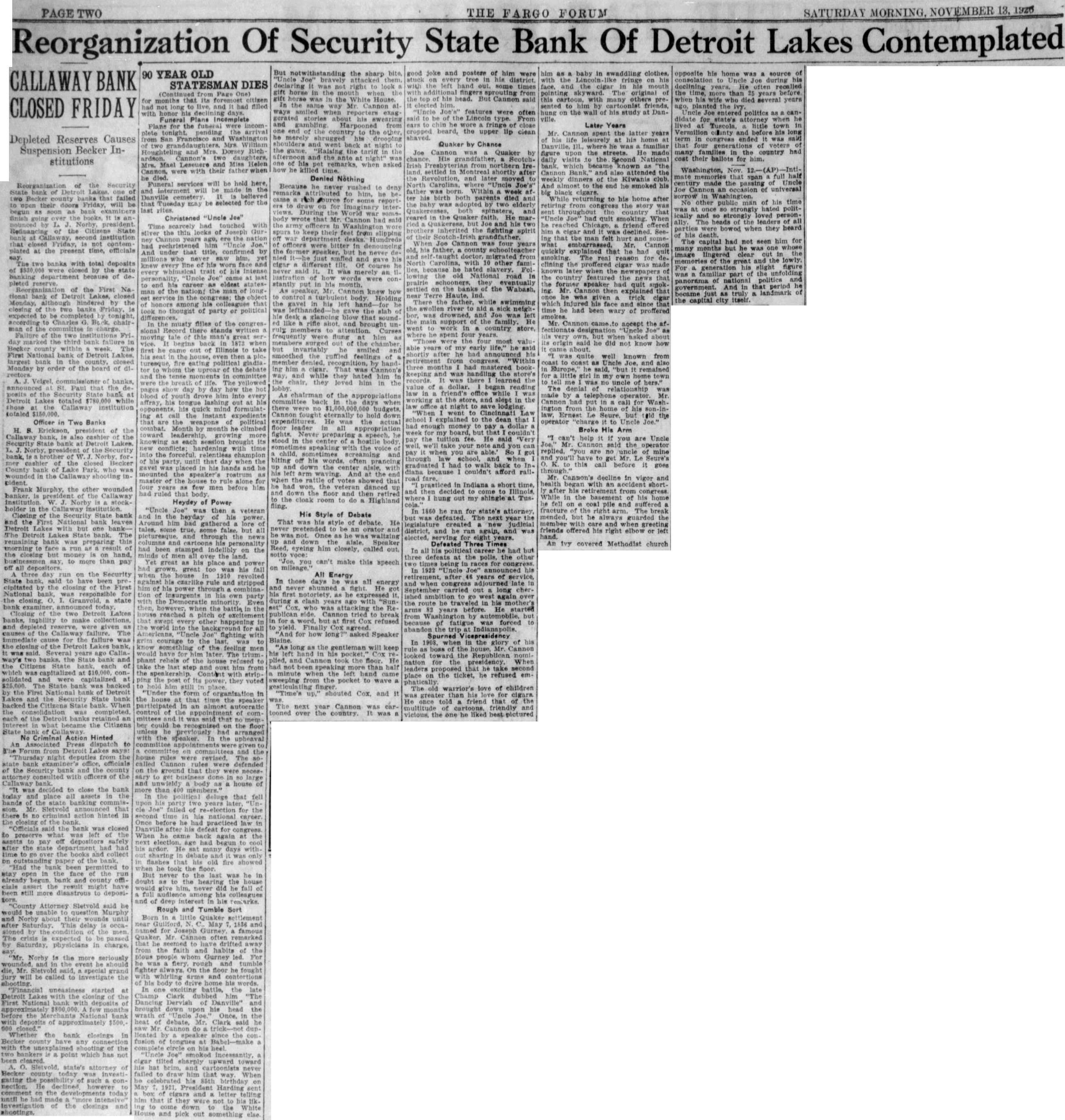
PAGE TWO THE FARGO FORUM SATURDAY MORNING, NOVEMBER 13, 1926 Reorganization Of Security State Bank Of Detroit Lakes Contemplated
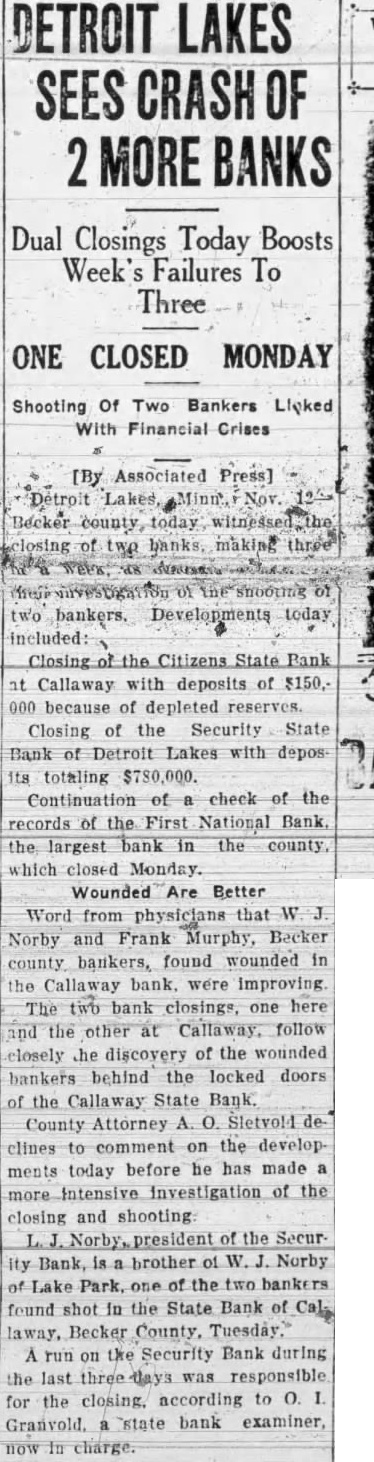
CALLAWAY BANK CLOSED FRIDAY had with
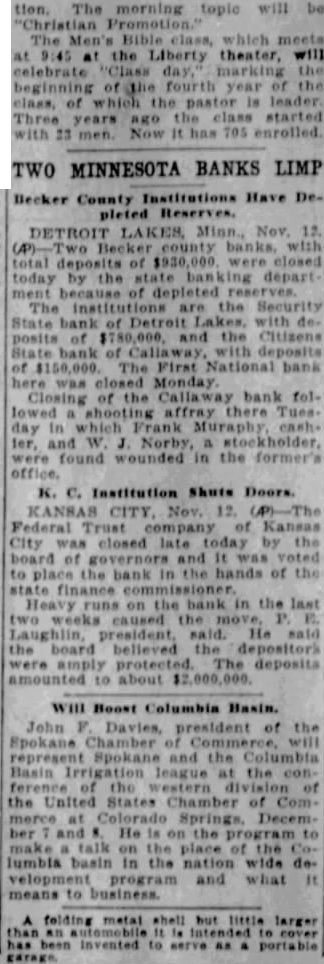
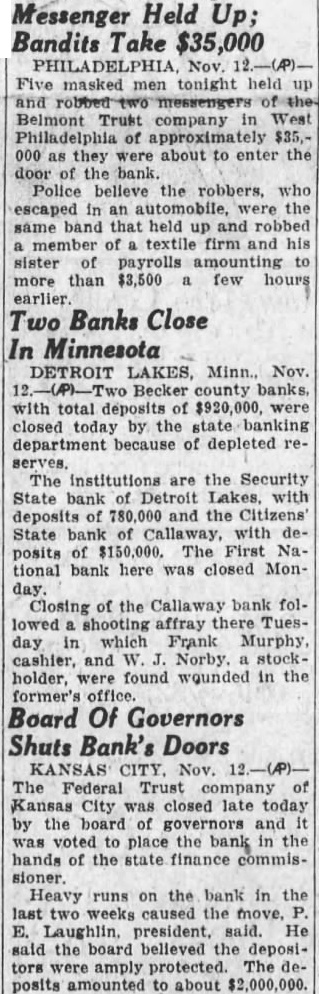
Depleted Reserves Causes Suspension Becker Institutions of Security State bank of two Becker that failed to open their Friday, will be begun as soon as bank finish the of the Citizens State bank at institution that Friday, contem plated at the present time, officials say. two banks with total deposits were closed by the state banking department because of pleted reserve. of the First tional bank of Lakes, Monday, hindered by the of the two banks Friday, expected to be completed by tonight, according to Charles G. chairman the Failure the institutions Fri. day marked the third bank failure in Becker county within The First National bank of Detroit largest the Monday by order of the board of of banks, St. Paul that the posits of the Security State bank at Detroit Lakes totaled $780,000 while the Callaway totaled Officer in Two Banks H. S. Erickson, president of the Callaway cashier the Security State bank at Detroit Lakes is brother Norby former cashier of the closed Becker County bank of Lake Park. who was wounded in the Callaway inFrank Murphy, the other wounded banker. the Callaway W. Norby stockholder in the institution Closing the Security State bank and the National bank Lakes but one Detroit State bank. The remaining bank was preparing this morning to run result the closing but money on hand, businessmen to more than pay off all three on the Security State have been cipitated by the closing of the First National bank, was responsible for the closing. O. state today two Lakes given causes of the The cause for the was the closing the Detroit Lakes years way's two State bank and each which at solidated and capitalized The State bank was backed the First Detroit Lakes the State bank backed State bank. When was of an became the Citizens of No Criminal Action Hinted An Press dispatch from Detroit Lakes night office, officials Security bank the county of the Callaway decided to close the bank today place assets in hands the state Mr. Sletvold that there no action hinted in of the "Officials said bank was closed to preserve of after the state department had and the bank been to bank county cials the result more disastrous deposi"County Attorney Sletvold said would be unable question Murphy and about delay the The crisis expected to passed by Saturday, physicians in Norby is seriously event should die, Mr. Sletvold special be called to the "Financial uneasiness started Lakes the First National deposits few before the National bank deposits of approximately $500. the bank in Becker with the shooting of the two bankers point which has not been state's attorney of Becker today investigating the of such He declined however comment he on the developments today until "more of the closings and
90 YEAR OLD STATESMAN DIES from Page One) months that its foremost citizen not to and had filled honor days. Funeral Incomplete for the were incomplete tonight, arrival from San Francisco Mrs. and Mrs. ardson. Cannon's daughters, Mrs. Mael Leseuere and Miss Helen Cannon, were with their father when he died. Funeral services be held here be made the and that may be selected for the last Christened "Uncle Joe" Time scarcely had touched with silver the thin locks of ney Cannon years ago, ere the under title, confirmed by And millions knew his face and every trait came at to end his career eldest statesthe of est service in the of honors among his that no thought of party or political differences. In the musty filles of the there stands written moving tale this great vice. first he Illinois to take his seat in the house, turesque, fire eating political gladia tor whom the of the debate and the committee the The pages day by day the hot blood of youth every his tongue lashing out at his quick mind formulat ing at the expedients are weapons of political combat. Month by he climbed toward leadership growing more knowing as each brought its new hardening with time into the of that day when the gavel his and he mounted the speaker's rostrum master of the house to alone for four few men before him ruled that body. Heydey of Power "Uncle then veteran was and in the heyday of his Around him gathered lore power of some true, some but picturesque, and through the news columns his had been stamped on the minds men all over the land. Yet great as his place and power had great too was his fall when the in 1910 revolted against his rule and stripped him of his combinaof insurgents in his own party with the Democratic minority Even when the battle in the reached pitch excitement other happening in world the for all Joe" fighting with courage to the was to the feeling men The to take the step and him from the with post its they voted to the form of organization in the house time the speaker almost control of the appointment of com that no ber could be recognized on the floor unless he previously arranged with the In the upheaval to committees and the were The called Cannon defended on the ground they were necesdone large and body house of than 400 the that fell two years cle failed of re-election for the his national Once he practiced law in defeat for When he back again the had begun to cool ardor. He many days debate was fire showed he But never was he doubt the hearing the house never did he fall of full among colleagues and of deep interest In his arks. Rough and Tumble Sort Born Quaker near and named for Joseph Gurney, Mr. that drifted from the habits the Gurney led. For he rough and tumble On floor he fought arms and his drive his words. In the Champ Clark him Dancing of Danville" down upon his head Once, heat of Mr. Clark said Mr Cannon since fusion of tongues complete circle on smoked sharply upward toward hat and failed him When his on May President Harding box of cigars letter that were to to the House and pick something else
But notwithstanding the sharp bite, "Uncle Joe" bravely attacked was right to look horse in the mouth when the gift herse was in the White House. In the same Mr Cannon ways exag. gerated stories about his swearing and gambling Harpooned from end of country to the he merely shrugged his drooping and went back at night the "Raising the the and the night" one of his pet asked when how he killed time. Denied Nothing Because never rushed deny to him, he to the World war somethat Mr had the to their feet slipping Hundreds in denouncing the he but never nied just and gave his different said merely an of how words were stantly put mouth. knew how body. Holding the gavel left handwas gave the his desk blow that and brought to frequently flung him chamber but smiled and smoothed the ruffled feelings of That was Cannon's and while him the they him the in As chairman of the back days when there no Cannon eternally to hold down He was the actual floor leader in all preparing he stood in the center hostile body sometimes with the voice of and biting off his often prancing up and the aisle. And at the when the rattle votes showed that he had the veteran danced up and down the floor and then retired to the cloak room to do R. Highland fling.
His Style of Debate That his style of debate. He an orator he was waltzing up and Speaker Reed, eyeing him closely, called out sotto voce: you can't make this speech on
All Energy In those days all energy never He got his first notoriety he during clash years ago with Cox, who the tried to break for but first Cox refused "And for how long asked Speaker Blaine. long the gentleman will keep his in his and the floor. He had not than half minute when the left hand sweeping from the pocket to wave finger shouted Cox. and The next year Cannon was tooned over the country. It was good joke and postere of him were stuck every tree in his the left hand some times sprouting from the of his head. But Cannon said features were often of the Lincoln type. From ears chin wore fringe close cropped the upper lip clean shaved.
Quaker by Chance Joe Quaker by His Presby from northern Iresettled in Montreal shortly after the moved Joe's was Within week ter his birth parents died the Quaker He fighting spirit of Joe four years his Carolina, with 10 other lowing the old National road prairie settled on the the Haute, There the while swimming the aid sick neigh was Joe was the support of the He country store, spent able of early he said he had keeping and the records. there learned the value began in friend's office while was working at the store, and slept in the law at night to lodging went to Cincinnati explained to the dean that had enough money pay dollar a week board, but that couldn't pay the tuition fee. He said you pay you are So got through graduated to walk back to Indiana because couldn't afford road fare. practiced in Indiana a short time, and to to where hung out my shingle Tus. In 1860 he ran for state's attorney, but was defeated. The next year the created district, and he ran and was elected, serving for Defeated Times In all his had but defeats at the the other two being in for In 1922 announced his retirement, after 46 years of service, and when congress late in September carried out long cherished west again over the route he traveled in his mother's arms 82 years before. He started from Washington by automobile, but because of fatigue was forced abandon the In 1908, when in the glory of his rule as boss of the Mr. Cannon looked toward the Republican nomination for the presidency. When leaders he second place on the ticket, he refused emThe old warrior's love of children was greater than his for He once told friend that of the multitude of cartoons. friendly and victous, the one he liked pictured him as baby in swaddling clothes, with the Lincoln fringe on his and the cigar in his mouth pointing skyward. The original of this with many others preto him friends, hung on the wall of his study at Danville.
Later Years Mr. Cannon spent the latter years his life leisurely at his home Danville, III., where he was familiar figure upon the streets. He made daily visits to the Second National bank, which known as Cannon Bank," and also attended the weekly dinners Kiwanis And almost the end he smoked his black cigars. to his home after the story that had quit When he friend and Seethat felt and what Mr. Cannon quickly explained had for clining the proffered cigar was made when the of the featured the news former speaker quit smokexplained that trick cigar and since time he had been wary of proffered Mr accept the aforigin said he did not know how "I quite well known from to as Joe, and also remained for girl tell was of The relationship made by telephone operator. Mr. Cannon had call for ington from the home of his Ernest Le the operator Uncle Joe." Broke His Arm In can't help are Uncle Joe," Mr. Cannon the operator no mine and you'll get Mr. Seure's O. to this before it goes Mr. Cannon's decline in vigor and an the basement of his he fell and suffered fracture the right The but he always guarded the with care and when greeting friends offered his right elbow or left An 1vy covered Methodist church opposite his home was source of consolation to Uncle Joe during his declining years, He often recalled the more than years before when his wife who died several years ago, planted the Uncle Joe entered politics candidate for state's attorney when he lived little town Vermilion county and before his term in congress ended it that four generations of voters in the country had cost their ballots for him. Washington, Nov. that full made the passing of Uncle Joe of universal No other public of his time man was at once 80 strongly hated politand strongly loved personheads the all of when they heard were bowed of his The capital had not seen him for many months but he was one whose image lingered clear the the great and the lowly. For his slight figure a familiar part the panorama politics period and that he government. And in became as truly a landmark of the capital city itself.