Article Text
PROCEEDINGS
ADJOURNED MEETING OF COUNTY BOARD
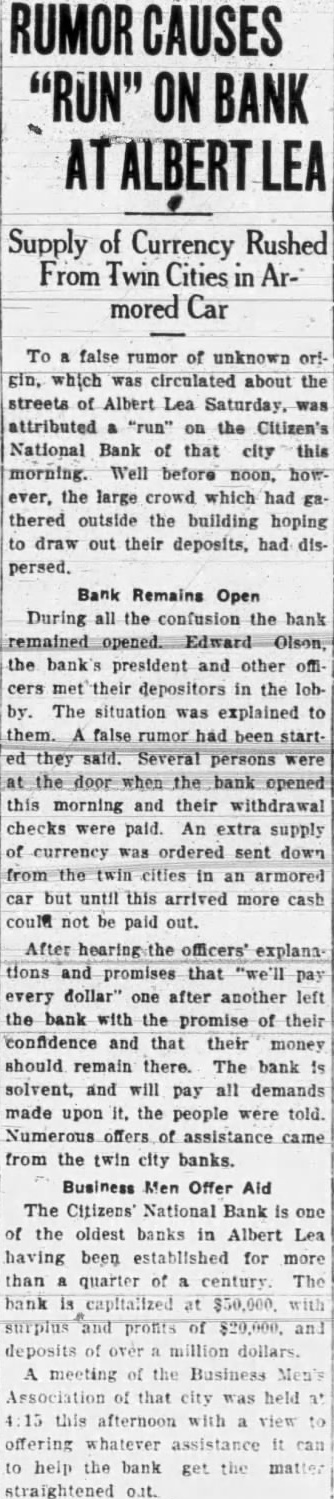
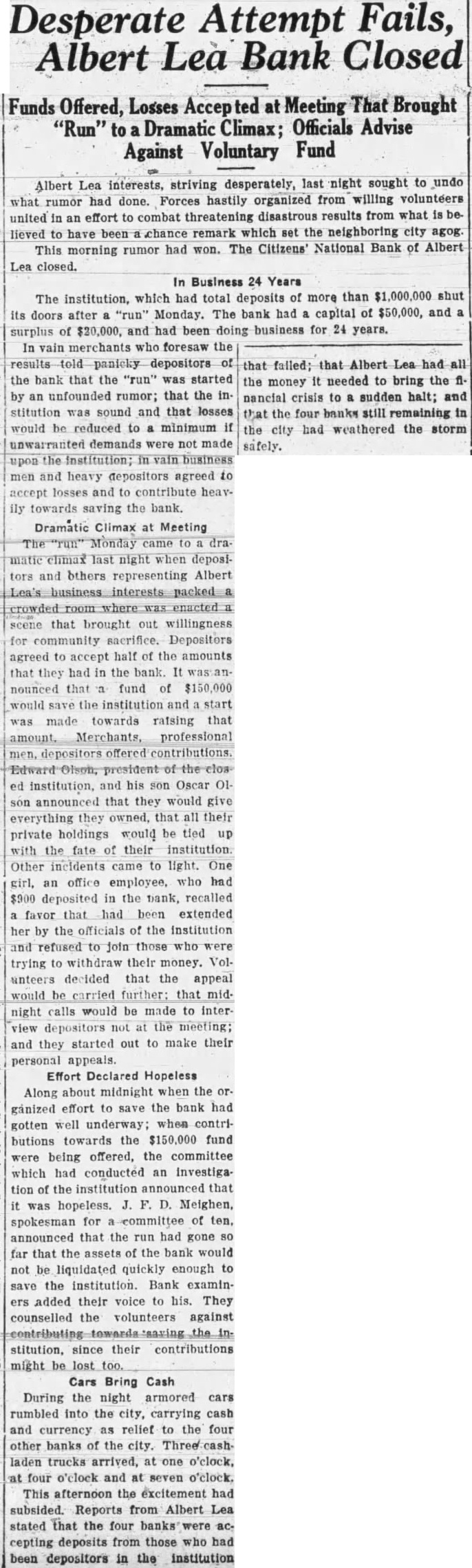
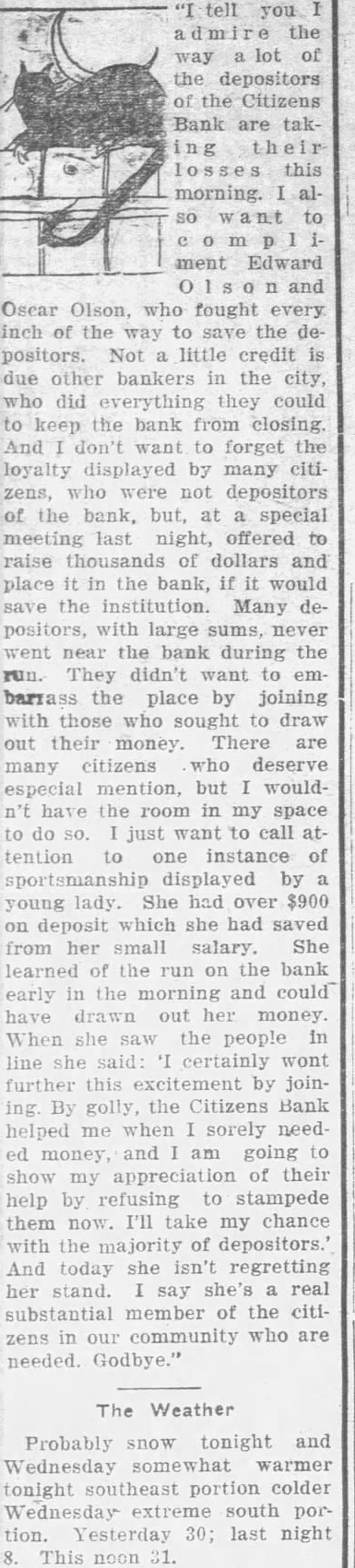
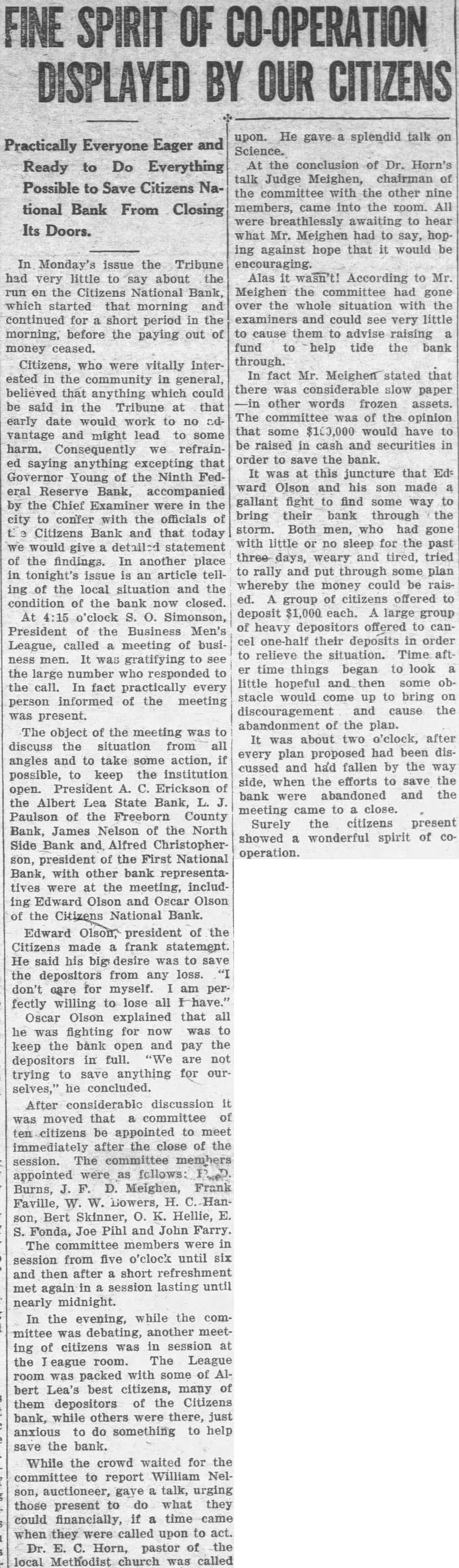
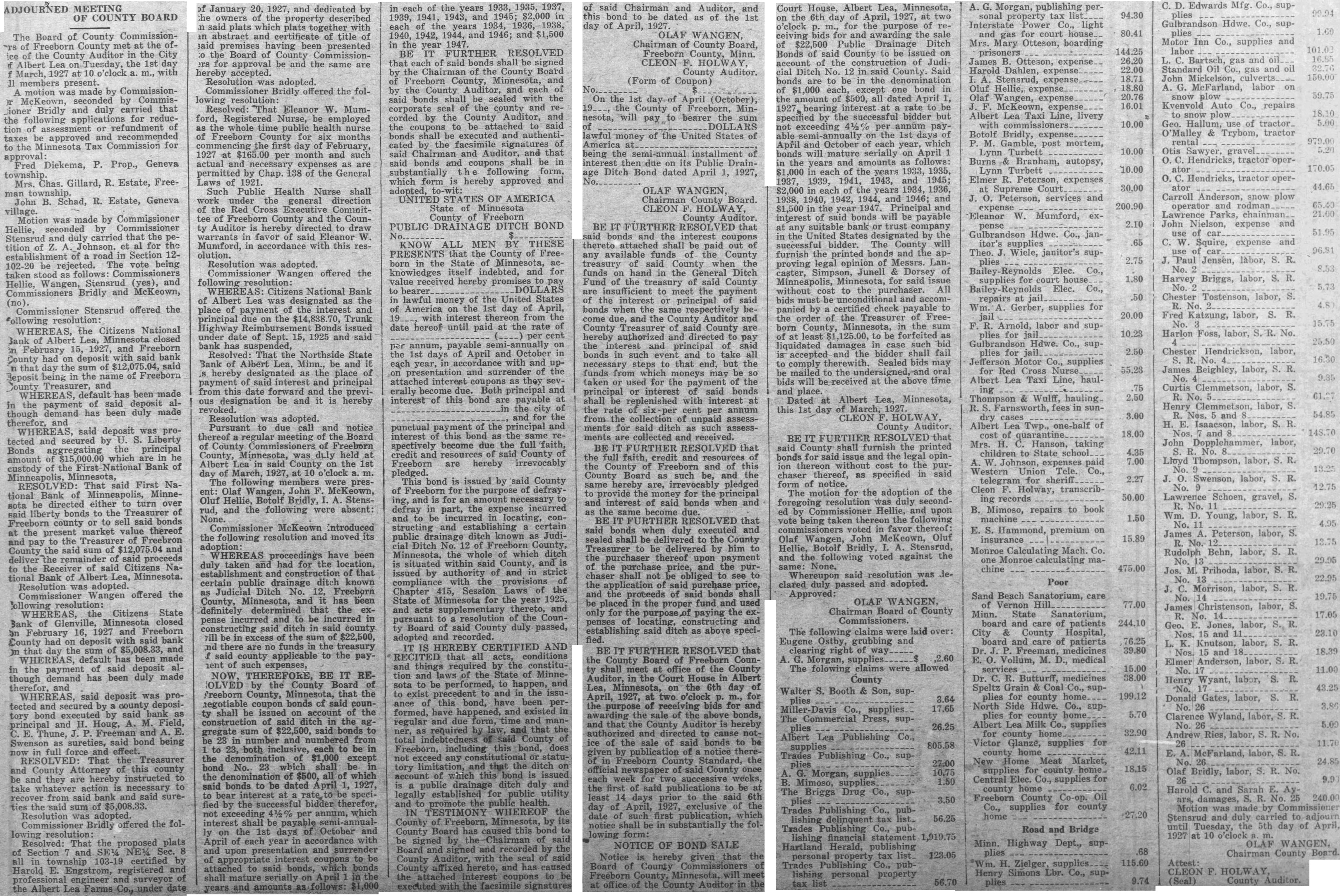
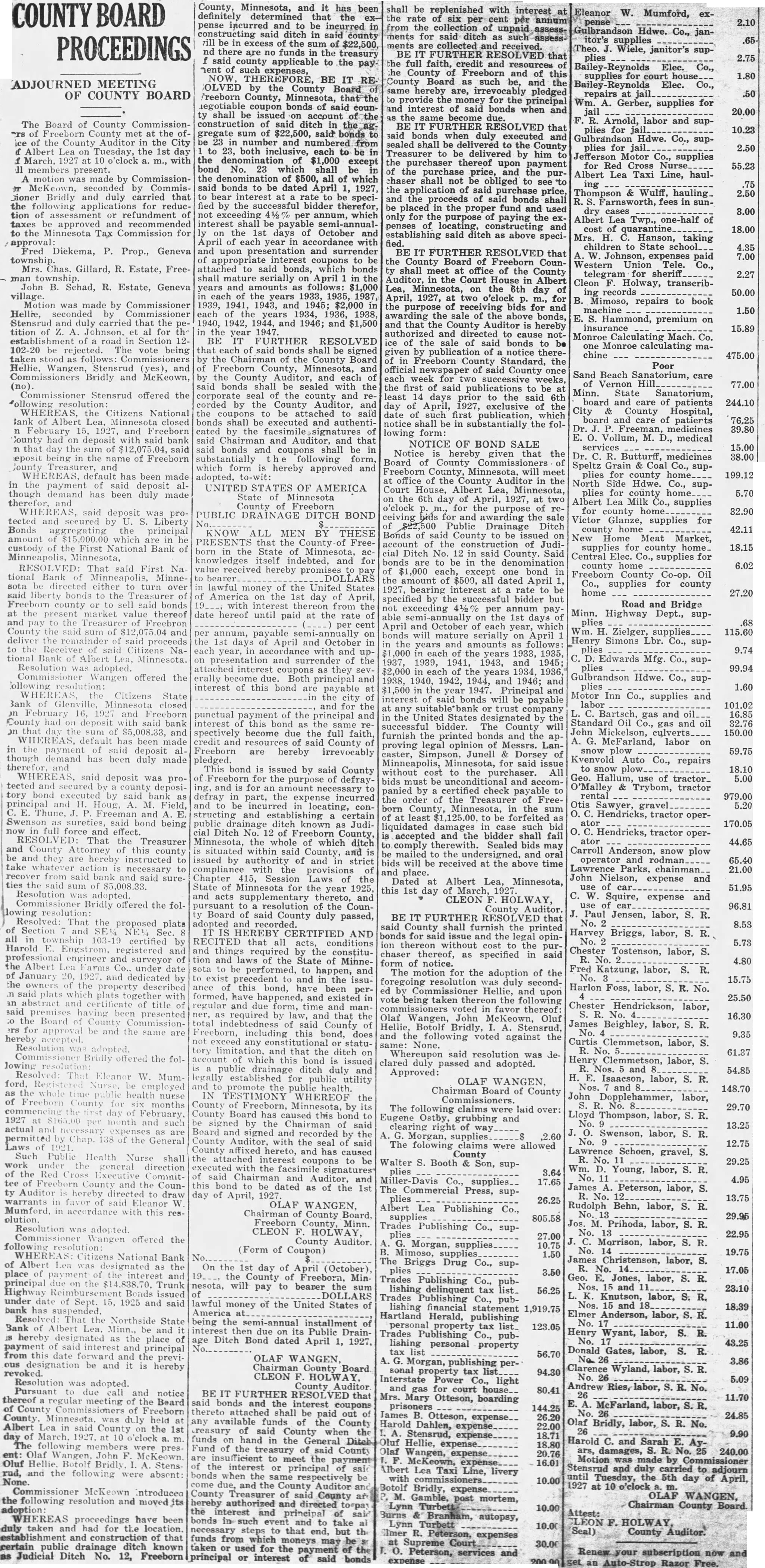
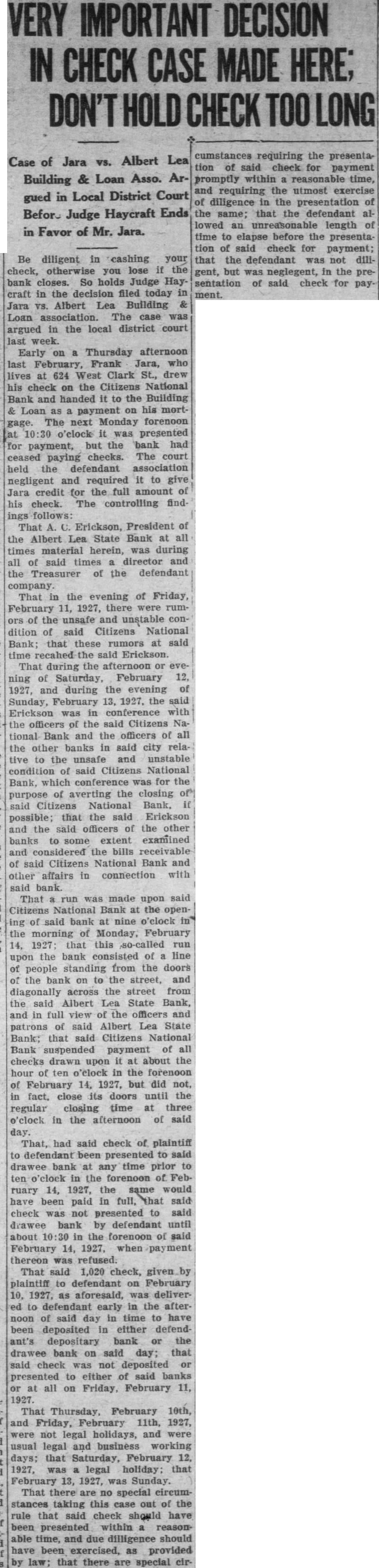
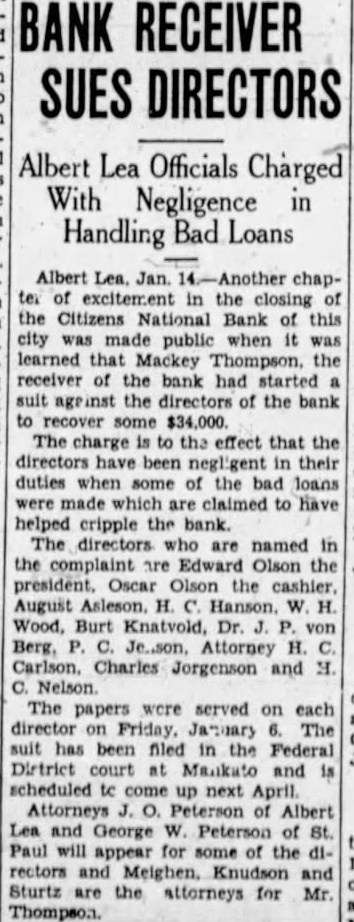
The Board of County Commissionof Freeborn County met at the of the County Auditor in the City Albert Lea Tuesday, the 1st day March, 1927 at 10 o'clock m., with members present. motion was made by CommissionMcKeown, seconded CommisJioner Bridly duly carried that the applications for reduction of assessment or refundment taxes be approved and to the Minnesota Tax Commission for Fred Diekema, P. Prop., Geneva township. Mrs. Chas. Gillard, R. Estate, Freeman township. John B. Schad, R. Estate, Geneva village. Motion was made by Commissioner Hellie, seconded by Commissioner Stensrud and duly carried that the tition Johnson, et for of road in Section 102-20 be rejected. vote being taken Hellie, Wangen, Stensrud (yes), and Bridly and (no) Stensrud offered the the Citizens National Bank of Albert Lea, Minnesota closed February 15, 1927, and Freeborn County had deposit with said bank that day the $12,075.04, said eposit being in the name of Freeborn County Treasurer, and WHEREAS, default has been made the payment of said deposit although demand has been duly made therefor, and WHEREAS, said deposit was protected and secured by Liberty Bonds aggregating the principal amount which he custody of the First National Bank of Minneapolis, Minnesota, RESOLVED: That said First National Bank Minneapolis, Minnesota directed either to turn over said bonds to the Treasurer of Freeborn county or to sell said bonds at the present market value thereof and pay to the Treasurer of Freebron County the said of and deliver of said proceeds the Receiver said National Bank of Lea. Minnesota. Resolution adopted. Wangen offered the Citizens State Bank of Minnesota closed February 16, and Freeborn County had deposit with said bank that day the and WHEREAS, default has been made in payment of said deposit though demand has been duly made WHEREAS, said deposit tected and secured county depository bond executed by said bank principal and Houg, Thune, and sureties, said bond being and effect. That the Treasurer and County Attorney this county be and they are hereby instructed to take whatever action necessary to recover from said bank and said sureties said sum of Resolution adopted. Bridly offered the following resolution: Resolved: That the proposed plats Section and all in certified by Harold registered and professional engineer and of the Albert Farms under date of January 1927, and dedicated by the property described said plats which plats with abstract and certificate of title said premises having been presented the Board County Commissionfor approval be and the same are hereby accepted. Resolution adopted. Bridly the following That Eleanor W. Mumthe whole nurse County for months day of February 1927 month and actual and are permitted Chap. of the General Such Public Health Nurse shall work under the general direction the Red Executive of Freeborn County and the CounAuditor hereby directed to draw warrants favor of said Eleanor Mumford, accordance with this olution. Wangen offered the Citizens National Bank of Albert Lea the place of and principal the Trunk Highway Bonds issued under date Sept. 1925 15, and said bank has suspended. That the Northside State Bank of be Minn., and hereby designated as the place of payment of said interest and principal from date forward and the previous designation be and hereby revoked. Resolution was adopted. Pursuant due call and notice thereof regular meeting of the Beard of County of County, Minnesota, held Albert Lea in said County the 1st day March, The members present: Olaf John Oluf Hellie. Botolf Stensrud, and the following were absent: None. the following resolution and moved adoption: WHEREAS proceedings have been duly taken and had for the and of that certain public drainage ditch known Judicial Ditch No. 12, Freeborn
County, Minnesota, and it has been definitely determined that the pense incurred and to be incurred in constructing said ditch in said county vill be in excess of the sum of nd there are no funds in the treasury said county applicable to the payof expenses, NOW, BE IT REOLVED by the County Board Freeborn County, Minnesota, negotiable coupon bonds of said shall issued on account of the construction of said ditch in the gregate sum of $22,500, said bonds be in number and numbered from to 23, both inclusive, each to be the denomination $1,000 except bond No. 23 which shall be the denomination of $500, all of which said bonds to be dated 1927, to bear interest at rate to be specified by the successful bidder not per which shall be payable the 1st days of October and of year in with and upon presentation and surrender of appropriate interest coupons to be attached to said bonds, bonds shall serially on in the and amounts follows: $1,000 years each years 1933, 1935, 1937, 1939, 1941, 1943, and 1945; $2,000 each the years 1934, 1936, 1938, 1940, 1942, 1944, and 1946; and $1,500 the year 1947 BE FURTHER that of said bonds shall be signed the Chairman of the County Board County, and by the County and each of said bonds shall be sealed with the corporate seal of the county and corded by the County Auditor, and the to to said bonds shall be executed and authenticated by the facsimile signatures of said Chairman and Auditor, and that said bonds and coupons shall be in substantially following form, which form is hereby approved and adopted, to-wit: UNITED STATES OF AMERICA State of Minnesota County of Freeborn DRAINAGE DITCH BOND
KNOW ALL MEN BY THESE PRESENTS that the County born in the State of Minnesota, knowledges itself indebted, and for value received hereby bearer lawful money of the United States America on the 1st day of with interest from the date hereof until paid at the rate of per cent annum, payable 1st of April and October in each year, in with and and surrender of the interest coupons as they erally due. Both principal and interest of this bond are payable the city and the punctual payment of the principal and interest of this bond the same spectively become due the full faith, credit resources said County of Freeborn are hereby irrevocably pledged. This bond is issued by said County of Freeborn for the of defrayand for in part, the expense incurred and be incurred locating, constructing and establishing certain public drainage known as Ditch No. 12 of Freeborn County, Minnesota, the whole of which ditch situated within said County, and issued by authority of and in strict compliance with the provisions Chapter 415, Session Laws of the State of Minnesota for the year 1925, and acts thereto, and pursuant to resolution of the CounBoard of said County duly passed, IS HEREBY AND that all acts, conditions and things required by the constitution and laws of the State of Minnesota to be performed, to happen, and exist precedent and in the issuance this bond, have been performed, have happened, and existed in regular and form, time and manrequired by law, and that the indebtedness said County of Freeborn, including this bond, does not any or statutory and that the ditch account which this bond issued public drainage ditch and legally for public utility IN TESTIMONY WHEREOF the County Freeborn, Minnesota, by County Board has caused this bond signed Chairman of said Board and signed and recorded by the County Auditor, with the seal said County affixed hereto, and has caused the attached interest to be executed signatures of said Chairman Auditor, and this bond be dated of the 1st day of 1927. April, OLAF Chairman of County Board, Freeborn County, Minn. CLEON County Auditor. of Coupon)
On the 1st day of April (October), the County of Freeborn, Minnesota, will pay to bearer the sum money of the United States of America being the semi-annual installment interest then due on its Public DrainDitch Bond dated April 1927,
OLAF WANGEN, Chairman County Board CLEON County BE IT FURTHER that said bonds and the interest coupons attached shall be paid out of any available funds of the County of said treasury County when the funds hand in the General Fund of the treasury of said County to meet the the interest or principal of said bonds when the same respectively be due, and the County Auditor County Treasurer of said County hereby authorized and directed the interest and bonds in such event and to take necessary steps to that end, but th funds from which moneys may taken or used for the payment or interest said bonds shall be replenished with interest at the rate six annum from the of ments for said ditch as collected BE FURTHER that the full faith, credit and resources of the County of Freeborn and of this County Board as such and the same hereby are, irrevocably pledged to provide the money for the principal and interest of said bonds when and the same become BE IT FURTHER that said bonds when duly executed sealed shall be delivered the County Treasurer to be delivered him to the purchaser thereof upon of the purchase price, and the purchaser shall not be obliged to the of said price, the proceeds of said bonds be placed in the proper fund and used only for the purpose of paying the expenses of locating, constructing establishing said ditch as above specified. BE IT that the County Board of Freeborn Counshall meet at office of the County Auditor, in the Court House in Albert Lea, Minnesota, on the 6th day April, 1927, at two o'clock for the purpose receiving bids for and the sale of the above bonds, and that the County Auditor is hereby authorized and directed to cause notof the sale of said bonds to be by of notice thereFreeborn Standard, the official newspaper of said County once each week successive weeks, the first of said to at least days prior to the said 6th day of April, 1927, exclusive of the date of such first publication, which notice shall be in substantially the lowing form: NOTICE OF BOND SALE Notice is hereby given that the Board of County Freeborn County, Minnesota, will meet office of the County Auditor in the Court House, Albert Lea, Minnesota, the 6th day of April, 1927, at two for the purpose of ceiving for and awarding the sale Public Drainage Ditch Bonds of said County to be issued on account of the construction of JudiDitch No. 12 in said County. Said bonds to be in the denomination $1,000 each, except one bond in the amount of $500, all dated April 1927, bearing interest at rate to be specified by the bidder but exceeding per annum pay able on the 1st days of April and October of each year, which bonds will mature serially on the years and amounts follows: each of the years 1933, 1935, 1937, 1939, 1943, and 1945; $2,000 in each of the years 1934, 1936, 1938, 1940, 1942, 1944, and 1946; and in the year 1947. Principal and interest of said bonds will be payable at any trust the United States designated by the successful bidder. The County will furnish the printed bonds and the proving legal opinion of Messrs. Lancaster, Junell Dorsey of Minneapolis, for said issue to the purchaser. All bids must be unconditional and accompanied by certified check the order of the Treasurer of born County, Minnesota, the sum of least to be forfeited liquidated damages case such bid accepted and bidder shall fail comply therewith. Sealed bids may mailed to the undersigned, and bids will be received at the above time and place. Dated at Albert Lea, Minnesota, this 1st day of March, CLEON County Auditor. BE FURTHER that said County shall furnish the printed bonds for said issue and the legal opinion thereon without cost the purchaser thereof, as specified in said form of notice. The motion for the adoption of the foregoing resolution was duly seconded Hellie, and upon vote being taken the following voted in favor thereof: Olaf Wangen, John Oluf Hellie, Botolf Bridly, Stensrud, and the following voted against the None. said resolution was declared duly passed and adopted. Approved:
OLAF Chairman Board of County The following claims laid over: Eugene Ostby, grubbing and clearing right of Morgan, The folowing claims were allowed County Walter Booth Son, supplies 3.64 supplies 17.65 The Commercial Press, supplies 26.25 Albert Lea Publishing Co., supplies 805.58 Trades Publishing Co., supplies 27.00 Morgan, supplies 10.75 Mimoso, supplies 1.50 The Briggs Drug Co., supplies 3.50 Trades Publishing Co., publishing delinquent tax list_ 56.25 Trades Publishing Co., publishing financial statement 1,919.75 Hartland Herald, publishing property tax 123.05 Trades Publishing Co., publishing personal property tax list 56.70 Morgan, publishing sonal property tax list 94.30 Interstate Power Co., light and gas for court 80.41 Mrs. Mary Otteson, boarding prisoners 144.25 James Otteson, 26.20 Harold Dahlen, expense 22.00 Stensrud, 18.71 Hellie, expense 18.80 Olaf Wangen, expense 20.76 expense. 16.01 Albert Lea Taxi Line, livery with 10.00 Bridly, Gamble, post mortem, Lynn 10.00 Burns autopsy, Lynn Turbett 10.00 Ilmer R. Peterson, expenses at Supreme 30.00 Peterson, services expense 200.90
2.10 .65
Eleanor W. Mumford, pense Gulbrandson Hdwe. Co., janitor's supplies Theo. J. Wiele, janitor's plies 2.75 Elec. for court house 1.80 Elec. Co., repairs at .50 Wm. A. Gerber, supplies for jail 20.00 Arnold, labor and supplies for 10.23 Hdwe. Co., supplies for jail. 2.50 Motor Co., supplies for Red Cross 55.23 Albert Lea Taxi Line, hauling Thompson Wulff, 2.50 Farnsworth, fees in sundry cases 3.00 Albert Lea Twp., one-half of cost of quarantine 18.00 Hanson, taking children to State school 4.35 Johnson, expenses paid 7.00 Western Union Tele. Co., telegram for sheriff 2.27 Cleon Holway, transcribing records 50.00 B. Mimoso, repairs to book machine 1.50 E. Hammond, premium on 15.89 Monroe Calculating Mach. Co. one Monroe calculating machine 475.00
Poor Sand Beach Sanatorium, care of Vernon Minn. State Sanatorium, board and care of patients City County Hospital, board and care of patierts medicines Vollum, M. D., medical Dr. R. Butturff, medicines Speltz Grain & Coal Co., supplies for county home North Side Hdwe. Co., supplies for county home Albert Lea Milk Co., supplies for county home Victor Glanze, supplies for county home New Home Meat Market, supplies for county home_ Central Elec. Co., supplies for county home Freeborn County Co-op. Oil supplies for county home
77.00
15.00 38.00
199.12
32.90
42.11
18.15
6.02
27.20
1.60
Road and Bridge Minn. Highway Dept., supplies .68 H. Zielger, supplies 115.60 Henry Simons Lbr. Co., supplies 9.74 C. Edwards Mfg. Co., supplies 99.94 Gulbrandson Hdwe. Co., supplies Motor Inn Co., supplies and labor 101.02 Bartsch, gas and 16.85 Standard Oil Co., gas and oil 32.76 John Mickelson, 150.00 McFarland, labor on snow plow 59.75 Kvenvold Auto Co., repairs to snow plow. 18.10 Geo. Hallum, use of tractor. 5.00 Trybom, tractor rental 979.00 Otis Sawyer, gravel 5.20 Hendricks, tractor operator 170.05 Hendricks, tractor operator 44.65 Carroll Anderson, snow plow operator and 65.40 Lawrence Parks, chainman. 21.00 John Nielson, expense and of 51.95 Squire, expense and use of 96.81 Paul Jensen, labor, S. R. No. 8.53 Harvey Briggs, labor, 5.73 Chester Tostenson, labor, No. 4.80 Fred Katzung, labor, S. R. No. 15.75 Harlon Foss, labor, S. No. 25.50 Chester Hendrickson, labor, No. 16.30 James Beighley, labor, No. 9.35 Curtis Clemmetson, labor, No. 61.37 Henry Clemmetson, labor, Nos. and 54.85 H. Isaacson, labor, Nos. and 148.70 John labor, 29.70 Lloyd Thompson, labor, S. 13.25 J. Swenson, labor, S. No. 12.75 Lawrence Schoen, gravel, No. 11 29.25 Young, labor, No. 11 4.95 James Peterson, labor, No. 13.75 Rudolph Behn, labor, 29.95 Jos. M. Prihoda, labor, S. No. 13 22.95 Morrison, labor, No. 14 19.75 James Christenson, labor, R. No. 17.05 Geo. E. Jones, labor, Nos. 15 and 23.10 Knutson, labor, Nos. 15 and 18.39 Elmer Anderson, labor, No. 11.00 Henry Wyant, labor, No. 43.25 Donald Gates, labor, 3.86 Clarence Wyland, labor, No. 5.09 Ries, No. 26 11.70 labor, No. 26 24.85 Olaf Bridly, labor, 26 9.90 Harold and Sarah damages, No. 240.00 Motion was made by Stensrud and duly carried to adjourn until Tuesday, the 5th of day April, 1927 o'clock at OLAF WANGEN, Chairman County Board.
HOLWAY, County Auditor. and