Click image to open full size in new tab
Article Text
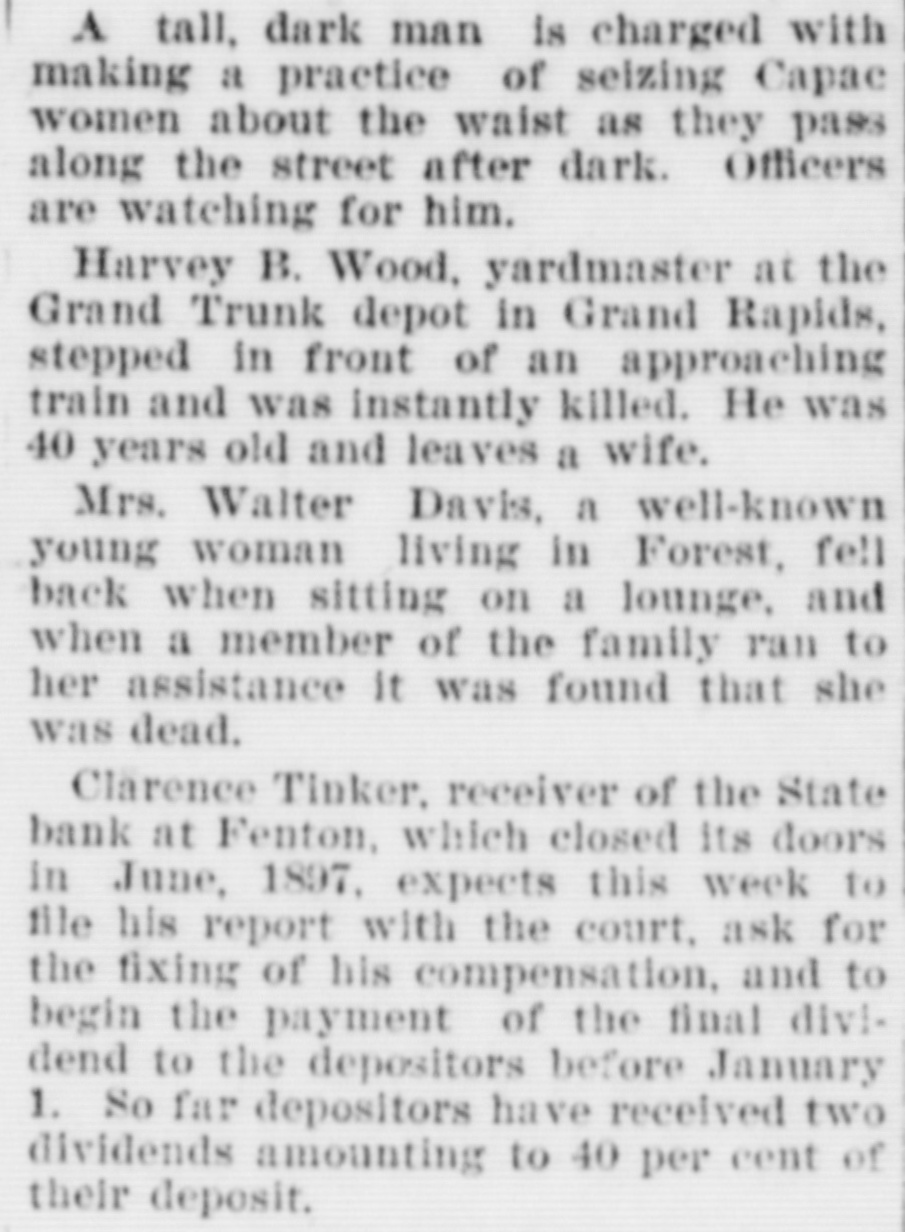
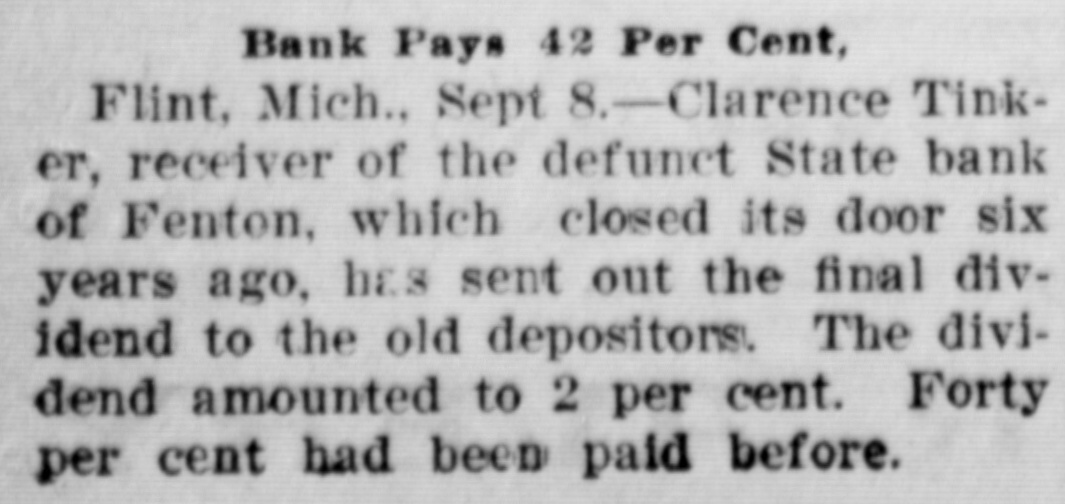
The assessed valuation of Hancock has been placed at $2,000,000. which is an increase of $335,030 over last year. A wealthy woman at the Battle Creek senitarium was arrested for stealing a $23 silk waist from a local store. A. C. Stewart. a Menominee man in the Nome district. has taken a Great Dane dog to the gold district with him to be used In hauling loads across the country. The separator in a creamery at Bailey exploded Wednesday. instantly killing Claude Doubleday, a boy employed about the place, and injuring several other persons. Shields Post, No. 68, G. A. R., of Shelby. will erect a monument in the park at that place in the near future. Over $600 has already been raised for that purpose. While Representative Shook was showing his wife a new revolver. it was accidentally discharged. the butlet entering her left cheek The wound is not serious. Edward Coer Dubois, formerly an engineer of railways in Michigan, died in Lima. Peru. Monday. He had been a resident in Peru for thirty-two years and was much respected. A Finlander walking on the North western tracks from Wakefield to Mikado was run over by a train. His legs, head and arms were cut off and the body terribly mangled. Shepherd will have an 18-year-old boy as superintendent of Its public schools next year. He is Harold Kellegg. of Corunna, who is now in the Normal school at Mt. Pleasant. Scott Burchfield was arrested at Charlotte charged with being one of the thleves who broke into the shaught erhouse of Heyman & Son. May 14. and stole about $60 worth of hides. George Norton, a boy of 16. has been arrested in Coldwater for being drunk upon the streets of that place. An of fort will be made to find out who the persons are that sold him the liquor. John F. Cronin, convict 7822 at the Jackson prison. who was sentenced in 1900 for assault to do great bodily harm less than the crime of murder. from Berrien county, died in the prison hospital. St. Joseph has experienced another dry Sunday It is reported that an attempt will be made to close all places of business next Sunday, and street cars will be stopped according to the state Sunday law. While sitting near a window during the thunderstorm. Mrs. John McCormick. living four miles from Campbell's Corners, was struck by lightning and severely if not fatally injured. Her hands were terribly burned. 1, E. Mitchell, whose family had mourned as dead for the past four years, has returned to Marinette worth a small fortune. He was injured in a railroad collision and his mind, he says, was a blank for four years. Judge Wisner has made an order fixing the compensation of Clarence Tinker, receiver of the defunet State bank of Fenton. at $6,000. The bank falled in June, 1897 A final dividend will now be declared and the bank's affairs wound up. Tommy Good. sent to Jackson in 1899, threatened to take the life of Deputy Sheriff Behrendt, but now appeals to him for aid in securing a release. His sentence expires in 1904. but as he has been anything but a model prisoner it is doubtful If he gets free. A man employed by the Lansing Gaslight company on Wednesday fair ly forced an entrance to a residence on Grand street in order to read the gas meter. Afterward he discovered that the cause of the opposition he encountered was due to the presence of a case of smallpox in the house, In Washtenaw county thirty-seven divorces were granted last year. At the beginning of the year there were sixty-eight cases pending and at the end eighty cases pending. Forty-nine new divorce bills were filed. Not a single divorce was refused. nor was there a single divorce sult withdrawn. C. P. Schuler, of Allegan, believes from a description given him that the man who committed suicide in Michigan City, Ind., by throwing himself