Article Text
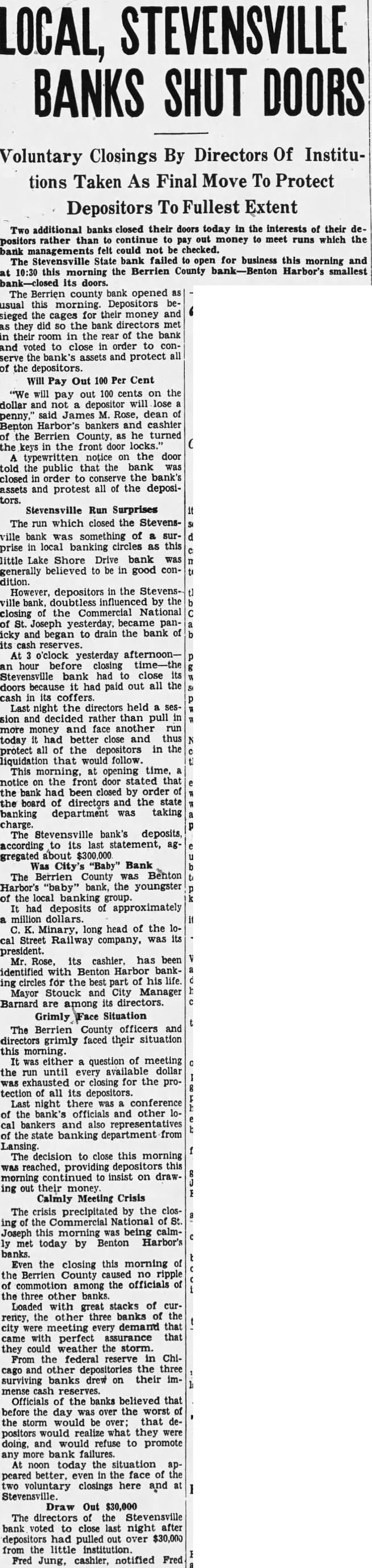
LOCAL, STEVENSVILLE BANKS SHUT DOORS Voluntary Closings By Directors Of Institutions Taken As Final Move To Protect Depositors To Fullest Extent Two additional banks closed their doors today in the interests of their depositors rather than to continue to pay out money to meet runs which the bank managements felt could not be checked. The Stevensville State bank failed to open for business this morning and at 10:30 this morning the Berrien County bank-Benton Harbor's smallest bank-closed its doors. The Berrien county bank opened as usual this morning. Depositors besieged the cages for their money and as they did so the bank directors met in their room in the rear of the bank and voted to close in order to conserve the bank's assets and protect all of the depositors. Will Pay Out 100 Per Cent "We will pay out 100 cents on the dollar and not depositor will lose penny, said James M. Rose, dean of Benton Harbor's bankers and cashier of the Berrien County, as he turned the keys in the front door locks.' typewritten notice on the door told the public that the bank was closed in order to the bank's assets and protest all of the depositors. Stevensville Run Surprises The run which closed the Stevensville bank was something of a surprise in local banking circles as this little Lake Shore Drive bank was generally believed to be in good condition. However, depositors in the Stevensville bank, doubtless influenced by the closing of the Commercial National of St. Joseph yesterday, became panicky and began to drain the bank of its cash reserves. At o'clock yesterday afternoonan hour before closing time-the Stevensville bank had to close its doors because it had paid out all the cash in its coffers. Last night the directors held a session and decided rather than pull in more money and face another run today it had better close and thus protect all of the depositors in the liquidation that would follow. This morning, at opening time, notice on the front door stated that the bank had been closed by order of the board of directors and the state banking department was taking charge. The Stevensville bank's deposits, according to its last statement, aggregated about $300,000 Was City's "Baby" Bank The Berrien County was Benton Harbor's "baby" bank, the youngster of the local banking group. had deposits of approximately million dollars. K. Minary, long head of the local Street Railway company, was its president. Mr. Rose, its cashier. has been identified with Benton Harbor banking circles for the best part of his life. Mayor Stouck and City Manager Barnard are among its directors. Grimly Face Situation The Berrien County officers and directors grimly faced their situation this morning. It was either a question of meeting the run until every available dollar was exhausted or closing for the protection of all its depositors. Last night there was conference of the bank's officials and other local bankers and also representatives of the state banking department from Lansing. The decision to close this morning was reached, providing this morning continued to insist on drawing out their money. Calmly Meeting Crisis The crisis precipitated by the closing the Commercial National of St. Joseph this morning was being calmly met today by Benton Harbor's banks. Even the closing this morning of the Berrien County caused no ripple of commotion among the officials of in the three other banks. Loaded with great stacks of currericy, the other three banks of the city were meeting every demand that came with perfect assurance that they could weather the storm. From the federal reserve in Chicago and other depositories the three surviving banks drew on their immense cash reserves. Officials of the banks believed that before the day was over the worst of the storm would be over; that depositors would realize what they were doing. and would refuse to promote any more bank failures. At noon today the situation peared better. even in the face of the two voluntary closings here and at Stevensville. Draw Out $30,000 The directors of the Stevensville bank voted to close last night after depositors had pulled out over $30,000 from the little institution. Fred Jung, cashier, notified Fred