Click image to open full size in new tab
Article Text
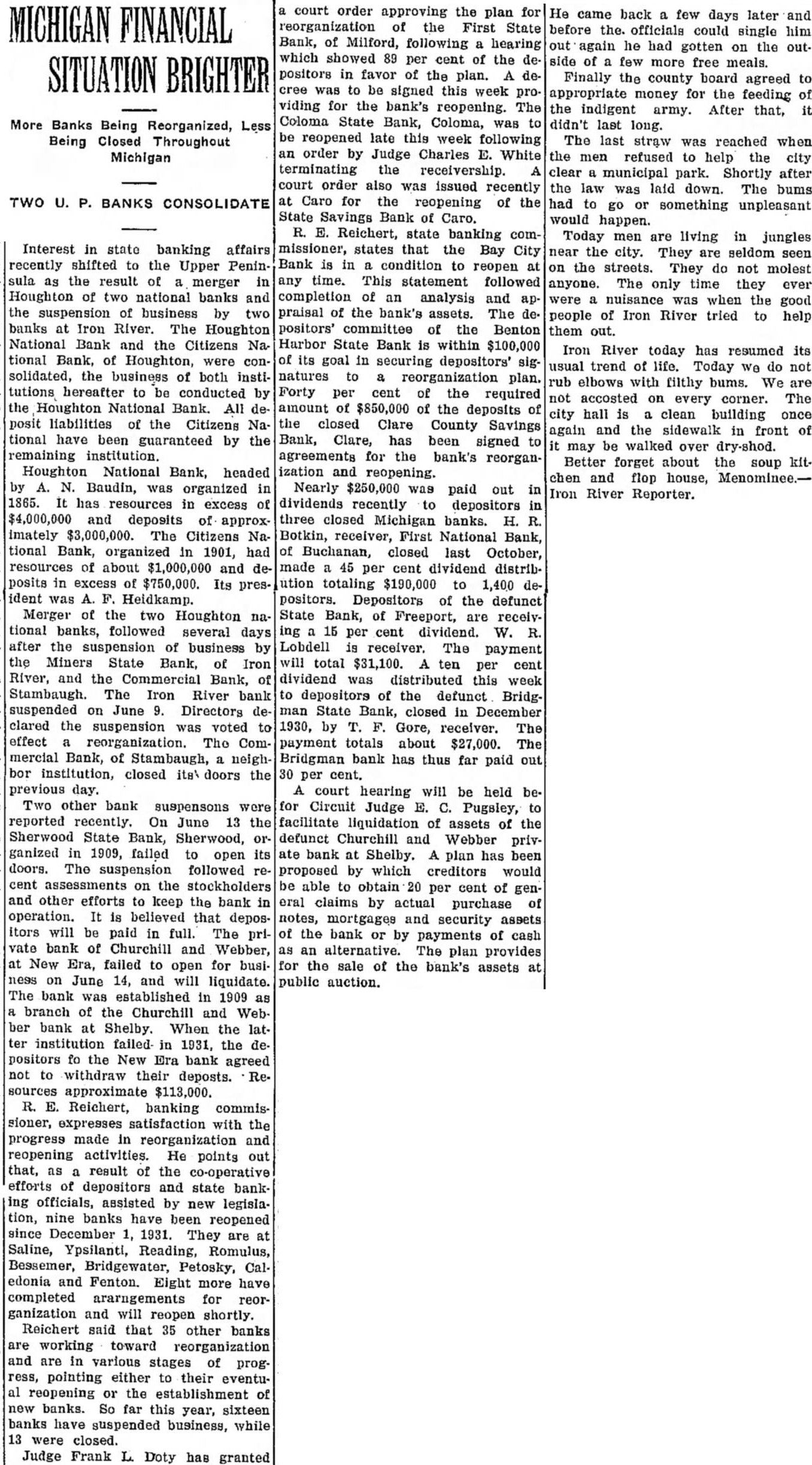
MICHIGAN FINANCIAL SITUATION BRIGHTER
More Banks Being Reorganized, Less Being Closed Throughout Michigan
TWO U. P. BANKS CONSOLIDATE
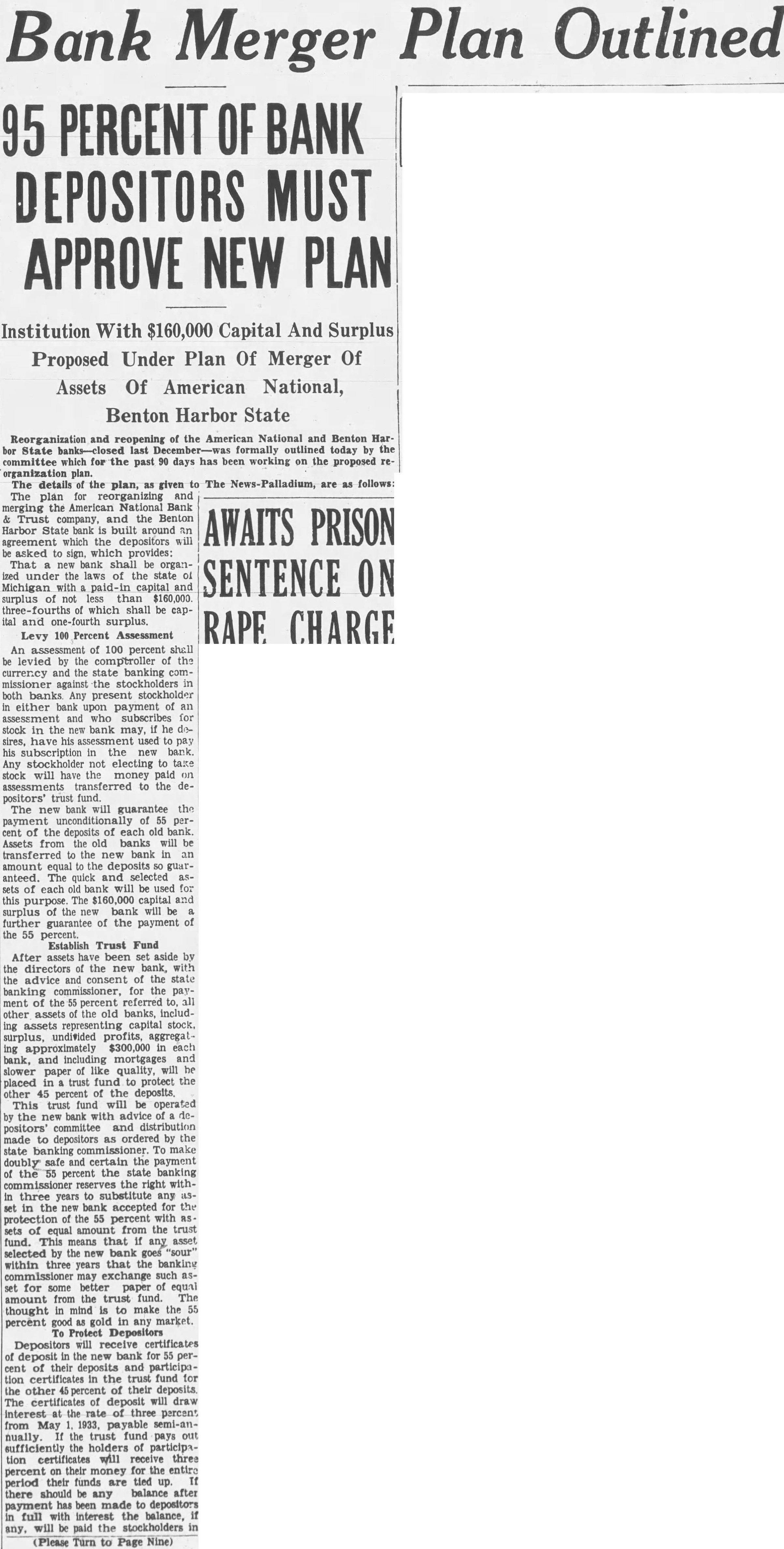
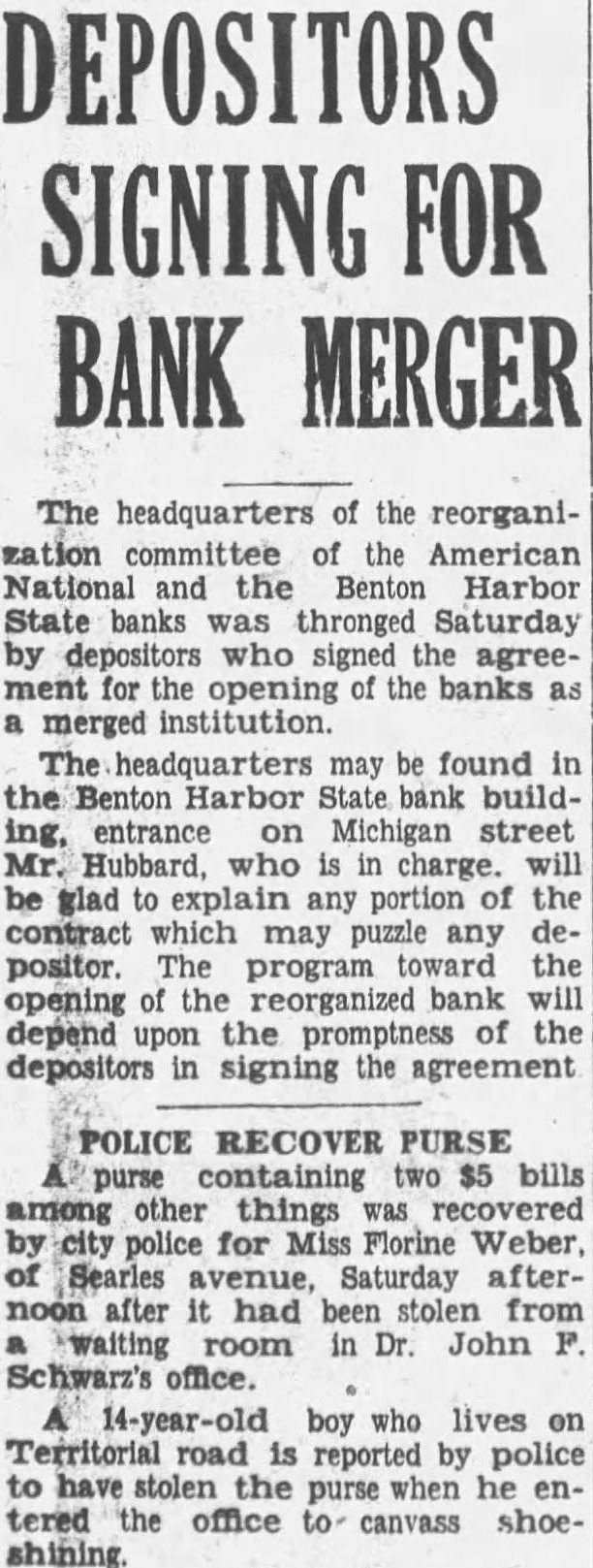
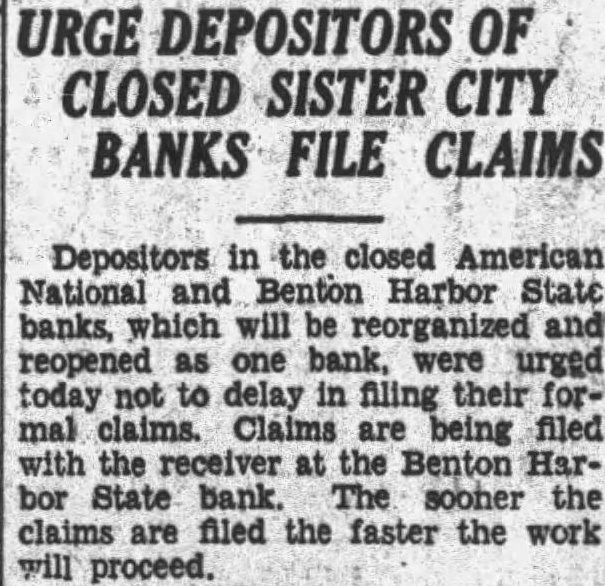
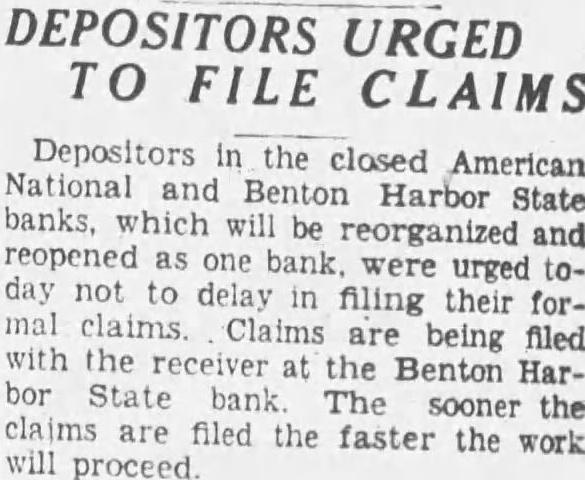
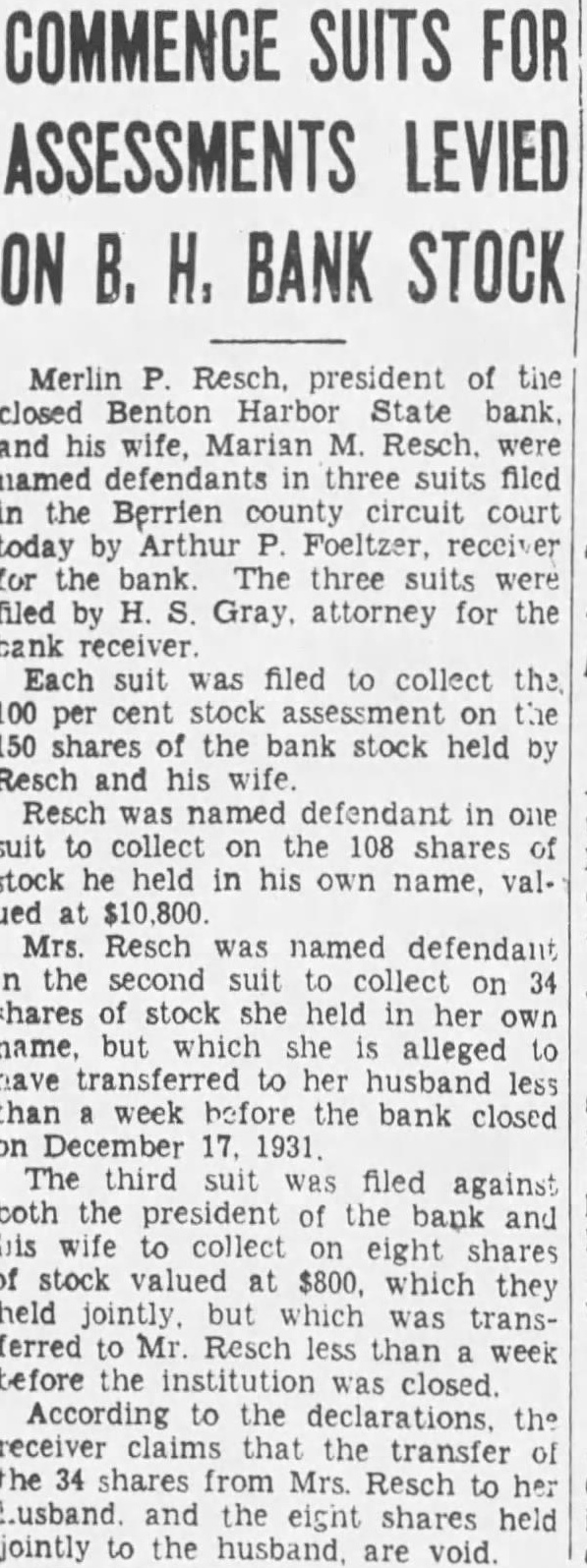
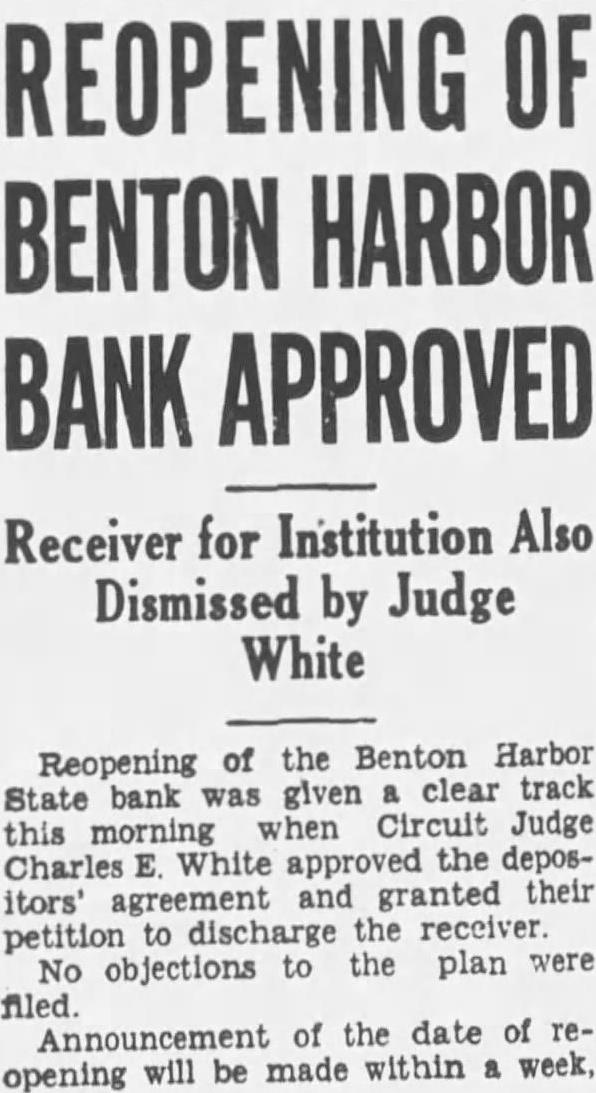
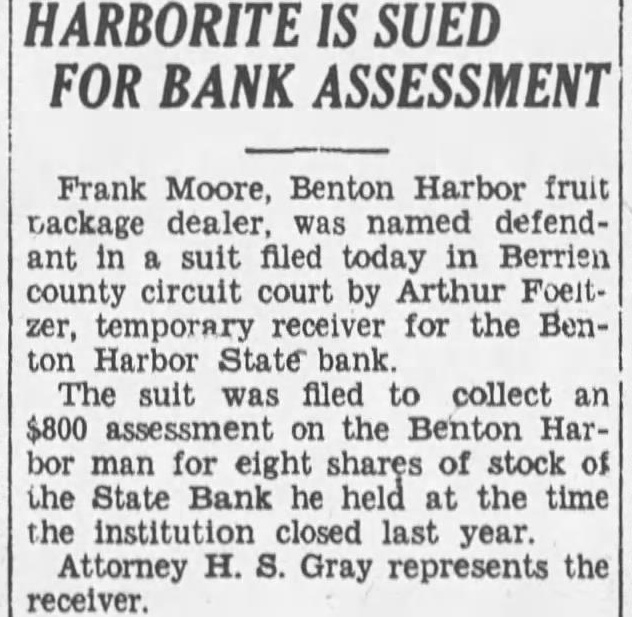
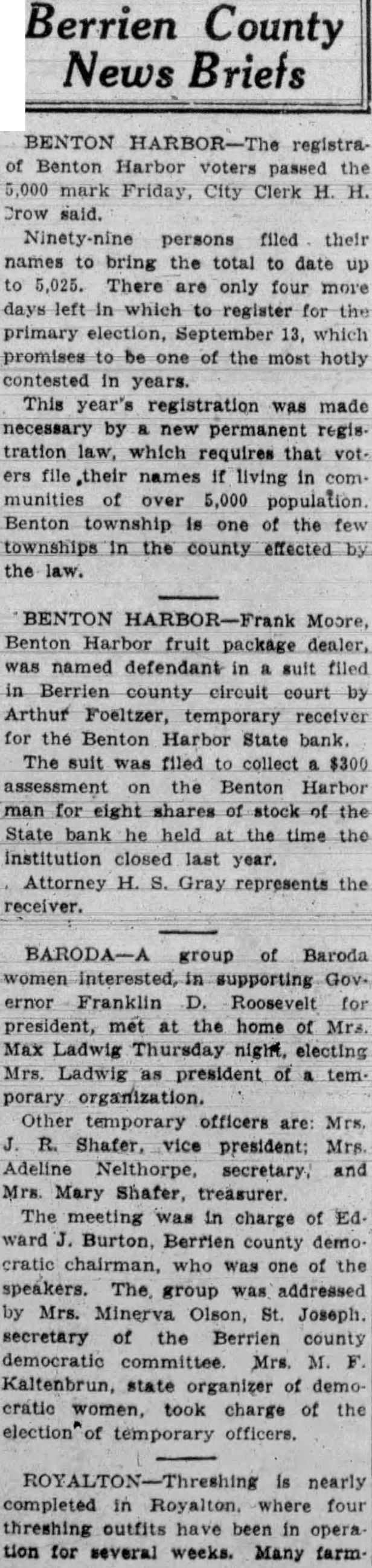
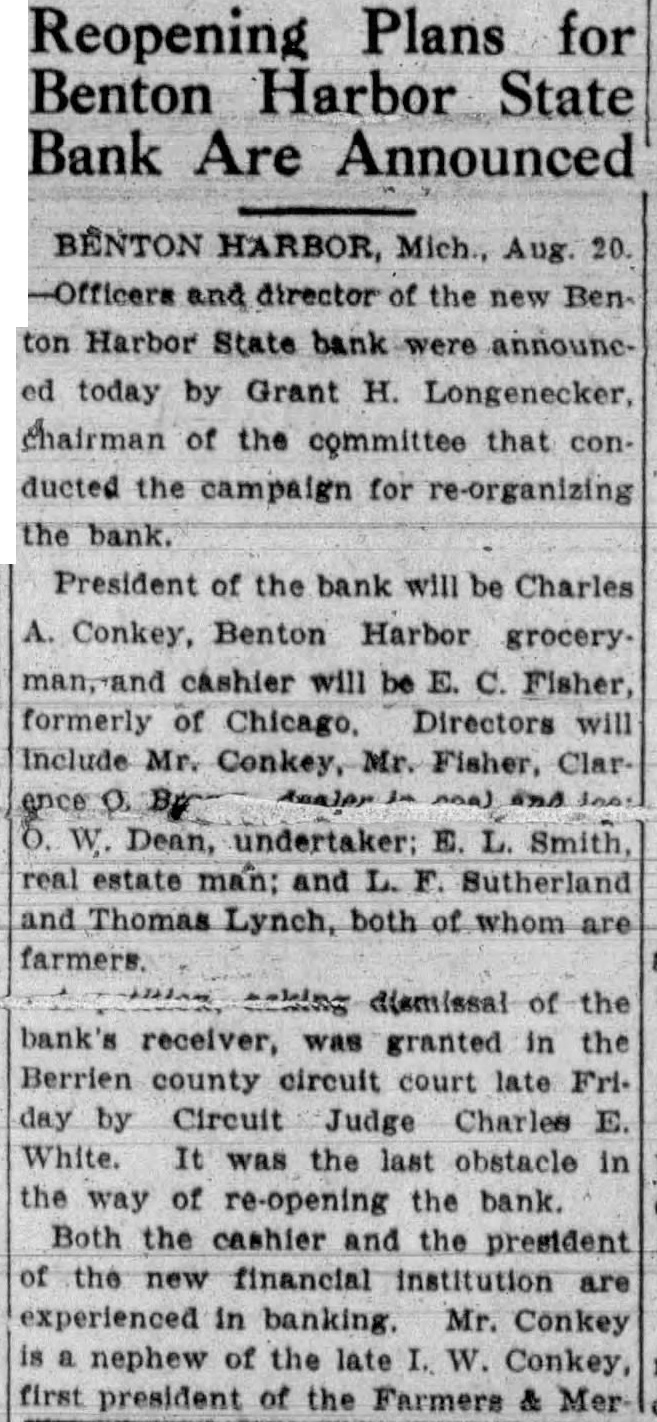
Interest in state banking affairs recently shifted to the Upper Peninsula as the result of a merger in Houghton of two national banks and the suspension of business by two banks at Iron River. The Houghton National Bank and the Citizens Na. tional Bank, of Houghton, were consolidated, the business of both institutions hereafter to be conducted by the Houghton National Bank. All deposit liabilities of the Citizens National have been guaranteed by the remaining institution. Houghton National Bank, headed by A. N. Baudin, was organized in 1865. It has resources in excess of $4,000,000 and deposits of approximately $3,000,000. The Citizens National Bank, organized in 1901, had resources of about $1,000,000 and deposits in excess of $750,000. Its president was A. F. Heidkamp. Merger of the two Houghton national banks, followed several days after the suspension of business by the Miners State Bank, of Iron River, and the Commercial Bank, of Stambaugh. The Iron River bank suspended on June 9. Directors declared the suspension was voted to effect a reorganization. The Commercial Bank, of Stambaugh, a neighbor institution, closed its\ doors the previous day. Two other bank suspensons were reported recently. On June 13 the Sherwood State Bank, Sherwood, organized in 1909, failed to open its doors. The suspension followed recent assessments on the stockholders and other efforts to keep the bank in operation. It is believed that depositors will be paid in full. The private bank of Churchill and Webber, at New Era, failed to open for business on June 14, and will liquidate. The bank was established in 1909 as a branch of the Churchill and Webber bank at Shelby. When the latter institution failed in 1931, the depositors fo the New Era bank agreed not to withdraw their deposts. Resources approximate $113,000. R. E. Reichert, banking commissioner, expresses satisfaction with the progress made in reorganization and reopening activities. He points out that, as a result of the co-operative efforts of depositors and state banking officials, assisted by new legislation, nine banks have been reopened since December 1, 1931. They are at Saline, Ypsilanti, Reading, Romulus, Bessemer, Bridgewater, Petosky, Caledonia and Fenton. Eight more have completed ararngements for reorganization and will reopen shortly. Reichert said that 35 other banks are working toward reorganization and are in various stages of progress, pointing either to their eventual reopening or the establishment of new banks. So far this year, sixteen banks have suspended business, while 13 were closed. Judge Frank L Doty has granted a court order approving the plan for reorganization of the First State Bank, of Milford, following a hearing which showed 89 per cent of the depositors in favor of the plan. A decree was to be signed this week providing for the bank's reopening. The Coloma State Bank, Coloma, was to be reopened late this week following an order by Judge Charles E. White terminating the receivership. A court order also was issued recently at Caro for the reopening of the State Savings Bank of Caro. R. E. Reichert, state banking commissioner, states that the Bay City Bank is in a condition to reopen at any time. This statement followed completion of an analysis and appraisal of the bank's assets. The depositors' committee of the Benton Harbor State Bank is within $100,000 of its goal in securing depositors' signatures to a reorganization plan. Forty per cent of the required amount of $850,000 of the deposits of the closed Clare County Savings Bank, Clare, has been signed to agreements for the bank's reorganization and reopening. Nearly $250,000 was paid out in dividends recently to depositors in three closed Michigan banks. H. R. Botkin, receiver, First National Bank, of Buchanan, closed last October, made a 45 per cent dividend distribution totaling $190,000 to 1,400 depositors. Depositors of the defunct State Bank, of Freeport, are receiving a 15 per cent dividend. W. R. Lobdell is receiver. The payment will total $31,100. A ten per cent dividend was distributed this week to depositors of the defunct Bridgman State Bank, closed in December 1930, by T. F. Gore, receiver. The payment totals about $27,000. The Bridgman bank has thus far paid out 30 per cent. A court hearing will be held befor Circuit Judge E. C. Pugsley, to facilitate liquidation of assets of the defunct Churchill and Webber private bank at Shelby. A plan has been proposed by which creditors would be able to obtain 20 per cent of general claims by actual purchase of notes, mortgages and security assets of the bank or by payments of cash as an alternative. The plan provides for the sale of the bank's assets at public auction.
He came back a few days later and before the. officials could single him out again he had gotten on the outside of a few more free meals. Finally the county board agreed to appropriate money for the feeding of the indigent army. After that, it didn't last long. The last straw was reached when the men refused to help the city clear a municipal park. Shortly after the law was laid down. The bums had to go or something unpleasant would happen. Today men are living in jungles near the city. They are seldom seen on the streets. They do not molest anyone. The only time they ever were a nuisance was when the good people of Iron River tried to help them out.
Iron River today has resumed its usual trend of life. Today We do not rub elbows with filthy bums. We are not accosted on every corner. The city hall is a clean building once again and the sidewalk in front of it may be walked over dry-shod. Better forget about the soup kitchen and flop house, Menominee.Iron River Reporter.