Click image to open full size in new tab
Article Text
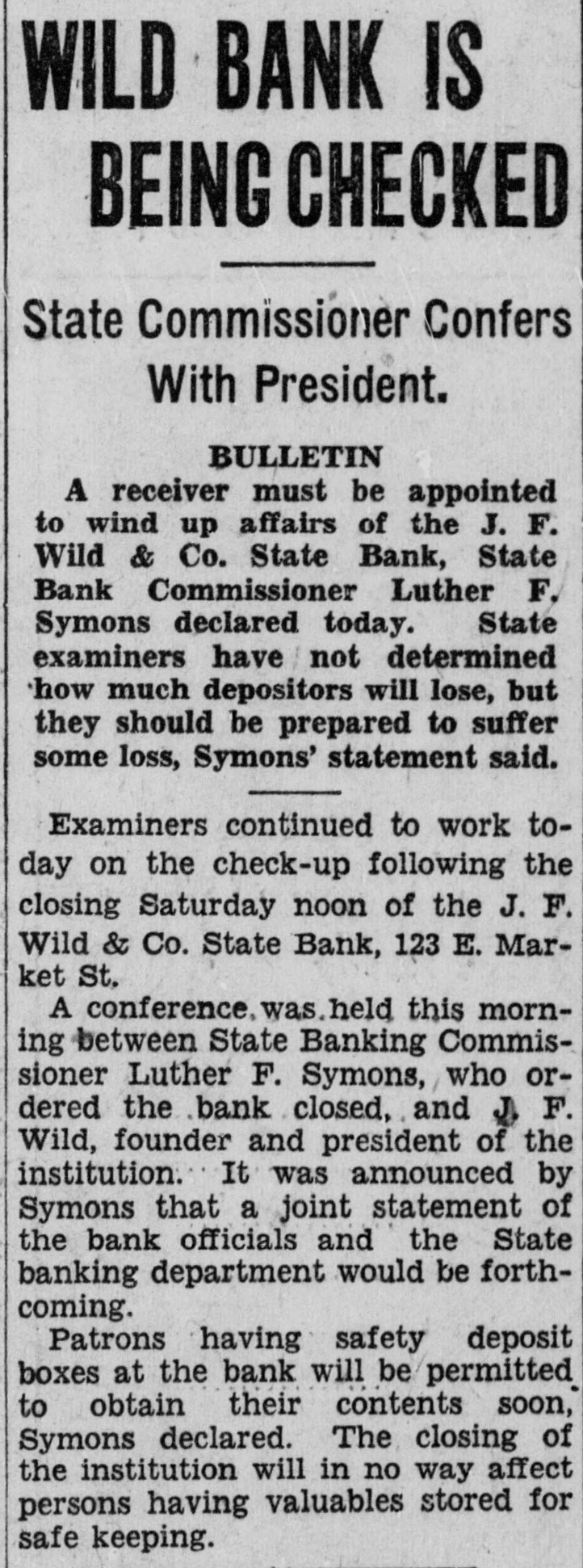
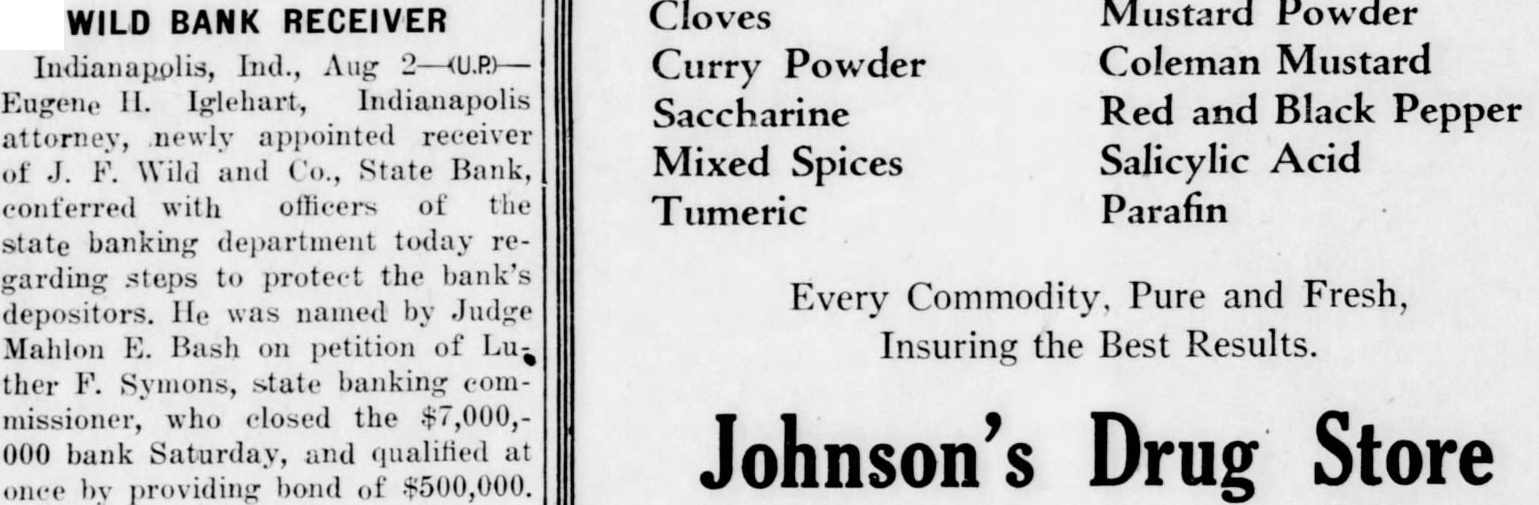
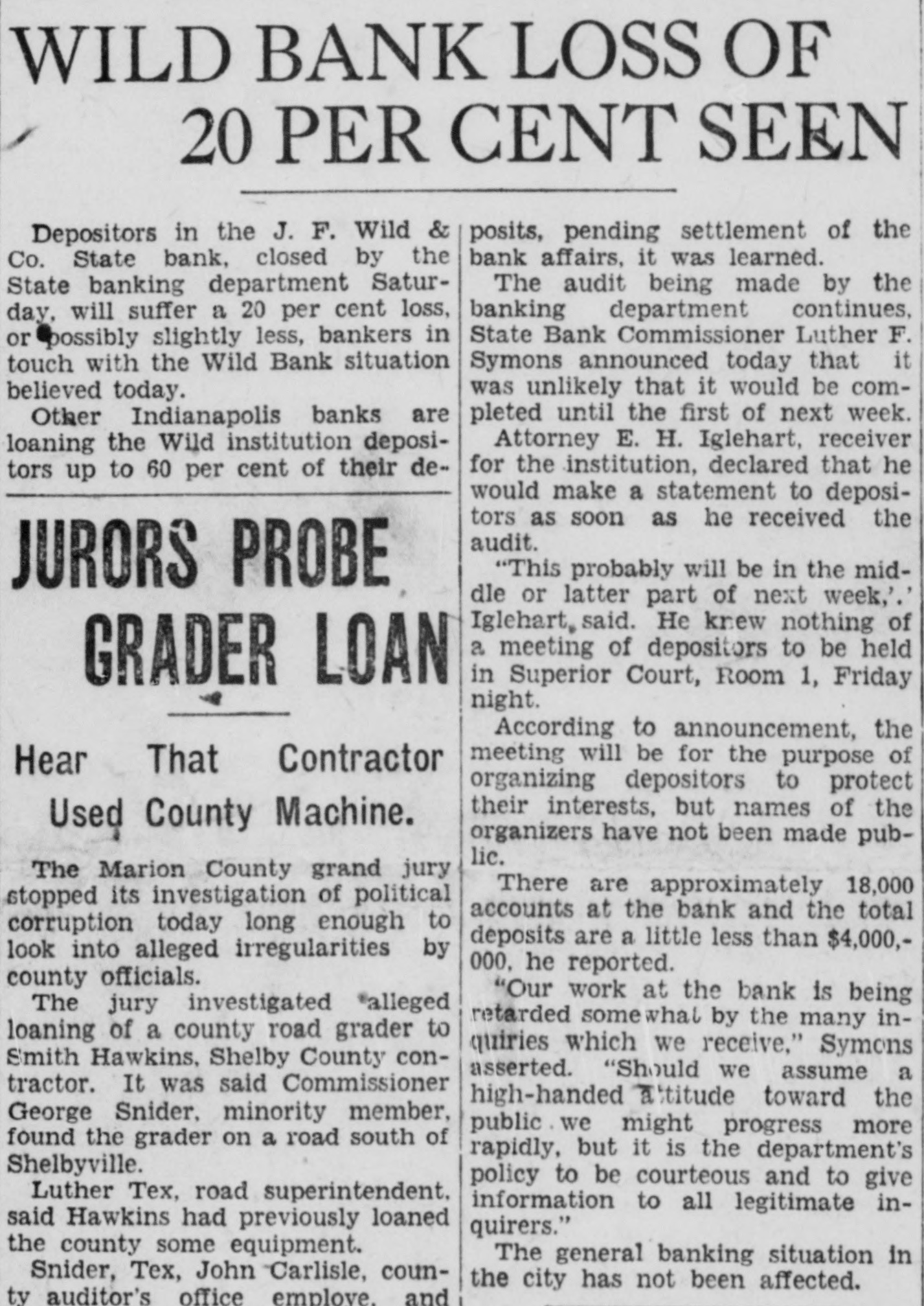
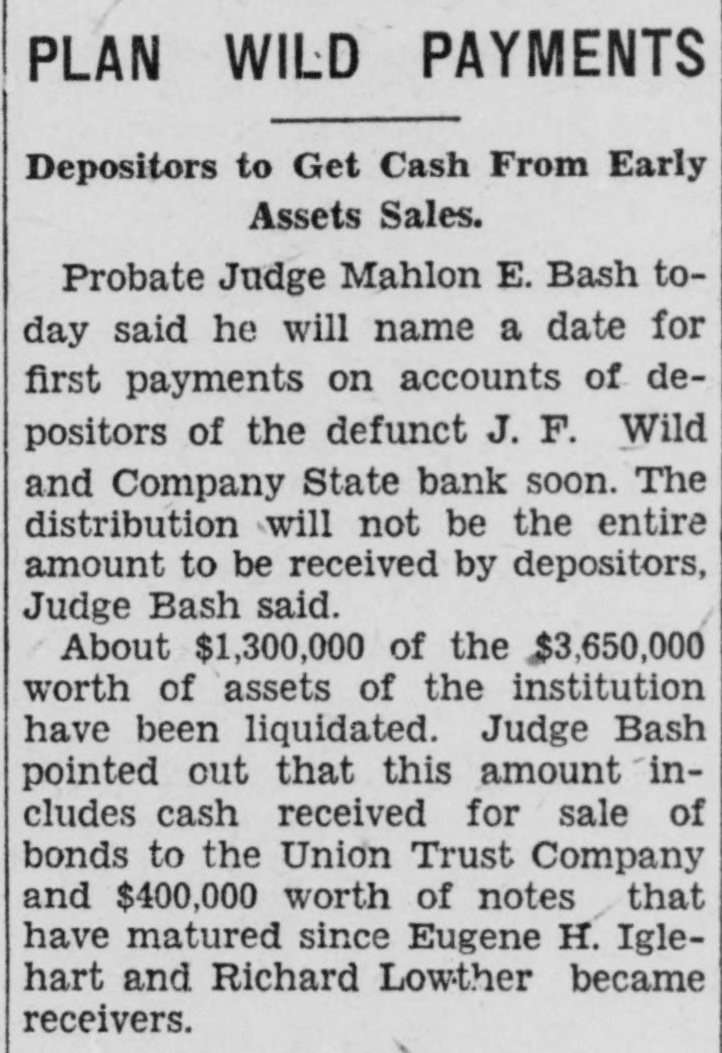
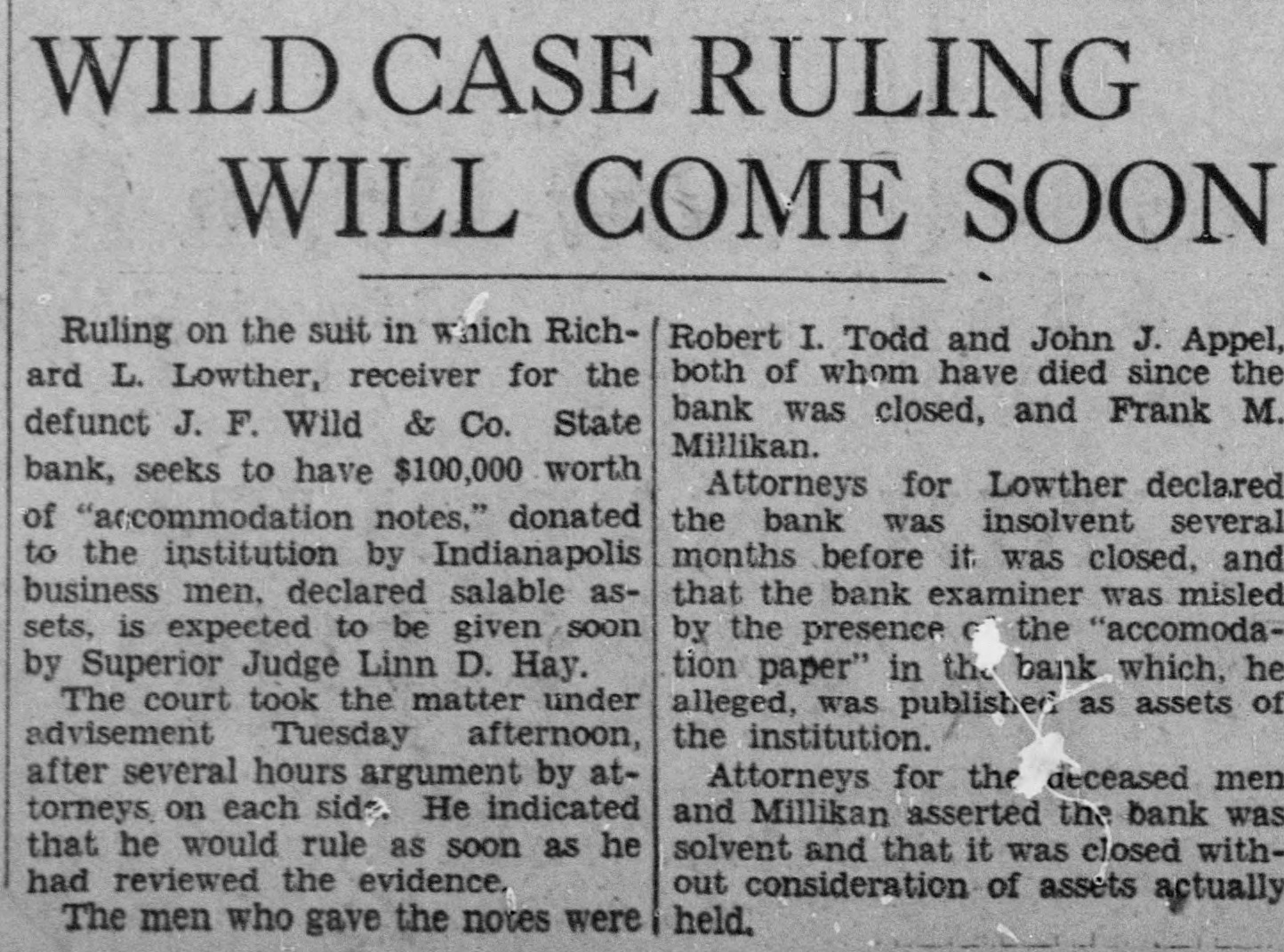
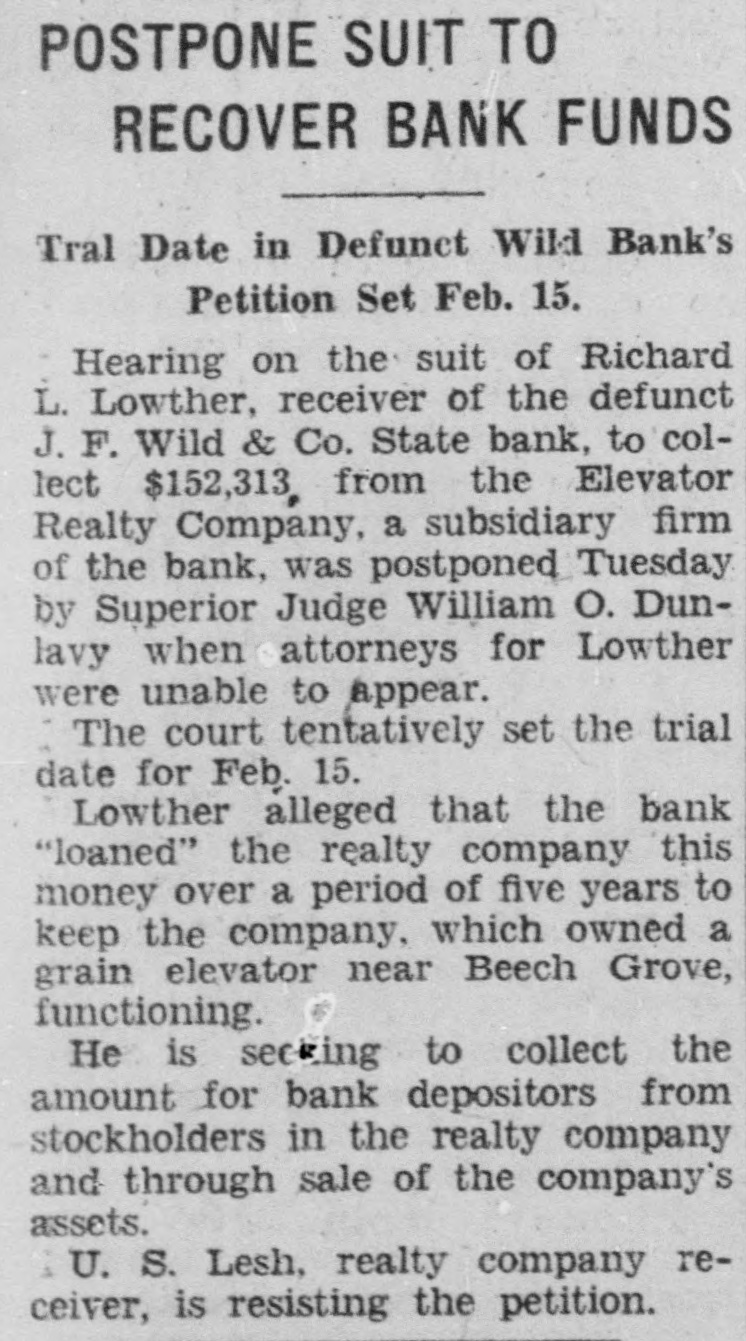
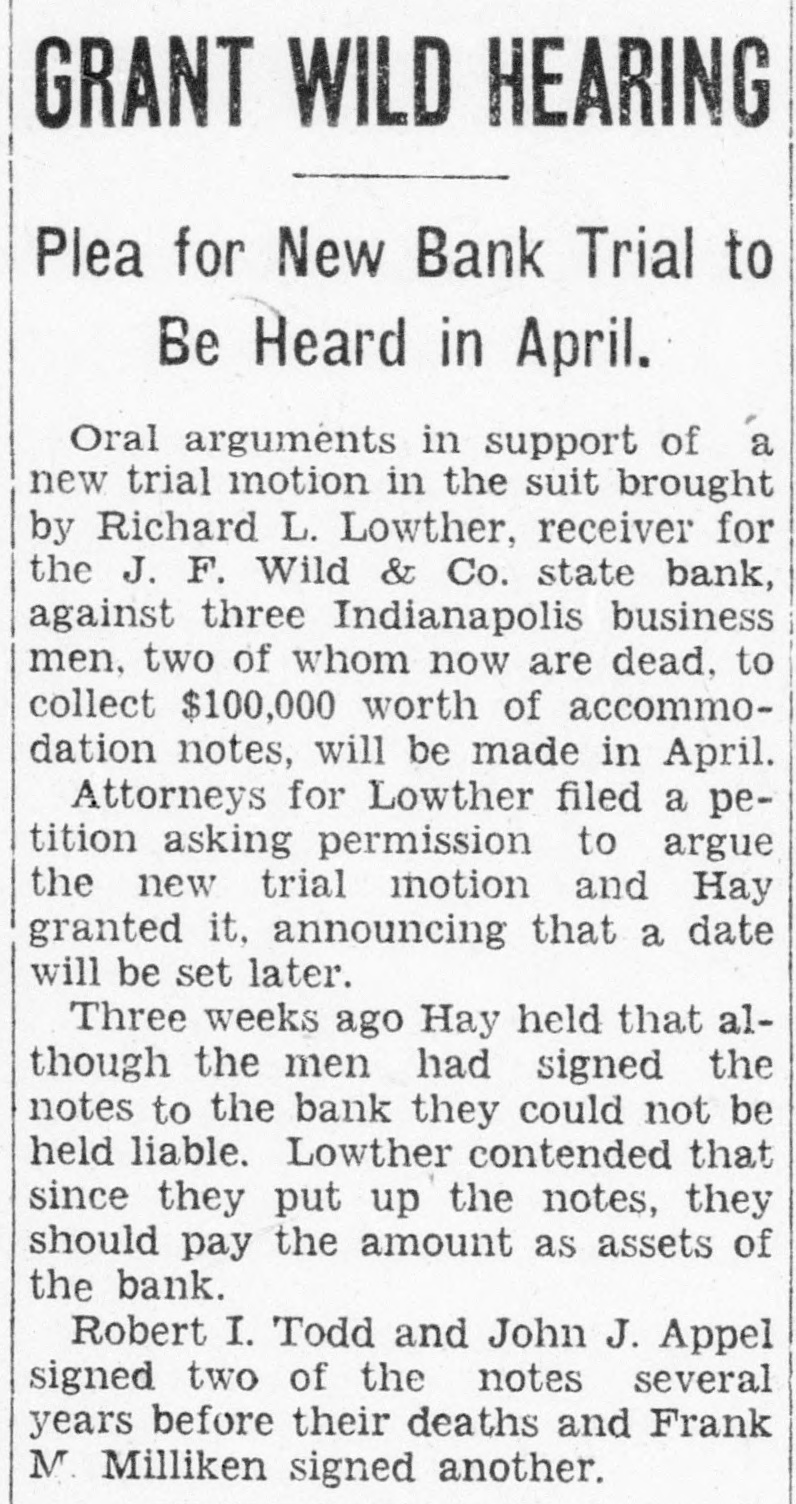
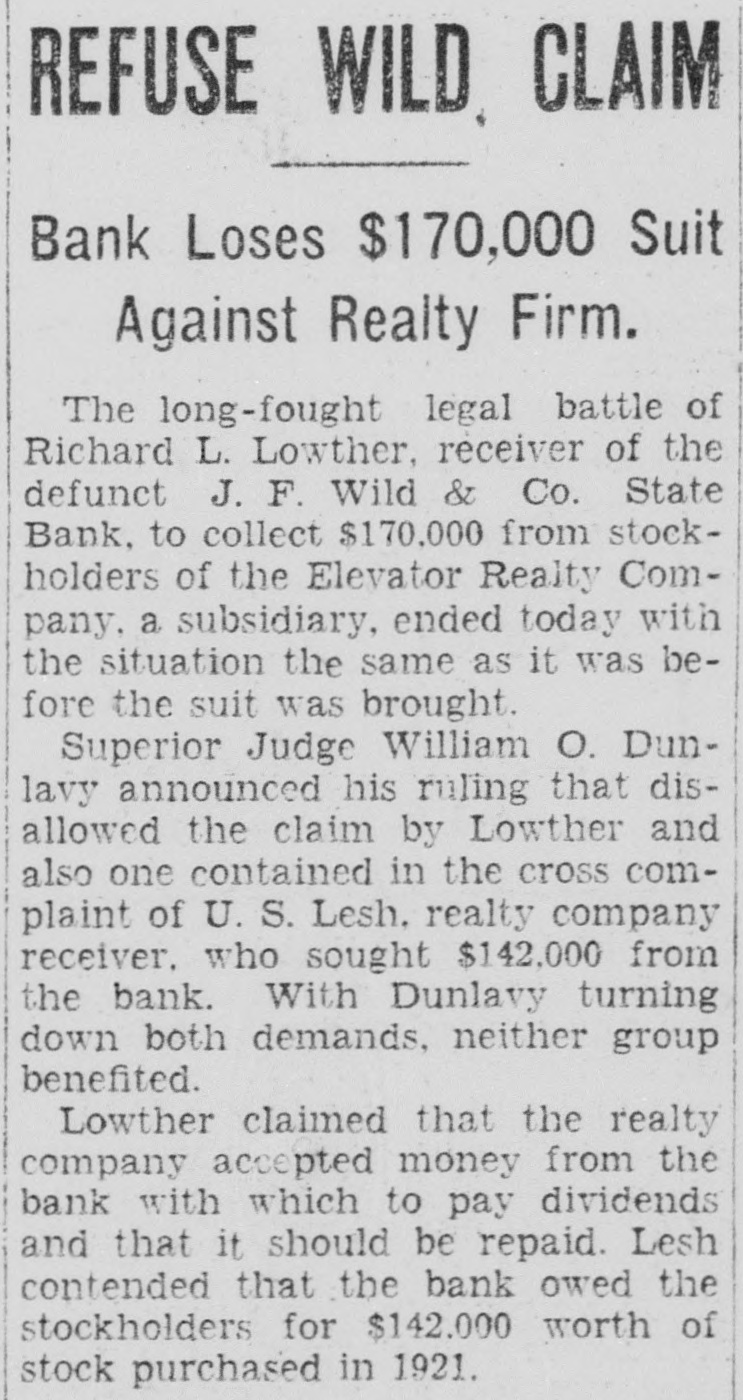
FOUR OFFICERS OF WILD BANK ARE INDICTED President, Directors and Cashier Charged With Embezzlement. WAS CLOSED IN JULY Charge Deposits Received Knowing Institution Was Insolvent. Four officials of the defunct J. F. 1 Wild and Company State Bank today were indicted on bank embezzlement charges by the Marion County grand jury. Those indicted: John F. Wild, Sr., president, College Ave. Rd. Otto P. Kern, cashier, 5310 Broadway. John Craig Fisher, vice president and director, 2723 N. Pennsylvania St. William F. McNairy, Sr., vice president and director, 3220 Broadway. Bonds of each were set at $1,000. The indictment is based on allegations that the indicted officials knew of the insolvency of the bank, but accepted deposits on the day it was closed. Depositors ost Money The fourteen counts are based on deposits accepted from individuals and a music company. They are: Paul Bisesi, 211 E. Maryland St., $4,041; Walter C. Stedfeld and Georgia Stedfeld. 4901 N. Pennsylvania St., $10,681.90; Stephen M. Davis, 4189 Ruckle St., $252.93; Theodore Losche, 33 S. Delaware St., $518.80; the Wilking Music Company and Frank C. Wilking, president, 20 E. Ohio St., $1,846.93, and Edward Ludwig, 17 E. Le Grande Ave., $70. It is charged that all but $6,000 of these deposits was lost to the depositors. The depositors named in the counts and Bank Examiners Luther Symons and Thomas D. Barr were named as witnesses on the indictment. Bank embezzlement carries a sentence. on conviction, of two to fourteen years in State prison. Wild Makes Statement Wild. commenting upon the indictment. said: "The J. F. Wild and Company State Bank was solvent when it was closed and I hold a certified public accountant's report to that effect." McNairy said his relations with the bank had been in the bond department and that he was deluctant to discuss the predictment until fully informed of the charge. "They've got to show me first," he said, "that the bank was insolvent." Kern is ill at his home and unable to make a statement, Mrs. Kern said. The Wild bank was closed by State examiners July 30, 1927. It was carried into receivership through Probate Judge Mahlon E. Bash. Eugene Iglehart and Richard L. Lowther, attorneys, are receivers for the defunct institution. Subsidiary Benefits Several months ago it was predicted that the bank would pay 93 cents on the dollar to depositors. Since then, one dividend of 40 per cent has been declared and paid. The receivers have made an investigation of the company's property in Florida and are attempting to sell this and realize as much money as possible on these investments, made during the boom period of the southern State. Suits are pending in Superior Court Two on notes amounting to $100,000 that were advanced to the bank. Efforts were made by the receivers to have these classes as assets of the institution, but rulings were given against this procedure in the county courts. In December it was revealed in a court case before Superior Judge William O. Dunlavy that the Elevator Realty Company, subsidiary firm of the bank, operating a grain elevator in Beech Grove, had benefited from several thousad dollars transferred to its books. Robbery Blamed The last statement of the bank showed total resources, $6,537,535.80; savings deposits, $1,276,721.49; bonds on hand, $7,107.70; special deposits, $7,559.61, and demand deposits of $2,577,997.73. The paid-in capital. stock was $100,000, with a surplus of $25,000, and $145,359.93 in undivided profits. The bank was holding $1,800,000 in first mortgage certificates. At the time the doors were closed bank officials stated that the bank's assets would probably be liquidated without loss to depositors, and they also declared that they attributed the condition of the bank partially to the robbery, Nov. 19, 1926, in which $271,500 worth of bonds were lost. Only a small part of the bonds were recovered.