Click image to open full size in new tab
Article Text
DAN STEPHENS OF FREMONT WRITES ABOUT TEE FUND
Commission Proceeding Un. Says New Plan Which Will LiquidFailed Banks in Economic Fund Not Busted.
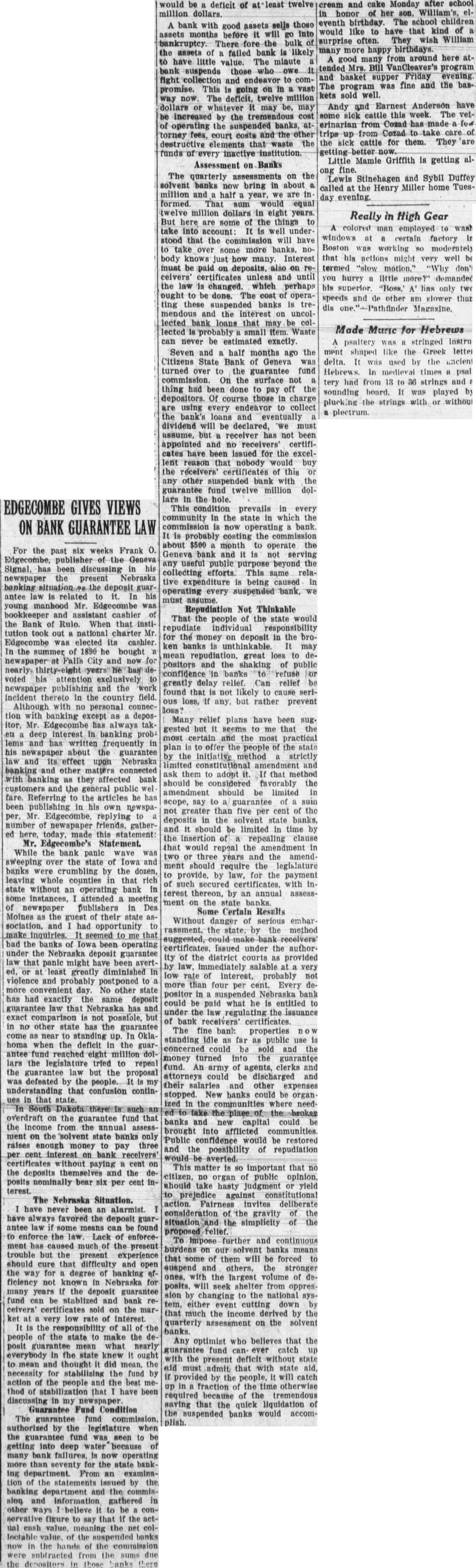
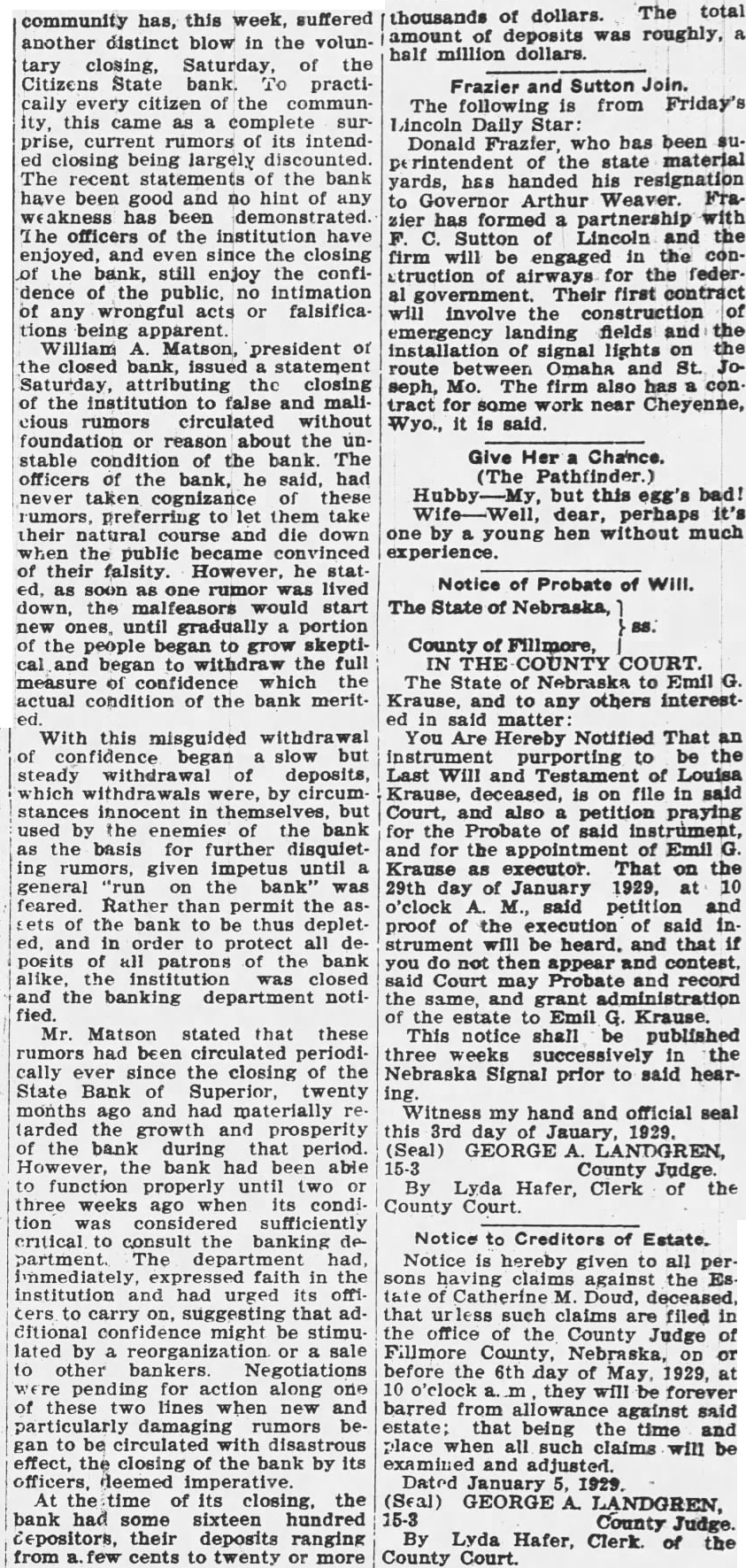
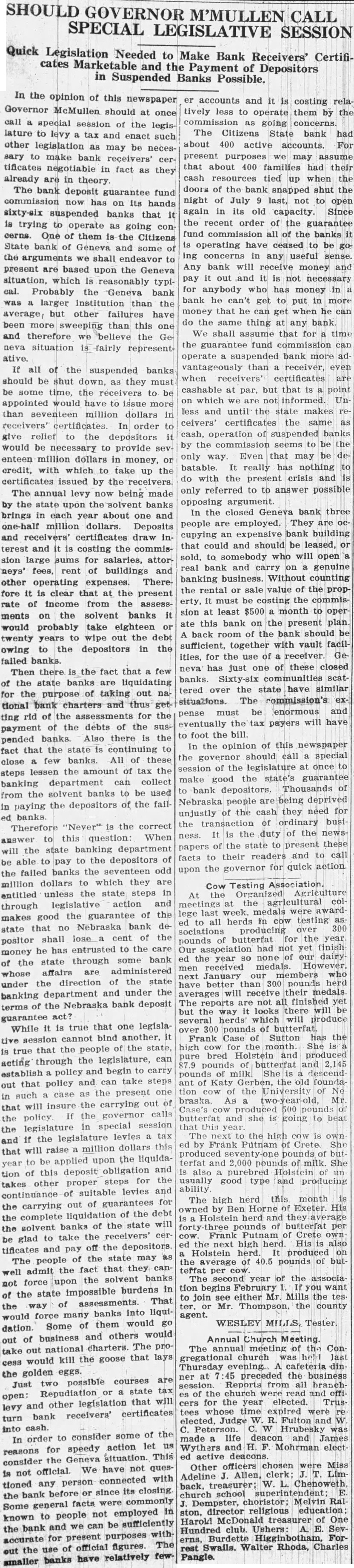
(Geneva Signal) (This letter published in the Fremont Tribune January 17, 1928, Hon. Dan the Fremont State bank. Mr. Stephens former Nebraska He is considered of gressman. the leading bankers of the state.) We are receipt of the following letter from friend in North Bend: "North Bend, Neb., Jan 14, 1928. Fremont State Bank. Fremont, Nebr. Gentlemen: Knowing that your bank is one of the strongest banks in Nebraska and knowing that you have the facts about the bank guaranty law thoroughly in mind am writing you for information. are aware of the fact that the First State bank here was taken the few days ago and is now being operated kinds rumors are afloat here about the length of time is going take for the to pay the Some years and some depositors. say say never. Some say the assests are worthless and others say the guarantee fund busted; and still others say isn't. Won't tell me what you the status our case and what you think of our future prospects in gard to this bad mess are now Your Friend.' Our reply to our North Bend respondent follows: DEAR FRIEND: In query about response your the status the First State bank North Bend and its depositors, glad to be able to give you what are appears to be reasonably exact ansto your questions. Under the new plan of the guarantee fund commission, according to book of instructions which sent out to its agents, proposes to proceed in the of banks in about the followoperating manner. First, fast as it can practically as so the commission proposes close the banks it is operating sell the liquid assests at once distribute the proceeds the sale the depositors. This will enable the depositors receive portion their deposits at once. The amount they will receive will be dependent wholly upon the amount of liquid assets the bank owns. has fifty cent its notes in good form and they are made people who are able pay them, ought to be able to sell these notes cash then, of course, would be available for the depositors once. The remaining assests of the bank, understand it, then to be sold rapidly as possible for what they will bring and the proceeds, rapidly they are will be distributed to the depositors. The perience of the guarantee fund commission the past in its banks that has handled, has to return to the depositors of the assets of the banks per cent of the total. markable showing for the Commission and, this average holds good the case of the First State North Bend, the commission will able to pay the depositors of that bank percent of the total deposits out sale of the bank's assets. The remaining per cent due the depositors will then paid out of the guarantee fund rapidly as this fund is accumulated. Second, after the liquid assets are sold dividend immediately paid to the depositors, the commission then proceed to take up the remaining assets, which classified slow, doubtful and worthless. The process disposing of these assets will be slower the commission makes every effort to collect the last dollar possible out them for the depositors. may take one year, two years or three as no doubt much litigation be necessary. Third, after all the assets of the bank been the ance remaining unpaid to the depositors' guarantee fund, which the state collects through assessments made upon the going banks of the state, brief outline just about the steps, as understand the will take the with depositors in the case of North Bend Bank bank they take has already closed out few banks along these lines of procedure and this harmony the recent publication sued by the guarantee fund commission its agents. Heretofore the commission has proceeded an entirely differcnt method, which has been pensive to the fund. practice pay the depositors full in spot cash soon as their claims were approved. soon the depositors their money they satisfied. the bank been mismanaged, exploited and robbed some of its officers, no jury the neighborhood could be found that would convict the guilty party. one case the banker wrecked bank and ran away. soon the million had been depositors by the guarantee commission the banker returned and had great reception from the people, accompanied and then followed years of litigation in which the guarantee fund tried collect the notes the people owed the bank. They another; lied about their their names had been forged; and made every sort of plea that could made to escape payments and the juries always in sympathy with them, and often so were the courts, and rendered judgments against the guarantee fund commission practically every opportunity. This sult of sort of procedure convinced the guarantee fund commission that other steps were necessary sorts of impositions and fraud. Now the depositors will no longer be interested in having note owners escape the payment their notes bank that is being liquidated. Every depositor knows that he doesn't get his money promptly because the people who notes the bank, do not then and they are not going very good about They are going encourage the payment these notes. In short, the present policy soon as the people will guarantee the commission their hearty support in working the liquidation in as economic manner possible. Now to your "prophets of say the guarantee fund ed. They are mostly made up of very small classes of men. First, there are few state bankhere and there who have good banks and who think they are greatimposed upon by being to the pay antee fund. This natural feeling they are in no responsible for the banks that They are in no way responsible for the excessive number of banks that have been chartered, yet the state has sumed compel them an assessment six-tenths of on their deposits, the proceeds of which assessment are be used the losses failed banks. second class of critics are tional bankers themselves, who feel that state bankers have great advantage over them through the eration the guarantee deposits law. They, course, naturally the law and prophesy fall because of selfish interest. These crities are foolenough to think that the failure the law would benefit them, which, of course, great delusion. Most criticisms the guaranty law originate with these two classes. Now what the truth about the matter. are that the guarantee fund has paid to its depositors in failed banks this state its organization approximately This sum has been paid from sources, viz., the assets of the banks that have been liquidated, from the antee fund. Had not been the guarantee fund commission least cent of this of would have been probably great deal more. The guarantee fund, so-called, merely insurance company wherethe state banks of Nebraska are the members must through pay assessment each other's losses the maximum of one per cent year. Under the state collect from the going more than sixtenths one cent their per posits in any single year. This provision placed in the law for the purpose preventing the assessments the banks being tory. Any good bank, making profit, can pay this assessment withinjury itself and can do the great benefit of the state. This does not any way consider the fairness of the assessment the banks. The people themselves should for portion of this insurance that's another question! Under the law, guaranty an sessment six-tenths one per which been ing for many years, will raise each year, together with the salvage from the failed banks, two million dollars. This two million dollars used by the guarantee fund pay the depositors of banks that they No one but an ignorant person, who does the facts, will spread the false statement that the antee fund There way the guarantee fund Each year two million dollars approximately which losses and pay run on until the is repealed or amended and that cannot take place morally until its debts are paid. And concern that has million dollars "busted." true that there may be more losses some years than the Fund will but some time will eatch pay the of with all paid in full. The positor should be thankful that he get his money even though he may have to wait time The worst enemy the people have case of this kind themselves. Hundreds them stand around street corners peddling gossip that nothing short of criminal libel, juring their own institutions and making the situation more difficult their doubtings misgivings. criminal peddle lie about the solvency of bank and those, do can prosecuted for sometimes think the law should vigorously enforced for the protection of the people. There hundreds cases where the damage has been done by idle rumors and sooner later, they are reflected in great lossto the very people who peddle them. No should peddle ors when doesn't know about their truthfulness. People should understand that everything being done to protect their interests that can be and it does no good to get excited and run from one to another with pessimistic storWe are very glad indeed to be able to answer your letter in way that ought convey to you confidence the situation. There are plenty banks in Dodge county that are not going to be blown over by passing breeze. matter great pride to us to be able to say publicevery opportunity that the Fremont State strong and solvent that can pay its demand depositors in spot cash fast they can line in front our windows and not dollar with which have always been able do and we expect hold as nearly to that position possible as long as conduct bank. We are taking the liberty of publishing your letter and our reply for the benefit of the people are terested this subject. Yours very truly, FREMONT BANK, By Dan Stephens, President. EDITOR'S writing and republishing Editor Edgecombe, of the Geneva Signal, has started that appears to be just what needed relieve the banking in Nebraska. The people Friend been pinched by bank failure, and the financial show our banks in very healthy condition. But must realize that the was passed cause of public demand. We, the people, forced this law on the state banks the state and they have paid their assessments, supporting the "peoples" measure, and has for several years stabilized finances the state. But the system used for many months has drawn on the fund until exhausted and there provision made for additional ments, and the department has sorted to the certificates raise money liquidate failed banks. The bankers not want to purchase they don't know when be paid. But, the credit of the state back the there no question but what they would sell readirate interest. this ready the money banking deportment could pay off the depositors and close up the failed banks relieving bad situations in many towns. It seems though the time has arrived for the people awaken the situation and assist the bankers, and the state department, get the constitutional provisions that will legalize the certificates, and back them with the state's credit. Mr. Edgecomb published the following editorial the concerning Stephens article. on the Guarantee On the first page of this issue will found letter written by Hon. Dan Stephens of Fremont and published by him the Fremont Tribune, January Mr. Stephens widely known over the state and held high regard citizen, former educator, former gressman very successful banker and of the ablest supporters of the bank deposit guarantee theory as represented the Nebraska law. The people of the state are entitled to the personal views of able exponent of the bank deposit guarantee theory. We wish to subsome comments upon the letter. Late advises indicate that the present liability of the bank deposit guarantee fund about nineteen million dollars. We understand that Stephens correct in saying that the state department is collecting about two million dollars year from the solvent banks under the sixtenths of one per cent provided by law coupled with money being on the assets failed banks. If interest were paid receivers' certificates other debts and no expense were incurred for the salaries of receivers and other operating expenses and for attorneys' fees would nine and half to liquidate years the nineteen million dollars for which the guarantee fund is now understood be liable. We think when Mr. Stephens says may take one, two or three years for the collections from the assets of failed banks and the assessments the solvent banks liquidate the present liabilities of the guarantee fund he much When one takes his adding substracting machine in hand figure on this matter he must certain facts that are likely to further article The Signal estimated that it costing the fund commission about $500 month operate the suspended Citizens State bank of Geneva. There are sixtysix of these suspended banks time, unless another or two has suspended very but course some them are much smalland their continued operation for collection will cost relativepurposes less. We must assume that few more banks will fail in the next yars. Every time bank suspends paying money the guarantee fund going bank. Unless given the situation some of the state banks will undoubtedly give their state charters and take out national charters, not difficult process for sound bank, and further reduce the annual sum be realized from the six-tenths of one solvent banks that is being annualpaid
Therefore we conclude that the tax payers the state ought to pare to take relief action at time, Stephens hints in his the tax the payers state, having benefited greatly by the operation the deposit guarantee law, should stand portion of the losses caused under the operation of the The question is, how? The Signal believes the time now. We have no favorite rempanacea to propose, but if the honor the state maintained opinion that the tax payers will have to assist in affording relief. Signal may wish to know whether has any vate grief because Geneva bank the unfortunate suspended list. The answer is both yes and no. ther this nor its editor caught money on deposit in failed Geneva bank, but every business institution in this community has suffered of business because of the present unfortunate bank situation. The Signal among the others. At least people in this state suffering financial embarrassment because the state department not able to oat bank receivers' certificates. Some of these people reside this communpart of The Signal's business to represent their interests and join with the other newspapers of the state in seeking remedy.
COW TESTING NOTES
The Association finished the first year's work February 1, and work for the second year was begun immediately. There were 237 cows on test during the month of January. Thirtythree of these were dry. The erage of the entire 237 was 680 pounds of milk per cow and 28.1 pounds of butterfat cow. The per average test was There 43 cows which produced over 40 pounds of butterfat and 18 which produced over 50 pounds of butterfat. Figuring butterfat at 46c per pound last month the 237 cows made above feed cost. Ben Horne's Holstein herd of cows averaged 42 pounds of butterfat per cow, and R. Everts Hostein herd of cows averaged pounds cow. These were the two high per herds for the month. The high cow owned by Frank Case of Sutton. His holstein cow produced 2129 pounds of milk and 87.8 pounds of butterfat with test of 4.1%. Frank Putman's Holstein cow pro- of milk and 74.1 duced pounds butterfat with test of pounds of 3.4% of the first year complete report Fillmore-Saline Dairy Herd the Association will apImprovement early issue of this papear in an
Wesley Mills, Tester. factory will A in Lincoln in 1928. be erected early