Article Text
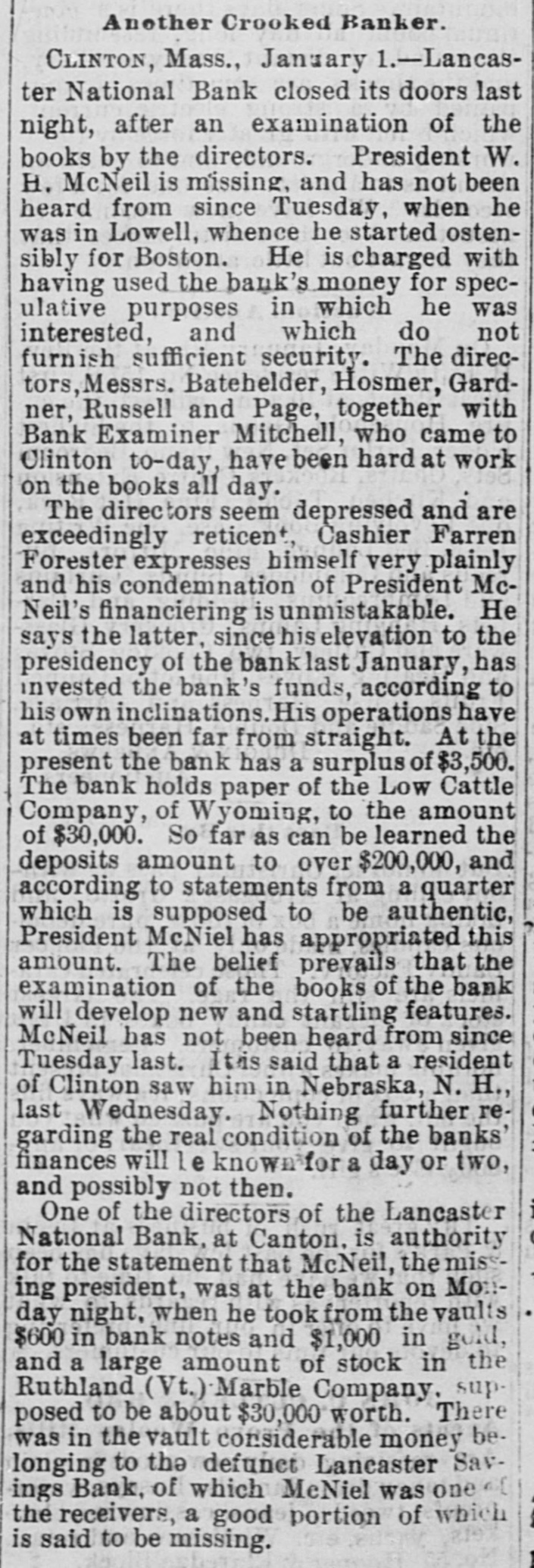
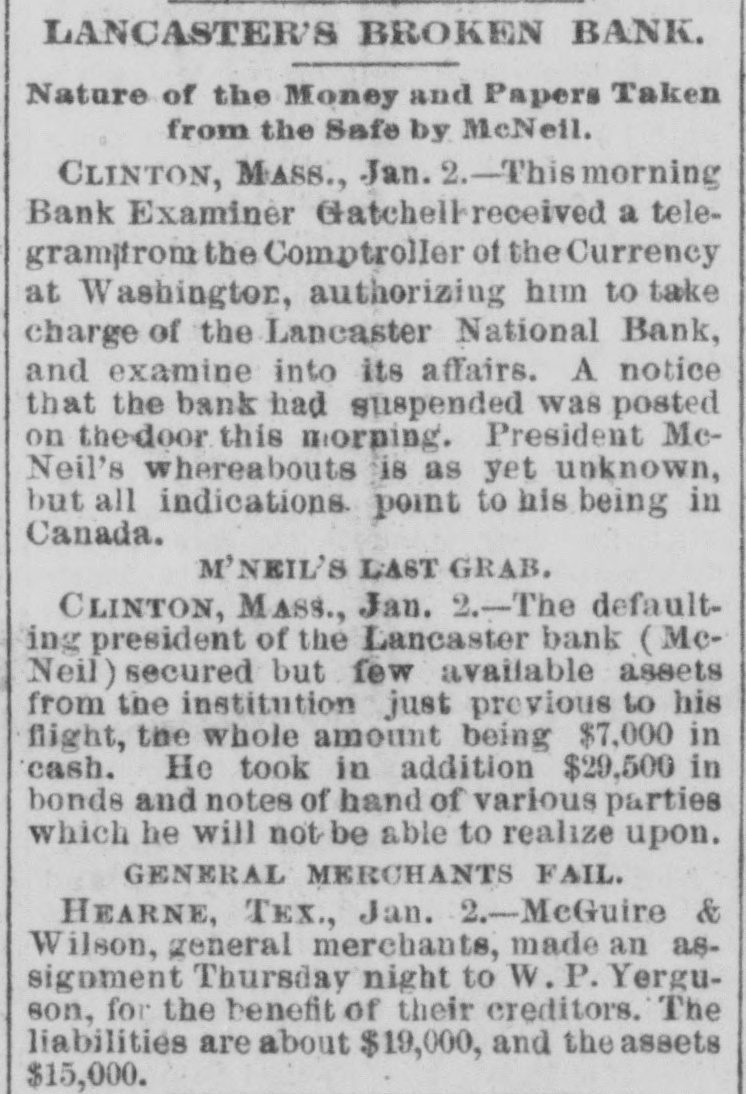
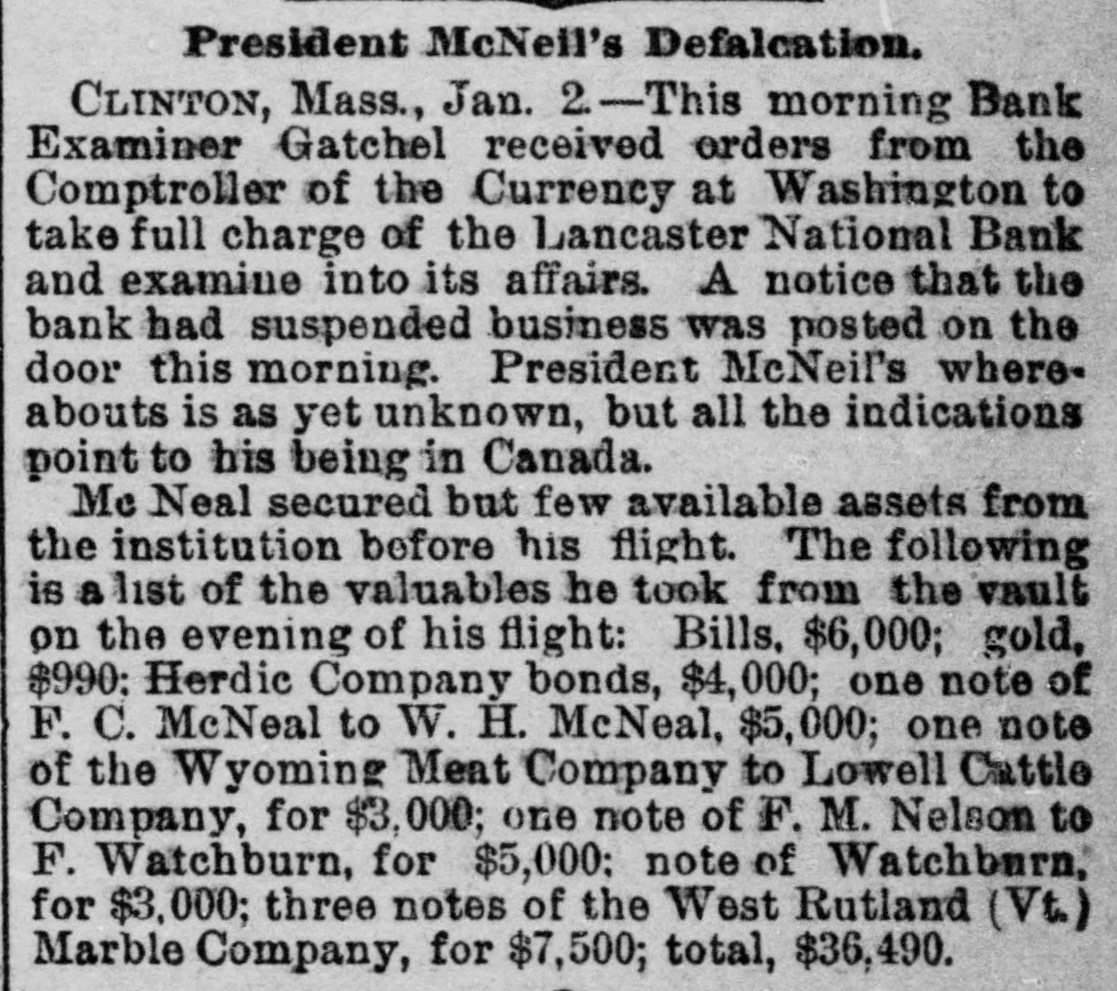
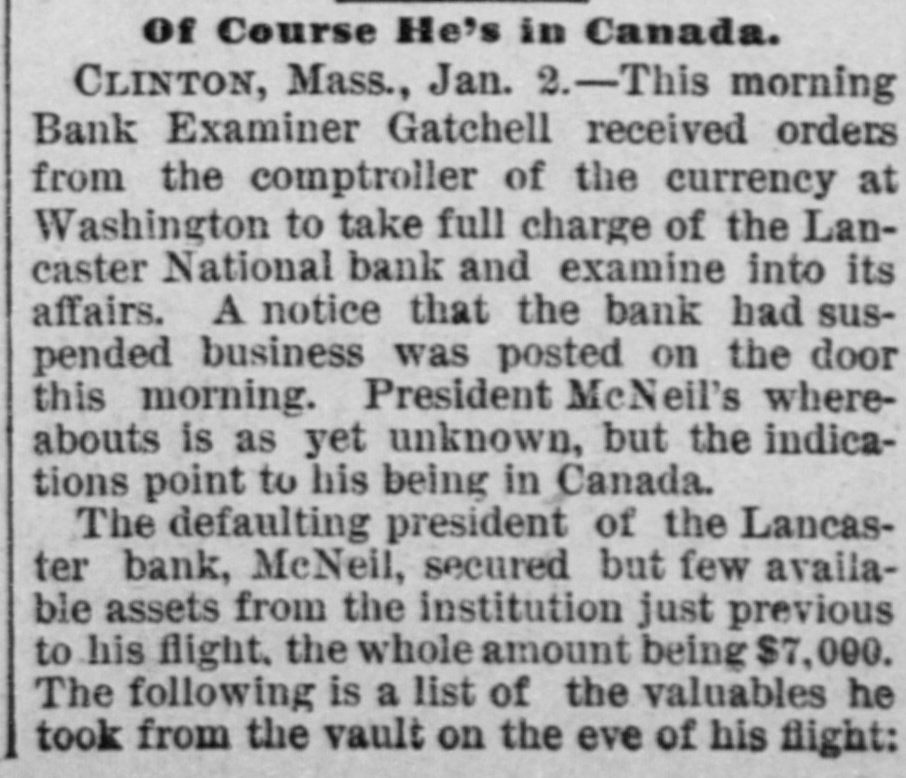
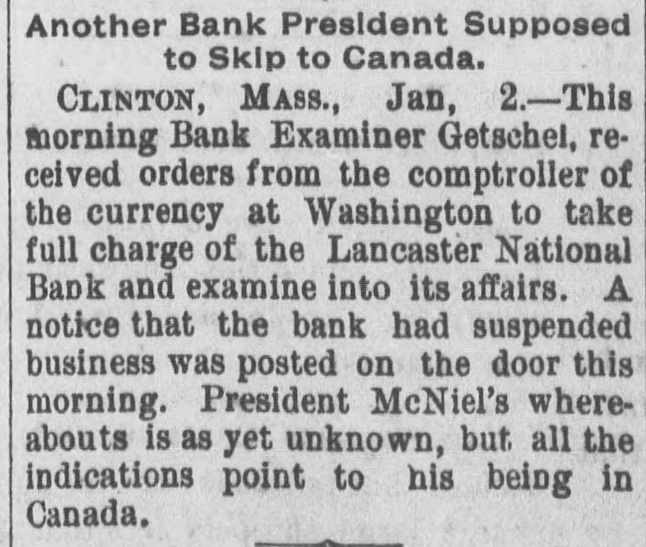
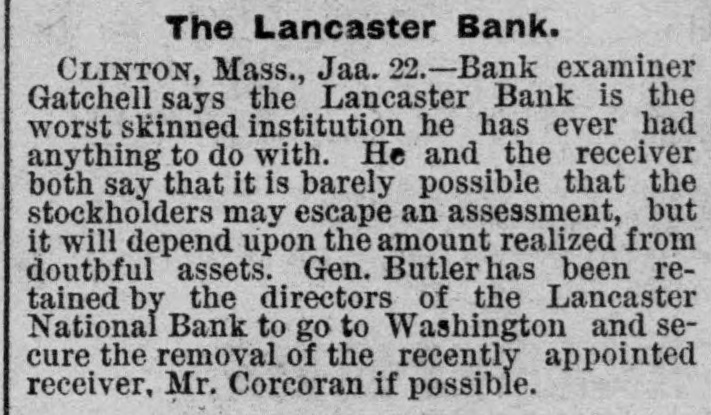
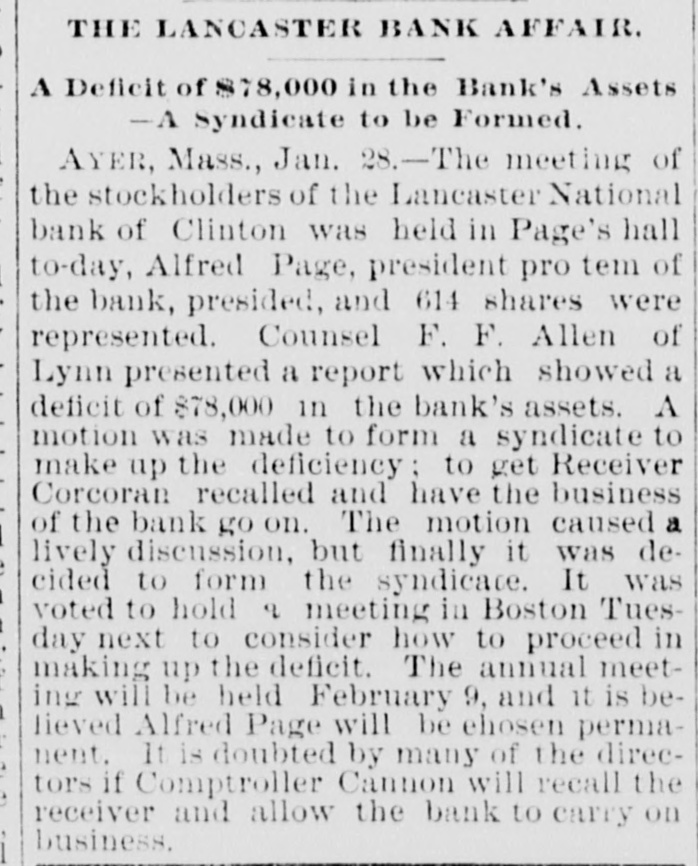
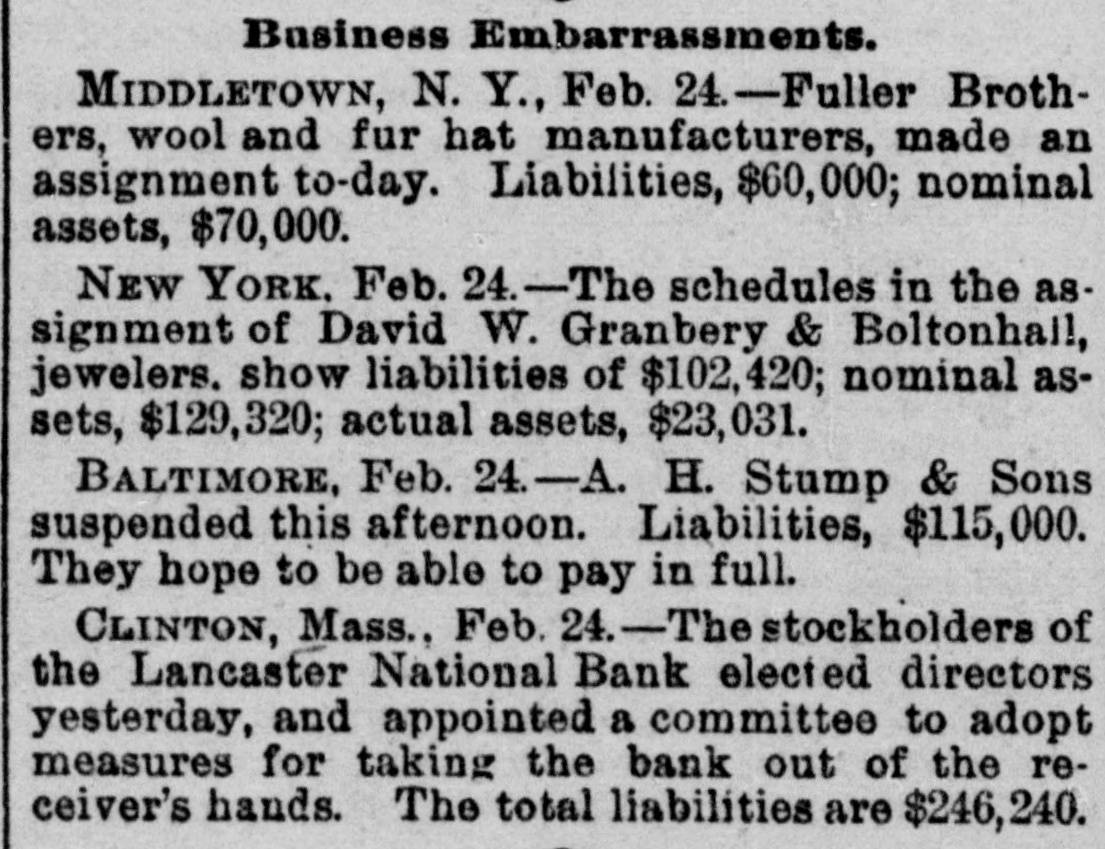
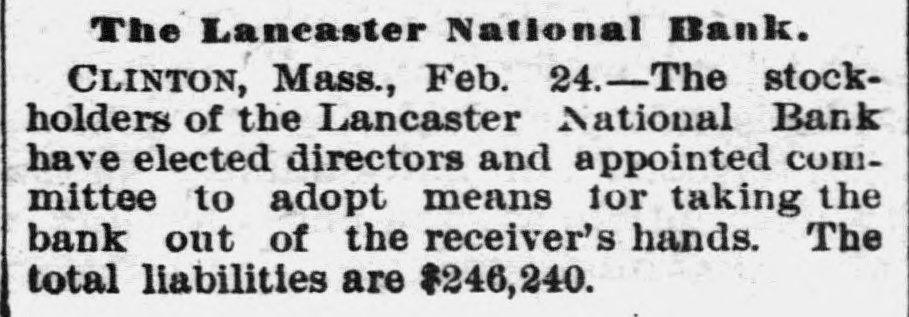
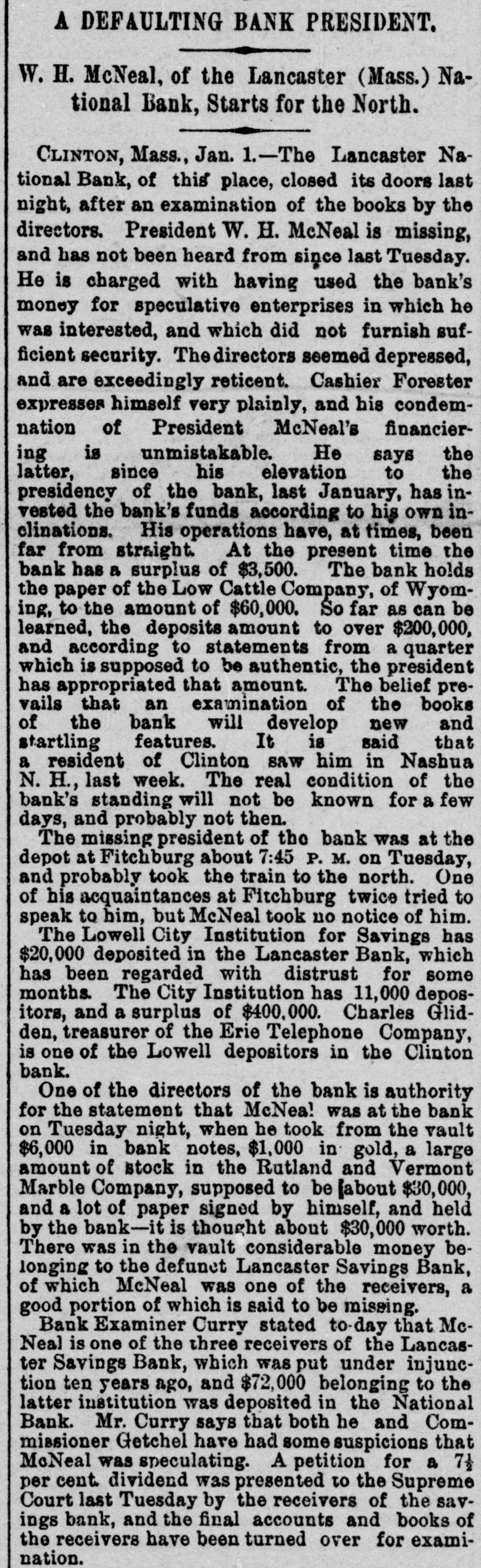
A DEFAULTING BANK PRESIDENT. W. H. McNeal, of the Lancaster (Mass.) National Bank, Starts for the North. CLINTON, Mass., Jan. 1.-The Lancaster National Bank, of this place, closed its doors last night, after an examination of the books by the directors. President W. H. McNeal is missing, and has not been heard from since last Tuesday. He is charged with having used the bank's money for speculative enterprises in which he was interested, and which did not furnish sufficient security. The directors seemed depressed, and are exceedingly reticent. Cashier Forester expresses himself very plainly, and his condemnation of President McNeal's financiering is unmistakable. He says the latter, since his elevation to the presidency of the bank, last January, has invested the bank's funds according to his own inclinations. His operations have, at times, been far from straight. At the present time the bank has a surplus of $3,500. The bank holds the paper of the Low Cattle Company, of Wyoming, to the amount of $60,000. So far as can be learned, the deposits amount to over $200,000, and according to statements from a quarter which is supposed to be authentic, the president has appropriated that amount. The belief prevails that an examination of the books of the bank will develop new and startling features. It is said that a resident of Clinton saw him in Nashua N. H., last week. The real condition of the bank's standing will not be known for a few days, and probably not then. The missing president of the bank was at the depot at Fitchburg about 7:45 P. M. on Tuesday, and probably took the train to the north. One of his acquaintances at Fitchburg twice tried to speak to him, but McNeal took no notice of him. The Lowell City Institution for Savings has $20,000 deposited in the Lancaster Bank, which has been regarded with distrust for some months. The City Institution has 11,000 depositors, and a surplus of $400,000. Charles Glidden, treasurer of the Erie Telephone Company, is one of the Lowell depositors in the Clinton bank. One of the directors of the bank is authority for the statement that McNea! was at the bank on Tuesday night, when he took from the vault $6,000 in bank notes, $1,000 in gold, a large amount of stock in the Rutland and Vermont Marble Company, supposed to be [about $30,000, and a lot of paper signed by himself, and held by the bank-it is thought about $30,000 worth. There was in the vault considerable money belonging to the defunct Lancaster Savings Bank, of which McNeal was one of the receivers, a good portion of which is said to be missing. Bank Examiner Curry stated to-day that McNeal is one of the three receivers of the Lancaster Savings Bank, which was put under injunetion ten years ago, and $72,000 belonging to the latter institution was deposited in the National Bank. Mr. Curry says that both he and Commissioner Getchel have had some suspicions that McNeal was speculating. A petition for a 71 per cent. dividend was presented to the Supreme Court last Tuesday by the receivers of the savings bank, and the final accounts and books of the receivers have been turned over for examination.