6883. Boston Bank (Boston, MA)

Bank Information

Episode Type
Suspension โ†’ Reopening
Bank Type
state
Start Date
May 22, 1882
Location
Boston, Massachusetts (42.358, -71.060)

Metadata

Model
gpt-5-mini
Short Digest
7e0f2e50faf36cd0

Response Measures

None

Description

Three newspaper dispatches (dated May 22, 1882) mention the suspension of the Boston bank causing a ripple of excitement in Chicago markets. The items only report a suspension (no description of a depositor run, receivership, government action, or permanent closing), and there is no follow-up in these clippings about receivership or permanent failure. I therefore classify this as a suspension with no evidence of a run; because the reports read as a temporary suspension (market ripple rather than panic) I judge reopening more likely than permanent failure, but this is uncertain due to lack of further information.

Events (1)

1. May 22, 1882 Suspension
Cause Details
Article only states the bank 'suspended'; no cause (e.g., government action, insolvency, or rumor) is given in these clippings.
Newspaper Excerpt
At one time the news of the suspension of the Boston bank caused a ripple of excitement and temporary weakness
Source
newspapers

Newspaper Articles (3)

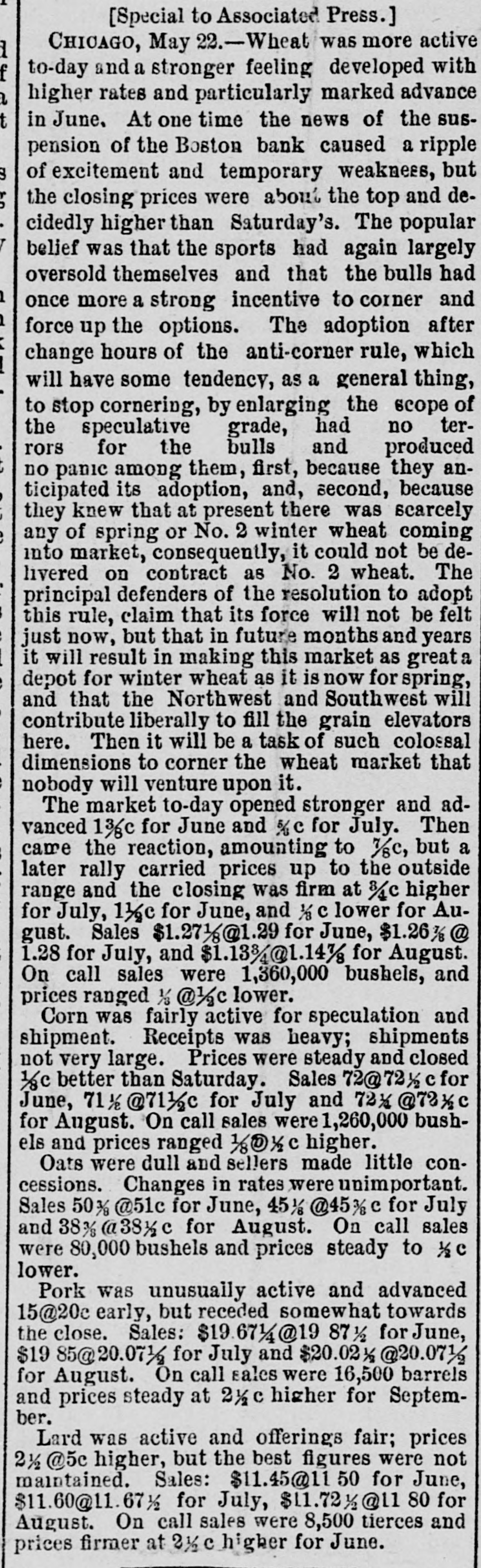
Article from Daily Globe, May 23, 1882

Click image to open full size in new tab

Article Text

[Special to Associated Press.] CHICAGO, May 22.-Wheat was more active to-day and a stronger feeling developed with higher rates and particularly marked advance in June, At one time the news of the suspension of the Boston bank caused a ripple of excitement and temporary weakness, but the closing prices were about the top and decidedly higher than Saturday's. The popular belief was that the sports had again largely oversold themselves and that the bulls had once more a strong incentive to corner and force up the options. The adoption after change hours of the anti-corner rule, which will have some tendency, as a general thing, to stop cornering, by enlarging the scope of the speculative grade, had no terrors for the bulls and produced no panic among them, first, because they anticipated its adoption, and, second, because they knew that at present there was scarcely any of spring or No. 2 winter wheat coming into market, consequently, it could not be delivered on contract as No. 2 wheat. The principal defenders of the resolution to adopt this rule, claim that its force will not be felt just now, but that in future months and years it will result in making this market as great depot for winter wheat as it is now for spring, and that the Northwest and Southwest will contribute liberally to fill the grain elevators here. Then it will be a task of such colossal dimensions to corner the wheat market that nobody will venture upon it. The market to-day opened stronger and advanced 13/c for June and % for July. Then came the reaction, amounting to T/C, but a later rally carried prices up to the outside range and the closing was firm at 8/4 higher for July, 11/cc for June, and 1/1/2 c lower for August. Sales $1.271/@1.29 for June, $1.26% @ 1.28 for July, and $1.133/@1.14% for August. On call sales were 1,360,000 bushels, and prices ranged 1/3 @1/3c lower. Corn was fairly active for speculation and shipment. Receipts was heavy; shipments not very large. Prices were steady and closed 1/cc better than Saturday. Sales 72@72%cfor June, 71% @711/2c for July and 72%@73%c for August. On call sales were 1,260,000 bushels and prices ranged 1/1/1c higher. Oats were dull and sellers made little concessions. Changes in rates were unimportant. Sales 50% @51c for June, 45 1/6 @45% c for July and 8(3381/c for August. On call sales were 80,000 bushels and prices steady to 1/2c lower. Pork was unusually active and advanced 15@20c early, but receded somewhat towards the close. Sales: $19.6714@19 87 for June, 19 85@20.07}/ for July and $20.02 % @20.07}/ for August. On call sales were 16,500 barrels and prices steady at 2 1/1 c higher for September. Lard was active and offerings fair; prices 2 1/25@c higher, but the best figures were not maintained. Sales: $11.45@11 50 for June, $11.60@11.67% for July, $11.72 % @11 80 for August. On call sales were 8,500 tierces and prices firmer at 21/2 higher for June.
Article from Daily Globe, May 23, 1882

Click image to open full size in new tab

Article Text

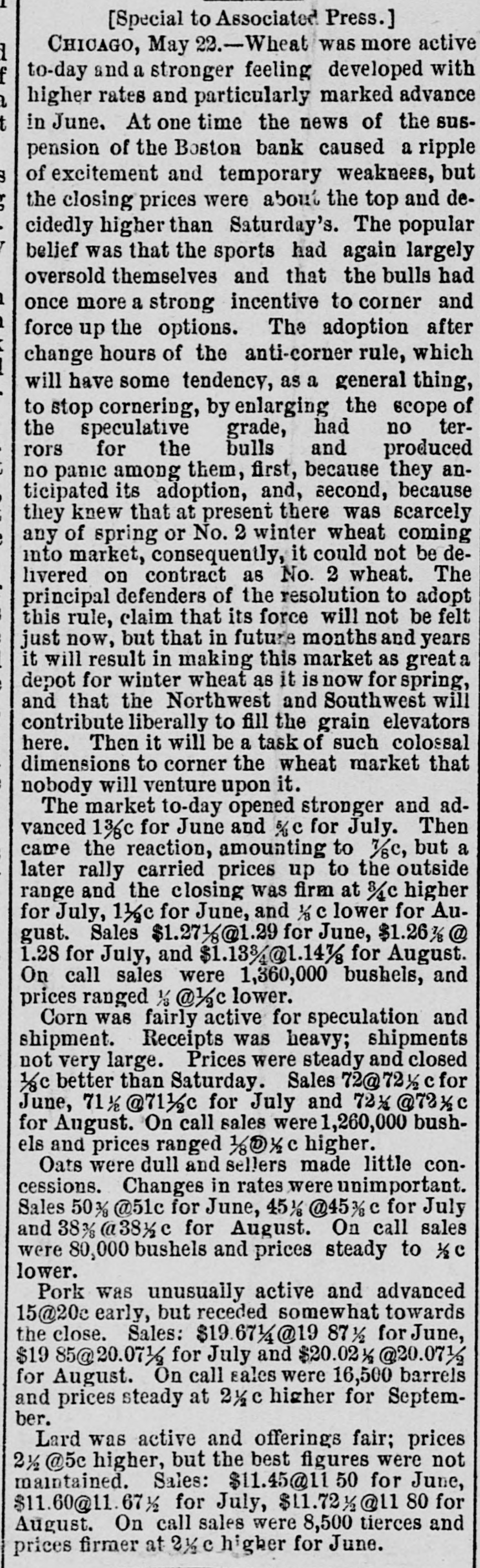
[Special to Associated Press.] CHICAGO, May 22.-Wheat was more active to-day and a stronger feeling developed with higher rates and particularly marked advance in June, At one time the news of the suspension of the Boston bank caused a ripple of excitement and temporary weakness, but the closing prices were about the top and decidedly higher than Saturday's. The popular belief was that the sports had again largely oversold themselves and that the bulls had once more a strong incentive to corner and force up the options. The adoption after change hours of the anti-corner rule, which will have some tendency, as a general thing, to stop cornering, by enlarging the scope of the speculative grade, had no terrors for the bulls and produced no panic among them, first, because they anticipated its adoption, and, second, because they knew that at present there was scarcely any of spring or No. 2 winter wheat coming into market, consequently, it could not be delivered on contract as No. 2 wheat. The principal defenders of the resolution to adopt this rule, claim that its force will not be felt just now, but that in future months and years it will result in making this market as great depot for winter wheat as it is now for spring, and that the Northwest and Southwest will contribute liberally to fill the grain elevators here. Then it will be a task of such colossal dimensions to corner the wheat market that nobody will venture upon it. The market to-day opened stronger and advanced 13/c for June and % for July. Then came the reaction, amounting to T/c, but a later rally carried prices up to the outside range and the closing was firm at 8/4c higher for July, 11/3c for June, and 1/1/2 lower for August. Sales $1.271/@1.29 for June, $1.26% @ 1.28 for July, and $1.133/@1.14% for August. On call sales were 1,360,000 bushels, and prices ranged lower. Corn was fairly active for speculation and shipment. Receipts was heavy; shipments not very large. Prices were steady and closed 1/6c better than Saturday. Sales 72@721/c for June, 71% @711/c for July and for August. On call sales were 1,260,000 bushels and prices ranged higher. Oats were dull and sellers made little concessions. Changes in rates were unimportant. Sales 50 @51c for June, 45 1/6 @45/ c for July and 38% @38/c for August. On call sales were 80,000 bushels and prices steady to 1/2c lower. Pork was unusually active and advanced 15@20c early, but receded somewhat towards the close. Sales: $19.6714@19 87 for June, $19 85@20.07}/ for July and $20.02 @20.071/2 for August. On call sales were 16,500 barrels and prices steady at 2 1/1 c higher for September. Lard was active and offerings fair; prices @5c higher, but the best figures were not maintained. Sales: $11.45@11 50 for June, $11.60@11.67% for July, $11.72 % @11 80 for August. On call sales were 8,500 tierces and prices firmer at 21/2 c higher for June.


Article from Wood County Reporter, May 25, 1882

Click image to open full size in new tab

Article Text

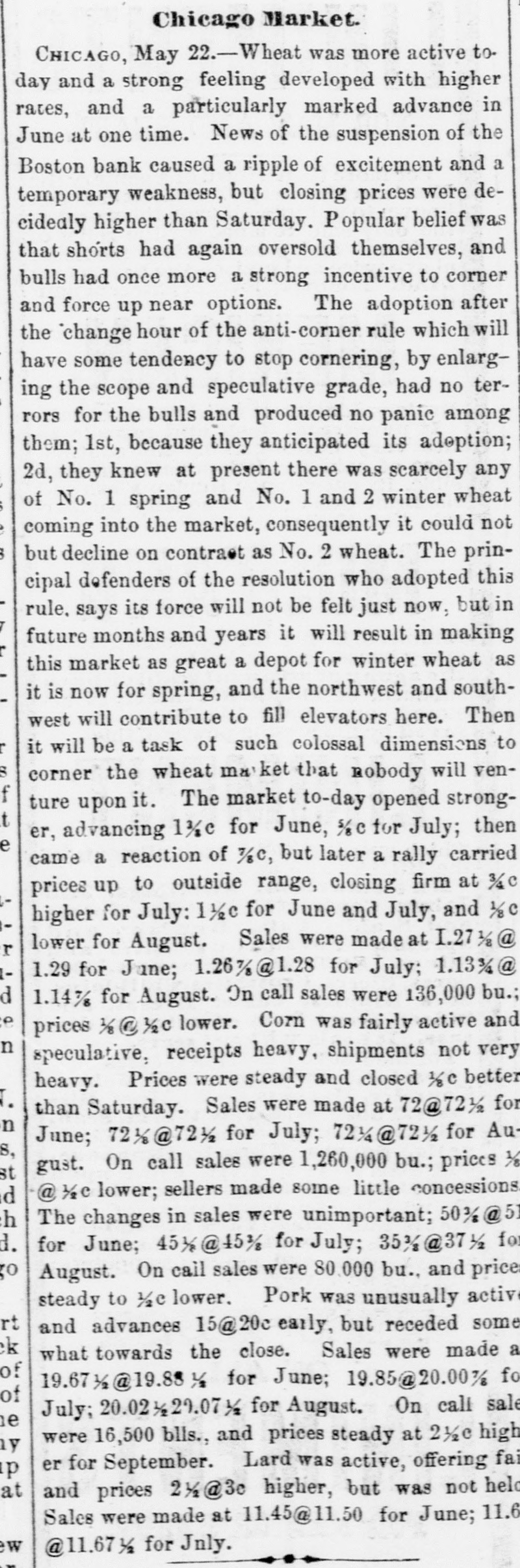
Chicago Market. CHICAGO, May 22.-Wheat was more active today and a strong feeling developed with higher rates, and a particularly marked advance in June at one time. News of the suspension of the Boston bank caused a ripple of excitement and a temporary weakness, but closing prices were decidealy higher than Saturday. Popular belief was that shorts had again oversold themselves, and bulls had once more a strong incentive to corner and force up near options. The adoption after the change hour of the anti-corner rule which will have some tendency to stop cornering, by enlarging the scope and speculative grade, had no terrors for the bulls and produced no panic among them; 1st, because they anticipated its adoption; 2d, they knew at present there was scarcely any of No. 1 spring and No. 1 and 2 winter wheat coming into the market, consequently it could not but decline on contract as No. 2 wheat. The principal defenders of the resolution who adopted this rule, says its force will not be felt just now, but in future months and years it will result in making this market as great a depot for winter wheat as it is now for spring, and the northwest and southwest will contribute to fill elevators here. Then it will be a task of such colossal dimensions to corner the wheat ma ket that Robody will venture upon it. The market to-day opened stronger, advancing 1 1/2 for June, sc for July; then came a reaction of I/C, but later a rally carried prices up to outside range, closing firm at 3/4 higher for July: 1 1/2c for June and July, and 1/8 lower for August. Sales were made at I.27 1/2@ 1.29 for June; 1.26%@1.2 for July; 1.13 3/4 @ d 1.14% for August. In call sales were 136,000 bu. prices lower. Corn was fairly active and speculative, receipts heavy, shipments not very heavy. Prices were steady and closed 1/8C better than Saturday. Sales were made at 72@721/2 for n June; 72% for July; 721/@721/2 for AuS, gust. On call sales were 1,260,000 bu.; prices 1/8 st @ 1/4c lower; sellers made some little concessions d h The changes in sales were unimportant; 50 1/2 @ 5] d. for June; for July; 35% @37 1/2 for TO August. On call sales were 80.000 bu., and prices steady to 1/2C lower. Pork was unusually activ rt and advances 15@20c early, but receded some k what towards the close. Sales were made a of 19.67 k @19.88 1/ for June; 19.85@20.00% fo of July; 20.02%29.07) for August. On call sale he were 16,500 blls., and prices steady at 2 1/20 high y er for September. Lard was active, offering fai ip at and prices 2 1/23e higher, but was not held Sales were made at 11.45@11.50 for June; 11.6 W @11.67 1/2 for Jnly.