Click image to open full size in new tab
Article Text
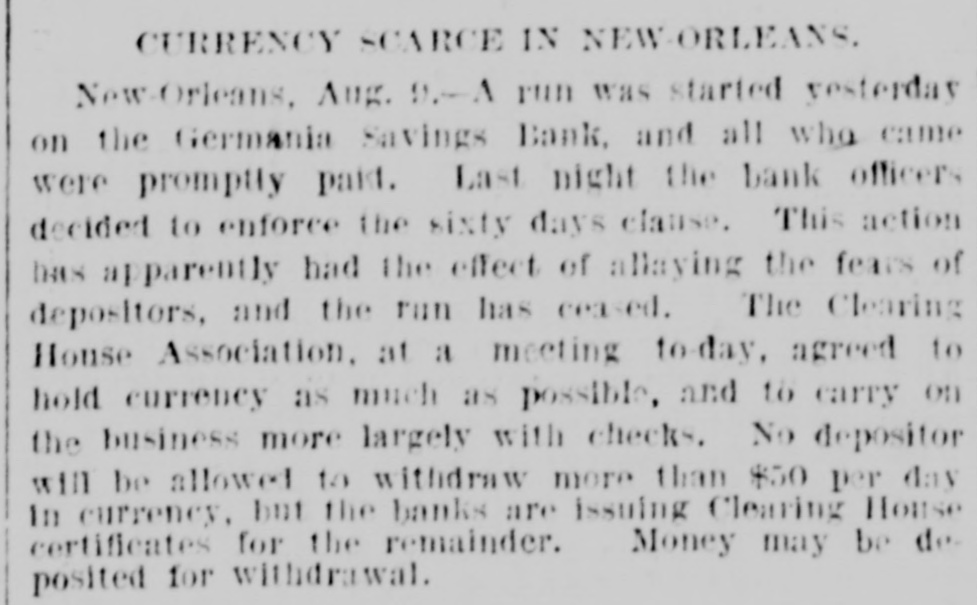
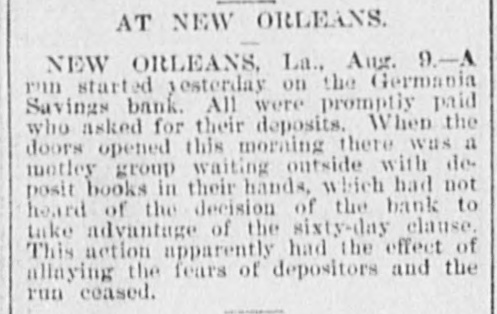
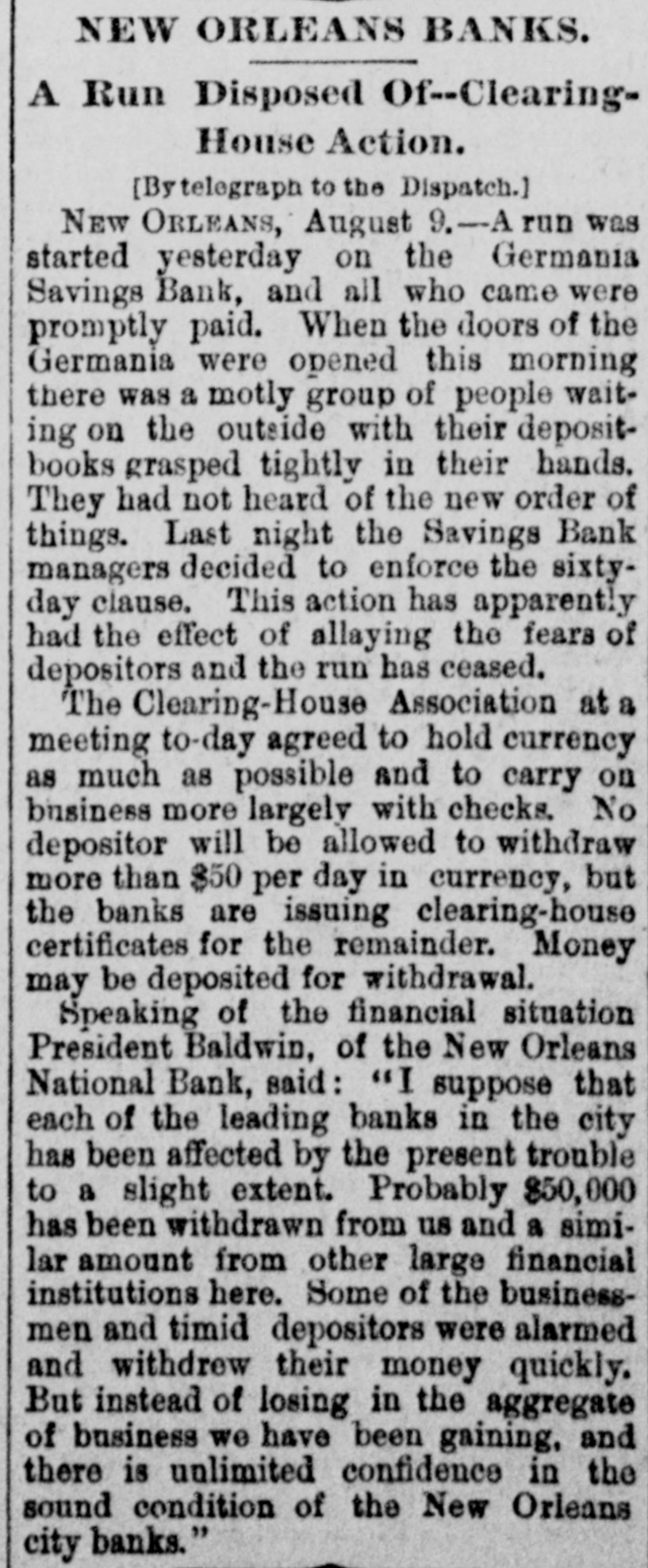
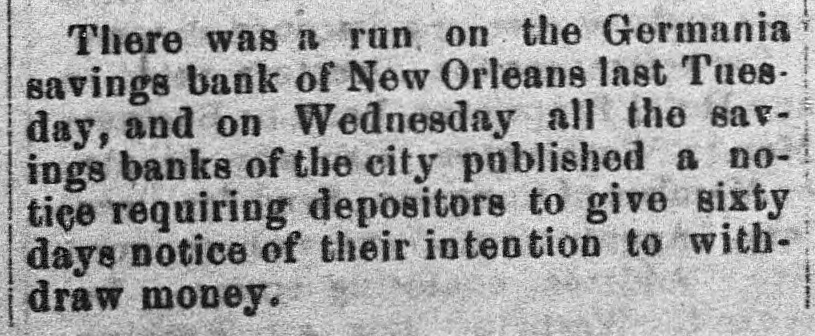
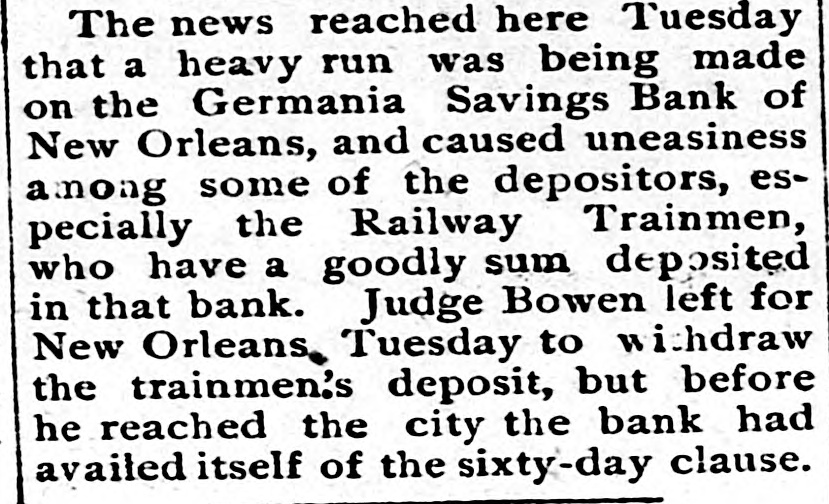
nim Summit TO selling the ore and makes monthly settlements with the holders of the stock. There are many furnaces which use this ore, and these are also divided among the heirs, Robert H. Coleman has the three Colebrook furnaces. two anthracite furnaces and the Coleman furnaces. Robert H. Coleman is also a joint owner of the North Lebanon furnaces and an important member of the firm of Coleman & Brock, manufacturers of pig iron. Other Business Troubles. MINNEAPOLIS, MINN.. August 9.The Commercial Bank of this city closed its doors this morning. NASHVILLE, TENN., August 9.-The First National Bank of this city suspended after banking hours this afternoon. A statement has not yet been given out. After the suspension of the First National Bank this afternoon the directors of the Fourth National had a meeting, those present représenting several millions of property, and signed a guaranty pledging themselves and their individual estates to the payment of all deposits. They further state that the bank is able to meet all of its obligations. The directors of the City Savings Bank held a meeting to night and unanimously decided to suspend payment for sixty days. The suspension is caused by the stringency of the money market. The bank is considered solvent. and will pay depositors and stockholders in full. Deposits, $40,707.90; assets, $151,499.92; ninety per cent. of which is good. The directors of the bank have personally pledged themselves and their estates to the payment of all deposits in full. Edgar Jones, president of the Union Bank and Trust Company, says in an interview with a reporter that his bank will open as usual to-morrow. John M. Sperry, president of the Merchants' National. in an interview says his bank will also open to-morrow as usual. PITTSBURG. PA., August 9.-The Linden Steel Company. one of the largest manufacturing concerns in Pittsburg has suspended operations on account of the stringency of the times and the difficulty in procpring discounts and inability to make collections. All employees, about eighty, have been discharged. ROCHESTER, MINN., August 9.-The Union National Bank closed temporarily this morning. There is no statement. The bank is solvent, and will resume without the appointment of a receiver. The other banks are all considered solid COLFAX. WASH., August 9.-The Bank of Colfax has closed. Capital $100,000; assets exceed liabilities two to one. MINNEAPOLIS, MINN., August 9.The Commercial Bank closed its doors this morning. The bank is a small local institution, doing business in this city. Capital, $200,000: deposits, $400,000. and its time deposits $222,000. The loans and discounts at the last statement amounted to $642,000. It is stated by the officers that depositors will be paid in full. NEW YORK, August 9.-Fuller Brothers, commission merchants at 139 Greenwich street, assigned to-day. They are said to be the largest wholesale dealers in nalls in this city, and the oldest concern in that line here. They have always been regarded as conservative and reliable. Members of the firm said that the assignment was the result of the terribly hard times. As commission merchants they had dealings with many nail mills, had made advances to them, and now were unable to collect from them. The firm had been absolutely unable to raise money to meet their obligations coming 01 su ou DATE pinoo show "anp their condition, but the totals will be large. A Run Avoided. NEW YORK, August 9.-A crowd of small depositors gathered before the doors of the closed Madison Squars Bank this morning and anxiously inquired as to the safety of their money. Large depositors, It was stated, had full confidence in the bank and were not on hand. About 11 o'clock Harry Goldstein, a son of Isaac Goldstein, a millionaire dealer of Sixty-second and Hudson streets, stated to depositors that his father had authorized him to say he would bond himself in $300,000 to pay all depositors. He did this because he was a friend of President Blant and was confident the affairs of the bank were all right. Ten minutes later the janitor appeared and stated that one of the directors was on hand with $40,000, prepared to settle with the depositors on the spot at ninety cents on the dollar. If they were willing however. to wait, every cent would be paid. No one took up the offer and the crowd dwindled away. Depositors Become Quiet. NEW ORLEANS, LA., August 9.-A run was started yesterday on the Germania Savings Bank, and all who came were promptly paid. When the doors of the Germania were opened this morning there was a motly group of people waiting on the outside with their deposit books grasped tightly in their hands. They had not heard of the new order of things. Last night the Savings Bank managers decided to enforce the sixty-day clause. This action has apparently had the effect of allaying the fears of depositors and the run has ceased.