Click image to open full size in new tab
Article Text
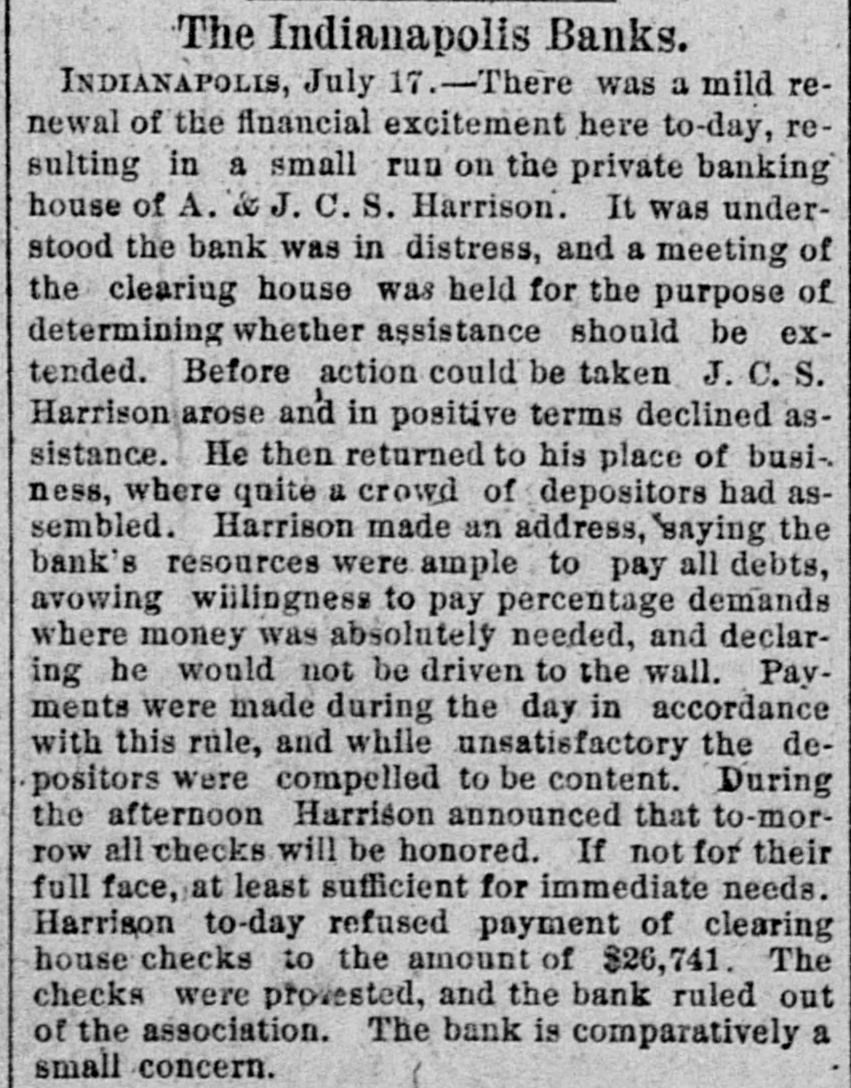
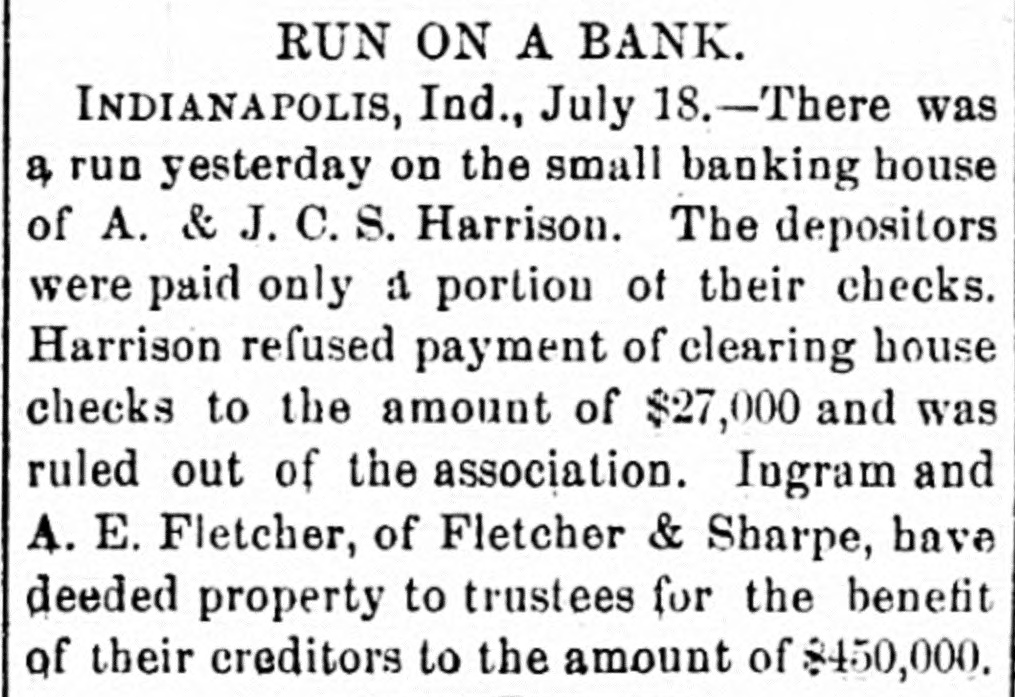
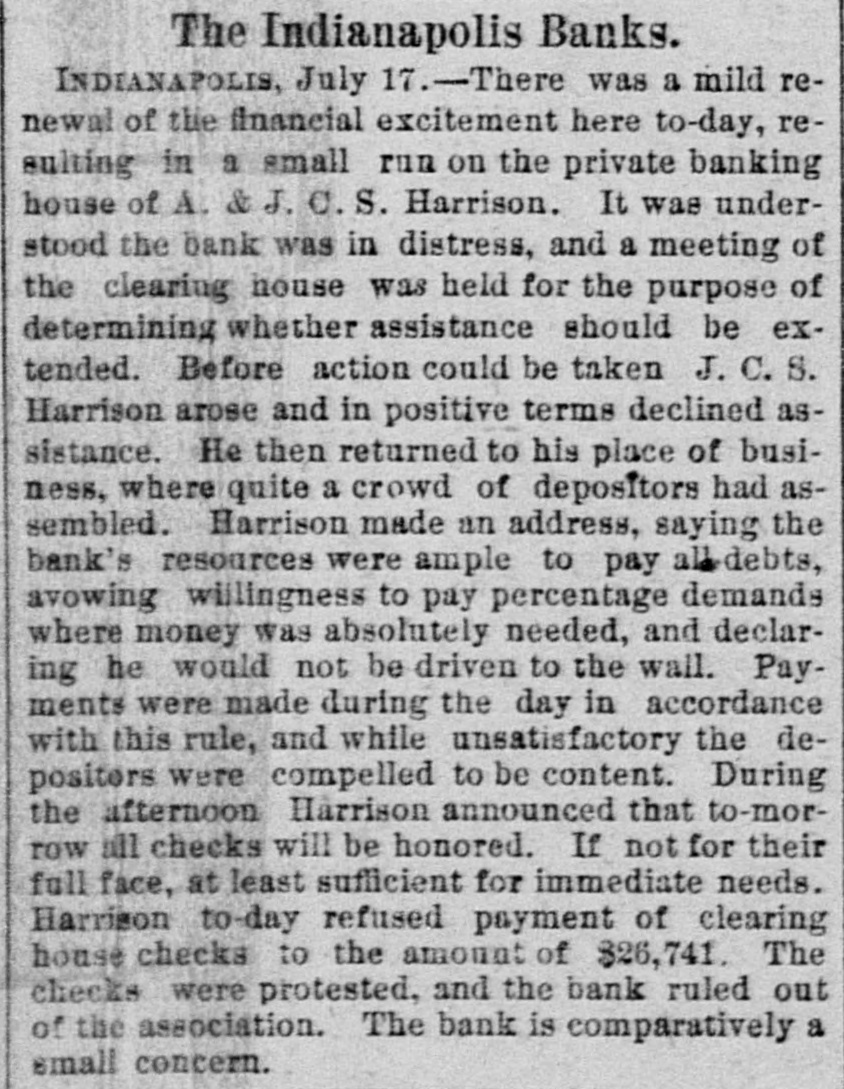
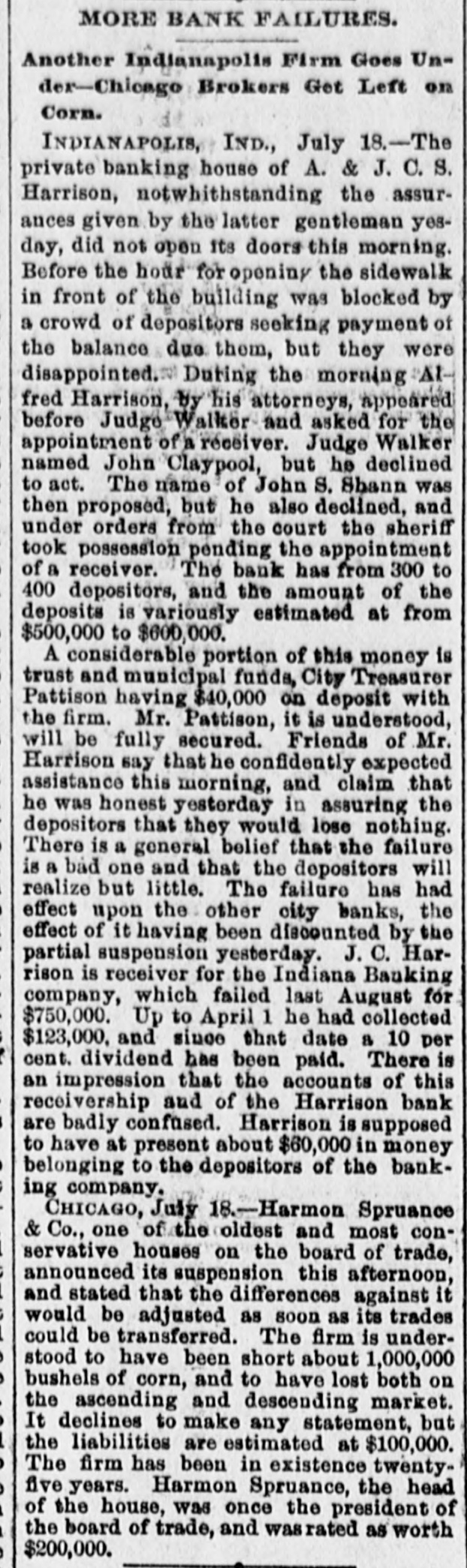
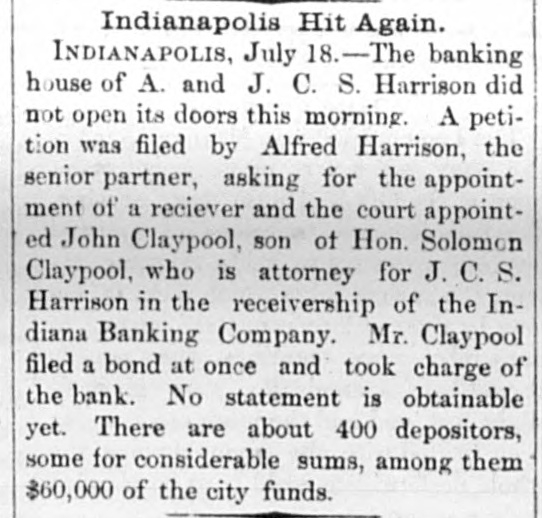
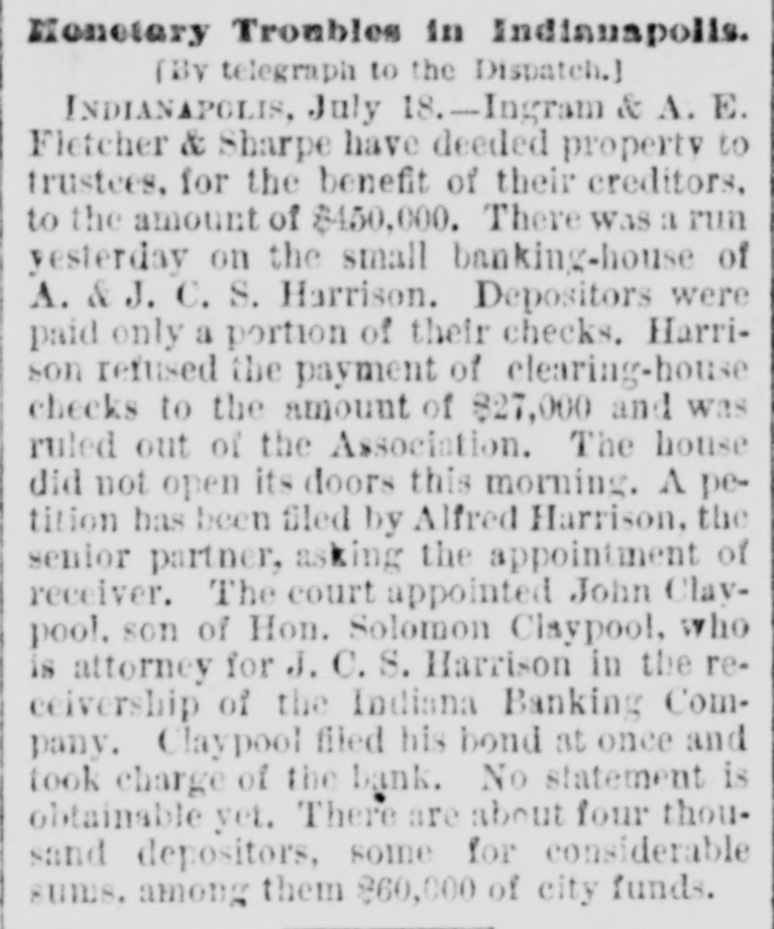
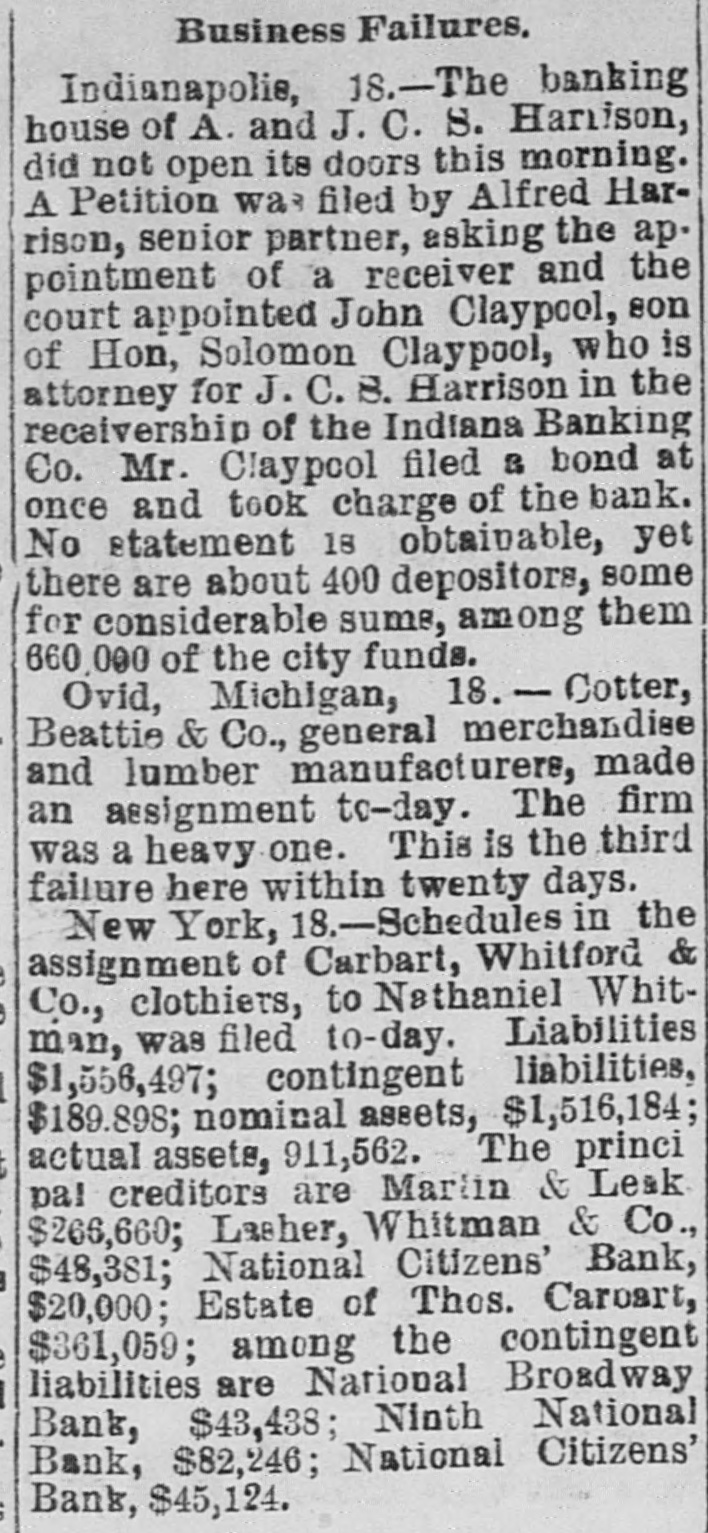
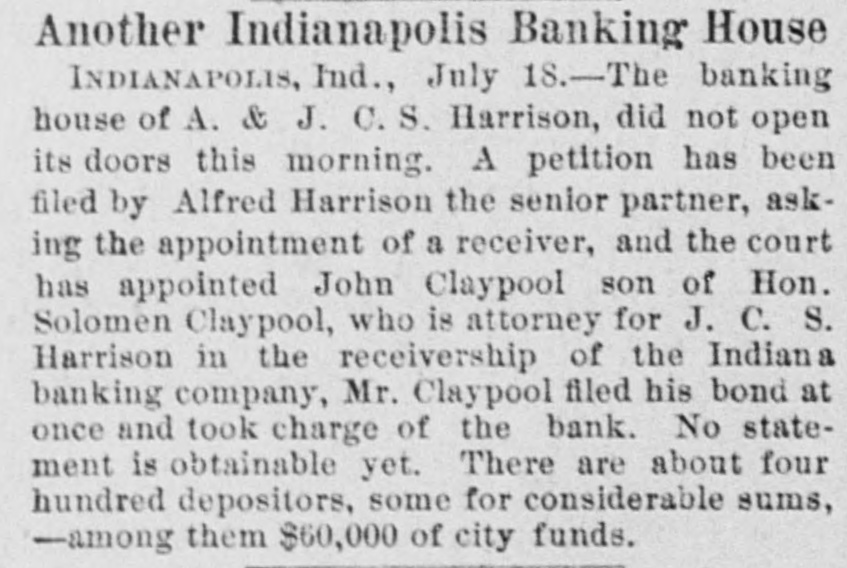
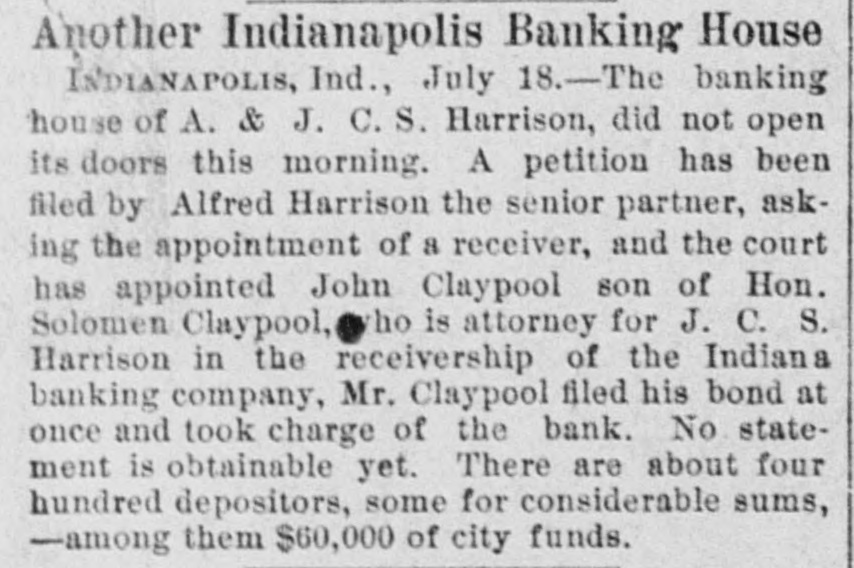
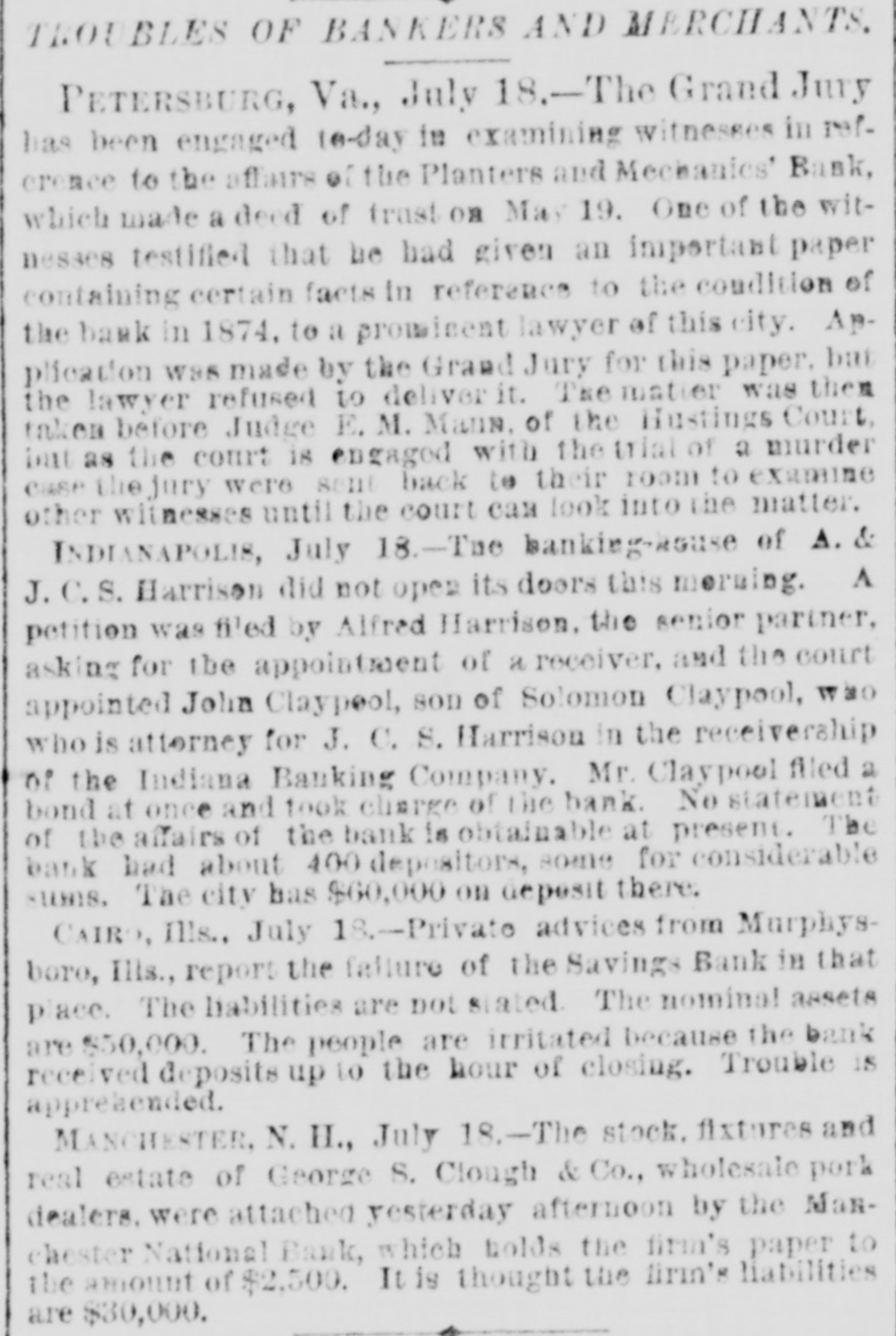
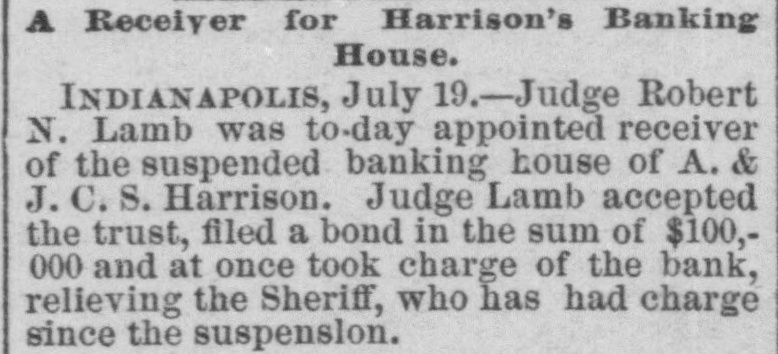
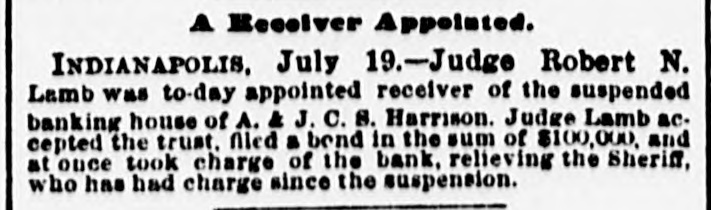
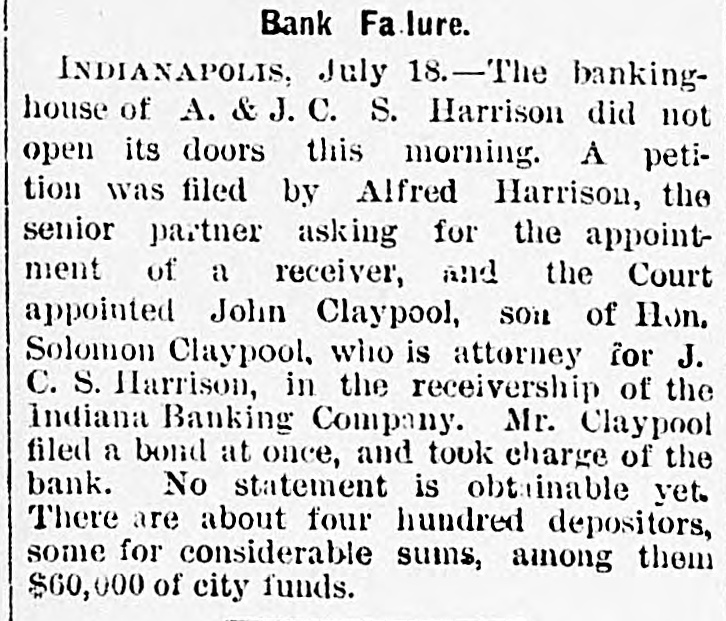
His Banking-House Suspends Operations and Asks for a Receiver. Nobody Found to Accept the Trust-Details of the Bank's Affairs-Proposed Reorganization of Fletcher & Sharpe's. The repeated assertions of Mr. John C.S. Harrison, on Thursday, that his bank would not suspend, and that depositors would be paid yesterday, proved to be, in gambler's parlance, "a great big bluff," as was suspected at the time. If he had confidence in his ability to make pay ments yesterday, in the expectation of reeeiving financial aid from the East, he must have been grievously disappointed, and if he knew, which is more probable, that he could not fulfill his promises, his conduct was not in strict accordance with some people's idea of honesty and veracity. The present opinion prevails that he succeeded in standing off for a single day that disaster that he must have known was inevitable. At the beginning of business hours, yesterday morning, there was a crowd of depositors around Harrisons' bank, anxiously awaiting the opening of the doors. If, on that eventful day, they await as vainly the opening of the golden gates, theirs will be an unhappy fate, indeed. The bank was not opened at all during the day, and no intimation of the intentions of the partners was given to the creditors, in the form of a notice on the door, as is usually the case. Those who had relied upon Mr. Harrison's promises were particularly indignant that he should have deceived them, and threats of vengeance were numerous and vehement. That gentleman was fortunate, perhaps, in having business that called him to another part of the city at that time, for he certainly could not be found down town. Very soon it became known that an application for a receiver for the bank had been made and granted by the court. THE LEGAL PROCEEDINGS. Before Judge Walker, sitting in special ses sion, Messrs. Harrison, Miller & Elam and Claypool & Ketcham, attorneys for the Harrisons, appeared at 9 o'clock in the morning, and filed the following complaint: Alfred Harrison vs. John C.S. Harrison. The plaintiff complains of the defendant and says that the parties are partners doing business, as bankers, at Indianapolis, under the firm name of A. &J. C.S. Harrison, and have been, as such partnership, doing such business for twenty years last past. The plaintiff further avers that run has been going on by their depositors against their said bank for several days last past, wherebyltheir cash resources have been so much reduced that they are unable longer to continue said banking business, and said firm is therefore insolvent. That in order to prevent multiplicity of suits and thereby cause great expense in litigation,and in order to save said estate for the creditors, it is important that & receiver of the said firm be appointed for said firm, to take posession and control of the assets of the firm and administer the same under the order of the court That a dissolution of said partnership be had and an accounting between the parties, wherefore plaintiff prays the court that a receiver be appointed to take possession and control and management of the assets of said firm and wind up its affairs. that said firm bedisolved. an accounting be had between the parties and for all other proper relief. HARRISON, MILLER & ELAM. CLAYPOOL & KETCHAM, 8 Attorneys for Plaintiff. To this an answer was filed by the defendant, admitting the facts set forth in the complaint. Mr. John Claypool, son of the senior member of the law firm of Claypool & Ketcham, was suggested for the position, but declined it, and by mutual consent Mr. John S. Spann was appointed, his bond being fixed at $300,000, and the court took a recess for him to secure the necessary securieties. Mr. Spann, however, did not want the position, for personal reasons, as it is stated, and when this became known, late in the afternoon, when it was too late to select another gentleman, the following order was issued by the court: Alfred Harrison vs. John C.S. Harrison. Comes now the plaintiff and files his complaint, asking the appointment of & receiver, which complaint is, in these words [Here follows the complaint given above], and said defendant files his answer, admitting the allegations of said complaint. And now Hon. Lewis C. Walker, one of the judges of the Superior Courts of Marion county, being satisfied that such reeeiver ought to be appointed, does, with a view to such appointment, take the custody and control of all the property and assets of said partnership firm of A. &J. Harrison, plaintiff and defendant, and does now, preceding the selection and qualification of such receiver, order and direct that the sheriff of Marion county do take possession and control of said prop. erty, including the banking house of said firm, with safes, vaults, and all books, papers, money and assets of every description, and said sheriff is directed safely to keep the same until the further order of said LEWIS C. WALKER, judge. Judge Superior Court. The bank and all the property was there fore turned over to the charge of Sherift Hess, who at once took possession. In all probability some self-sacrificing gentleman will be found this morning who is willing to be the receiver and is able to give the required bond. THE CONDITION OF THE BANK. It is next to impossible to obtain any accurate information regarding the real condition of the bank. Both of the partners declined to make any statements for publication yesterday. In fact, they even refused to see the reporters who called at their houses. An enterprising News reporter did get to see Mr. Alfred Harrison yesterday morning, and his account of the interview is as follows: He was in a crusty humor, and when the re porter requested a statement concerning the bank's condition and an approximate of its as sets and liabilities, he turned white with rage and burst forth vehemently, Young man, I had rather have you to come here to burglarize my house than to catechise me about my business. It is an insult for you to enter my door on that kind of a mission. Put that in your paper if you want to. The young man mildly suggerted that the depositors considered it their business as well as his, and were anxious to hear something authentic touching the suspension, where upon he again exploded with still greater fury, saying: won't tell you anything You can't catéchise me about my business. It is insulting for you to come here now. Put that in your paper; every word of it, I say The old gentleman could searcely retain himself in his arm chair, on account of his indignation, and the re porter, unable to make himself heard, perempsorily retired. Mr. John C. S. Harrison could not be found by the reporters, and at his house they were told that he would see nobody. Mr. Watson, the cashier of the bank, said that he thought its de-