Click image to open full size in new tab
Article Text
OKLAHOMA BANK HOLIDAYS
Acting Governor Takes Precautions Against a Run.
On Demand of Financiers He Issued Proclamation Closing Institutions of Territory For Week.
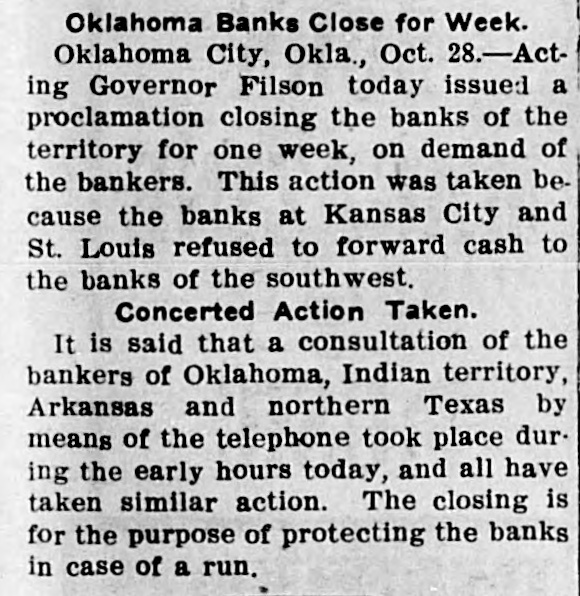
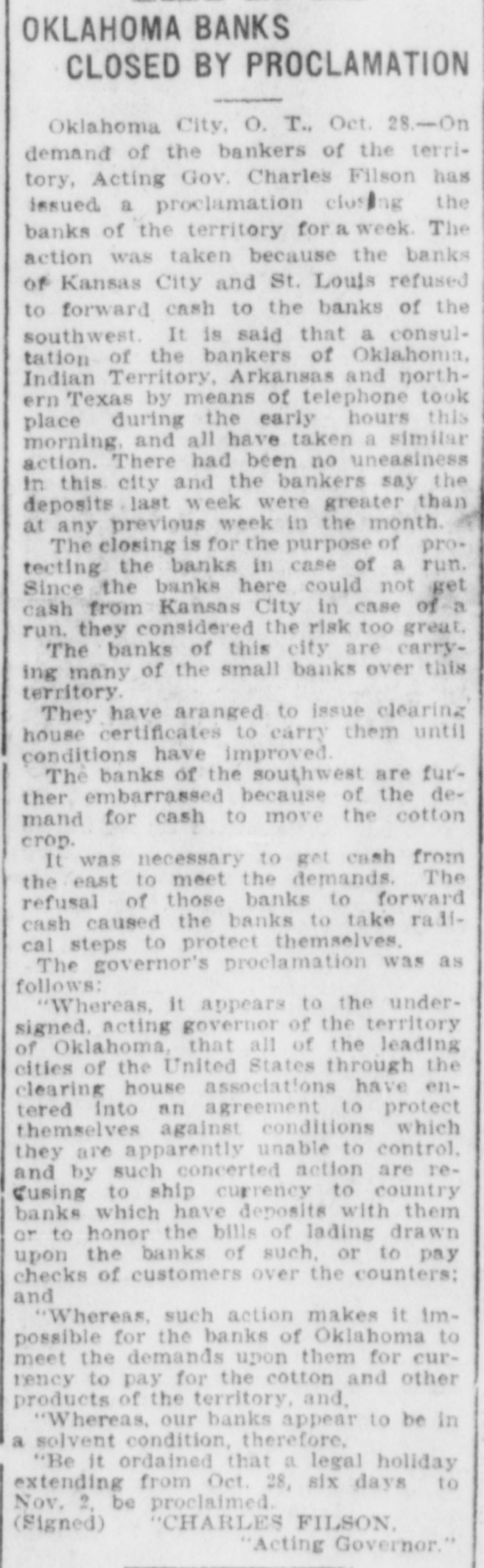
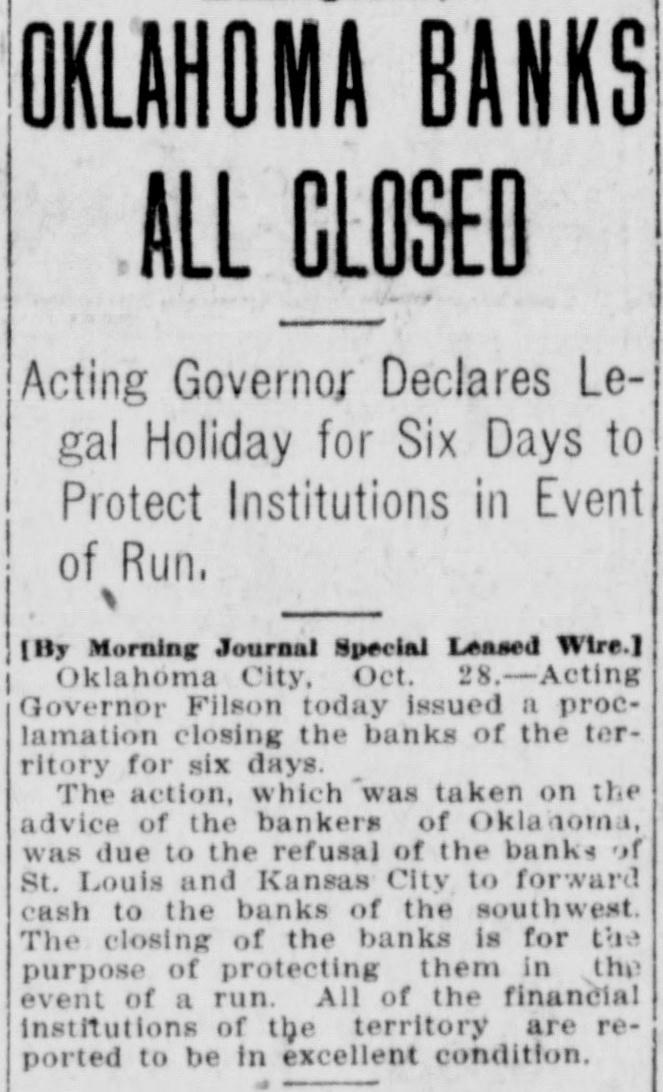
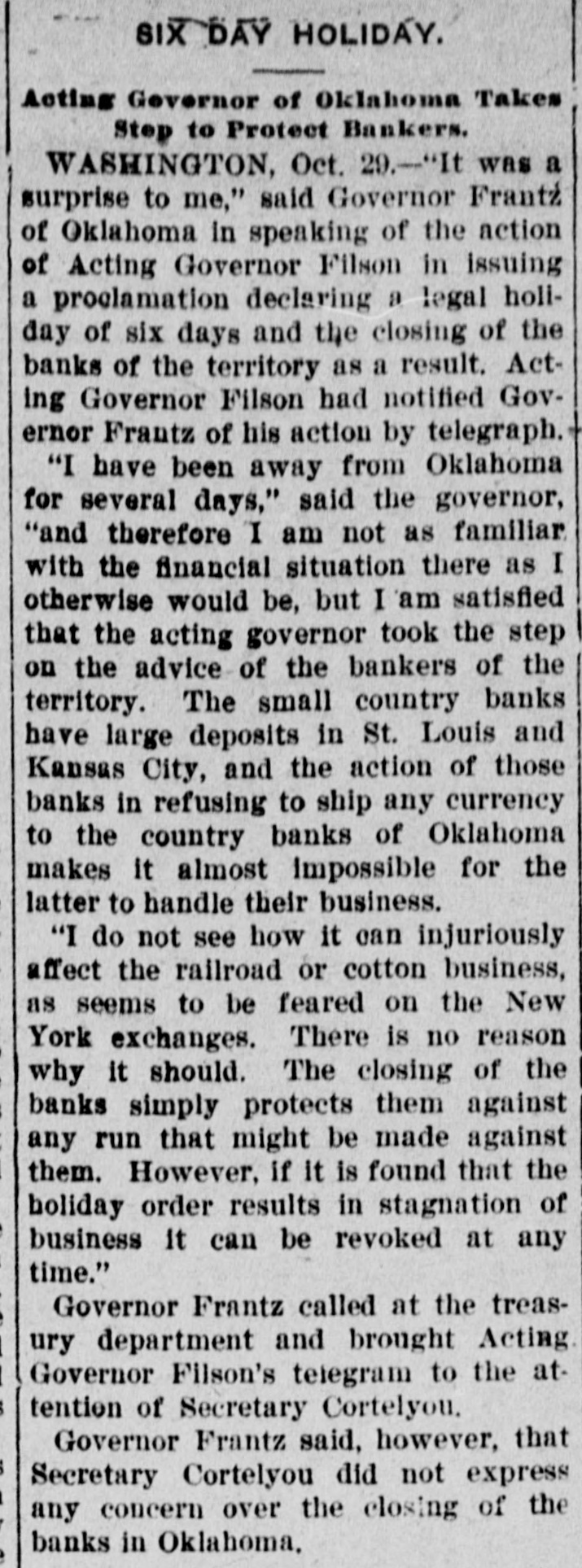
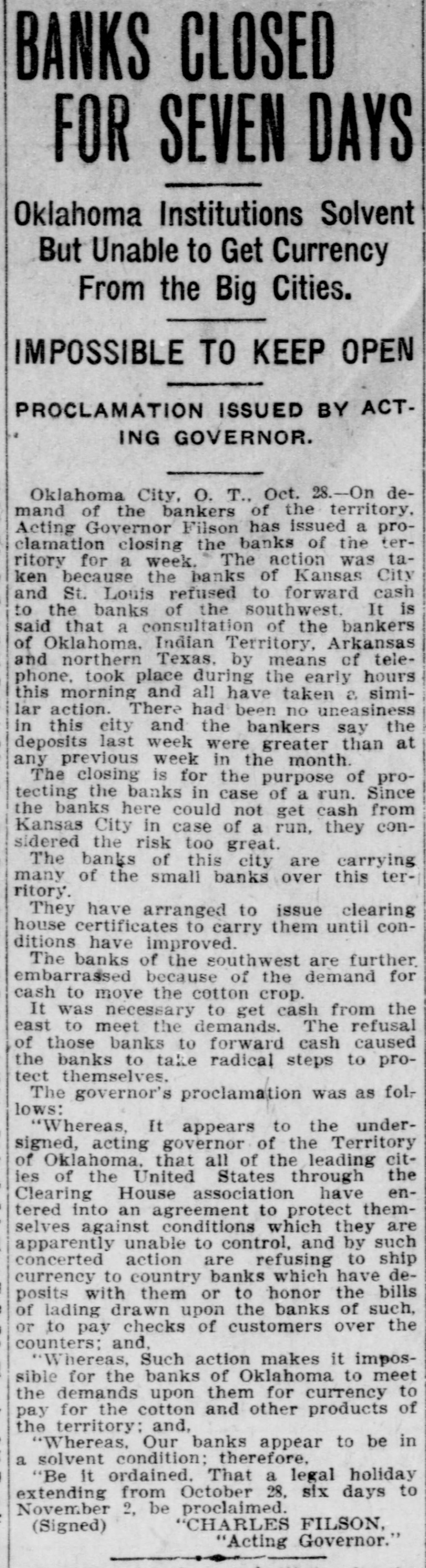
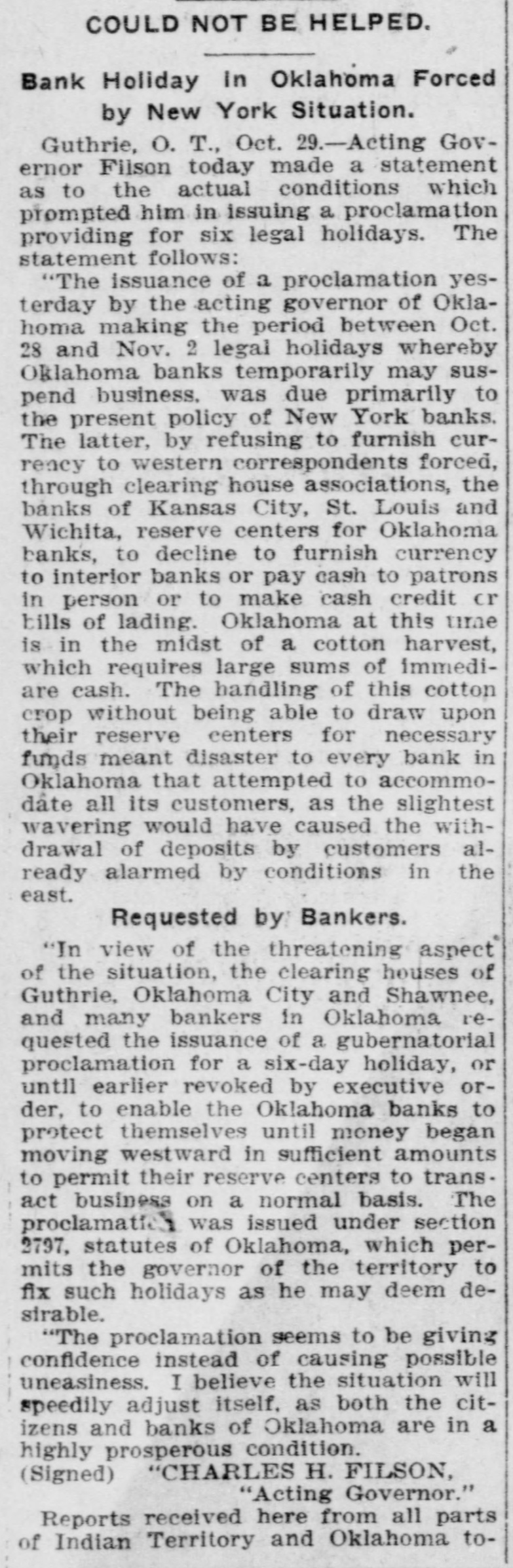
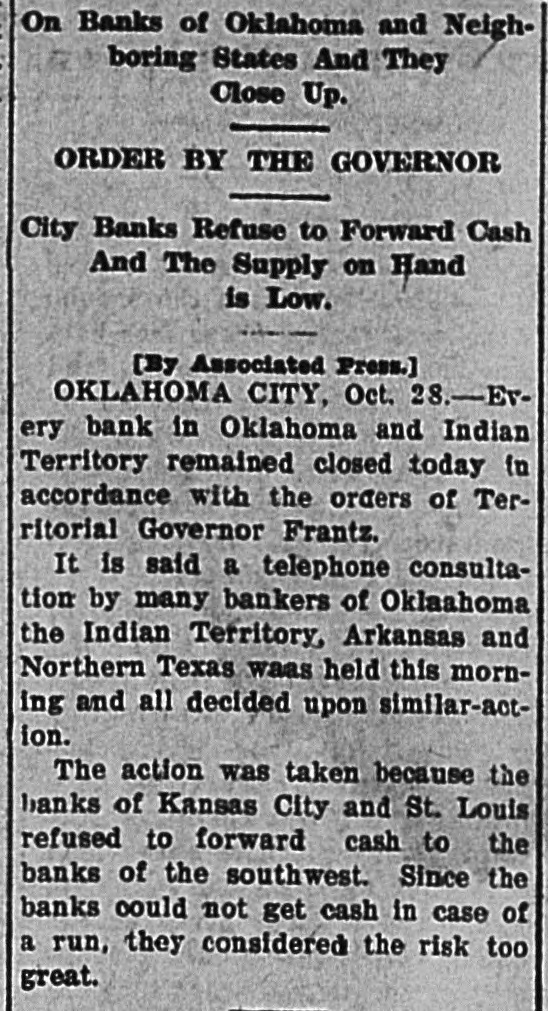
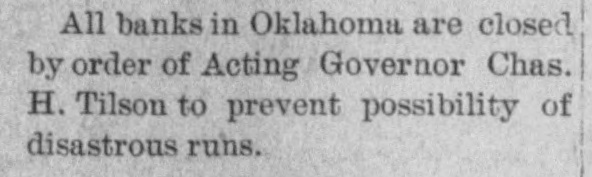
Oklahoma City, Okla.--Charles Filson, Acting Governor of the Territory, issued a proclamation declaring a six-day holiday. In consequence, every bank in the city was closed. The proclamation follows: "Whereas, It appears to the undersigned, Acting Governor of the Territory of Oklahoma, that all of the leading cities of the United States through their clearing house associations have entered into an agreement to protect themselves against conditions which they are apparently unable to control, and by such concerted action are refusing to ship currency to country banks which have deposits with them or to honor the bills of lading drawn upon the banks of such, or to pay checks of customers over the counters; and "Whereas, Such action makes it impossible for the banks of Oklahoma to meet the immediate demands upon them for currency to pay for the cotton and other products of the Territory; and "Whereas, Our banks appear to be in a solvent condition; therefore, "Be it ordained that a legal holiday, extending from October 28, six days, to November 2, be proclaimed. "CHARLES FILSON, "Acting Governor."
There has been no uneasiness in this city, and the bankers say the deposits last week were greater than in any previous week in the month. The motive in closing is protection in case of a run. Since the banks here could not get cash from Kansas City in case of unusual demands they considered the risk too great. The banks of this city are carrying many of the small banks of the Territory. They have arranged to issue Clearing House certificates until conditions improve. The banks of the Southwest are further embarrassed because of the demand for cash to move the cotton crop. It is said that many bankers of Oklahoma, Indian Territory, Arkansas and Northern Texas were in consultation by telephone early in the morning, and that all decided on similar action.